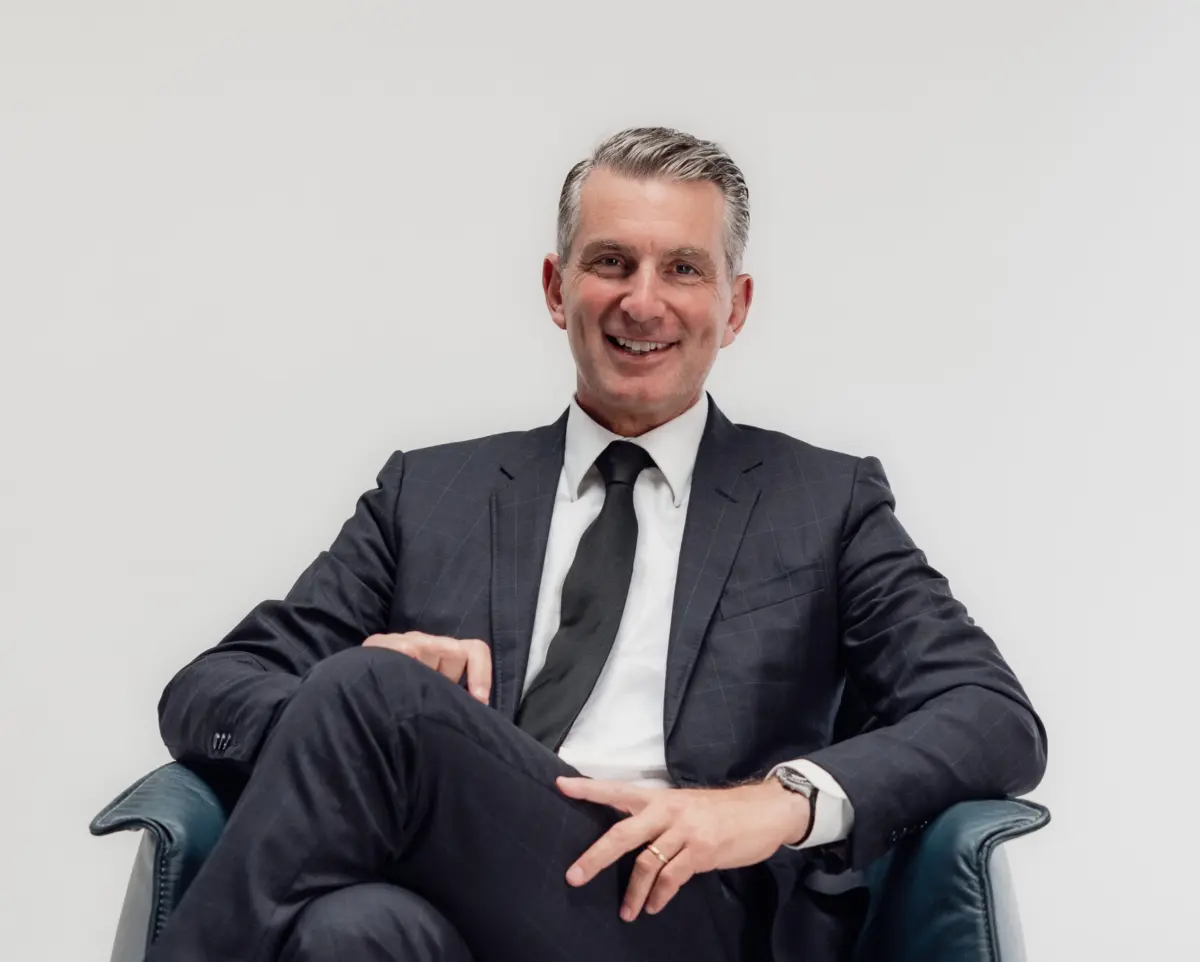




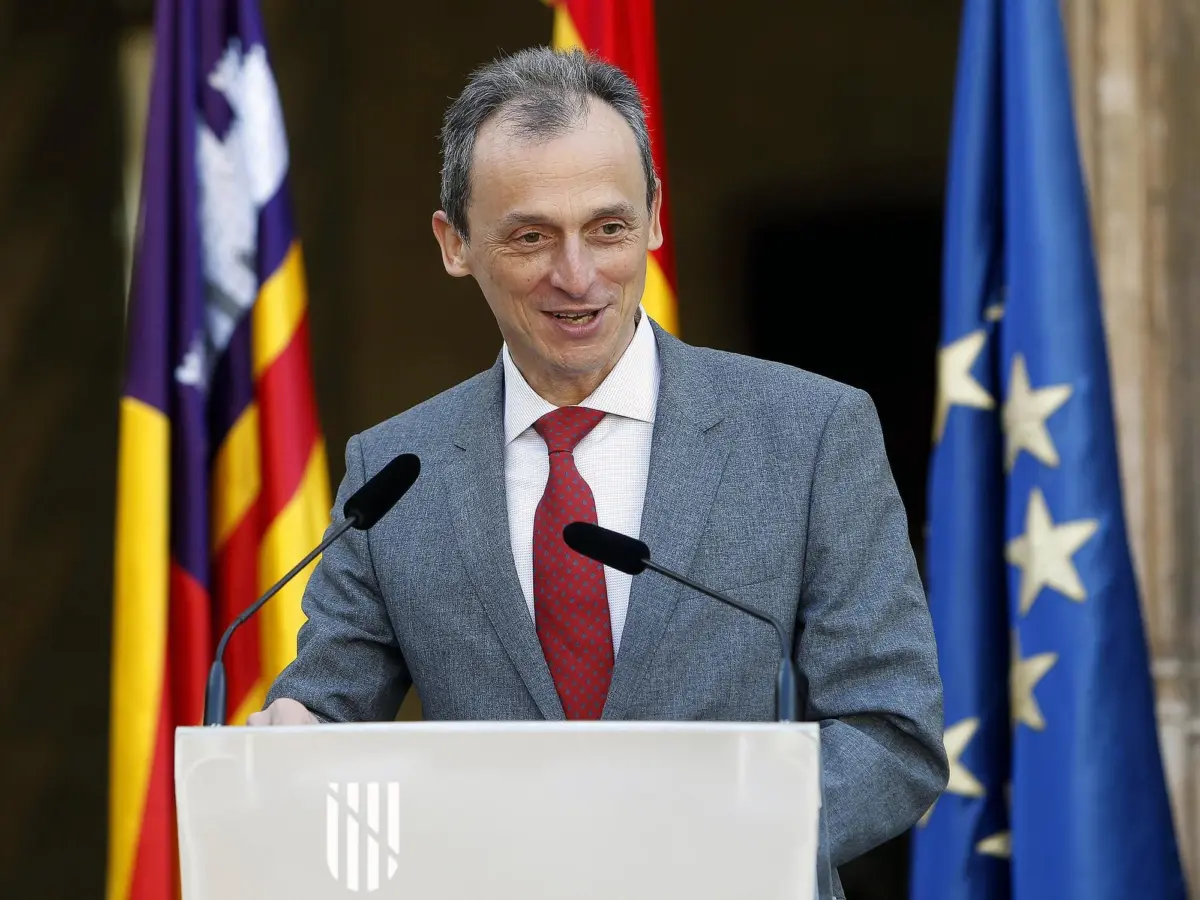
For millions of children growing up around the world, gazing up at the stars is the beginning of a lifelong fascination with outer space. Yet, only an extraordinarily select group of individuals possess the rigorous technical aptitude, physical endurance, and mental resilience required to turn that celestial dream into reality. Among that elite cadre is Pedro Duque, a pioneering aeronautics engineer who shattered boundaries to become Spain’s very first astronaut. Throughout a distinguished career that saw him journey beyond the confines of Earth aboard NASA’s Space Shuttle Discovery and the International Space Station, Duque cemented his status as a national icon.
Nearly three decades after his maiden spaceflight, Duque remains Spain’s most celebrated ambassador of the cosmos. His historic exploits have been woven into the fabric of the nation’s educational and cultural landscape, inspiring three public schools to bear his name alongside a multitude of prestigious domestic and international accolades. In recognition of this enduring legacy, the IEEE Board of Directors has named Duque an IEEE honorary member. The distinction honors his profound contributions to space exploration, his leadership in collaborative international science and technology initiatives, and his enduring role as a powerful role model for younger generations entering the technical professions.
Although Duque was unable to attend the official honors ceremony in New York City, he shared his deep appreciation through recorded acceptance remarks that were broadcast during the event. Addressing the audience via video, the veteran engineer acknowledged the monumental standing of the organization.
"We engineers of all specialties recognize the leadership of your institute—the largest and most important engineering society in the world," Duque said in his presentation. "What an honor it is to belong now to an organization whose purpose it is to foster technological innovation and excellence for the benefit of humanity."
Inspired by Apollo 11
Duque’s journey toward the stars began in childhood, fueled by a natural curiosity about how things worked. That inclination was nurtured early by his father, an air traffic controller who demystified the mechanics of aviation for his young son, laying the groundwork for a lifelong passion for aeronautical engineering.
The defining moment of his youth arrived in July 1969, when a six-year-old Duque watched the historic Apollo 11 moon landing unfold on television. The spectacle left an indelible mark on his imagination. Reflecting on that monumental era, Duque recalls that nearly everyone of his generation was captivated by the space race. The event was presented with an epic gravity that emphasized its profound impact on human society, awakening a collective realization that humanity was beginning to explore entirely new frontiers.
Yet, pursuing a career in aerospace from within Spain during that era presented formidable obstacles. At the time, the country lacked a domestic space program, operating under the regime of Francisco Franco, which allocated virtually no financial resources toward scientific innovation and advanced research. That political and economic landscape shifted dramatically following Franco’s death in 1975. As Spain transitioned into a democratic constitutional monarchy, the nation began actively integrating into European research and development frameworks, opening new doors for technological collaboration, most notably with the European Space Agency.
Building a Foundation in Engineering and Flight Control
Duque pursued his academic ambitions at the Polytechnic University of Madrid, graduating in 1986 with a degree in aeronautical engineering from the institution’s esteemed aeronautical and space engineering school. His professional career began in Madrid with GMV, a prominent space and technology company, where he worked as a flight dynamics engineer. As a member of the orbit determination group stationed at the European Space Operations Centre in Darmstadt, Germany, Duque played an instrumental role in developing complex algorithms, orbit computational software, and advanced computer models.
His early technical portfolio expanded rapidly as he joined flight control teams for critical European missions. He supported the European Remote Sensing-1 satellite following its launch in 1991, as well as the European Retrievable Carrier, which lifted off in 1992 aboard Space Shuttle Atlantis during the STS-46 mission.
The trajectory of his life shifted in 1990 when the European Space Agency initiated a rare recruitment drive for its astronaut corps. Encouraged by colleagues and driven by a sense that childhood ambitions were finally within reach, Duque applied. Following an exhaustive selection process, he was chosen in 1992 to join the European Astronaut Corps. This appointment initiated a grueling regime of physical and technical preparation at the European Astronaut Centre and the Gagarin Research and Test Cosmonaut Training Center in Russia.
In 1994, Duque served as the prime crew interface coordinator for the ESA-Russian EuroMir space station missions, managing critical communications between astronauts aboard the Mir space station and European scientists on the ground to ensure the seamless execution of orbital experiments. NASA subsequently selected him in 1996 as an alternate payload specialist on the ground for Space Shuttle Columbia’s STS-78 mission, where he trained extensively to manage scientific payloads and supported flight operations from mission control.

His own entry into Earth orbit occurred in 1998, when he flew as a mission specialist representing the ESA aboard Space Shuttle Discovery for the STS-95 mission, managing complex in-orbit operations, scientific investigations, and equipment maintenance. Five years later, in 2003, Duque served as a flight engineer aboard the Soyuz TMA-3 Cervantes mission, a joint Russian-Spanish expedition to the International Space Station. During this flight, he operated station systems, conducted vital maintenance, and performed numerous scientific experiments under the guidance of the mission commander.
Memories of Flight and the Evolution of Space Travel
Reflecting on the rigorous years of preparation, Duque describes the experience as intensely demanding yet profoundly rewarding. Despite the fleeting nature of orbital missions—each lasting roughly ten days—the payoff of meticulous preparation was immeasurable. Among his most cherished memories are witnessing the stark beauty of Earth transitioning between day and night, observing the moon flatten into a glowing sliver moments before setting, and experiencing the unique physical sensation of microgravity. Above all, he highlights the enduring bonds forged with crewmates and ground support personnel.
Among those colleagues was legendary astronaut John H. Glenn, the first American to orbit the Earth, with whom Duque flew aboard Discovery. Discussions with Glenn often centered on the evolving criteria for astronaut selection. While early missions during the Apollo and Gemini eras favored seasoned test pilots capable of reacting decisively to unpredictable mechanical failures, Duque notes that modern aerospace technology has fundamentally transformed the discipline.
Today’s spacecraft feature advanced automated systems that reduce the need for human intervention in routine mechanical management, shifting the astronaut’s primary focus toward conducting intricate scientific research and maintaining complex hardware. However, Duque emphasizes that upcoming crewed missions to the moon and Mars will once again demand the autonomous problem-solving capabilities traditionally embodied by test pilots, as these journeys will rely on novel spacecraft technologies operating far from immediate ground support. Furthermore, future explorers will face the formidable psychological challenge of enduring prolonged confinement with crewmates in deep space environments.
Navigating Sudden Celebrity and National Leadership
Transitioning from a behind-the-scenes engineer to a national celebrity presented a unique personal challenge for Duque. Unaccustomed to public scrutiny, navigating widespread public fame required patience and adaptation. Over time, he learned to accept the unexpected gravity that the public and professional communities assigned to his opinions, recognizing that leadership is often an organic byproduct of years spent managing high-stakes missions.
That leadership capacity proved invaluable when Duque transitioned away from active spaceflight. Following his retirement from the ESA in 2018, he was appointed Spain’s minister of science, innovation, and universities, a portfolio he held until 2021. In this governmental role, he directed national policies spanning scientific research, technological advancement, and higher education. A crowning achievement of his ministerial tenure was securing Spain’s historic commitment to contribute approximately US $800 million to the European Space Agency between 2020 and 2026, marking the largest aggregate space investment in the country’s history.
Following his tenure in public office, Duque continued to apply his expertise across the private and defense sectors. In 2022, he joined Destinus Spain as an advisor to the strategic committee, contributing to the development of advanced European aircraft propulsion technologies. The following year, the Spanish government appointed him chairman of the board at HispaSat, the prominent Madrid-based satellite operator delivering crucial broadcasting and broadband infrastructure across Europe, North Africa, and the Americas.
A Surprising and Prestigious Accolade
The recent announcement regarding his IEEE honorary membership came as a surprise to Duque. Though aware that a colleague had submitted his name for consideration, he initially viewed the prospect of selection as improbable given his specific background in aeronautical engineering rather than electrical engineering or telecommunications—fields he had nevertheless harbored a deep affinity for since youth.
After consulting with IEEE member colleagues regarding the significance of the distinction, which recognizes profound and lasting impacts on society, Duque expressed deep appreciation for the honor. As he reflects on his newest role within the organization, he remains focused on discovering how his unique multidisciplinary perspective can best serve the hundreds of thousands of engineering professionals who comprise the institute.
Today, after decades of service spanning orbital mechanics, ministerial leadership, and corporate governance, Pedro Duque continues to shape the trajectory of science and technology from his post in Madrid, maintaining a lifelong commitment to innovation, exploration, and the advancement of humanity.