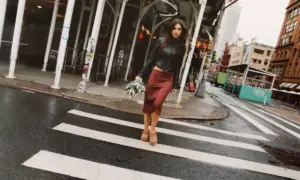






As Gucci legend goes, the foundation of the iconic Italian luxury house was laid back in 1897, when a young Guccio Gucci worked as a humble porter in London’s prestigious Savoy Hotel. During his time at the historic establishment, Gucci observed closely the vibrant comings and gowings of the jetsetting bourgeoisie—businessmen dressed in dapper, impeccably tailored suits and their posh wives, who ultimately inspired the creation of his very first Gucci luggage collection. Yet, his observations extended far beyond the traditional elite, taking in stage performers, eccentric artists, and a colorful cross-section of people from all walks of life. For his Spring/Summer 2027 collection for Gucci, designer Demna has taken a direct page from this foundational piece of the brand’s history, translating the tension between bourgeois respectability and radical eccentricity into a modern fashion statement.
The narrative of the collection began with its setting. Dubbed “The Store Show,” the expansive runway unfolded inside a cavernous, multi-room space meticulously transformed into the most democratic part of any luxury house: its retail store. While modern social media critics and disgruntled shoppers on platforms like TikTok—such as reality star Bethenny Frankel—might have plenty of sharp commentary regarding how consumers are treated inside high-end luxury boutiques, the fundamental reality remains that anyone can technically walk through the front doors and browse the merchandise. Actually purchasing those items, of course, is an entirely different story.
By contrast, a traditional runway show represents the absolute opposite dynamic: it stands as one of fashion’s most exclusive spaces, notoriously difficult to access even for seasoned fashion editors and industry insiders. Staging a major fashion show inside a meticulously constructed faux retail store, therefore, felt like a deliberate, provocative move on Demna’s part. Step into the expansive Gucci world, the designer seemed to convey to the audience. Everyone is warmly welcomed to look, to lust, and to covet the creations on display. To actually leave the store carrying a shopping bag, however, you will still need your credit card at the ready.
This inclusive yet aspirational ethos was immediately reflected in the diverse array of attendees. Walking through the winding rooms of the Gucci “store” toward the seating area offered a snapshot of contemporary pop culture and high fashion colliding. LA It girls Victoria Villaroel and Stassi Anastassov could be seen taking selfies against the retail backdrop, while tennis star Jannik Sinner shared a warm embrace with fashion icon Anna Wintour. Nearby, pop star Shawn Mendes was spotted canoodling with his girlfriend, Bruna Marquezine, while recent Love Island winners Trinity and Bryce gave quick social media interviews amid the pre-show buzz.
Further into the VIP room, fashion royalty and cultural icons including Donatella Versace, Mariacarla Boscono, and Bianca Jagger calmly took their seats in the front row. The atmosphere reached a fever pitch with the last-minute arrival of Cardi B, who stepped into the venue and was instantly swarmed by a wall of photographers and flashing camera bulbs. While this seemingly random assortment of celebrity talent might have appeared eclectic at first glance, it made total sense when viewed through the lens of what Demna has consistently sought to achieve: building a unified Gucci world where true luxury is no longer defined strictly by belonging to one particular social tribe or exclusive club.
The clothing presented on the runway told a remarkably similar story about identity, class, and rebellion. Those fortunate enough to be seated in room A witnessed a lively promenade unfolding just outside the perimeter of the faux “store,” where a diverse cast of distinct characters strode up and down the street before making the deliberate decision to enter the Gucci universe. The menswear segment of the presentation began on a polished, restrained note, featuring cropped trousers, sockless loafers, and sharply fitted suits cut with exaggerated, structured shoulders that nodded to traditional tailoring codes.
As the presentation progressed, however, the menswear began to evolve, growing steadily edgier and a touch more rebellious. The tailored looks gave way to rounded, almost inflated outerwear jackets paired effortlessly with slouchy, relaxed-fit jeans, punctuated by XXL horsebit belts worn slung low around the hips.
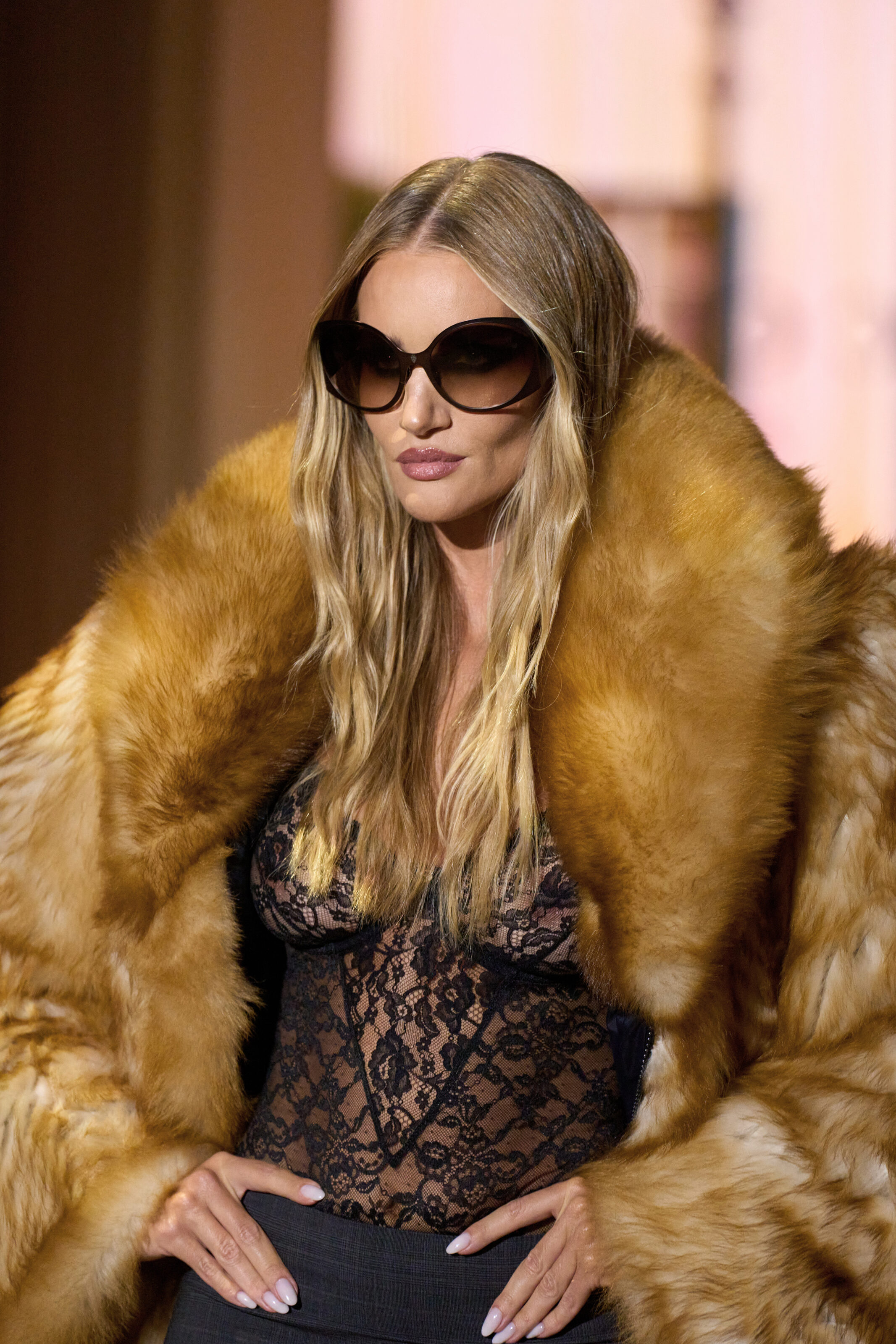
Womenswear followed a similarly multifaceted trajectory, opening with an air of prim sophistication reminiscent of Milanese sciure—the city’s famously well-dressed older women—attired in immaculate skirt suits and sharp pantsuits. These looks were paired with riding boots embellished with iconic Horsebit hardware, serving as a direct and respectful nod to the equestrian heritage of the house’s original well-heeled clientele. Observers noted that Donatella Versace nodded approvingly and offered enthusiastic applause when one particularly chic older model strode down the runway, looking thoroughly prepared to drop her credit card and purchase the entire store setup on the spot.
That initial wave of conservative elegance soon evolved into more eclectic pairings, including rugby shirts styled with pleated tartan skirts and oversized fur coats thrown carelessly over traditional men’s shirting. Every look was heavily piled with dripping, statement-making Gucci jewelry that demanded attention.
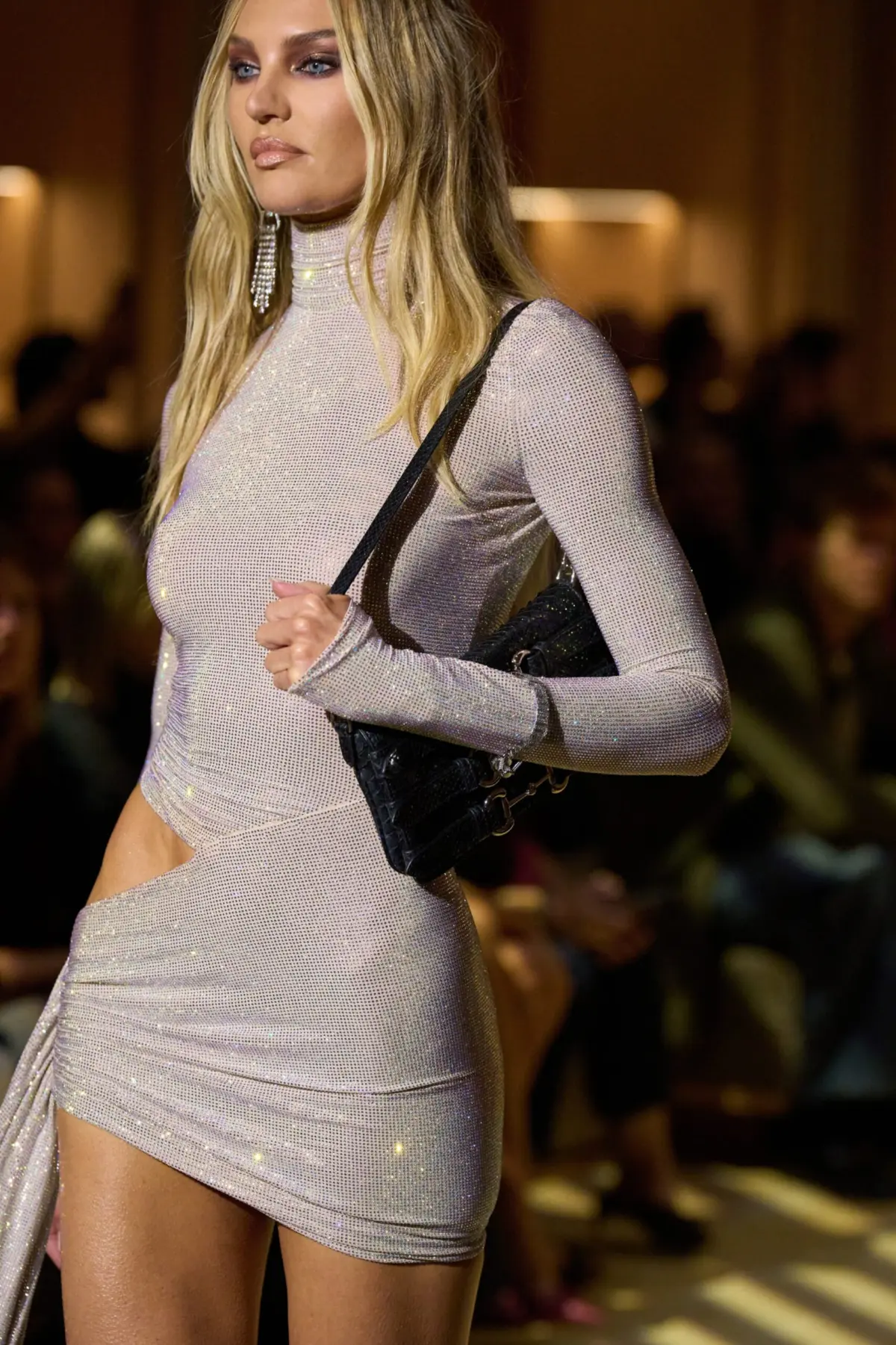
As the show marched forward, the aesthetic grew progressively sexier and more daring. Supermodel Candice Swanepoel slinked down the runway wearing a glittering, skin-tight mini dress featuring a dramatic side cutout, quickly followed by model Alex Consani—sporting striking hot-pink eyeshadow—in a floor-length black dress accented by a daring thigh-high slit. One particularly striking paper-thin gown swapped a traditional shoulder strap for a heavy, teardrop-shaped metallic weight that swung like a metronome over the model’s shoulder with every step.
In the realm of accessories, familiar Gucci signatures such as the Horsebit, Bamboo, Marmont, and Ophidia lines were omnipresent throughout the collection. Yet, Demna infused plenty of fresh, unexpected elements into the mix: razor-sharp metal stilettos, a triple Horsebit belt tightly cinched over a swishy fringe skirt, and a python shoulder bag sculpted into the literal shape of a stalk of bamboo.
True Gucci devotees are well aware that the historic Italian house originally introduced its iconic curved bamboo handles due to severe postwar material shortages, which forced the brand’s artisans to experiment with unconventional resources out of sheer necessity. In this collection, Demna appeared to take that familiar historical code and distort it slightly, injecting a healthy dose of tongue-in-cheek playfulness into the luxury accessories.
Ultimately, the entire collection ties back to the central tension that Demna outlined in his pre-show notes: while Gucci may have originated from a place of polished bourgeois respectability, its most enduring and memorable eras are precisely those that successfully introduced eccentricity, subversion, and unbridled sex appeal into that refined world.
For those in attendance, the experience lingered long after the final model left the runway, leaving an indelible impression of what contemporary luxury can feel like when doors are thrown open to a broader spectrum of humanity. And perhaps that is the ultimate underlying point of Demna’s evolving vision for Gucci: everyone is invited inside the store to browse and belong. What you ultimately choose to become once you step across the threshold is entirely up to you.