






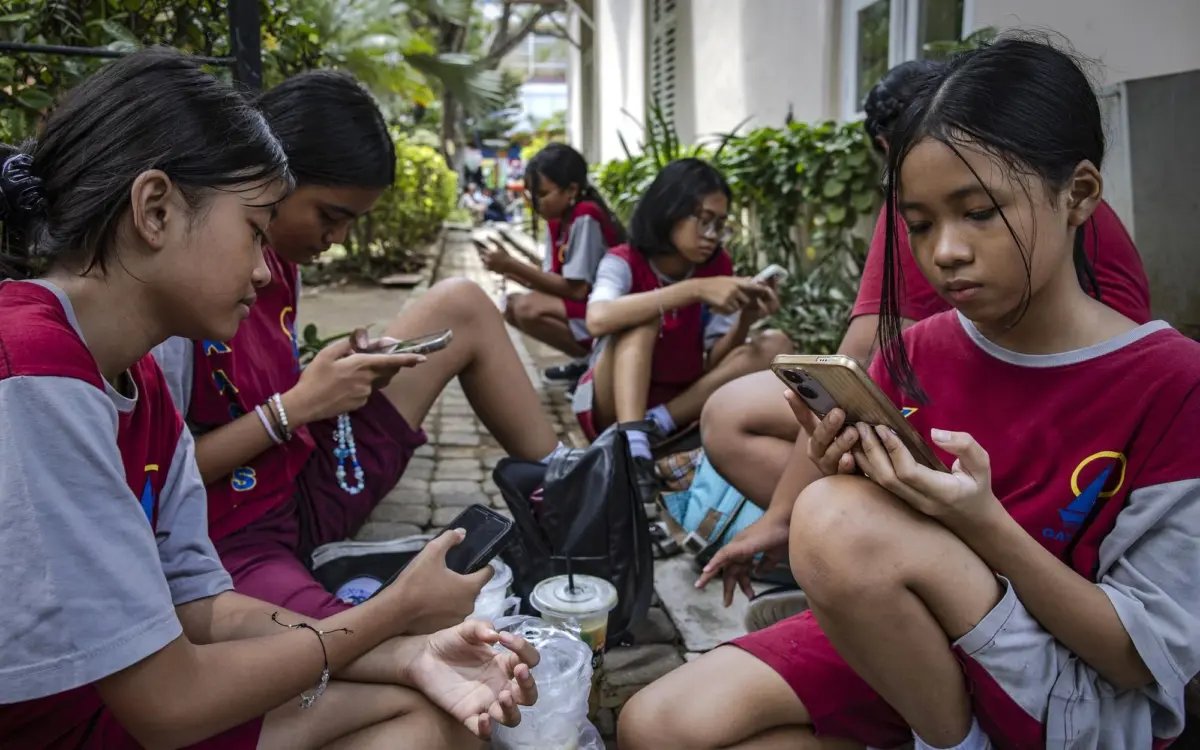
Social media occupies a central, complex position in modern adolescent development, fundamentally shaping how young people communicate, learn, socialize, and express their identities. While these digital platforms offer pathways for connection and creativity, those benefits are increasingly accompanied by profound risks that can undermine a child’s character, cognitive growth, and social well-being. Researchers and public health advocates point to a litany of hazards linked to unregulated digital consumption, including excessive screen time, compulsive platform addiction, cyberbullying, the rapid spread of misinformation, radicalization, privacy violations, exposure to inappropriate content, sextortion, and the anxiety-inducing loop of doomscrolling.
Recent scientific findings underscore the tangible academic toll of early digital immersion. A prominent study published in Nature: Human Behaviour revealed that adolescents who begin using social media at an early age tend to experience significantly lower academic performance. Parallel reporting highlights a cascading mental health crisis among teenagers, characterized by rising rates of self-harm, compulsive and repetitive checking behaviors, and inadvertent exposure to graphic pornography and violent material. For years, the burden of shielding minors from these digital pitfalls has fallen almost entirely on parents, individual schools, and the sporadic self-regulation efforts of social media providers themselves.
However, as these localized measures have proven largely ineffective and inadequate against sophisticated engagement algorithms, governments and policymakers around the world have stepped in, shifting the legal and moral responsibility directly onto social media providers.
Australia’s Nationwide Ban Sets a Precedent
Australia took a pioneering legislative leap by becoming the first country to enact a nationwide social media ban targeting children younger than 16. Enacted in December, the sweeping law initially applied to 10 major platforms: Facebook, Instagram, Kick, Reddit, Snapchat, Threads, TikTok, Twitch, X, and YouTube. To minimize disruption to everyday life and education, lawmakers specifically excluded messaging services, online gaming environments, and non-social utilities such as Discord, GitHub, Roblox, WhatsApp, YouTube Kids, and dedicated educational tools.
Rather than penalizing children or their families, the legislation places the full burden of enforcement on the platform providers through mandatory age-assurance mechanisms. Tech companies are legally required to take reasonable steps to prevent individuals aged 15 or younger from creating or holding active accounts. Notably, the law does not restrict passive content consumption; children are still permitted to view publicly available posts and videos without logging into an account, though they are strictly barred from commenting, interacting, or publishing their own content.
To comply with the mandate, platforms must verify users’ ages using an array of tools, ranging from government-issued identification and biometric or facial age-estimation technologies to behavioral inference algorithms and self-declaration options backed by auxiliary checks. The financial penalties for noncompliance are severe, with fines reaching up to US $35.6 million. In the immediate wake of the law’s passage, the ten targeted platforms reported removing nearly 5 million accounts belonging to underage users across Australia.
Despite winning widespread praise from parent groups and child advocacy organizations, the ban has faced fierce criticism from human rights organizations and digital freedom advocates. These groups argue that sweeping restrictions unduly limit young people’s fundamental freedom of expression and block their access to valuable information, potentially fostering social isolation and cutting off critical support networks, particularly for marginalized youth.
Promising Early Outcomes and Persistent Implementation Struggles
Early evaluations suggest the Australian experiment is already yielding encouraging results. According to findings highlighted in Time magazine, the legislation has successfully reduced account ownership and overall social media consumption among younger children. A public opinion survey conducted by YouGov revealed that 61 percent of parents with children aged 16 and younger observed positive behavioral shifts at home, including an increase in face-to-face interactions, greater attentiveness, and strengthened parent-child relationships. Furthermore, three out of five surveyed Australians rated the overall legislative effort as effective.
The policy has also forced platform operators to rethink their product architecture. In response to the regulatory pressure, Snapchat began rolling out a restricted, friends-only experience tailored specifically for users aged 13 to 15. Moreover, the law is stimulating a nascent market for purpose-built online spaces designed to cater to the developmental needs of children under 16 without exposing them to the predatory engagement loops of mainstream social media. Observers note that if a "no social media before 16" standard solidifies into a widely accepted cultural norm, it could significantly empower parents and schools to delay digital immersion.
Yet, the implementation of the ban has not been without friction. An independent study revealed that online platforms have struggled immensely with the technical execution of age checks, allowing many underage users in Australia to bypass restrictions with relative ease. Resourceful children quickly discovered workarounds, such as utilizing free virtual private networks to mask their geographic location and subvert verification protocols—often exposing themselves to services with questionable data-collection practices.
The study found that roughly 70 percent of children managed to retain their existing accounts on restricted platforms, while others simply created new profiles using falsified birth dates or migrated toward unregulated offshore platforms that fall outside the jurisdiction of Australian law. These widespread workarounds prompted the Australian government to double its maximum financial penalties and issue stern warnings of imminent court action against tech giants failing to enforce compliance.
A Global Pivot Toward Age Verification and Standards
Australia’s pioneering policy has served as a catalyst for a broader international movement. A growing number of countries are actively implementing or considering similar social media restrictions, including Brazil, Canada, France, Greece, Indonesia, Norway, Poland, Thailand, Türkiye, and the United Kingdom, while the European Union contemplates region-wide rules. As these nations draft their own legislation, the global policy debate has shifted from whether age verification is necessary to determining how to implement it effectively without compromising user privacy.
Navigating this delicate balance remains a formidable technical challenge. Recognizing the need for structured guidance, organizations like the IEEE Standards Association (IEEE SA) have stepped forward to develop frameworks that assist developers in building safer, age-appropriate digital environments. The IEEE Standard for Online Age Verification provides a rigorous framework for designing, evaluating, and deploying verification systems, incorporating strict requirements for privacy protection, data security, information management, and high-accuracy age range estimation.
Complementing this is an earlier standard based on the 5Rights Foundation’s Principles for Children, which outlines practical steps for qualifying online products to ensure they present information in an age-appropriate manner aligned with the United Nations Convention on the Rights of the Child. To operationalize these rules, the IEEE SA established an online age-verification certification program that assesses systems against six key indicators: accuracy, frequency of assurance, counter-fraud measures, authenticity, frequency of authenticity checks, and birth data confidence. Several nations, including Indonesia, have already drawn upon these IEEE guidelines to shape their own national child-protection regulations.
Calls for Deeper Platform Reforms and Architectural Accountability
While nationwide bans represent significant policy interventions, experts emphasize that they only address the symptoms of a deeper structural problem rooted in the very architecture of modern social media platforms. Features such as infinite scrolling, aggressive algorithmic recommendations, data-driven engagement tactics, and personalized advertising directed at minors are primary drivers of compulsive use.
Legal accountability is slowly catching up to these design practices. In a landmark legal development, Meta agreed to settle a massive lawsuit brought by numerous U.S. states for $17.1 billion. The lawsuit accused the tech giant of intentionally engineering its platforms to be addictive to children and concealing internal research that detailed the harmful effects of Instagram on teenagers. Under the terms of the settlement, Meta agreed to institute meaningful child-safety safeguards, including setting automatic daily time limits and disabling push notifications on Facebook and Instagram during school hours. With additional lawsuits still pending, the tech industry faces mounting pressure to overhaul its core product design.
Industry experts argue that prohibition alone cannot serve as a permanent fix. Katina Michael, an IEEE Senior Member, professor at the University of Sydney Business School, and founding editor-in-chief of IEEE Transactions on Technology and Society, noted that bans offer an understandable short-term response to public anxiety but fall short as long-term solutions. She advocates instead for the widespread adoption of socio-technical systems designed to promote human well-being, suggesting that the digital ecosystem must embed ethics, accountability, transparency, and human values directly into platform architecture from the outset.
Ultimately, safeguarding children in the digital age will demand a coordinated, multi-layered approach combining public policy, responsible platform design, enhanced digital literacy, active parental involvement, and cultural shifts. Building a secure and inclusive digital ecosystem that supports adolescent development requires sustained collaboration among technology companies, content creators, educators, policymakers, and young people themselves, supported by professional organizations dedicated to fostering trustworthy and responsible technology.