





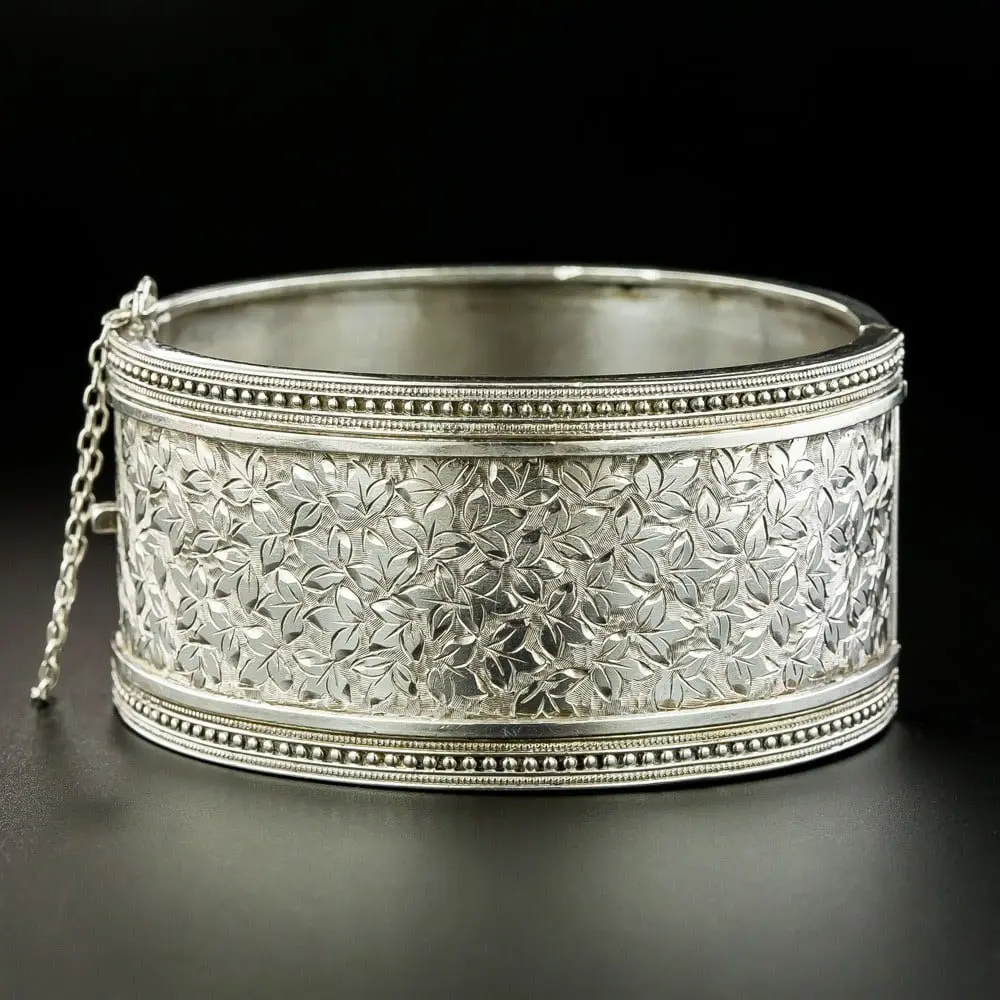
Silver has occupied a foundational position in human history, serving as a medium of exchange, a canvas for master artisans, a driver of technological innovation, and a catalyst for geopolitical conflict. Often overshadowed in modern economic value by gold or platinum, silver possesses a rich and complex legacy that frequently outstrips its golden counterparts in both volume and historical impact.
Represented on the Periodic Table of the Elements by the symbol Ag, silver is a white metallic element that is harder than gold yet softer than copper. It is second only to gold in its malleability and ductility, while standing out as an exceptional conductor of heat and electricity. Classified as a noble metal due to its remarkable resistance to oxidation, silver has historically been alloyed with other metals to achieve the structural integrity required to maintain intricate shapes and fine details.
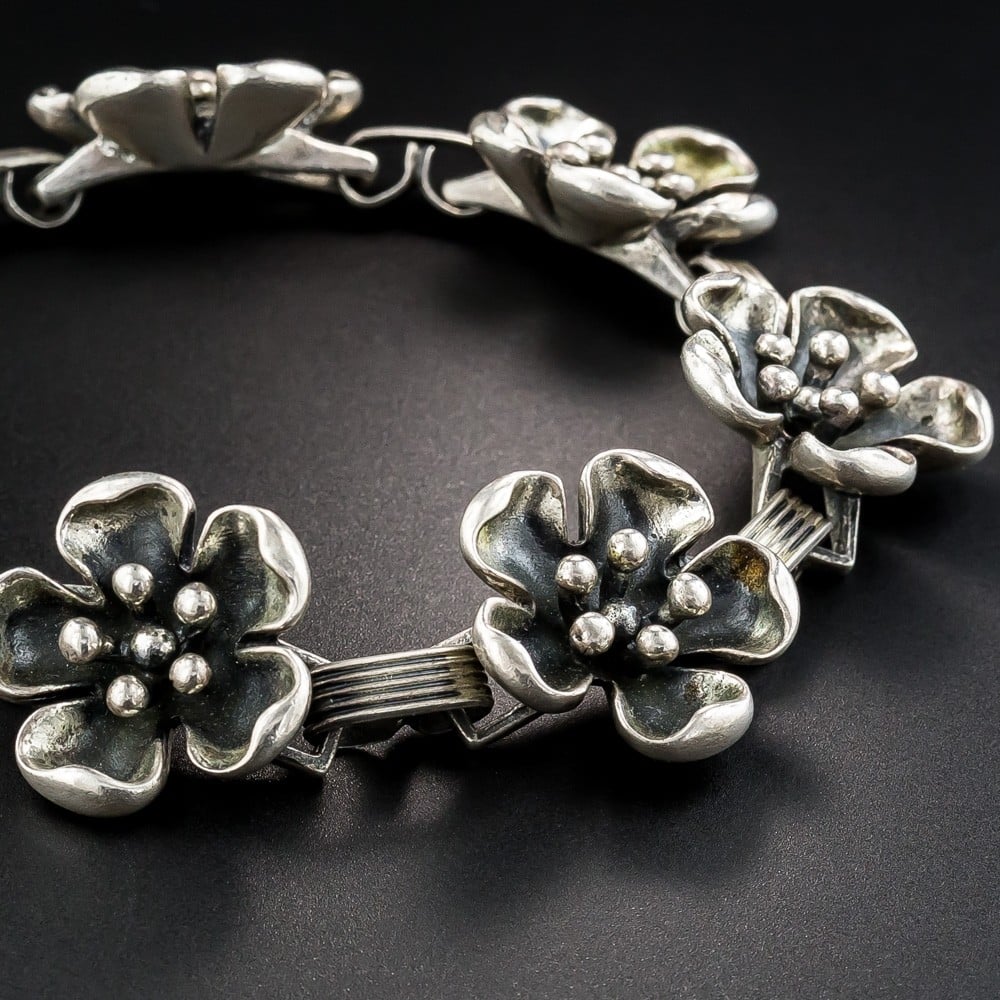
Despite its current affordability relative to other precious metals, dismissing silver as secondary is a historic miscalculation. Throughout various epochs, silver has been valued higher than gold. Furthermore, the sheer quantity of silver utilized in jewelry and decorative arts outweighs all other precious metals by a substantial margin. The pursuit of silver deposits has fueled mining and metallurgical advancements, shaped entire economies, and shifted the balance of power in wars that dictated the course of human history.
Bronze Age Origins and Early Civilizations
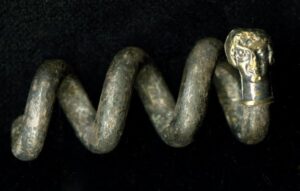
The story of silver traces back to the late fourth millennium BC, when inhabitants of modern-day Turkey discovered that silver could be extracted from lead through the process of cupellation. While surviving artifacts from this nascent period are exceptionally rare, those that remain demonstrate the sophisticated capabilities of Bronze Age silversmiths.
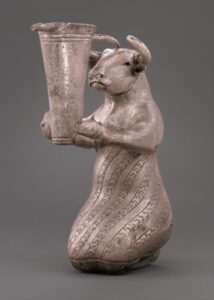
At the dawn of written history, silver functioned as a currency in Mesopotamia. Rather than circulating as standardized coins, it was measured by weight or shaped into rings. The workshops of Mesopotamian silversmiths mirrored those of goldsmiths and were frequently one and the same. Although slightly less ductile than gold and demanding more frequent annealing during production, silver could be cast, hammered into ultra-thin sheets, engraved, embossed, worked in repoussé, and embellished with filigree and granulation. Archaeological discoveries of high-purity silver vessels, statuettes, and jewelry illustrate the delicate and soft nature of these early creations.
In ancient Egypt, value was frequently ascribed to the rare and the exotic. While gold was readily accessible in nearby mountain ranges such as the Eastern Desert and Nubia, pure silver had to be imported along arduous trade routes that also brought prized materials like Afghan lapis lazuli. Consequently, pure silver was initially valued more highly than gold, reserved exclusively for the societal elite. By approximately 1600 BC, however, the influx of silver caused its value to decline to roughly half that of gold, establishing it as a stable, abstract currency. Its popularity fluctuated with fashion; while the tomb of King Tutankhamun contained very few silver items, later rulers like Sheshonq II were entombed in all-silver sarcophagi.
The Minoans and Mycenaeans engaged extensively in Mediterranean trade, integrating silver into their material culture, as evidenced by archaeological finds across the Greek mainland, Crete, and Cyprus. Meanwhile, the Phoenicians played a pivotal role by establishing colonies and trade networks throughout the Mediterranean, initiating the large-scale exploitation of Spanish silver deposits. This expansion distributed silver across the classical world on an unprecedented scale, transforming the metal from an exclusive, exotic commodity into a widely accessible resource.
Classical Antiquity and the Roman Era
For both Greek and Roman societies, the availability of silver was paramount, serving as the bedrock for minted coinage. Although gold dominated surviving jewelry inventories from the era—partly due to the continuous cycle of remelting and recycling—silver was fashioned into finger rings, anklets, and armlets.
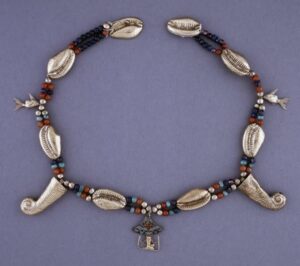
The Romans developed a particular fondness for niello, a surface decoration technique resembling enameling but executed using silver sulfate rather than glass. Offering a metallic luster and superior durability, niello spread throughout Northern and Eastern Europe during the Roman occupation, leaving a lasting mark on Anglo-Saxon and continental artifacts.
Roman historian Pliny the Elder documented the Roman fascination with and obsession over silver in his Naturalis Historia. Detailing everything from the deep-shaft mining techniques utilized in Spain—where Hannibal’s ancient mines still operated with elaborate drainage systems—to the rigorous testing methods of the era, Pliny captured the societal anxieties surrounding rising luxury. He described various purity tests, such as heating silver on an iron fire-shovel to observe color changes, and lamented the extravagant escalation of silver plate consumption among Roman elites. From silver-plated banqueting couches and tableware crafted by legendary artists like Mentor to extravagant displays of wealth during military campaigns, silver permeated every layer of Roman public and private life.
Celtic and Medieval Transformations
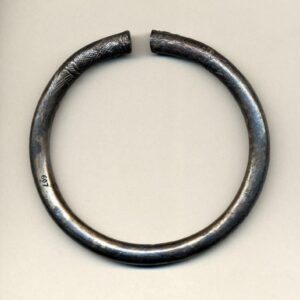
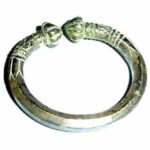
Celtic tribes utilized silver extensively alongside bronze to craft decorated brooches, torcs, and lunulae. Prior to Roman contact, the Celts relied on "ring money"—standardized rings of silver, copper, bronze, or gold used exclusively as currency rather than personal adornment.
With the collapse of Roman supply lines, gold grew scarce in Europe, elevating silver to the preeminent metal for jewelry and decorative objects. Germanic and Anglo-Saxon jewelry shifted toward functional items such as fibulae, disc brooches, penannular brooches, and belt buckles, frequently crafted from silver, gilded, or inlaid with garnets and niello.
The 9th-century Fuller Brooch, housed in the British Museum, exemplifies this mastery. Crafted from hammered sheet metal with extensive niello inlay, the circular brooch features intricate personifications of the Five Senses surrounded by geometric animal and human motifs symbolizing Creation.
As Viking expeditions brought vast quantities of silver into Scandinavia around 800 AD, silversmithing traditions flourished. This momentum was further sustained by the discovery of Swedish silver deposits around the turn of the first millennium. As European society stabilized and trade routes to the East reopened, gold reclaimed its status as the premier metal for elite jewelry. Nevertheless, this economic expansion fostered a prosperous middle class capable of adorning themselves with more affordable silver alternatives, driving innovations in decorative and symbolic jewelry. By the close of the Middle Ages, the trade in silver goods became subject to formal assaying and hallmarking regulations.
The Renaissance and the Age of Exploration
The Renaissance brought profound cultural and economic shifts across Europe, fueled by recovering populations, expanding trade networks in the North Sea and the Levant, and the dissemination of classical knowledge following the fall of Constantinople in 1453.
The Age of Exploration dramatically altered the global economy. Following Christopher Columbus’s expeditions, Spanish, Portuguese, French, English, and Dutch explorers vied for dominance in the New World. Conquistadors like Pizarro and Cortés subdued the Incan and Aztec empires, unlocking massive silver deposits—most notably in Mexico starting in 1546. This unprecedented influx of American silver sustained European currencies and ensured a steady supply of affordable precious metal for jewelry and decorative arts, with some shipments even traveling directly across the Pacific to secure Asian commodities.
The Baroque and Georgian Eras
During the Baroque period, South American silver continued to flood European markets. Nations like England, France, and the Netherlands established robust colonial networks, competing fiercely for control of trade routes and treasure fleets.
While core silver-working techniques remained stable, stylistic applications evolved. Portable timepieces emerged as novel status symbols frequently housed in silver cases. More significantly, silver began to be utilized in gemstone settings, particularly for diamonds. Direct trade routes established with India allowed European jewelers to acquire diamonds in quantities previously unattainable, bypassing traditional middlemen. The bright white luster of silver perfectly complemented the colorless sparkle of these stones.
This diamond-setting trend accelerated during the Georgian era, sustained by continued South American production and the discovery of rich diamond deposits in Brazil in 1727. While fine jewelry was often constructed with gold backs and silver-topped fronts, all-silver pieces and specialized cut-down collet settings remained common. Furthermore, the introduction of die-striking technology in 1777 revolutionized manufacturing. By utilizing presses, drop hammers, and metal dies to stamp and cut components for manual assembly, manufacturers produced the world’s first mass-market jewelry lines. This cost-effective technique made silver ornamentation accessible to a broader demographic than ever before.
The Victorian Era and Industrialization
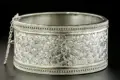
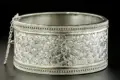
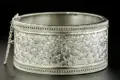
The Industrial Revolution brought mechanization to the forefront of jewelry production. Die-striking and stamping techniques, pioneered in the late Georgian period, were perfected throughout the Victorian era, allowing for the large-scale manufacture of silver jewelry.

Cultural shifts also dictated design trends. Following Queen Victoria and Prince Albert’s acquisition of Balmoral Castle in 1848, Scottish agate jewelry surged in popularity, predominantly executed in silver in keeping with Northern European traditions.
Towards the end of the Victorian period, the Arts and Crafts movement emerged as a direct reaction against the mass industrialization of decorative arts. Prioritizing artistic integrity and hand-crafted execution over the intrinsic material value of metals and gemstones, Arts and Crafts artisans favored silver over gold. They embraced bezel-set cabochon stones, creating a distinct aesthetic that celebrated the timeless versatility of silver and secured its enduring legacy in the history of human adornment.