





Silver, a brilliant white metallic element designated by the symbol Ag on the Periodic Table, has occupied a central role in human civilization for millennia. While harder than gold yet softer than copper, silver ranks second only to gold in its exceptional malleability and ductility. It is also an extraordinary conductor of heat and electricity. Classified as a noble metal due to its remarkable resistance to oxidation, silver has historically served as a cornerstone for the production of fine jewelry, intricate coinage, and exquisite objets d’art. Because pure silver is inherently soft, artisans have traditionally alloyed it with other metals to provide the structural integrity required to maintain intricate shapes and fine details.
Although modern markets often price silver well below precious metals like gold or platinum, viewing it as secondary would be a profound historical misconception. At various junctures throughout history, silver commanded a higher value than gold. When evaluating the sheer quantities utilized in jewelry manufacture across the ages, silver outpaces all other precious metals by a vast margin. Furthermore, this versatile white metal has historically driven far more technological innovation in mining and metallurgy than its metallic counterparts. Entire economies have risen and fallen on the availability of silver, and access to its deposits has frequently shifted the tides of war and altered the course of human history.
Bronze Age Origins and Early Significance
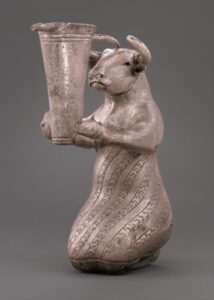
The historical narrative of silver begins near the end of the fourth millennium BC, when innovative inhabitants of modern-day Turkey discovered a method to extract silver from lead through the process of cupellation. While surviving artifacts from this nascent period are exceedingly rare, those that remain offer a profound window into the sophisticated capabilities of Bronze Age silversmiths.
At the dawn of written history, silver functioned as a vital currency throughout Mesopotamia. Rather than circulating as standardized coins, it was measured strictly by weight or shaped into rings. The workshop of a Mesopotamian silversmith closely mirrored—and frequently overlapped with—that of the goldsmith. Although silver possesses slightly less ductility than gold and demands more frequent annealing during crafting, it can be seamlessly cast, hammered into translucent sheets, engraved, embossed, worked in repoussé, and adorned with delicate filigree and granulation. Archaeological discoveries of ancient vessels, statuettes, and jewelry confirm that high-purity silver was regularly utilized to craft these delicate objects.
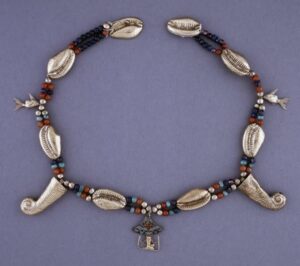
In ancient Egypt, where rare and exotic materials commanded immense prestige, silver was prized above all for its scarcity. While Egyptians could source gold locally from the mountains of the Eastern Desert and Nubia, pure silver had to be imported over perilous trade routes, such as those that also brought prized Lapis lazuli from distant Afghanistan. Consequently, early Egyptian silver was valued more highly than gold and remained the exclusive preserve of the elite.
By approximately 1600 BC, however, the global supply of silver had expanded significantly, causing its market value to decline to roughly half that of gold. By this era, it functioned as an abstract currency of relatively stable value. Yet, its popularity fluctuated with shifting fashions; the tomb of King Tutankhamun contained very few silver items, whereas later pharaohs, such as Sheshonq II, were entombed with magnificent all-silver sarcophagi.
The Minoans and Mycenaeans actively engaged in Mediterranean trade, frequently handling substantial quantities of silver. This commercial activity is clearly reflected in the early Greek silver jewelry recovered from archaeological sites across the Greek mainland, Crete, and Cyprus. Meanwhile, the Phoenicians played a transformative role in Mediterranean civilization through their extensive maritime colonization and commerce. By initiating the large-scale exploitation of rich Spanish silver deposits and distributing the metal throughout the classical world, the Phoenicians helped transition silver from an exclusive, exotic commodity into a widely accessible resource.
Classical Era and Roman Opulence
For both ancient Greek and Roman societies, a reliable supply of silver was paramount, as their monetary systems relied entirely on properly minted silver coinage. Although archaeological excavations have yielded far more surviving gold jewelry from this era—partly due to the frequent remelting and recycling of silver items—the surviving pieces demonstrate that silver was employed for every conceivable category of ornament, including finger rings, anklets, and armlets.
Romans developed a particular fondness for niello, a surface decoration technique closely resembling enameling but utilizing silver sulfate instead of glass. Niello proved significantly more durable than traditional enamel, yielding a distinctive metallic luster rather than a vitreous finish. As Roman legions marched across Northern Europe, the technique spread throughout the continent, leaving a lasting stylistic mark on Anglo-Saxon and Eastern European artifacts.
Roman perspectives on silver are vividly preserved in the writings of Pliny the Elder. In his seminal Naturalis Historia, Pliny documents the Roman obsession with the metal, detailing deep-shaft mining operations in Spain, where Hannibal’s ancient mines still produced hundreds of pounds of silver daily. He also outlines the various methods Romans used to test the purity of silver plate, the dizzying sums wealthy citizens paid for works by master artisans such as Mentor, and the staggering display of conspicuous consumption that saw emperors and elites plate everything from banqueting couches to carriage wheels in precious metals.
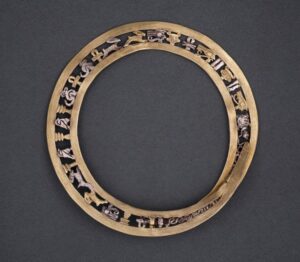
Celtic and Medieval Transformations
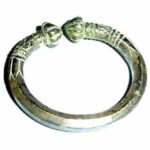
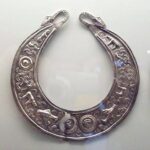
Celtic tribes utilized silver extensively alongside bronze to fashion decorated brooches, torcs, and lunulae. Prior to the Roman incursions, Celtic economies relied on "ring money"—rings composed of silver, copper, bronze, or gold that served exclusively as currency rather than personal adornment.
Following the collapse of Roman supply lines, gold grew exceedingly rare in Western Europe, allowing silver to ascend as the preeminent metal for jewelry. Germanic jewelry during this period consisted primarily of functional items such as fibulae, disc brooches, penannular brooches, and belt buckles fashioned from silver, occasionally gilded or inlaid with gemstones, with garnets reigning as the absolute favorite.
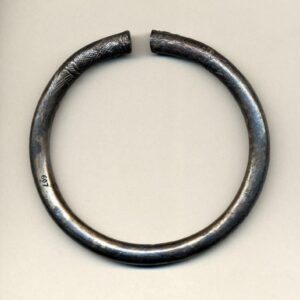
Around 800 AD, Viking military campaigns and trade along the northwestern European coast funneled monumental quantities of silver into Scandinavia, where silversmithing blossomed into a vibrant cultural tradition. This influx was further amplified around the turn of the first millennium by the discovery of major Swedish silver deposits. The Germanic tribes enthusiastically adopted the Roman tradition of niello, utilizing the stark black-and-white color contrast to accentuate intricate native engraving styles, as famously exemplified by the ninth-century Anglo-Saxon Fuller Brooch housed in the British Museum.
As European society evolved and trade routes to the East reopened, gold reclaimed its historic position as the preferred metal for elite jewelry. Nonetheless, expanding trade networks simultaneously nurtured a prosperous middle class eager to adorn themselves in ways previously reserved for monarchs. For those operating on a tighter budget, silver jewelry offered an accessible and stylish alternative. The repertoire of silver ornaments expanded beyond purely functional pieces to encompass decorative and symbolic items such as finger rings, bangles, and pendants. By the late Middle Ages, the proliferation of silver trade necessitated the establishment of formal assaying and hallmarking systems to guarantee metal purity.
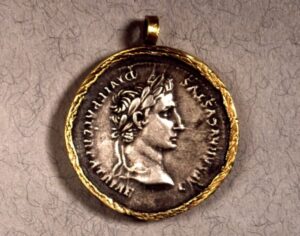
Renaissance and Baroque Expansion
The Renaissance witnessed a profound cultural and economic revival across Europe, fueled in part by recovering populations, expanding northern trade centers, and the dissemination of classical knowledge following the fall of the Byzantine Empire in 1453. However, the most transformative catalyst for silver was the Age of Discovery. Following Christopher Columbus’s historic voyages, Spain spearheaded European exploration and conquest in the New World.
The dramatic subjugation of the Inca and Aztec empires by conquistadors like Pizarro and Cortés brought vast territorial wealth under Spanish control. From 1546 onward, monumental silver deposits discovered in regions such as modern-day Mexico flooded global markets. While much of this treasure remained in Europe to sustain growing economies and finance trade, a significant portion was transported directly across the Pacific to secure Asian commodities.
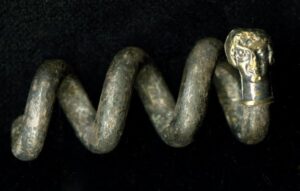
While fundamental silverworking techniques remained largely unchanged from the medieval period, the unprecedented abundance of the metal ensured that silver remained a staple of both monetary systems and affordable fine jewelry.
During the Baroque period spanning the seventeenth century, European powers including England, France, and the Netherlands established permanent footholds in the Americas, fiercely competing for control of lucrative silver fleets returning from the New World. While silver manufacturing methods remained stable, the era introduced notable novelties. Portable timepieces emerged as technological marvels frequently housed in silver cases. Furthermore, the burgeoning direct trade with India—facilitated by European trading posts established along the Indian subcontinent—paved the way for a revolutionary stylistic pairing: setting diamonds in silver. The cool white tone of the metal perfectly complemented the absence of color in the newly arriving diamonds, bypassing the Arabic middlemen of earlier centuries and establishing a lasting aesthetic trend.
Georgian and Victorian Innovations
The Georgian era was characterized by a booming South American silver supply and an insatiable market for diamond jewelry. The practice of setting diamonds in silver, established during the Baroque period, became standard practice. Because vast quantities of diamonds were continuously imported from India and, after 1727, from newly discovered deposits in Brazil, jewelers routinely utilized silver-topped gold or entirely silver settings. The classic cut-down collet settings characteristic of Georgian jewelry were almost exclusively crafted from silver to accentuate the brilliant white fire of the stones.
A major technological leap occurred in 1777 with the introduction of die striking. This innovative manufacturing technique involved stamping and cutting precious metal components using specialized dies, presses, and drop hammers, which artisans then assembled by hand. This cost-effective production method birthed the world’s first mass-produced jewelry lines, making items significantly more affordable than traditional handmade pieces. As boatloads of silver arrived in Europe, vast quantities of die-struck silver jewelry flooded commercial markets.
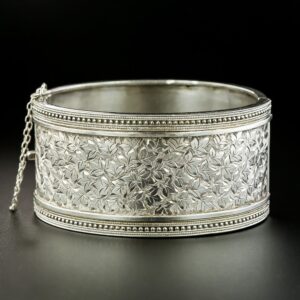
During the Victorian era, the Industrial Revolution accelerated these manufacturing advances, embedding silver deeply into mechanized stamping and die-struck production. Following Queen Victoria and Prince Albert’s acquisition of Balmoral Castle in 1848, Scottish agate jewelry surged into international fashion, predominantly executed in silver in keeping with Northern European traditions.
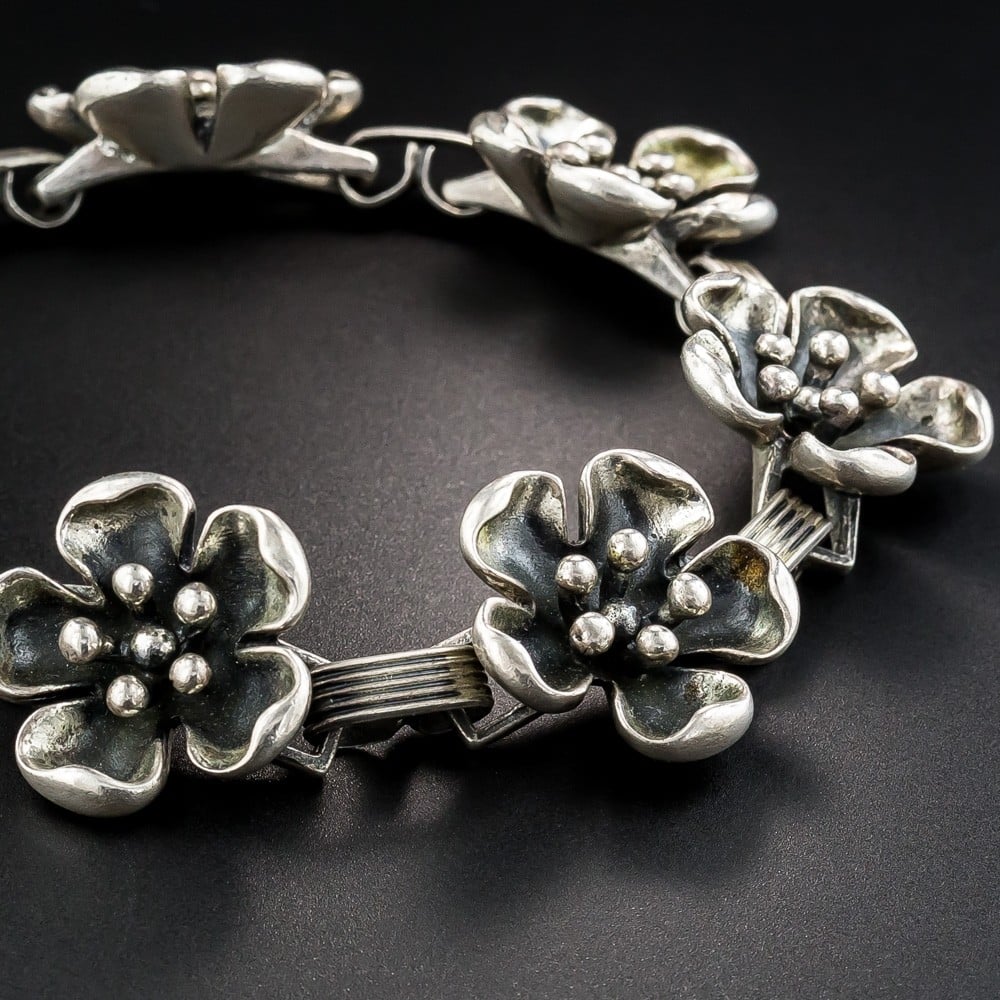
Toward the close of the Victorian period, the Arts and Crafts movement emerged as a direct ideological reaction against the industrialization of jewelry production. This sub-period prioritized artistic design and hand-craftsmanship over the intrinsic material value of precious metals and gemstones. Arts and Crafts artisans favored cabochon-cut stones secured in simple bezel settings, overwhelmingly choosing silver over gold to realize their distinct aesthetic vision.