




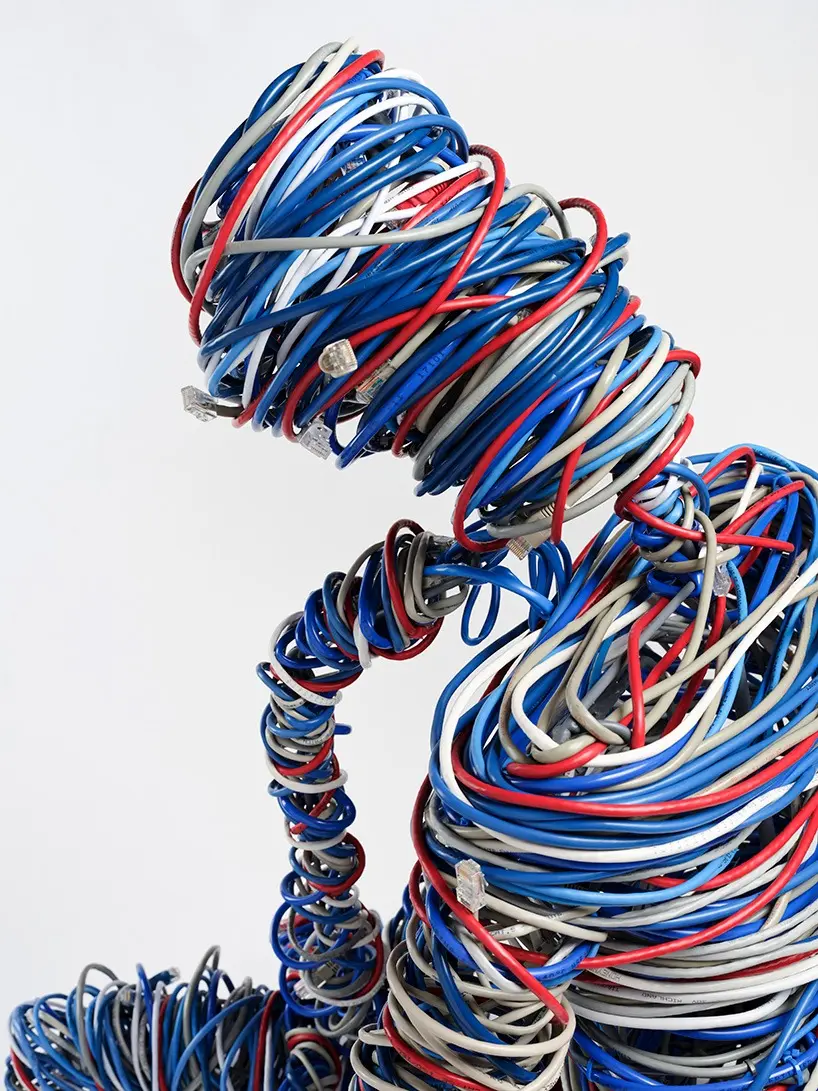
In the contemporary art and design landscape, few endeavors are as compelling as those that manage to bridge the gap between classical art history and the hyper-modern materials of the digital age. This dynamic intersection is precisely what artist Kasey McMahon achieves in her striking sculptural work, which reimagines one of the most famous seated poses in Western art history through an unconventional, network-based medium. By utilizing steel network cables as her primary structural and aesthetic material, McMahon creates a profound visual and conceptual dialogue between timeless human introspection and the invisible, yet omnipresent, digital architectures that bind modern society together.
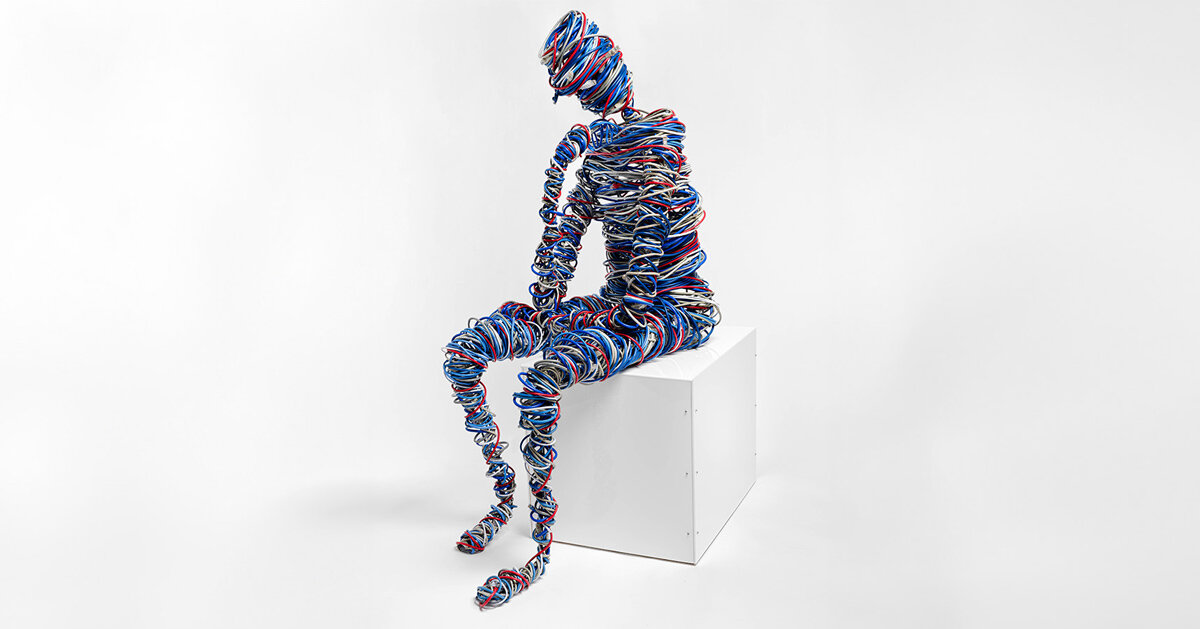
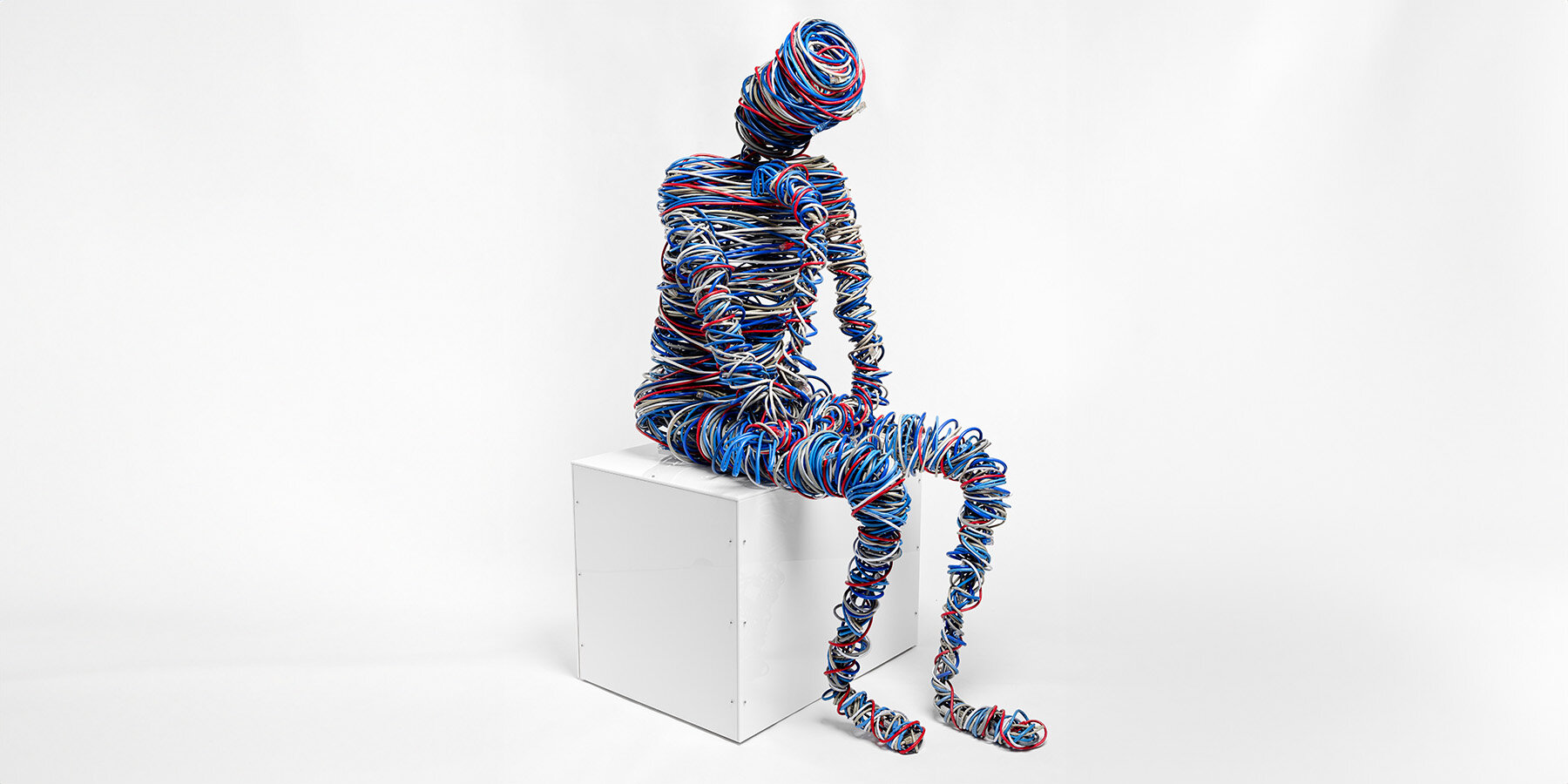
The core power of McMahon’s piece lies in an intentional and striking material contrast. At first glance, the familiar, contemplative silhouette instantly evokes Auguste Rodin’s iconic masterwork, The Thinker, a universal symbol of deep human thought, philosophy, and existential reflection. Yet, upon closer inspection, the traditional bronze or marble surface is entirely absent. Instead, the sculpture is constructed from intricately woven, coiled, and bundled steel network cables. This unexpected choice of medium transforms a classical study of human anatomy and internal rumination into a tangible manifestation of data flow, connectivity, and technological infrastructure. The rigid yet flexible nature of the steel cables allows the artist to sculpt muscle, shadow, and contour with surprising fidelity, while simultaneously imbuing the human form with the cold, industrial aesthetic of telecommunications.
This provocative sculpture arrives within a broader cultural moment where contemporary artists are increasingly looking to reinterpret historic institutions, architectural landmarks, and canonical artworks through modern lenses. The art world has recently seen a wave of high-profile commissions and multidisciplinary exhibitions that similarly challenge viewers to reconsider how contemporary materials interact with historical spaces and concepts.
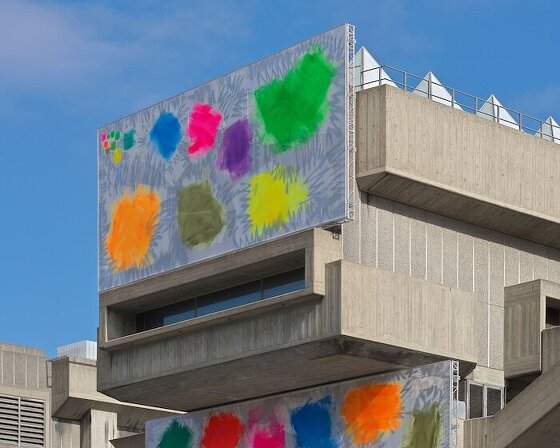
Among these contemporary cultural developments is a major intervention in London, where Swiss artist Renée Levi has brought her signature fluorescent painting to the brutalist facade of the Hayward Gallery. Commissioned by Audemars Piguet Contemporary, Levi’s temporary installation transforms the raw concrete and industrial mesh of the iconic Southbank Centre building into a vibrant, glowing canvas. Shaped closely by the surrounding architecture, the constant movement of the city, and changing daylight conditions, Levi’s work demonstrates a parallel interest in marrying industrial substrates with expressive, contemporary artistic interventions.
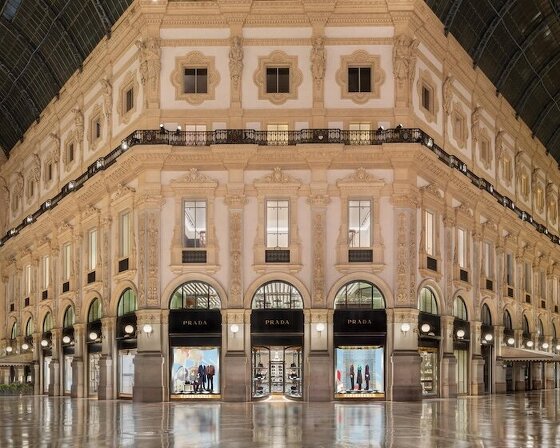
Similarly, the dialogue between history, commerce, and contemporary spatial design is currently unfolding in Milan through the ambitious debut of the Prada Galleria. Spanning an impressive eight floors inside the historic Galleria Vittorio Emanuele II, this multifaceted destination seamlessly weaves together fashion, art, history, and culinary tradition. By uniting retail spaces, the historical archive exhibition Pradasphere, the historic pastry shop Marchesi 1824, and programming from Fondazione Prada under one roof, the project acts as a living monument to how contemporary luxury brands can activate and reinterpret historical urban architecture for modern audiences.
In the realm of visual history and cultural preservation, contemporary projects are also turning toward underrepresented or overlooked artistic movements to recontextualize the past. A notable example is the collaborative effort between GUNIA and Assouline, which has assembled a comprehensive visual history of Ukrainian folk art in the publication Naïve My Love: Ukrainian Folk Art of the 20th Century. Gathering rare paintings, textiles, decorative objects, and other artifacts through years of rigorous field research across Ukraine, the project preserves and celebrates a rich vernacular tradition, offering a poignant reminder of the enduring power of cultural heritage amidst the changing tides of history.
Further pushing the boundaries of monumental public art and architectural storytelling, French artist JR recently captured global attention by deploying a massive, 70-meter-wide trompe-l’œil wave across the neoclassical facade of the Vatican Apostolic Library. Titled Diluvium, JR’s striking installation plays directly with the institution’s historical anxieties, transforming the ultimate conservation fear of water damage into a breathtaking, monumental image that ripples across centuries-old stonework. Whether through colossal public installations on historic libraries or intimate sculptural reinterpretations of canonical figures, contemporary artists continue to find innovative ways to make viewers question the boundaries between the physical and the conceptual.
Kasey McMahon’s network-cable sculpture fits seamlessly into this wider discourse, using the language of modern industry to comment on the condition of modern humanity. As society becomes increasingly reliant on digital networks, cloud infrastructure, and invisible webs of communication, works like The Thinker prompt a vital inquiry into what it means to think, feel, and reflect in a hyper-connected world. By translating the internal monologue of Rodin’s classic figure into the literal cables that carry global information, McMahon offers a brilliant physical metaphor for the modern mind—one that is deeply human at its core, yet inextricably wired into the vast technological grid of the twenty-first century.