


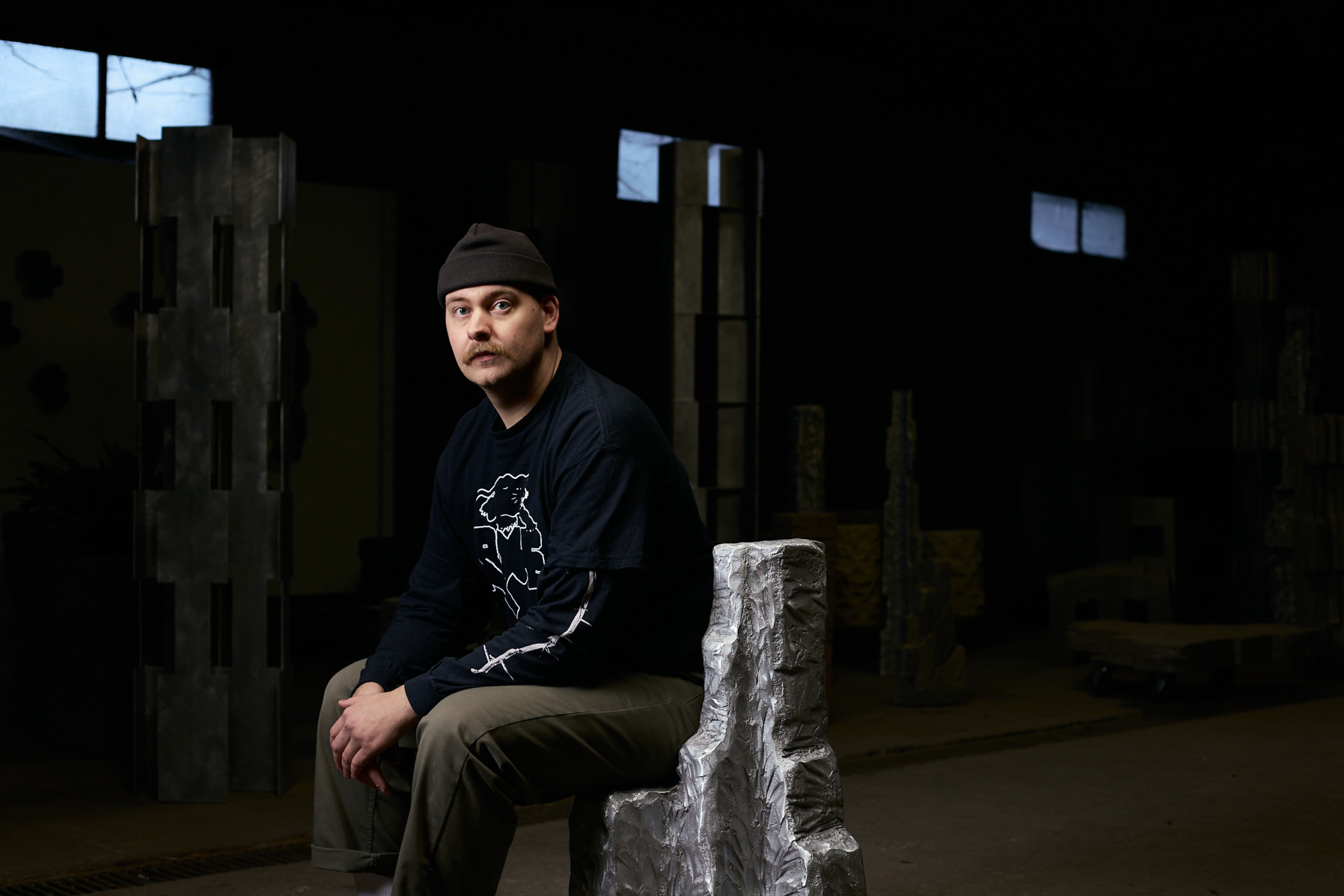
Long before he was exhibiting tactile, architectural objects in galleries across Europe or collaborating with luxury houses like Bottega Veneta and Kelly Wearstler, Bram Vanderbeke harbored a very different vocational dream. As a child growing up in Belgium, he wanted nothing more than to be a bricklayer. That early fascination with the rhythm of mortar and masonry ultimately steered him toward studies in woodwork and construction, laying the physical and conceptual groundwork for a career that would effortlessly bridge the realms of fine art, contemporary design, and structural architecture.
After pursuing formal design studies at the Royal Academy of Fine Arts in Ghent and subsequently graduating from the prestigious Design Academy Eindhoven, Vanderbeke pivoted his hands-on talents away from traditional construction and directly into the art and design world of his hometown. Today, his practice explores the profound, tactile relationship between an object, its architectural environment, and its ultimate user. Focusing intensely on raw materiality, stark form, and uncompromised function, his sculptural work consistently challenges the boundaries of traditional disciplines, resulting in creations that feel simultaneously ancient and fiercely contemporary.
“I just loved how architecture, art, and nature can merge so well with each other,” Vanderbeke reflects, pointing to Insel Hombroich—a renowned museum and sculpture park nestled in Neuss, Germany—as a lasting source of creative inspiration. Returning to the site across different seasons, the designer has long been struck by how the shifting, living landscape radically transforms the human experience of space and sculpture.
Perhaps surprisingly to those accustomed to the polished aesthetic of collectible design, Vanderbeke’s creative DNA is also deeply informed by the raw energy of hardcore punk. “I grew up in this subculture, which is built on DIY shows and a very close community,” he explains. That foundational DIY ethos and the relentless motivation to simply make things happen resonate powerfully with his hands-on studio approach, where he frequently acts as both designer and builder.

This fall, Vanderbeke’s expansive vision was on full display in Cavea, a major group exhibition featuring more than 70 works by over 40 distinct designers. The showcase was co-organized by the Brut Collective—the influential Belgian collectible design group that Vanderbeke helped cofound in 2018—alongside DesignUnDisciplined. Beyond his collaborative group efforts, Vanderbeke’s recent output includes bespoke designs for the newly reopened museum shop at the Design Museum Gent, alongside high-profile commercial commissions for luxury fashion and interior icons such as Bottega Veneta, Kelly Wearstler, Pieter Mulier, and Lore Van Keer.
For a recent installment of the Friday Five column, we spent five minutes with Vanderbeke to delve into the intricate design process behind his latest cross-disciplinary endeavor: a striking collaboration with Belgian jeweler Lore Van Keer centered on the Anthology Side Table and Stool.

Anthology Side Table/Stool from the LVK x BV Collection
In an innovative union of furniture and jewelry design, Vanderbeke and Lore Van Keer have teamed up to explore the intersections of form, structure, and material. The resulting LVK x BV collection features two distinct pieces: a delicate silver necklace and a bold, sculptural stool produced in strictly limited editions of 20 and eight pieces, respectively.
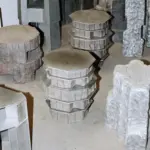
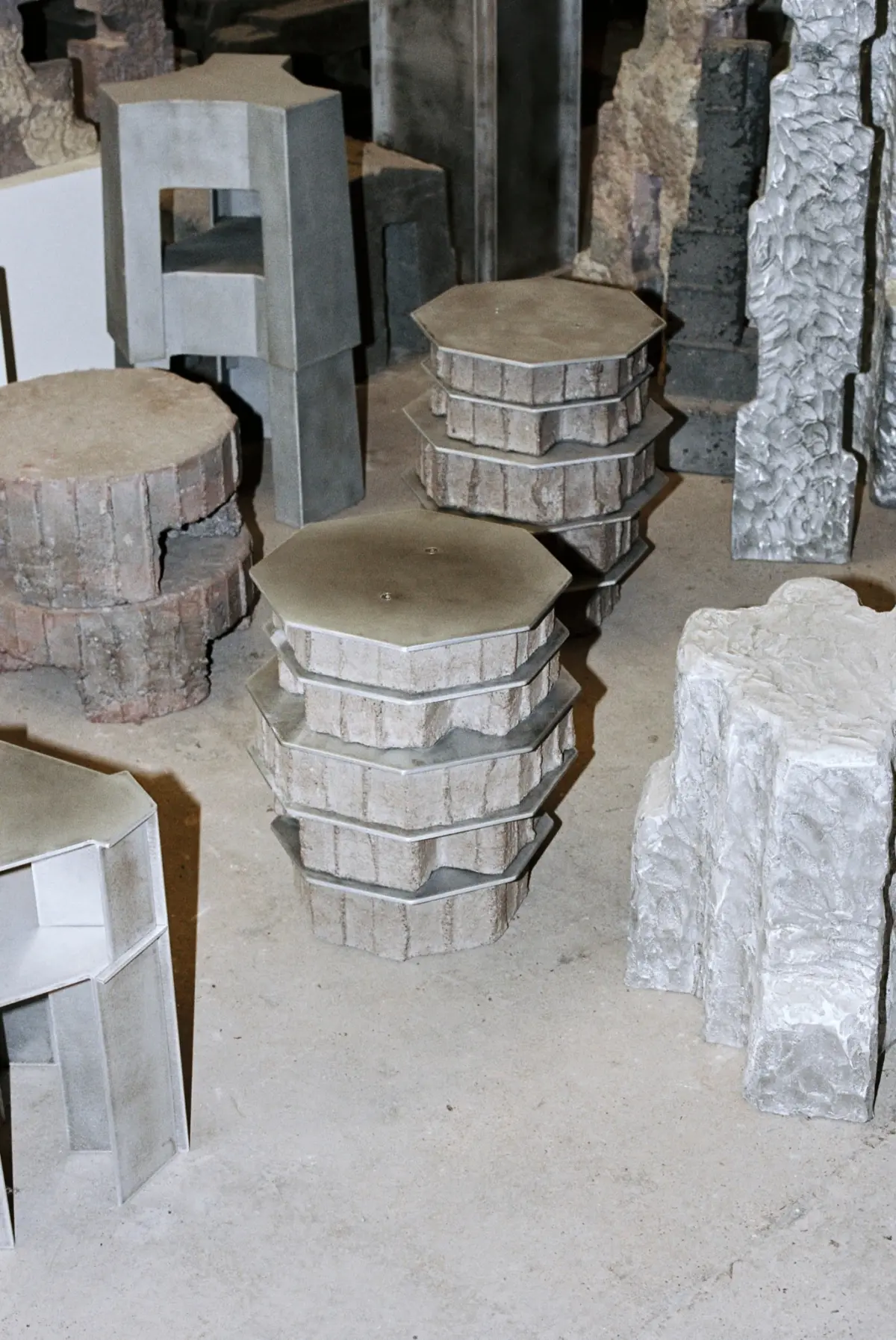
The highly tactile stool features a striking composition of alternating layers of cast concrete and aluminum. Handcrafted meticulously within Vanderbeke’s Belgian atelier, each individual piece requires the construction of a brand-new mold, ensuring that every single iteration is entirely unique. Engineered for both indoor and outdoor spatial integration, the stool-slash-table is produced strictly on a made-to-order basis, bridging the gap between functional seating and collectible art.

What Inspired the LVK x BV Anthology Side Table/Stool?
Stacked Geometry
The genesis of the project occurred when Lore Van Keer invited Vanderbeke to reinterpret her signature Anthology jewelry collection into a three-dimensional furniture object. “I liked the stacked shapes of the collection,” Vanderbeke explains of the initial design spark. “She also plays with circles and hexagon shapes, which I translated into the shapes of the Anthology Side Table.”
Specifically, Van Keer’s Anthology 10 ring provided the primary visual cue. The ring’s rhythm of stacked forms and precise geometric structures served as a blueprint for Vanderbeke to scale up these micro-architectural elements into a heavy, functional object. By alternating layers of industrial concrete with smooth aluminum, he achieved a layered compositional rhythm that dictates the entire visual identity of the piece.

Architectural Layers
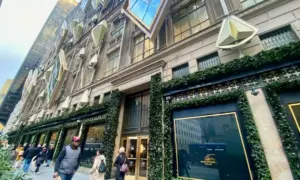
When conceptualizing the physical volume and layering of the furniture piece, Vanderbeke found guidance in a dog-eared monograph he keeps close at hand in his studio: Isamu Noguchi’s A Sculptor’s World. The seminal volume highlights the spectacular ceiling and cascading waterfall that Noguchi famously designed for the lobby of 666 Fifth Avenue in New York City before its controversial removal in 2020. Taking direct note of the lobby ceiling’s striking layers of parallel aluminum slats, Vanderbeke integrated a similarly rhythmic, layered approach into the structural execution of the Anthology piece.
Ancient Forms
Beyond mid-century modern architectural milestones, Vanderbeke’s conceptual palette draws heavily from the distant past. “I’m always inspired by excavations and ruins,” the designer notes, “especially the rough stacked shapes of the Roman columns and their textures.” This fascination with ancient structural engineering connects seamlessly to his broader body of work, including his acclaimed Cast Bricks collection, which shares a direct lineage with the material honesty of the Anthology side table.

Building Blocks
At the core of Vanderbeke’s methodology is an ongoing exploration of raw construction materials. For his related Brick Chair, the designer arranges ordinary, industrial bricks in methodical yet profoundly intuitive compositions, carefully crafting negative spaces that ultimately function as bespoke molds for his architectural furniture. This straightforward, labor-intensive technique serves as a direct nod to the foundational methods construction workers employ when laying the groundwork for a building—bringing Vanderbeke’s creative journey full circle back to the childhood ambitions of a young boy in Belgium who simply wanted to be a bricklayer.