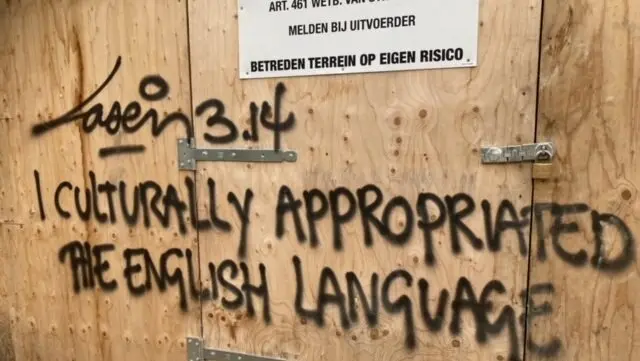
Moving to a new country is an exercise in adaptation, requiring newcomers to navigate unfamiliar transit systems, complex bureaucratic frameworks, and entirely new cultural norms. For international arrivals in the Netherlands, this cultural immersion often begins before they have even fully unpacked their suitcases, starting with a rapid and involuntary absorption of local vocabulary. Whether stepping off a trans-Atlantic flight, rolling out of a train carriage at Amsterdam Centraal, or disembarking from a North Sea ferry, foreigners quickly find that certain Dutch words effortlessly infiltrate their daily speech, eventually replacing their English equivalents entirely.
Linguists and long-term residents alike have long observed this linguistic phenomenon, which serves as a fascinating marker of integration. Among the very first terms to enter an expat’s lexicon is lekker, a word that defies simple translation while anchoring itself at the center of Dutch daily life. Serving as the primary descriptor for nearly anything positive, pleasant, or satisfying, lekker can be applied to a diverse array of experiences. Newcomers quickly learn to order a lekker broodje for lunch, remark on the lekker weer when the sun finally breaks through the grey clouds, or describe intimate moments with the phrase lekkere sex. Its versatility makes it indispensable, bridging the gap between mere description and genuine appreciation of comfort.
Equally pervasive in the social lives of newcomers is the concept of the borrel. For reasons that remain delightfully opaque to outsiders, the Dutch rarely invite colleagues or acquaintances simply out for drinks; instead, social gatherings and after-work unwinding are invariably framed as having a borrel. For those integrated into the local corporate world, this tradition reaches its institutional peak on Friday afternoons with the vrijmibo, an abbreviation of vrijdagmiddagborrel. This end-of-the-week social ritual marks the official transition from professional responsibilities to the weekend, cementing itself as a sacred fixture of office culture across the country.
Beyond social interactions, the bureaucratic realities of living in the Netherlands ensure that administrative vocabulary is acquired with startling speed. Chief among these is btw, an acronym that newcomers quickly learn to pronounce in the traditional Dutch fashion as bay-tay-vay. Rather than adopting its English text-message meaning of "by the way," residents quickly understand that btw refers strictly to sales tax or value-added tax on goods and services. Closely trailing this financial term is belasting, the broader word for tax. Given the notoriously robust tax structures and the significant contributions residents make to the public purse in the Netherlands, it comes as little surprise that both btw and belasting become permanently etched into the vocabulary of every taxpayer within weeks of arrival.
Interactions with local authorities further accelerate this linguistic adoption. Rather than referring to the municipal offices by their English terms, internationals quickly transition to discussing the gemeente. Whether registering a new address, applying for a parking permit, or collecting official documents, residents find themselves in frequent contact with the friendly personnel at the town hall, making gemeente a standard household term. Similarly, when minor medical needs arise, expats frequently bypass the standard English word for pharmacy, finding that apotheek slips effortlessly into conversation, sitting naturally alongside the term makelaar, which designates the real estate professionals who assist newcomers in finding housing—frequently accompanied by characteristically high fees.
Communication habits also undergo a subtle shift over time. After spending a few weeks in the country, internationals notice that the English verb "to phone" or "to call" is largely abandoned in favor of the Dutch root bel. It becomes entirely natural to inform friends or colleagues that "I’ll bel you tonight." However, newcomers soon learn to decode the nuances of local phrasing, particularly the phrase we bellen. When uttered by a Dutch acquaintance, this seemingly reassuring promise can carry ambiguous weight, often signaling that a phone call will materialize at some unspecified point in the future—or perhaps never at all.
Economic and professional life introduces other distinctive terms that neatly bundle complex concepts into single words. A prime example is horeca, a remarkably handy blanket term derived from the initial syllables of hotel, restaurant, and cafe. Widely used to describe the hospitality and catering industry, particularly when discussing employment or economic sectors, it represents a level of linguistic efficiency that observers note the rest of the English-speaking world could easily adopt. Meanwhile, the humble English pocket diary or digital planner is almost instantly rebranded as an agenda. There is simply no escaping this transformation; appointments are invariably made in one’s agenda, and scheduling a routine meeting three weeks out at 2:30 PM requires a solemn consultation of this indispensable tool.
Recreational habits are similarly reframed by local terminology. Once an expat is fully settled into the rhythms of Dutch life, traditional references to going on a skiing holiday tend to vanish. Instead, residents announce they are going on wintersport, a transition that holds true even if the traveler spends considerably more time enjoying the social atmosphere of the après-ski than actually carving down the mountain slopes.
Of course, daily life in a densely populated and highly digitized country inevitably brings technical hiccups, leading to quick mastery of the word storing. When a regional train fails to arrive, a tram is hopelessly delayed, the home internet connection abruptly collapses, or a supermarket checkout stalls because mobile payments are offline, the root cause is almost invariably attributed to a storing. For frequent rail commuters and daily travelers, this single word encapsulates the collective sighs of frustration shared by passengers across the network.
At the heart of this linguistic journey lies gezellig, arguably the most famous and untranslatable cornerstone of Dutch culture. Encompassing notions of coziness, warmth, fun, and a welcoming atmosphere, gezellig is more than a mere adjective; it is a cultural benchmark that underpins how the Dutch evaluate social spaces, home interiors, and interpersonal gatherings. Understanding this single concept is widely considered essential to truly grasping the social fabric of the Netherlands, proving that mastering the local vocabulary involves far more than simply swapping words—it requires embracing a distinct way of living.