





E-commerce giant Shopify has announced the launch of Canvas, a new site-building tool that allows merchants to set up and design their digital storefronts entirely through conversation with artificial intelligence. Revealed on Thursday, the new feature marks a significant evolution in how online stores are conceptualized, built, and customized, lowering the technical barriers traditionally associated with web design.
While Shopify has long provided a capable no-code site builder, building and tailoring a store through that traditional interface typically involved selecting a theme and manually rearranging a modular system of sections and blocks. Merchants looking to execute deeper, more tailored customizations often found themselves forced to edit underlying code directly or hire professional developers to achieve their vision.
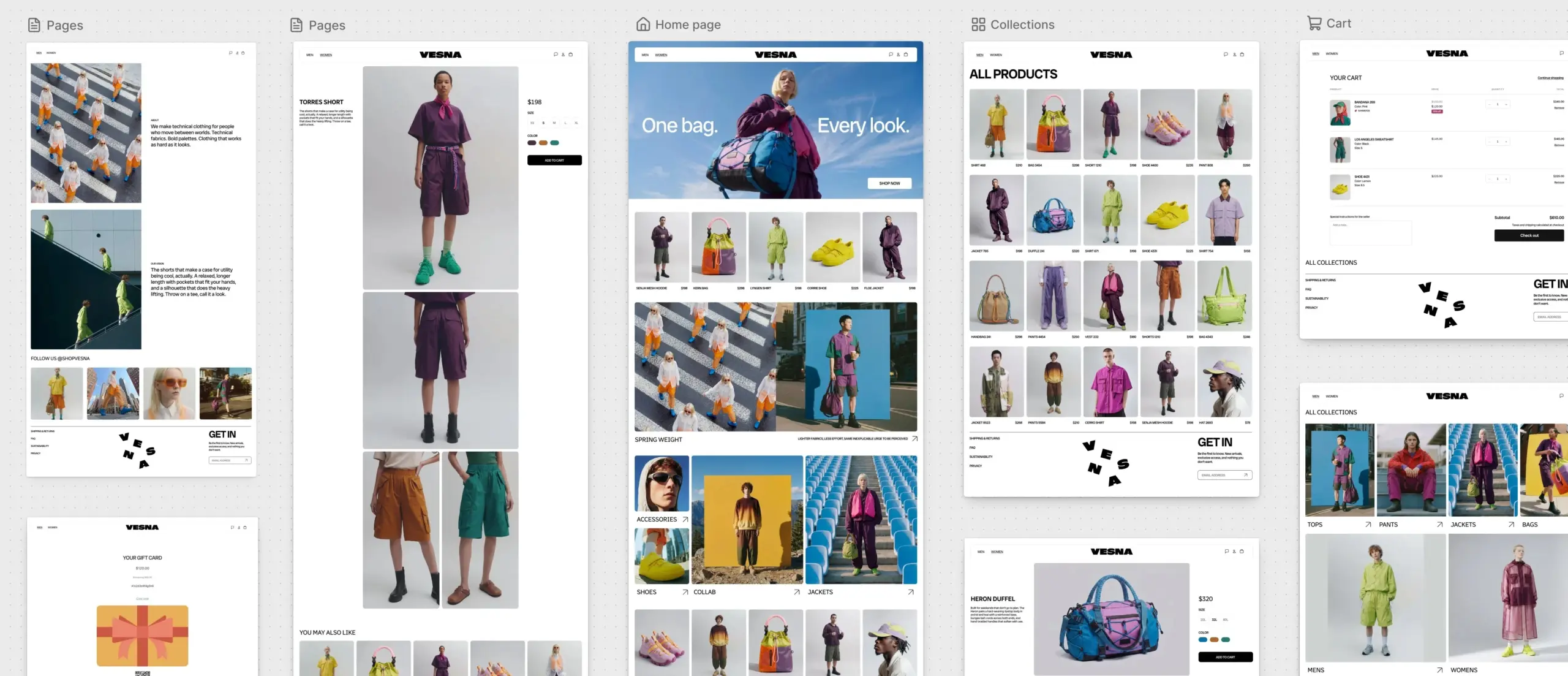
Canvas changes this dynamic by integrating directly with Shopify’s existing AI agent, Sidekick. Instead of manually navigating menus or rearranging blocks, merchants simply chat with Sidekick to bring their desired store layout to life. As the conversational AI processes requests and makes alterations, Canvas displays the results in real time. This allows merchants to observe how the overall store environment comes together dynamically, or zoom in closely to evaluate specific details and micro-interactions.
Crucially, Shopify emphasizes that this preview is not a static mockup, but rather the actual code behind the store being rendered live. This means merchants can test the page’s full interactivity, evaluate animations in real time, and inspect how pages will appear across various screen sizes and devices. To ensure a seamless collaborative process, Sidekick is also equipped to take screenshots of the work as it progresses, allowing the AI to perceive the exact visual state the merchant sees as the site updates.
The introduction of Canvas arrives as part of a broader, industry-wide shift toward a future where building and deploying a website no longer requires writing or editing code by hand. Shopify’s new tool enters a competitive landscape that already features AI-powered site-building solutions from companies such as Wix, Squarespace, Webflow, and Framer, alongside a wave of emerging vibe-coding platforms like Lovable and Replit.
Although the conversational interface will likely be the primary method of interaction, Canvas still preserves direct control for users who prefer a hands-on approach. Merchants retain the ability to click directly on individual elements on the page to make manual modifications if they choose. However, the core premise of the product is that most users will simply articulate their design goals to Sidekick in natural language.
Sidekick itself is not an entirely unfamiliar presence within the Shopify ecosystem. The AI assistant has already been deployed to help merchants write code, construct applications, customize themes, and execute various backend edits. Prior to the release of Canvas, however, those capabilities had not been synthesized into a comprehensive, unified site-building product. Canvas provides a dedicated environment where users can view their entire store at once, panning and zooming around the interface while updating the store’s actual underlying files.
To make this seamless workflow possible, Shopify engineers gave Sidekick the direct ability to interact with and modify theme files. Simultaneously, the company simplified its underlying theme architecture, making the overall structure, logic, and design of a store much easier for Sidekick to comprehend and manipulate accurately.
Because Canvas is still in the early stages of its rollout, the initial launch comes with certain limitations that the company plans to address over time. Features such as third-party theme support, app blocks and extensions, multiple markets, translations, scheduled rollouts, and routine theme updates are not included in the initial release. Additionally, the tool is currently restricted to desktop use. Shopify has indicated that support for these expanded capabilities and platforms is planned for future updates as the product matures.
Looking ahead, as Canvas becomes more robust and feature-complete, the technology holds the potential to make online entrepreneurship significantly more accessible. By bridging the gap between imagination and execution, the tool could open doors for individuals and small businesses that lack the budget for dedicated developers and designers, or simply do not have the time to learn how to code.