





Silver has long captured human imagination, sitting quietly in the shadow of gold while quietly building empires, shifting the tides of war, and driving technological revolutions. Represented on the Periodic Table by the symbol Ag, this brilliant white metallic element is harder than gold, softer than copper, and second only to gold in its exceptional malleability and ductility. As an outstanding conductor of heat and electricity and a noble metal boasting remarkable resistance to oxidation, silver’s unique properties have made it indispensable to human civilization. Historically, it has played a prominent role in the production of fine jewelry and objets d’art, nearly always alloyed with another metal to provide the structural integrity required to maintain intricate shapes and delicate details.
Despite being valued less than gold or platinum in modern markets—a disparity that often leads to the false assumption of lesser importance—silver has historically commanded immense prestige. At various points in human history, silver was valued more highly than gold. When looking at the sheer quantities utilized across antiquity, the use of silver in jewelry and ornamentation outweighs all other precious metals by a massive margin. Furthermore, this versatile white metal triggered far more technological advances in the fields of mining and metallurgy than any of its precious metallic cousins. Entire economies have risen and fallen on its availability, and access to silver deposits has repeatedly reshaped borders and steered the course of history.
Bronze Age Silver: Mesopotamia, Egypt, and the Aegean
The story of silver extraction begins near the close of the 4th millennium BC, when inventive communities in modern-day Turkey discovered a method to extract silver from lead through the process of cupellation. While surviving artifacts from this nascent period are exceptionally rare, those that remain offer profound insights into the sophisticated capabilities of Bronze Age silversmiths.
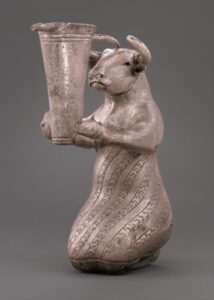
At the dawn of written history, silver functioned as an active currency in Mesopotamia. Rather than circulating as standardized coins, it was traded purely by weight or shaped into utilitarian rings. The workshop of a Mesopotamian silversmith would have closely mirrored—or indeed been shared with—that of the goldsmith. Although silver is slightly less ductile than gold and demands more frequent annealing during fabrication, it can be cast, hammered into translucent sheets, engraved, embossed, worked in repoussé, and elaborately decorated with filigree and granulation. Archaeological finds of ancient vessels, delicate statuettes, and jewelry confirm that silversmiths utilized high-purity silver, yielding remarkably soft objects.
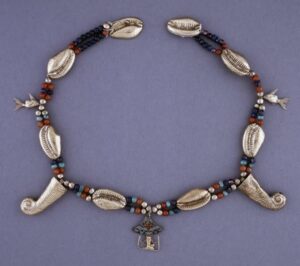
Meanwhile, the ancient Egyptians possessed an insatiable appetite for the rare, the exotic, and the distant. They went to extraordinary lengths to secure materials like Afghan lapis lazuli, which they considered perhaps their most valuable gemstone. Silver traveled along these very same trade routes into Egypt, where it was treated with equal reverence and viewed as deeply exclusive. Because gold could be sourced relatively close to home from the mountains of the Eastern Desert and Nubia—with some electrum likely originating from the same regions—pure silver had to be imported. This scarcity made silver worth more than gold, rendering it suitable only for society’s most elite figures.
By approximately 1600 BC, however, the global supply of silver had expanded considerably, causing its market value to drop to about half that of gold. Around this time, it began functioning as an abstract currency with a relatively constant value. Yet, silver’s popularity remained subject to the whims of fashion. For instance, the tomb of King Tutankhamun contained virtually no silver objects, whereas Pharaoh Sheshonq II was entombed within a striking all-silver sarcophagus.
As maritime trade flourished, civilizations such as the Minoans and, to a greater extent, the Mycenaeans engaged extensively in commerce, handling significant volumes of silver. Consequently, early Greek silver jewelry frequently appears at archaeological excavation sites across the Greek mainland, Crete, and Cyprus. Later, the Phoenicians assumed a pivotal role in Mediterranean civilization through aggressive colonization and widespread trade. It was the Phoenicians who initiated the large-scale exploitation of Spanish silver deposits, distributing the metal throughout the classical world. Their commercial incentives stripped silver of its exclusively exotic status, elevating its availability to unprecedented heights.
Classical Silver: Greece, Rome, and the Insights of Pliny
For both ancient Greek and Roman societies, a steady supply of silver was an absolute necessity. Their monetary systems depended entirely on it, anchored by properly minted silver coins. While surviving artifacts suggest that silver was used less frequently for jewelry than gold—a discrepancy partly attributable to centuries of remelting and recycling—the pieces that managed to endure reveal its application across every imaginable category of personal adornment, including finger rings, anklets, and armlets.
The Romans developed a particular fondness for niello, a surface decoration technique strikingly similar to enameling but executed using silver sulfate rather than glass. Niello proved significantly tougher than traditional enamel, offering a distinctive metallic luster rather than a vitreous finish. As Roman legions occupied Northern Europe, the technique spread rapidly across the continent, as evidenced by Anglo-Saxon archaeological finds in Britain and throughout Eastern Europe.
The Roman polymath Pliny the Elder provided an enduring, if characteristically skeptical, window into his contemporary society’s obsession with the metal in his monumental work, Naturalis Historia. Pliny documented the arduous nature of silver mining, noting that ore was exclusively found deep within the earth without external indicators like sparkling surfaces. He detailed how silver required smelting alongside lead or galena, and highlighted the staggering scale of Roman extraction operations, noting that mines initiated by Hannibal in Spain continued to yield massive quantities of silver centuries later.
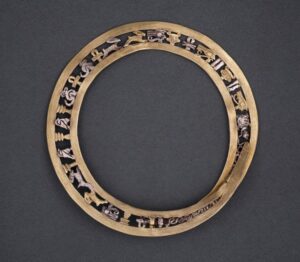
Pliny also recorded Roman methods for testing silver quality—such as observing how a piece reacted to extreme heat on an iron shovel or how pure silver instantly caught and dissipated human breath—while lamenting the staggering rise of domestic luxury. He cataloged how Romans progressed from simple earthenware to adorning banquet couches, cooking utensils, and even traveling carriages with chased silver, contrasting this modern decadence with the austere frugality of early republican heroes like Scipio Africanus and Curius Dentatus.
Celtic and Medieval Silver Traditions
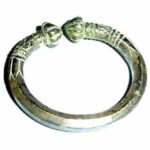
Celtic tribes utilized silver extensively alongside bronze for decorative items, with ornate brooches, torcs, and lunulae representing the most common forms of personal adornment. Prior to Roman incursions, the Celts did not utilize standardized coinage, relying instead on "ring money." Fashioned from silver, copper, bronze, or gold, these rings served strictly as a monetary medium rather than wearable jewelry.
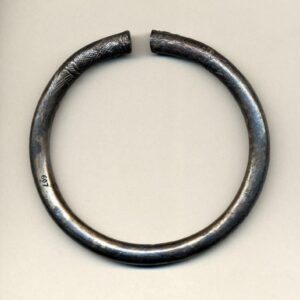
With the collapse of Roman supply lines and trade networks, gold rapidly became a rarity across Europe, propelling silver to the forefront of jewelry production. Germanic jewelry during this era favored functional items such as fibulae, disc brooches, penannular brooches, and belt buckles, typically crafted from silver and occasionally gilded or inlaid with precious stones, with garnets reigning as the absolute favorite.
From approximately 800 AD onward, relentless Viking expeditions along the northwestern coasts of Europe funneled vast quantities of silver into Scandinavia. This influx allowed local silversmiths to flourish, cementing silver jewelry as a defining cultural tradition. The subsequent discovery of rich Swedish silver deposits around the turn of the first millennium further sustained the widespread wear of silver ornaments. Furthermore, the Germanic tribes readily adopted the Roman enthusiasm for niello, utilizing the stark black-and-white contrast to accentuate intricate Germanic engraving patterns, a masterclass of which is preserved in the 9th-century Anglo-Saxon Fuller Brooch housed in the British Museum.
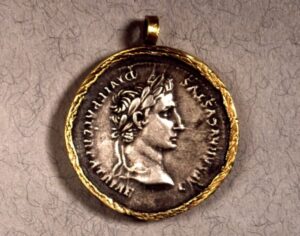
As European society evolved and trade routes to the East reopened, gold reclaimed its traditional dominance in fine jewelry. Nevertheless, this revitalized commerce fostered the growth of an emerging middle class eager to adorn themselves in fashions once restricted to wealthy rulers. Those operating on a tighter budget readily embraced silver jewelry as an accessible and attractive alternative. Over time, the scope of silver jewelry expanded from purely functional fasteners toward decorative and deeply symbolic pieces, including finger rings, bangles, and pendants. By the close of the Middle Ages, the trade in silver jewelry and silverware became heavily regulated by institutional hallmarking systems.
Renaissance, Baroque, and Georgian Developments
The Renaissance brought profound cultural shifts across Europe, fueled by population recovery, urban expansion, and the rediscovery of classical knowledge following the fall of Constantinople. The Age of Exploration that followed Christopher Columbus’s landfall in the Americas transformed global economics. Spanish conquistadors such as Pizarro and Cortés subjugated the Inca and Aztec empires, unlocking massive silver deposits—particularly in modern-day Mexico starting in 1546. This steady stream of transatlantic silver supplied European markets while establishing direct trade routes to China. While traditional silverworking techniques remained largely unchanged, the sheer abundance of metal ensured that silver remained both a vital currency and an affordable precious metal for jewelry production.
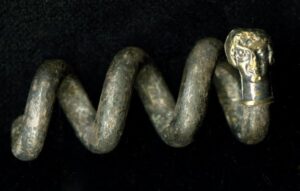
During the Baroque period spanning the 17th century, South American silver continued to flood European markets. Navies from England, France, and the Netherlands frequently clashed over treasure fleets returning from the New World. While fabrication techniques remained steady, innovative applications emerged. Portable timepieces became a significant novelty, frequently housed in silver cases. More importantly, silver began to be utilized extensively for setting diamonds. The white metal perfectly complemented the absence of color in diamonds, which were arriving in growing numbers from India following the establishment of direct trade settlements by European maritime powers.
The Georgian era witnessed an unprecedented boom in South American silver production alongside a massive influx of diamonds from both India and newly discovered Brazilian deposits in 1727. While fine jewelry frequently paired gold bases with silver-topped fronts, items composed entirely of silver remained commonplace. The characteristic cut-down collet settings of Georgian jewelry were almost universally crafted from silver to accentuate the icy brilliance of the stones they secured. Furthermore, the advent of die striking in 1777 revolutionized manufacturing. By stamping and cutting precious metal components using heavy presses and drop hammers, artisans could assemble pieces by hand, ushering in the era of mass-produced, cost-effective jewelry that brought silver ornaments to a broader consumer base than ever before.
Victorian Transformation and Industrialization
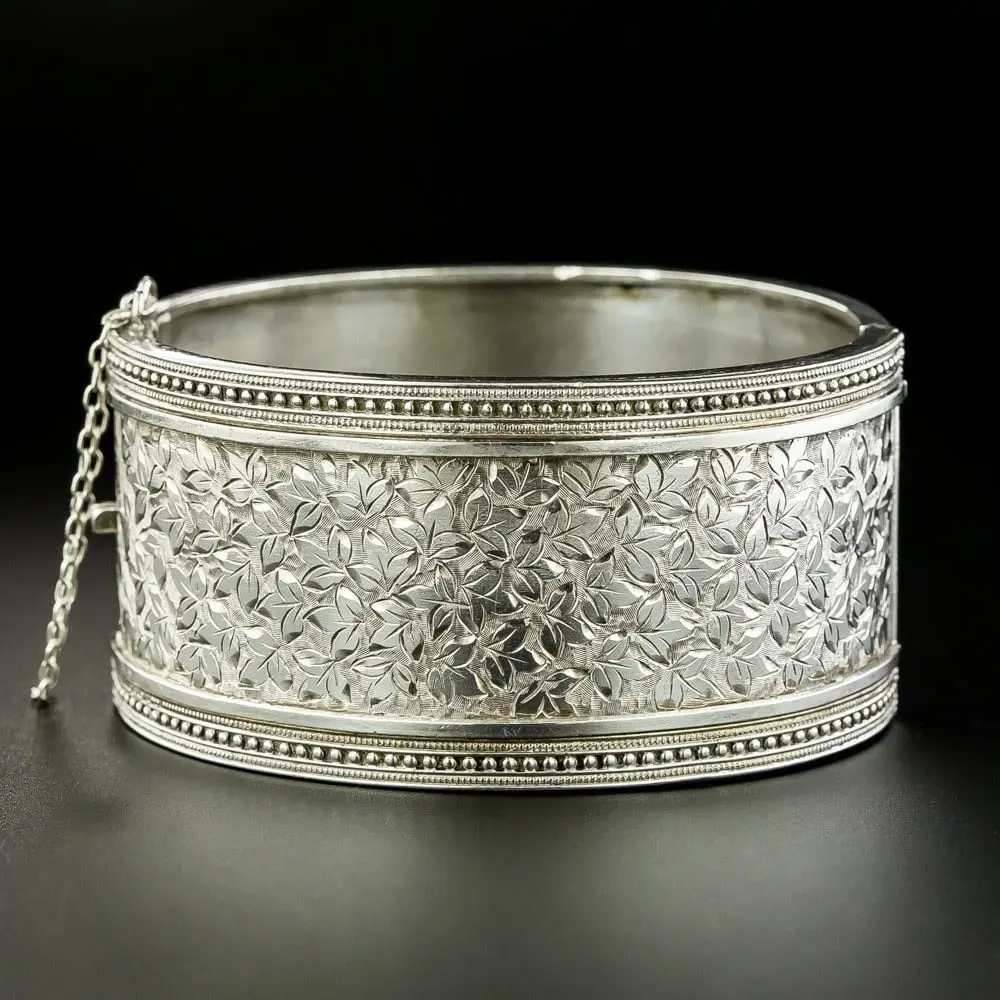
The Industrial Revolution left an indelible mark on Victorian jewelry manufacturing. Silver was utilized on an industrial scale for stamping and die striking, perfecting techniques developed during the late Georgian period. The cultural appetite for silver jewelry was further stimulated in 1848 when Queen Victoria and Prince Albert purchased Balmoral Castle in Scotland, sparking a widespread fashion craze for Scottish agate jewelry predominantly executed in silver.
Towards the end of the Victorian era, the Arts and Crafts movement emerged as a direct ideological reaction against the mass industrialization of jewelry production. This sub-period prioritized artistic design and handcraftsmanship above the intrinsic financial value of raw metals and gemstones. Arts and Crafts artisans favored cabochon-cut stones—typically secured in simple bezel settings—and overwhelmingly chose silver over gold as their primary medium, ensuring that silver retained its esteemed place in the artistic and cultural landscape.