





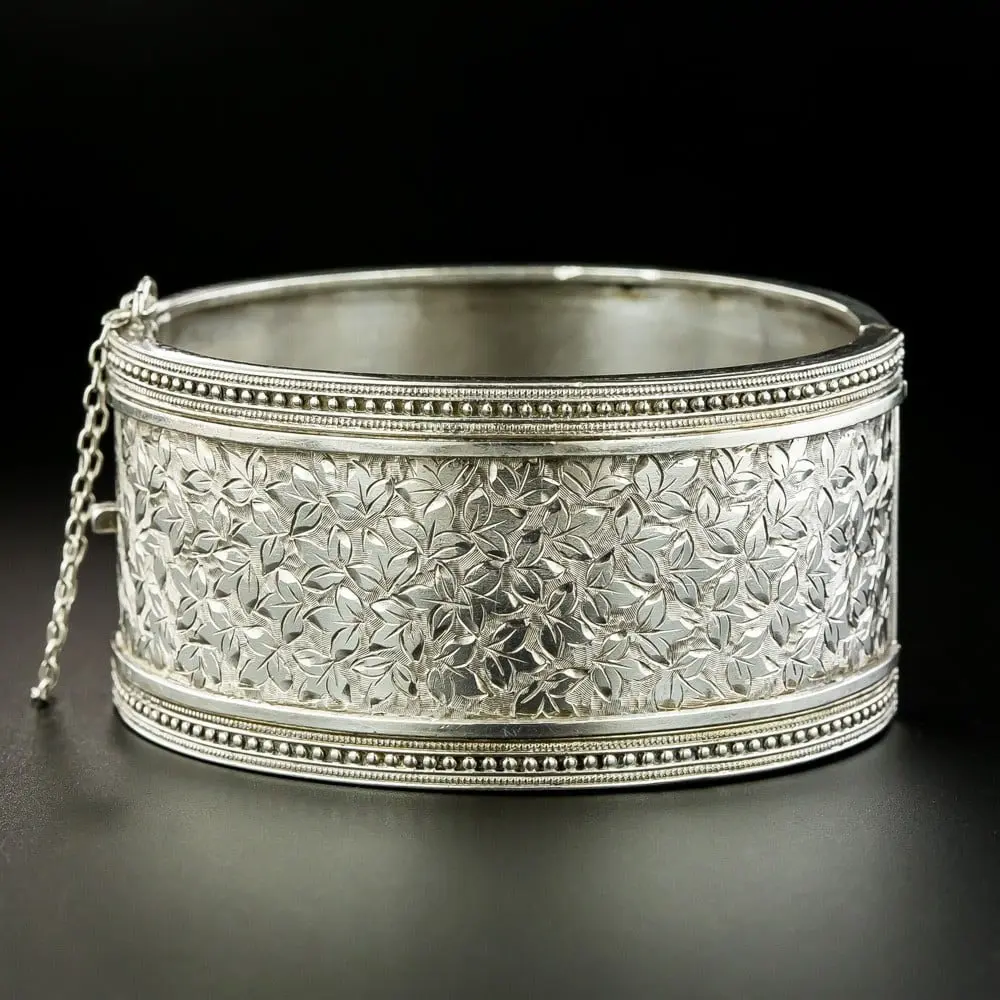
Long overshadowed in contemporary markets by the astronomical values commanded by gold and platinum, silver remains one of the most historically pivotal and technologically transformative metals in human history. Represented on the Periodic Table by the symbol Ag, silver is a brilliant white metallic element. While it is harder than gold, it is softer than copper and ranks second only to gold in both malleability and ductility. Beyond its physical properties—including its status as an exceptional conductor of heat and electricity and a noble metal resistant to oxidation—silver has anchored economies, shaped geopolitical conflicts, and inspired millennia of artistic and technological achievement.
Silver Significance
To dismiss silver merely because it is relatively inexpensive today is to misunderstand its profound historical footprint. Throughout various epochs, silver has been valued far more highly than gold. When examining the sheer quantities of silver utilized in jewelry, tableware, and decorative objects across history, its consumption dwarfs that of other precious metals by a wide margin.
Furthermore, the pursuit of silver triggered far more technological breakthroughs in mining and metallurgy than its precious metallic cousins. Entire global economies have risen and fallen on the availability of silver deposits, and access to these vital resources has frequently shifted the tides of war and rewritten the course of history. From ancient Mesopotamia to the height of the British Empire, silver has served as a cornerstone of human civilization.
Bronze Age Silver
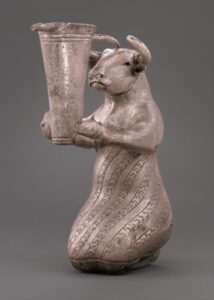
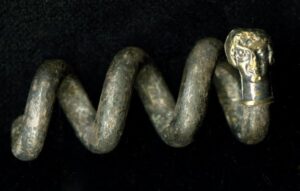
The story of silver stretches back to the end of the fourth millennium BC, when innovative inhabitants of modern-day Turkey discovered a method to extract silver from lead through the process of cupellation. While surviving artifacts from this nascent era are exceptionally rare, those that endure offer a remarkable window into the capabilities of Bronze Age silversmiths.
At the dawn of written history, silver served as a primary form of currency in Mesopotamia. Rather than circulating as standardized coins, the metal was traded strictly by weight or shaped into functional rings. The workshop of the Mesopotamian silversmith would have closely mirrored—or indeed been identical to—that of the goldsmith. Although silver is slightly less ductile than gold and demands more frequent annealing during manufacturing, ancient artisans quickly mastered its properties. They could cast it, hammer it into gossamer-thin sheets, engrave and emboss it, execute intricate repoussé work, and embellish it with delicate filigree and granulation. Archaeological excavations have unearthed exquisite vessels, votive statuettes, and jewelry crafted from high-purity silver, yielding items of remarkable softness.
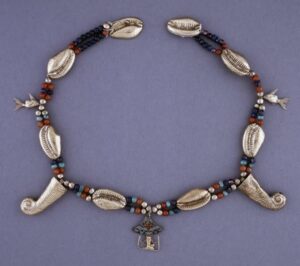
In ancient Egypt, where society deeply cherished the rare and exotic, silver occupied an elite status. While gold could be sourced relatively close to home from the mountains of the Eastern Desert and Nubia, pure silver had to be imported along perilous trade routes—such as those that brought prized Afghan lapis lazuli. Consequently, early Egyptian silver was valued more highly than gold, reserved exclusively for the upper echelons of society. By approximately 1600 BC, however, expanding supply chains caused the value of silver to drop to roughly half that of gold, transforming it into a stable, abstract currency. Its popularity thereafter fluctuated with the tides of fashion; King Tutankhamun’s famous tomb contained remarkably few silver objects, whereas Pharaoh Sheshonq II was laid to rest in an all-silver sarcophagus.
Meanwhile, the Minoans and Mycenaeans engaged in extensive maritime trade, circulating silver throughout the Greek mainland, Crete, and Cyprus. It was the Phoenicians, however, who truly revolutionized the Mediterranean silver trade through their extensive colonization networks. By initiating the large-scale exploitation of rich Spanish silver deposits, the Phoenicians distributed the metal throughout the classical world on a scale never before witnessed, lifting silver out of its strictly exotic and exclusive tier.
Classical Silver
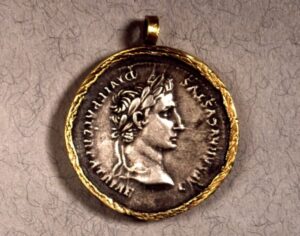
To both ancient Greek and Roman societies, a steady supply of silver was vital for maintaining their monetary systems, which relied heavily on properly minted silver coins. While gold frequently dominates the surviving archaeological record of classical jewelry—due in part to the heavy recycling and remelting of silver over the centuries—surviving pieces demonstrate that silver was fashioned into finger rings, anklets, armlets, and hair ornaments.
The Romans developed a particular fondness for niello, a surface decoration technique strikingly similar to enameling but executed using silver sulfate rather than glass. Niello produced a much tougher finish with a distinctive metallic luster, a technique that eventually spread across Northern Europe during the Roman occupation, leaving a lasting mark on Anglo-Saxon and Eastern European craftsmanship.
Roman historian Pliny the Elder captured the Roman obsession with silver in his encyclopedic work Naturalis Historia. Describing the subterranean realities of silver mining, Pliny noted that the metal was found exclusively in deep shafts rather than surface deposits, often extracted alongside lead or galena. He detailed how Hannibal’s ancient Spanish mines—such as the massive Baebelo mine—generated immense fortunes, operating day and night with teams of water-bearers illuminated by torches. Pliny also documented the rigorous testing methods of the era, noting that high-quality silver would remain pristine when placed on a white-hot iron fire-shovel, whereas inferior metal would turn reddish or black.
Pliny’s writings also lamented the staggering escalation of Roman luxury. He contrasted the austere frugality of early military commanders—such as Catus Aelius, who ate off earthenware and owned only two silver drinking cups awarded for valor—with contemporary nobles like Pompeius Paulinus, who marched into battle against savage tribes carrying twelve thousand pounds of silver plate. The insatiable Roman appetite for chased silver vessels crafted by legendary artists like Mentor drove prices to astronomical heights, marking a cultural pivot where the acquisition of foreign opulence reshaped Roman morals.
Celtic Silver
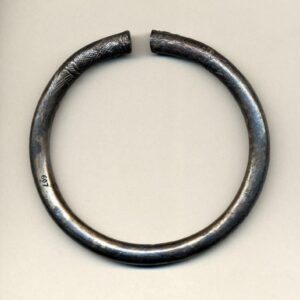
Among Celtic tribes, silver and bronze served as the primary mediums for personal adornment. Master metalsmiths produced highly decorated brooches, torque necklaces, and crescent-shaped lunulae. Before the advent of Roman conquests, the Celts operated largely without a coinage system, utilizing abstract "ring money" crafted from silver, copper, bronze, or gold purely as a medium of exchange rather than for wear.
Medieval Silver
The collapse of Roman trade routes plunged Europe into a prolonged shortage of gold, elevating silver to the undisputed premier metal for jewelry and decorative arts. Germanic jewelry of the early medieval period focused heavily on functional items such as fibulae, disc brooches, penannular brooches, and belt buckles, predominantly forged from silver and occasionally gilded or inlaid with contrasting red garnets.
Following the onset of Viking expansions around 800 AD, vast quantities of silver flowed into Scandinavia from the northwest European coast. This influx fueled a flourishing tradition of Scandinavian silverwork, further accelerated by the discovery of rich Swedish silver deposits around the turn of the first millennium. The Roman penchant for niello was enthusiastically adopted by Germanic tribes, who utilized the stark black-and-white contrast to accentuate intricate engraving patterns.
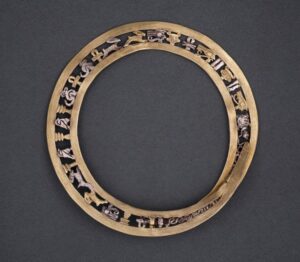
A prime example of this metallurgical artistry is the Fuller Brooch, a 9th-century Anglo-Saxon circular brooch housed in the British Museum. Hammered from sheet metal and extensively inlaid with niello, the brooch features personifications of the Five Senses arranged around a central roundel, surrounded by an openwork zone of geometric animal and human motifs symbolizing creation.
As medieval society evolved and Eastern trade routes reopened, gold gradually reclaimed its traditional status as the preferred metal for elite jewelry. Nonetheless, expanding trade also fostered a burgeoning middle class, enabling ordinary citizens to adopt forms of personal adornment previously reserved for royalty and nobility. Those operating on a more modest budget turned increasingly to silver. By the late Middle Ages, the proliferation of silver jewelry and silverware necessitated the establishment of formal assaying and hallmarking systems to guarantee purity and protect consumers.
Renaissance Silver
Spanning roughly from 1500 to 1600, the Renaissance was rooted in the explosive growth of Northern Italian trade centers, the economic recovery following the plague, and the diffusion of classical knowledge brought by exiles fleeing the fall of the Byzantine Empire in 1453.
The Age of Discovery supercharged this era. Following Christopher Columbus’s arrival in the Americas, European powers raced to claim territories across the globe. Spanish conquistadors such as Francisco Pizarro and Hernán Cortés subjugated the Inca and Aztec empires, unlocking immense mineral wealth. Following the discovery of colossal silver deposits in modern-day Mexico in 1546, silver mines poured vast quantities of the white metal into international trade networks, with significant shipments even bypassing Europe entirely to secure Asian goods via trans-Pacific galleons.
While core silver-working techniques remained largely unchanged from the medieval period, the unprecedented abundance of American silver allowed the metal to remain a vital monetary standard and an accessible luxury for Europe’s expanding, prosperous middle class.
Baroque Silver
During the Baroque period spanning the 17th century, the steady stream of South American silver into Europe continued unabated as England, France, and the Netherlands established permanent colonies in the New World. The independent Dutch Republic emerged as a dominant maritime and artistic power, frequently clashing with Spanish and English fleets over treasure-laden galleons returning from the Americas.
While craftsmanship techniques remained traditional, the Baroque era witnessed notable innovations. Portable timepieces emerged as a major novelty, frequently housed in intricate silver cases. More significantly, silversmiths began utilizing silver settings for diamonds. Intensified maritime trade routes to India allowed European merchants to bypass Arabic middlemen and conduct direct trade with Indian diamond dealers, flooding the market with colorless stones. Silver settings provided a brilliant, harmonious backdrop that perfectly complemented the icy sparkle of these newly accessible diamonds.
Georgian Silver
The Georgian era was characterized by a booming mining sector in South America and the discovery of rich new diamond deposits in Brazil beginning in 1727. The Baroque practice of setting diamonds in silver evolved into a widespread standard of fine jewelry design. While many high-end pieces combined gold bodies with silver-topped fronts, solid silver items remained common, and the characteristic cut-down collet settings of Georgian jewelry were almost universally crafted from silver to accentuate the white brilliance of the stones.
A major technological leap arrived in 1777 with the introduction of die-striking. This manufacturing process utilized specialized steel dies, presses, and drop hammers to stamp and cut precious metal components, which were then hand-assembled into finished jewelry. This cost-effective technique heralded the dawn of mass-produced jewelry, enabling manufacturers to flood the market with affordable, die-struck silver pieces that could be retailed at a fraction of the cost of traditional hand-wrought items.
Victorian Silver
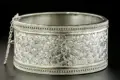
The Industrial Revolution brought mechanized production methods to their zenith during the Victorian era, profoundly transforming the jewelry industry. Stamping and die-striking, pioneered during the late Georgian period, were fully perfected, allowing for the mass production of intricate silver jewelry on an unprecedented scale.
Cultural trends also heavily favored the metal. Following Queen Victoria and Prince Albert’s acquisition of Balmoral Castle in Scotland in 1848, Scottish agate jewelry surged into international fashion, predominantly executed in silver in accordance with fine Northern European traditions.
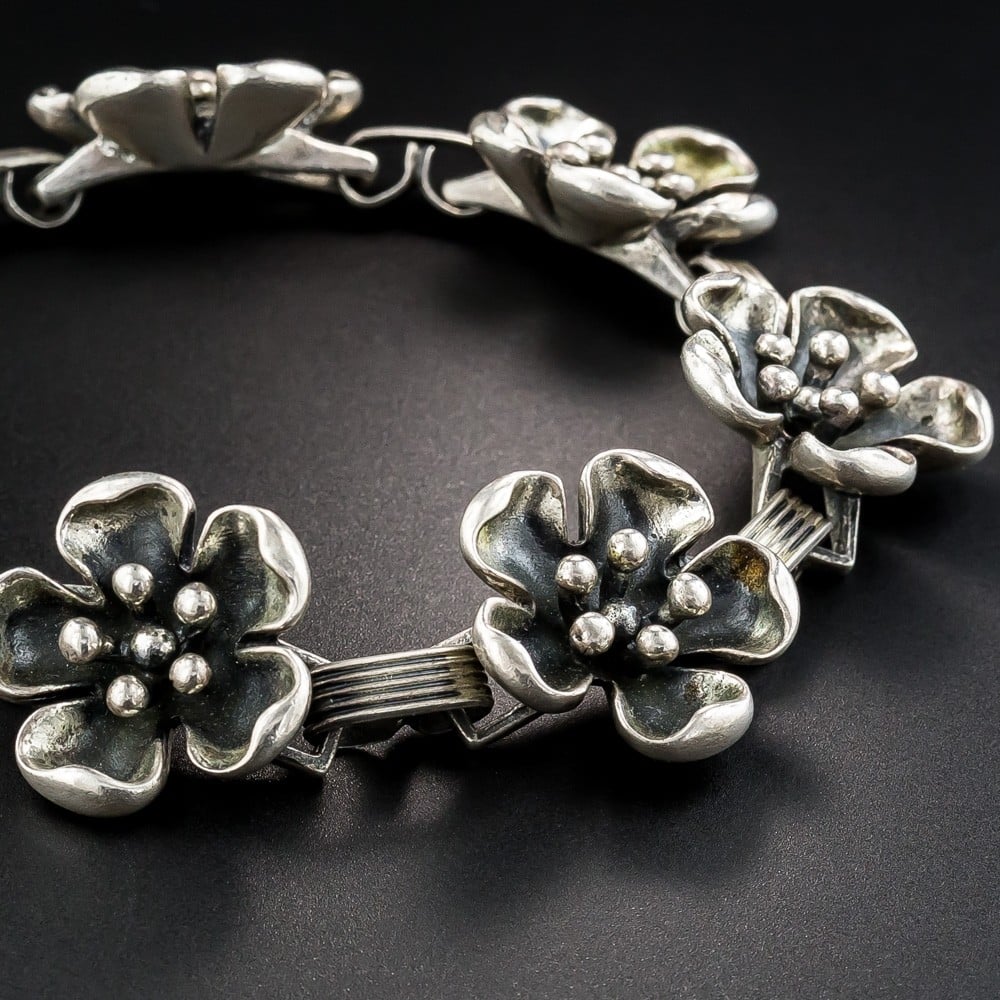
Toward the close of the Victorian period, the Arts and Crafts movement emerged as a direct ideological reaction against the mass industrialization of decorative arts. Championing hand-crafted integrity, Arts and Crafts artisans prioritized artistic design over the intrinsic market value of materials. Eschewing faceted stones in favor of bezel-set cabochons, these designers decisively turned away from gold, elevating silver to the premier medium for their expressive, artisanal creations.