





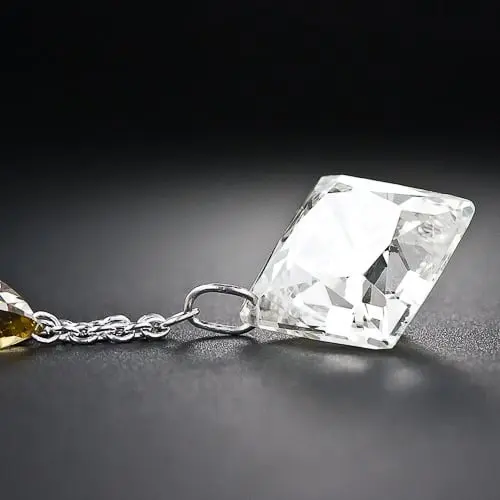
In the intricate world of gemology, the way a mineral interacts with light defines much of its beauty, value, and identification. Among the various optical descriptions used by gemologists and mineralogists, "adamantine" stands out as one of the most striking and exclusive terms. Primarily associated with diamonds, adamantine luster describes a brilliant, exceptionally high-reflectance quality that sets certain gemstones apart from all others.
To fully understand the term, gemological experts look at both its physical optics and its deep historical roots. The word itself comes from the ancient Greek root adamastos, which translates directly to "untamable" or "invincible." Throughout history, the broader term "adamant" was used flexibly in literature and common speech to describe any material possessing extraordinary hardness, whether it was a diamond or another exceptionally tough substance. Over centuries of scientific classification, however, the terminology evolved to specifically categorize the optical brilliance and refractive properties of the world’s most captivating stones.
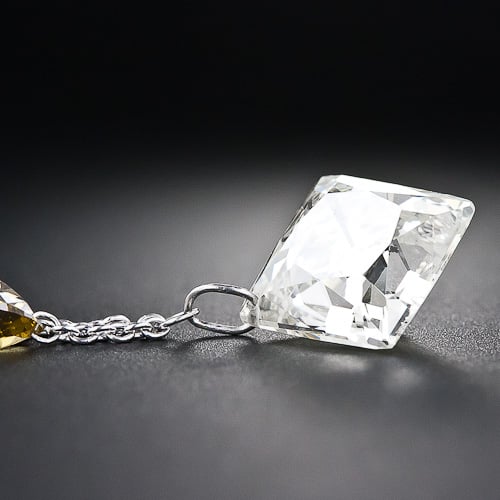
In modern gemology, adamantine luster is formally defined as the brilliant, highly reflective sheen exhibited by diamonds and other gemstones that possess a Refractive Index ranging strictly between 1.9 and 2.5. The Refractive Index, or RI, measures how much light is bent, or refracted, as it enters a material. When a gemstone features an RI within this specific high bracket, light is slowed down and bent to such a degree that it exits the stone with intense brilliance and sharp, mirror-like surface reflections. This unique optical phenomenon gives the stone an unmistakably radiant appearance that immediately distinguishes it from minerals with vitreous (glassy), pearly, or greasy lusters.
While diamonds remain the ultimate benchmark for adamantine luster, the category is not exclusive to them. However, gemstones that fall just shy of this optical threshold occupy a fascinating secondary category known as subadamantine luster. A prime example of this is zircon, a natural gemstone renowned for its high dispersion and fiery brilliance. While zircon exhibits remarkable optical performance and can often rival a diamond in its flashing colorful light play, its overall surface brilliance is classified as subadamantine, placing it just below the strict refractive threshold required for pure adamantine status.
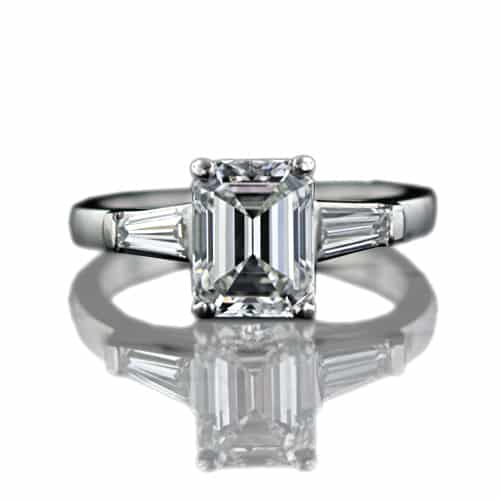
The distinction between adamantine and subadamantine lusters highlights the incredible precision required in professional gemological evaluation. Gemologists examine not only the internal fire and dispersion of a cut stone, but also the sharp, adamantine quality of surface reflections bouncing off the facets. These optical characteristics allow experts to accurately identify mineral species, distinguish natural stones from synthetics or simulants, and appreciate the unique physical properties that have fascinated humanity for millennia. From the ancient Greek perception of untamable hardness to modern laboratory measurements of refractive indices, the concept of the adamantine continues to represent the pinnacle of gemstone brilliance and durability.