





Travel has long shaped the way clothing is designed, yet few contemporary wardrobes acknowledge the reality of how people actually move today. A single day can begin on an early-morning flight, unfold through high-stakes meetings, continue onto a bustling production set, and end around a dinner table in an entirely different city. The historical distinctions between work, leisure, and ceremony have become increasingly fluid. Meanwhile, much of the fashion industry continues to treat these facets of modern life as entirely separate occasions requiring entirely separate wardrobes, forcing travelers into a continuous cycle of packing, unpacking, and outfit changes.
For entrepreneur Adam Khafif, this systemic tension in modern dress became impossible to ignore after more than a decade spent traveling alongside his life and business partner, acclaimed journalist and filmmaker Noor Tagouri. Together, they navigated an existence defined by constant, breathless movement, crossing continents as naturally as they moved between corporate boardrooms, editorial shoots, high-profile interviews, and public speaking engagements. In this whirlwind environment, clothing was expected to keep pace with each rapid transition without ever demanding undue attention of its own, serving as a silent, reliable second skin.
"I started —andever for those who move between worlds," Khafif explains. The genesis of the brand was informed just as much by his unique upbringing as it was by his demanding professional life. Raised across a rich tapestry of Moroccan, Italian, and American cultures, he spent every formative summer in Morocco, where an entirely different philosophy of dress quietly revealed itself through the rhythms of everyday life. This cross-cultural foundation planted the seeds for what would eventually evolve into a completely new category of apparel designed for the borderless professional.
Observing the daily cadence of life in North Africa provided a profound counterpoint to Western fashion habits. "Growing up Moroccan, spending every summer in Morocco, I always had a reference: the Moroccan djellaba moves through every context of daily life, the same garment in a different fabric for different occasions: weddings, work, at home, to the market, and especially on travels," Khafif notes.
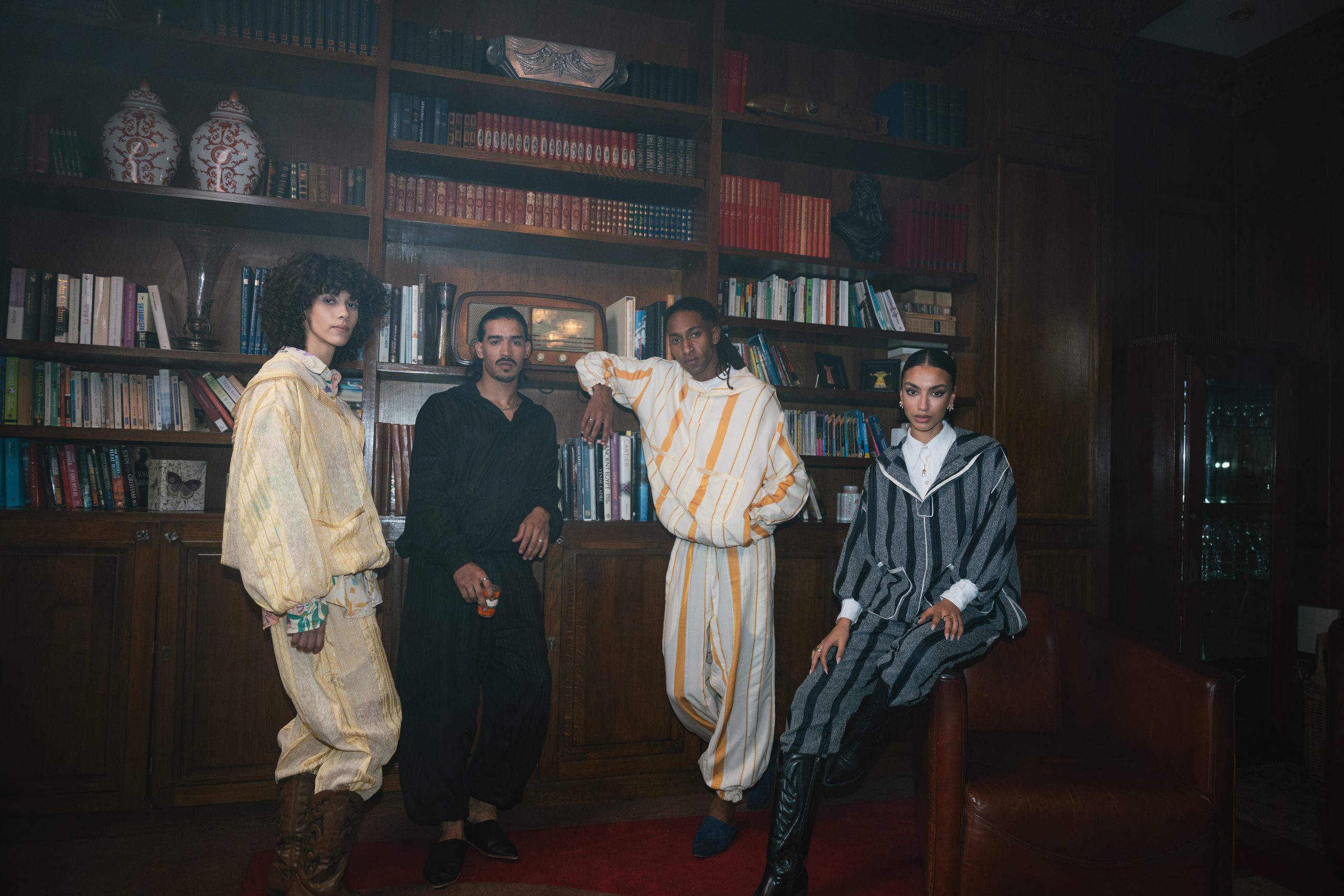
Rather than representing a rigid single tradition or a purely ceremonial garment, the djellaba embodied a rare sense of sartorial continuity. Its overarching form remained reassuringly familiar, while the fabric, weight, and finish shifted fluidly to suit the exact circumstance at hand. The garment belonged just as naturally in a bustling local marketplace as it did at important family celebrations, suggesting that true versatility could emerge not from compromise, but from thoughtful, time-honored refinement. "I wanted to take that spirit and build something for the way we, and many others, are actually living—dynamic, versatile, mixed-media lives," Khafif says.
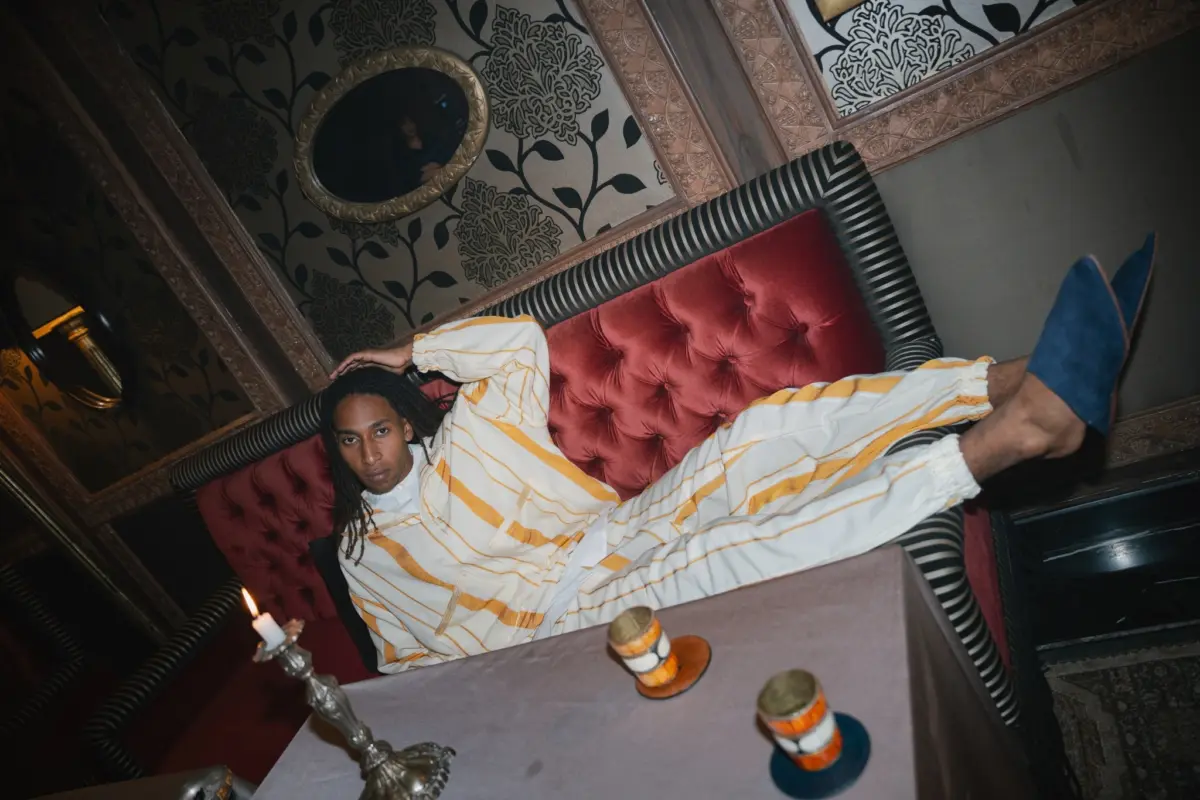
That ambitious vision became the bedrock foundation of —andever’s Travel Uniform, a collection that was carefully developed over several years through close observation, repeated wear, and continual, meticulous refinement. Khafif describes the line as a deliberate attempt to unite two distinct design languages that very rarely intersect in the contemporary marketplace: the relaxed comfort and functional utility of American sportswear paired with the quiet versatility and understated elegance of Moroccan craft.
The resulting collection is remarkably understated in its visual appearance yet exceptionally considered in its structural construction. Relaxed pullovers and wide-leg trousers are cut with generous ease to comfortably accompany long-haul journeys, while effortlessly maintaining the composure and polish expected in more formal settings. Their silhouettes remain intentionally uncomplicated, allowing woven textures, delicate handloom stripes, and subtle variations in garment weight to provide distinction rather than loud, transient ornament. Sheer interpretations sit comfortably alongside densely woven cottons, offering versatile garments well-suited to vastly different global climates without ever altering the underlying, harmonious form.
Throughout the collection, proportion is carefully balanced with aesthetic restraint, producing clothing that feels equally at home whether the wearer is in motion or entirely at rest. The accompanying Balgha travel slippers thoughtfully reinterpret Morocco’s traditional leather footwear with a softened, contemporary profile, while naturally tanned leather totes and beach bags pair generous everyday functionality with meticulous hand-finishing. These accessories allow practical everyday objects to carry the exact same sense of permanence and craftsmanship as the garments themselves.
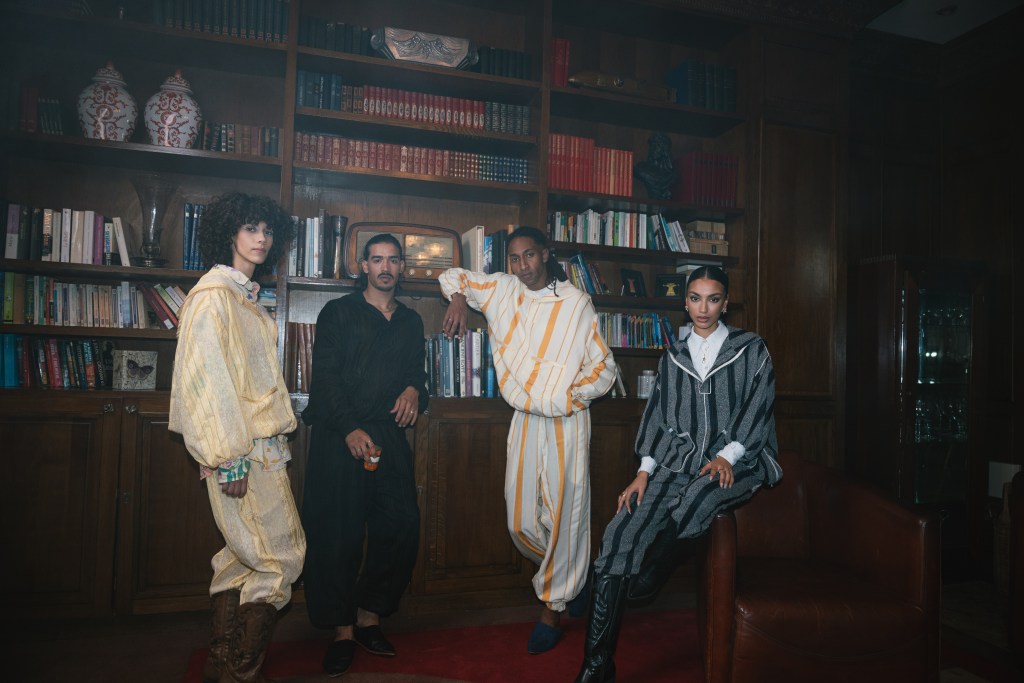
The collection’s deep relationship with Morocco extends well beyond superficial aesthetic reference or mood-board inspiration. For Khafif, true authenticity required building the brand side-by-side with the local communities whose rich heritage of craftsmanship had inspired the project from its very inception. "What I didn’t want to do was what I’d watched the industry do for years: use Morocco as a moodboard without ever really going there, literally and figuratively," he reflects.
Instead, he returned directly to the master artisans, skilled weavers, and dedicated leather workers whose work he had admired throughout his childhood. "I found the artisans and weavers and leather workers I’d admired my whole life and asked them to create with me, to bring a contemporary voice to traditional craft," he says.
Every single garment is meticulously handmade in Morocco, utilizing local materials like Sousdi cotton, intricate hand-loom weaving, traditional Sfifa embroidery, and naturally tanned leather. The production process strictly follows this same ethical philosophy. Brand campaigns are intentionally photographed in Morocco alongside local Moroccan photographers, stylists, craftspeople, and creative teams, ensuring that the people who actively preserve these ancient traditions remain visible, valued participants in the story being told. "The people who inspired the work are in the work," Khafif emphasizes.
Significantly, the collection was never conceived as a purely commercial exercise from the outset. Before ever inviting retail customers into the process, Khafif created a personal wardrobe prototype for himself and wore it almost exclusively for several years. "I made myself a personal set first and wore it for three to four years," he says, testing its durability and adaptability. "On buses, planes, meetings, dinners, every transitional moment a creative finds themselves in."
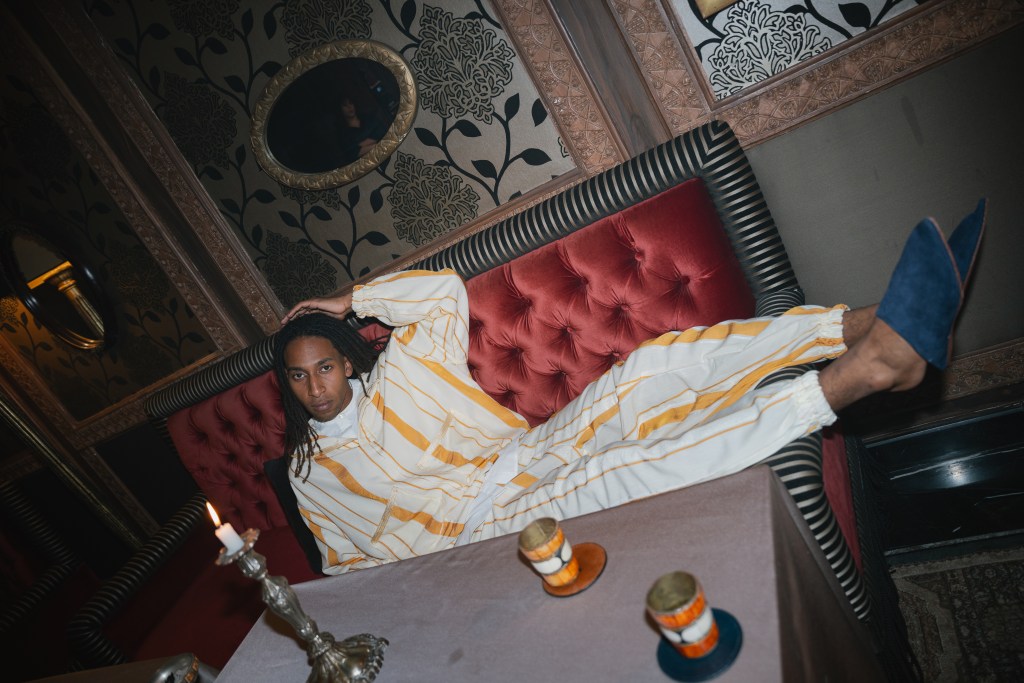
Those intervening years became a period of quiet, real-world testing. The garments traveled repeatedly across international borders long before they were ever offered for sale to the public, evolving organically through lived experience rather than being rushed to market by rigid seasonal fashion deadlines. Early versions of the designs appeared naturally in Noor Tagouri’s editorial work, including a notable visual story on Morocco published by Vogue Arabia.
When Khafif ultimately felt the collection had reached the exacting standard he originally envisioned, approximately 100 close friends, family members, and industry peers placed early pre-orders, quietly funding the brand’s very first official production run. That initial, tightly knit community soon expanded to include a diverse network of prominent creatives, writers, and cultural figures such as Timothy Goodman, Seth Godin, Kimberly Drew, Lina Makkoul, Nadeska Alexis, and Sophia Li.
Although —andever was born fundamentally as a digital-first brand, Khafif has remained deeply interested in restoring something vital that has become increasingly absent from contemporary retail: the genuine thrill of discovery. He notes that as he "was developing the brand, one of the core intentions was to bring back the thrill of discovery that internet and social media have flattened."
This philosophy directly inspired the creation of Here & There Exclusives, an innovative geolocation system through which selected pieces of the collection become available for purchase only when the customer is physically present in specific cities and regions that deeply shaped the brand’s identity, including Morocco, New York, Massachusetts, Italy, France, Turkey, and California. "To own one, you have to be somewhere," Khafif explains of the geographic gating. "Ship anywhere, but be there when you purchase."
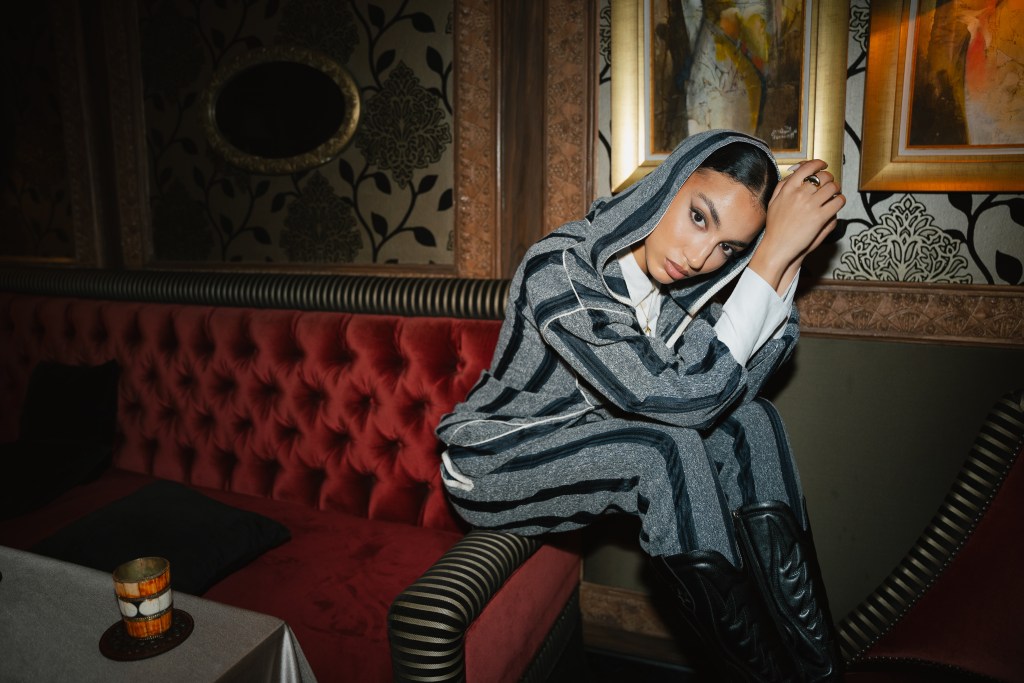
This conceptual approach powerfully recalls an earlier, more deliberate era of global travel, when acquired objects carried profound personal memories not simply because of what they were, but precisely because of where they had been found. The act of purchasing becomes an integrated part of the travel journey itself, anchoring the physical garment to a specific geographic place and fleeting moment in time, rather than reducing it to just another anonymous package delivered to a doorstep.
This thoughtful relationship between clothing and physical place also directly informs where the collection is encountered in the physical world. Rather than pursuing traditional, high-volume wholesale distribution through conventional department stores, —andever has deliberately found its earliest retail homes within culturally rich boutique hotels and concept spaces, including Kasbah Bab Ourika in Morocco and Curio Faena in Miami—environments where travel, high hospitality, and organic discovery naturally converge.
Throughout the entire collection, physical movement is understood less as sheer speed and more as a continuous journey. Heritage is carried forward proudly through living, breathing craft, travel becomes a meaningful way of collecting profound experiences rather than accumulating possessions, and clothing serves as the quiet, unifying thread connecting one place, one personal encounter, and one chapter of life seamlessly to the next.