





THE HAGUE — The Dutch minority government has been plunged into a severe political crisis after coalition parties D66 and CDA brokered an eleventh-hour budget compromise with the left-wing opposition party Pro. The dramatic late deal has successfully broken a parliamentary deadlock over the nation’s upcoming fiscal plans, but it has simultaneously pushed the ruling coalition to the brink of collapse by alienating its right-wing partner, the VVD.
The sudden political maneuver unfolded shortly after a strict 2pm statutory deadline for changes to the cabinet’s tax plan had expired. Despite the lapsed formal deadline, Pro announced a last-minute legislative amendment designed to generate an extra €1 billion in state revenue by targeting assets, savings, inheritances, and cash gifts, alongside a renewed governmental pledge to clamp down on aggressive corporate tax avoidance schemes.
While the third and most conservative faction in the minority government, the right-wing liberal VVD, is fully expected to vote against the newly introduced amendment when it reaches the floor, the political math suggests the measure will still pass. A sufficient coalition of minor opposition parties has indicated they will support the proposal, virtually guaranteeing a majority in the Lower House of the Dutch parliament.
The high-stakes developments have forced immediate adjustments at the highest levels of government. Prime Minister Rob Jetten was forced to abruptly cancel an important scheduled trip to Dublin, where he was slated to attend a high-profile summit of European Union leaders. Instead, the Prime Minister will remain in The Hague to spearhead an extraordinary parliamentary debate on the budget, which has been hastily scheduled for Thursday morning.
The VVD has not yet formally responded to the announcement of the eleventh-hour compromise, leaving political observers and allies in suspense. The conservative party now faces a severe political dilemma: it must decide whether to swallow its pride and accept the heavily amended budget, or follow through on its repeated warnings and withdraw its parliamentary support altogether. Should the VVD pull the plug, it would instantly trigger the collapse of the current cabinet.
The successful amendment represents a significantly watered-down version of a much more aggressive proposal originally tabled jointly by Pro and the pro-European party Volt. That initial blueprint sought to squeeze an extra €1.5 billion out of the economy by establishing a brand-new, punitive top tax rate specifically aimed at savers and high-net-worth investors possessing liquid assets valued at more than €1.3 million. Leadership within D66 and CDA rejected that initial vision out of hand, dismissing the proposal at the time as "too coarse" for the broader Dutch economy.
However, through frantic backroom negotiations as the budget deadline loomed, the parties managed to forge a compromise. The updated legislative package still introduces substantial wealth-targeting measures, including an increased tax burden on inheritance and cash gifts, satisfying the left-wing desire for economic redistribution while staying within boundaries acceptable to the centrist coalition partners.
Millionaires’ Tax
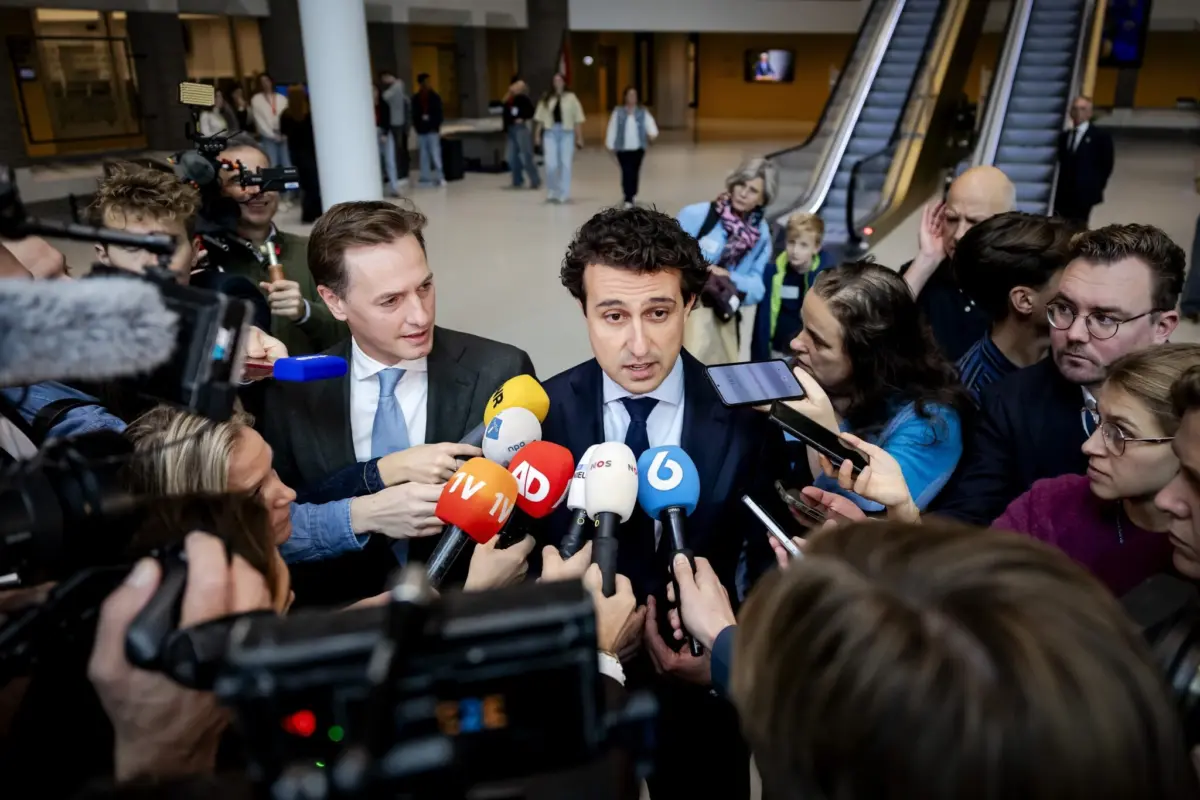
"This is a breakthrough," declared Pro party leader Jesse Klaver, addressing reporters following the dramatic announcement. "In the last few days we have held talks to bring about a compromise to make the Netherlands fairer. If this plan is accepted, the Netherlands will have a millionaires’ tax."
Klaver emphasized that the VVD was completely excluded from the final round of negotiations, underscoring the deep ideological fractures currently plaguing the governing coalition. "We have talked to D66 and CDA," Klaver noted. "If you want to know if the VVD support it, you’ll have to ask them."
The exclusion of the VVD from the compromise talks comes as little surprise given the party’s vociferous opposition to wealth taxation in any form. Earlier in the budget cycle, the VVD had explicitly stated that it was entirely "unthinkable" that the party could ever vote for the amendment in its original or near-original form. VVD Member of Parliament Wendy van Eijk forcefully argued at the time that the plan crossed her party’s absolute "pain threshold" and warned that such wealth taxes would ultimately prove "bad for the Netherlands."
Now that the official deadline to submit parliamentary amendments has officially passed, the VVD is cornered. The party must urgently determine whether it can tolerate remaining in a government that implements a wealth tax, or if doing so would permanently compromise its core fiscal principles. If the VVD decides it cannot stomach the deal, it will spell the definitive end of the current coalition arrangement.
The looming specter of a government collapse has sent shockwaves through the political establishment, particularly because the Netherlands is already weary of political instability. Just days earlier, on Tuesday, the Dutch parliament voted overwhelmingly in favor of a motion explicitly calling on the cabinet to thoroughly explore alternative coalition formations before taking the drastic step of calling early national elections. Lawmakers across the political spectrum are desperately attempting to prevent what would be the third general election in just over three years—a level of political volatility rarely seen in modern Dutch history.
If the VVD ultimately chooses to break away and early elections are indeed called, political analysts expect the vote to take place in March. In the intervening months, a caretaker government would be forced to step in, desperately attempting to cobble together a fragile, ad-hoc majority in parliament simply to pass a functioning budget plan and keep the machinery of the Dutch state running smoothly through the transition period.