





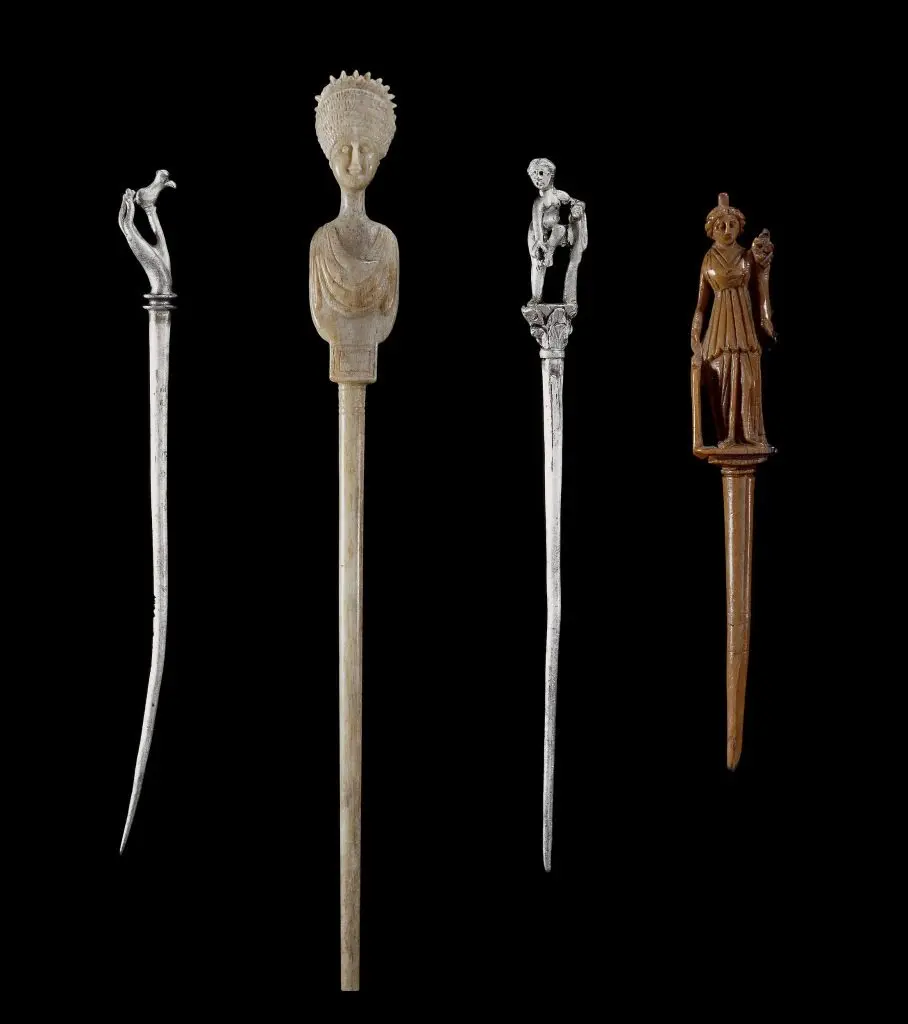
In the study of ancient material culture, small everyday objects often reveal the most profound insights into the daily lives, aesthetic values, and practical innovations of past civilizations. Among the most fascinating personal accessories preserved from the classical world is the acus, a specialized pin utilized extensively during the Roman period. Originally designed to secure the intricate and towering hairstyles characteristic of Roman fashion—where it was known specifically as an acus crinalis—this remarkably versatile implement played a dual role in ancient wardrobe management, frequently serving alongside or in place of a traditional fibula to secure loose garments.
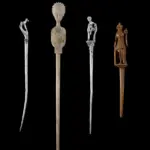
Measuring typically between six and nine inches in length, the acus was far more than a simple fastening device; it was an object that bridged the gap between personal grooming and wearable art. Fabricated from a wide variety of materials depending on the social status, wealth, and personal preference of the owner, these slender shafts could be fashioned from precious metals such as gold and silver, resilient organic materials like bone and wood, or exotic substances such as ivory. Surviving examples housed in institutional collections, such as the extensive holdings of the British Museum, showcase a remarkable range of craftsmanship, varying from utilitarian bone pins utilized by everyday citizens to ornate, silver-crafted specimens that reflected the refined tastes of affluent Roman elites.
To understand the primary function of the acus crinalis, one must look closely at the complex history of Roman hairstyling, particularly during the late Republic and the Imperial eras. Roman fashion, especially for women of high social standing, placed an immense emphasis on elaborate, sculptural coiffures. These styles often involved complex arrangements of curls, braids, and false hair supported by underlying frames or wire structures. To keep these gravity-defying creations securely in place throughout the day, long, sturdy pins were absolute necessities. The acus was slid horizontally or diagonally through the mass of hair, piercing the braids and anchoring the architecture of the style firmly to the head. Because of their substantial length—reaching up to nine inches—these pins could penetrate deep into thick coils of hair, providing the necessary structural stability for styles that would otherwise quickly unravel.
Beyond its indispensable role in the Roman dressing room, the acus possessed a secondary, highly practical function within the realm of ancient textiles. In an era before modern buttons, zippers, and hook-and-loop fasteners, the inhabitants of the Roman world relied heavily on pins, brooches, and tied cloth to keep their draped garments in place. While the fibula—the ancient ancestor of the modern safety pin—is widely recognized by archaeologists as the primary clothing fastener of the period, the long and sturdy acus was frequently employed for a similar purpose. Whether used in conjunction with a fibula to add extra security to heavy woolen cloaks and tunics or used entirely on its own to spear and knot folds of fabric, the acus demonstrated a remarkable multifunctionality that made it an essential item in households across the Roman Empire.
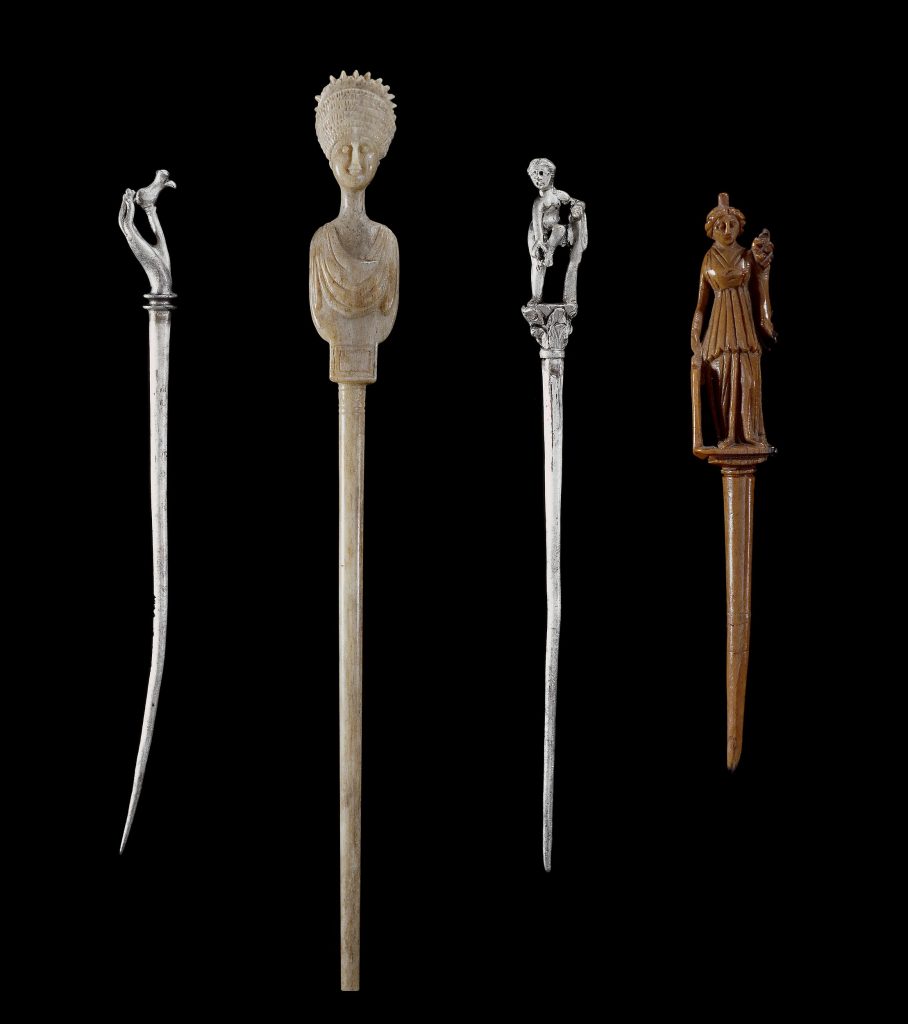
The materials chosen for the manufacture of these pins often provide modern historians and archaeologists with crucial context regarding trade routes, economic standing, and local resource availability within the Romano-British landscape and the broader empire. Gold and silver acus specimens, often discovered in high-status burials or wealthy urban contexts, highlight the availability of precious metals and the skill of Roman silversmiths and goldsmiths, who frequently decorated the heads of the pins with intricate geometric patterns, carved animal motifs, or miniature sculptural busts. Conversely, pins fashioned from bone offer a fascinating glimpse into the broader Roman economy, where animal skeletal remains from food consumption were systematically repurposed into durable, polished everyday items. These bone pins, while less ostentatious than their metal counterparts, required considerable skill to shape, smooth, and taper to a fine point without splintering the material.
Wood and
ivory acus artifacts represent another fascinating subset of these ancient accessories, though organic materials like wood are exceptionally rare in the archaeological record due to the natural decay processes of soil and moisture. When wooden pins do survive—typically in waterlogged environments or arid conditions—they reveal the use of dense, local timbers that could be smoothly polished. Ivory pins, meanwhile, point to long-distance luxury trade networks that spanned continents, bringing exotic animal products from distant lands into the workshops of Roman artisans. Regardless of the material, the manufacturing process always prioritized a smooth, polished shaft that could glide effortlessly through human hair or woven textile without snagging or tearing the fabric or strands.
The archaeological recovery of Romano-British era bone and silver hairpins provides tangible evidence of cultural exchange and the adoption of Roman fashions within provincial territories. Following the Roman conquest of Britain, local populations increasingly adopted continental styles of dress and grooming, incorporating items like the acus crinalis into their daily routines. Excavations of Roman forts, towns, and cemeteries across Britain have routinely yielded collections of these versatile pins, often found clustered near the skull in skeletal remains, confirming their primary use as hair ornaments, while others discovered near the shoulders or torso hint at their garment-securing capabilities.
As research into Roman material culture continues to evolve, small finds like the acus remind modern observers that the daily life of the ancient world was defined by a sophisticated blend of practicality and aesthetic expression. By examining the physical dimensions, material composition, and archaeological context of these six-to-nine-inch pins of gold, silver, bone, wood, and ivory, historians gain a clearer and more intimate portrait of the people who wore them. Whether keeping an elaborate imperial hairstyle intact during a formal banquet or securing the folds of a heavy woolen garment against the chill of a Romano-British winter wind, the humble acus remains a testament to the ingenuity and enduring craftsmanship of the Roman world.