





As children, many of us first learned about political scandals by asking our parents why an elected official’s private indiscretions mattered so much. The answer was rarely just about broken vows or breaches of domestic propriety. Instead, it was about exposure. Extramarital relationships create points of vulnerability: the risk of blackmail, covert leverage, undue influence, and the perennial counterintelligence hazard of sensitive state secrets traded during pillow talk.
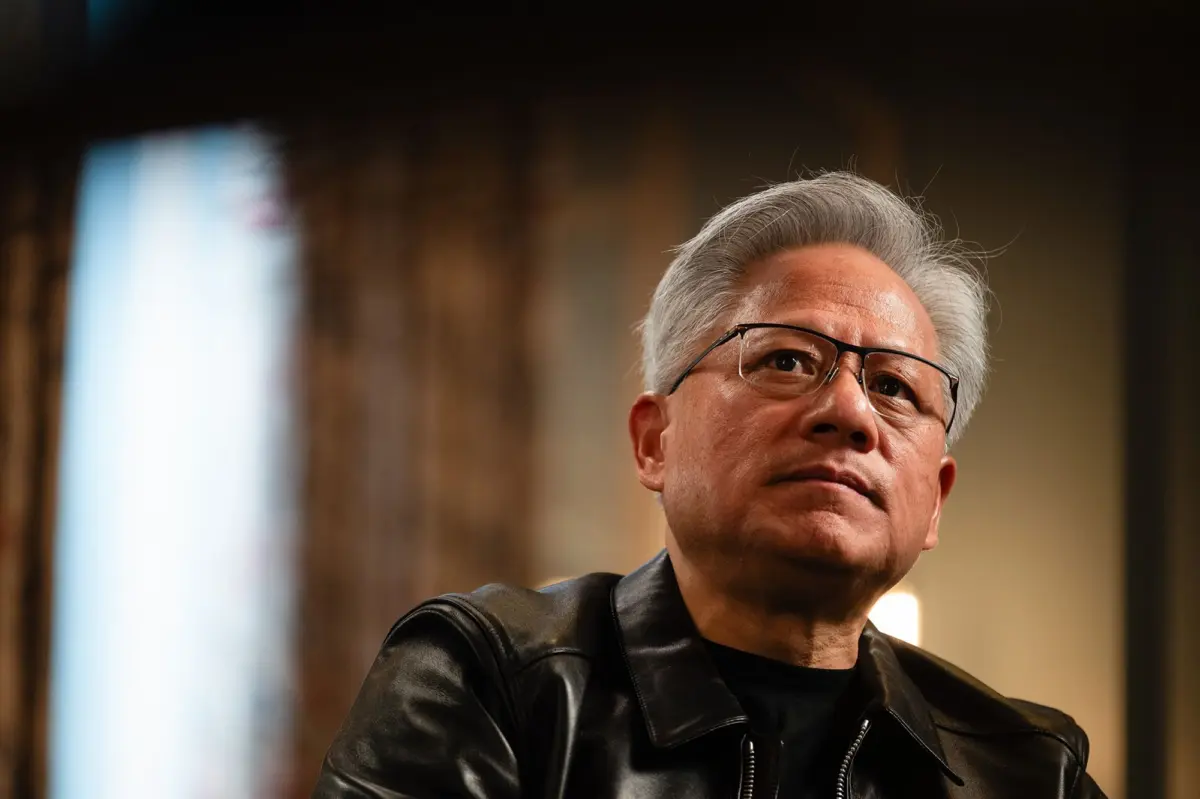
In the upper echelons of Silicon Valley and Wall Street, that fundamental lesson appears to have been brushed aside. Over the weekend, prominent venture capitalists and financiers—including Shaun Maguire and hedge fund manager Bill Ackman—hastened to the public defense of Nvidia cofounder and chief executive Jensen Huang. Their show of support followed Huang’s stunning confession that he had engaged in an extramarital affair with Alice Huang, an executive at Megaspeed who has been identified as an alleged Chinese intelligence asset.
Officials in Beijing have moved swiftly to dismiss the controversy. A spokesperson for the Chinese Ministry of Foreign Affairs labeled the espionage allegations “unsubstantiated” and characterized them as “nothing but smears against China.” Yet within Washington’s national security apparatus and across global financial markets, the revelation has ignited an immediate crisis.
Huang may not hold an elected office or command an army, but in the modern global economy, his leverage rivals that of many world leaders. As the leader of Nvidia, he oversees the world’s most valuable enterprise—a $4 trillion corporate colossus that controls the indispensable technological substrate of the modern era: the advanced, high-performance graphics processing units (GPUs) required to build, train, and deploy frontier artificial intelligence models.
For years, policymakers and industry analysts watched with growing unease as Huang repeatedly and publicly lobbied against federal trade restrictions, insisting that Nvidia should retain the ability to sell its high-end semiconductors to Chinese buyers. This persistent push came even as successive administrations and defense officials warned that ceding any computational edge to Beijing could permanently tip the balance of technological and economic power against the West. When Huang was ranked fourth on the New Establishment list this past autumn, his protracted resistance to these export controls was highlighted as his single greatest strategic vulnerability.

That vulnerability has now triggered an unprecedented reckoning. Nvidia’s board of directors has commissioned an independent investigation into Huang’s personal conduct and corporate decision-making, while federal intelligence and regulatory agencies work to calculate the full blast radius of the security breach.
The fallout touches on multiple dimensions of national security. Ryan Fedasiuk, a senior fellow at the Foundation for American Innovation, noted that the scandal presents three distinct and urgent vectors of inquiry.
The primary concern centers on corporate and technological espionage: whether foreign intelligence operatives were able to glean nonpublic, proprietary details regarding Nvidia’s internal architecture, upcoming product roadmaps, or the confidential procurement activities of its most vital customers, such as major frontier artificial intelligence research laboratories.
The second hazard involves political exposure. Given Huang’s prominent profile and direct personal ties to President Donald Trump, counterintelligence investigators must determine whether Chinese intelligence services indirectly gathered actionable intelligence regarding the president, White House deliberations, or senior administration officials.
The third line of investigation strikes at corporate governance and export compliance: whether Huang’s personal entanglement with Alice Huang improperly influenced Nvidia’s commercial transactions with Megaspeed. Megaspeed has been the subject of an active probe by the U.S. Department of Commerce over suspected violations of federal law concerning the illicit diversion of restricted semiconductors.

In response to inquiries, a representative for Megaspeed told The New York Times that the firm is carrying out its own internal review into the diversion allegations and asserted that it has repeatedly offered full cooperation to the United States government.
Reporting by the Times revealed that American intelligence and security officials had been aware of Huang’s relationship with the Megaspeed executive since at least 2025. The disclosure of that intelligence immediately following the midterm elections has raised pointed questions regarding the timeline and management of the file. Dennis Wilder, a former senior intelligence official who teaches at Georgetown University’s School of Foreign Service, observed that elements within the national security community likely grew unwilling to tolerate the administration’s handling of Huang, culminating in the information surfacing publicly through investigative reporting.
For many institutional investors, however, geopolitical hazards appear secondary to the preservation of market capitalization. Since 2023, Nvidia’s unprecedented commercial expansion has served as the anchor of the wider equity bull run, swelling investment portfolios and stabilizing broader indexes. To many on Wall Street, any sudden move to strip Huang of his leadership role introduces an unbearable degree of market volatility.
Yet counterintelligence analysts argue that market performance cannot override basic institutional governance. As Fedasiuk noted, market participants and the public must draw a firm line between the individual interests of an executive and the broader obligations of Nvidia itself, which remains a keystone supplier for the international artificial intelligence infrastructure.
The broader fallout continues to draw scrutiny across political, regulatory, and financial circles, with figures like Sherrod Brown, Lina Khan, Bernie Sanders, and Elizabeth Warren monitoring tech oversight and corporate compliance.

Signal and Noise
Deep ideological currents within the artificial intelligence sector continue to draw scrutiny. A recent profile in The New York Times examining the intellectual frameworks shaping Anthropic cofounder Dario Amodei directed readers to an archived wedding website for his sister and fellow Anthropic cofounder, Daniela Amodei, and Anthropic staff member Holden Karnofsky. The vintage site offers an unfiltered look into the insular personal and cultural eccentricities that have long characterized the leadership tier of the safety-conscious AI movement.
Elsewhere, the short-selling community demonstrated its own forensic persistence. Investment-research outfit Culper Research had anticipated the corporate governance vulnerabilities currently engulfing Nvidia months ago. Back in May, the firm published a detailed research brief outlining its short position against the chipmaker, specifically citing concerns over Jensen Huang’s unusually close ties to Megaspeed and Alice Huang. While short sellers are often criticized by corporate executives, their investigative work frequently surfaces red flags well ahead of official corporate acknowledgments.
Meanwhile, in the consumer health-tracking space, Whoop provided a stark reminder of how ubiquitous biometric surveillance has become. The wearable company published data over the weekend highlighting how illicit substances measurably degrade the body’s recovery metrics. According to Whoop’s published findings, self-reported consumption of LSD and ketamine delayed bedtimes by more than an hour and dragged user recovery scores down by roughly nine points. Psilocybin usage exhibited a comparatively milder impact, pushing sleep back by 33 minutes and reducing recovery scores by 2.9 points.
The Headline
Lobbyists and corporate counsel across the technology sector report that executive suites are bracing for an aggressive wave of congressional scrutiny. With the midterm elections concluded, corporate legal teams are preparing for a barrage of subpoenas, with federal lawmakers preparing wide-ranging inquiries into national security safeguards, supply-chain diversions, and antitrust compliance across the artificial intelligence and hardware sectors.
Deal Flow
The institutional capital markets are gearing up for one of the most consequential public debuts in modern tech history. Anthropic has formally established an indicative price range of $70 to $78 per share for its impending initial public offering. The pricing targets an overall corporate valuation of $1.3 trillion for the frontier AI developer, with trading slated to commence on November 19.

On the philanthropic front, Airbnb cofounder and chief executive Brian Chesky announced a $100 million personal gift dedicated to the restoration and enhancement of San Francisco’s municipal park system. The donation represents the single largest individual philanthropic gift ever made to the city, arriving amid recurring public debate regarding whether Silicon Valley’s ultra-wealthy elite do enough to materially support their local communities.
On the East Coast, New York City’s startup ecosystem logged an unprecedented funding streak. Venture-backed firms based across the city secured a record-shattering $4.94 billion in capital during the month of October alone, propelled by substantial financing rounds for fintech provider Ramp, prediction platform Kalshi, and developer-infrastructure startup Modal Labs.
On the West Coast, California’s midterm election produced a contentious outcome regarding the allocation of public funds. Voters approved Proposition 38, authorizing $4.2 billion in state bond financing for a three-person immunology research institute that includes Napster founder and veteran investor Sean Parker on its board. The ballot initiative was originally conceived and placed before voters by billionaire physician and institute cofounder Gary K. Michelson.
Data Point
$140 billion+: The estimated personal net worth of Nvidia chief executive Jensen Huang. As corporate boards, intelligence officials, and divorce attorneys assess the implications of his admitted affair, that ten-figure fortune underscores the staggering personal, familial, and corporate assets now caught in the balance.