






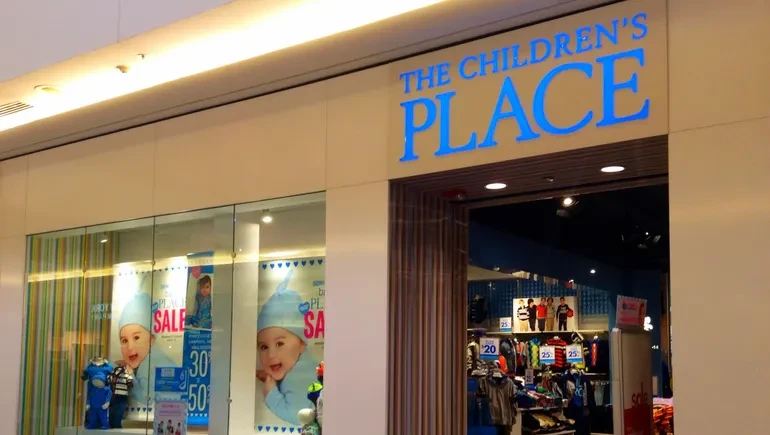
Founded in 1969, the exact same year as retail giant The Gap, children’s apparel specialist The Children’s Place now faces a radically different and far more precarious trajectory. While its historic contemporary managed to navigate decades of shifting consumer preferences, the future of The Children’s Place hangs in the balance as the company works through a court-supervised sale process that could ultimately result in the liquidation of its assets.
The retailer’s journey to this critical juncture has been defined by severe financial headwinds, mounting debt obligations, and a rapidly evolving competitive landscape that left the once-dominant children’s wear specialist struggling to maintain its footing. According to recent court documents, the company lists total debts exceeding $881 million alongside total assets valued at approximately $742 million.
Despite these overwhelming financial pressures, leadership remains focused on executing an orderly transition. Rudy Morando, the company’s co-chief restructuring officer, emphasized the historic scale and responsibility of the ongoing proceedings in a formal statement.
"For nearly 60 years, The Children’s Place has supported growing families with apparel that customers have come to know and love," Morando said. "We recognize the significance of this development for our employees, customers, vendors, and other partners, and we are committed to conducting an efficient and transparent sale process."
A Broad Footprint and International Reach
Operating primarily through its core namesake brand as well as Gymboree, The Children’s Place has maintained a substantial retail footprint. The business sells merchandise through two distinct digital storefronts and operates roughly 500 brick-and-mortar retail stores across North America. In addition to its direct-to-consumer operations, the company distributes its products via prominent wholesale marketplaces, including Amazon.
Remarkably, the retailer was actively pursuing physical expansion right up until its financial restructuring came to a head, opening 19 new stores during the second quarter of the year. Beyond its domestic operations, the company maintains a wider global footprint. Financial filings and corporate investor resources indicate that the brand reaches consumers across 13 international markets through a network of 10 franchises, various wholesale partnerships, and active social media sales channels.
Pressures from Inflation, Competition, and Strategic Missteps
The root causes of the retailer’s financial distress stem from a confluence of macroeconomic pressures and internal miscalculations. In recent years, the company watched consumer demand for value-priced children’s clothing steadily decline. That drop-off in demand, combined persistent inflation, fluctuating tariffs, and intensifying competition within the children’s apparel sector, severely compressed the company’s financial margins.
According to Neil Saunders, managing director at GlobalData, the competitive pressure has been relentless. Major big-box competitors and off-price operators—including heavyweights such as Target, Walmart, Amazon, and various discount retailers—have significantly upgraded the quality and design of their children’s clothing lines while continuing to offer them at aggressively low prices. These large-scale competitors have successfully captured substantial market share at the expense of dedicated specialty retailers like The Children’s Place, Saunders noted in emailed comments.
Compounding these external market challenges, the company made strategic operational missteps that alienated shoppers and strained its balance sheet. Saunders pointed out that The Children’s Place made it considerably easier for budget-conscious parents to take their business elsewhere when management chose to raise the minimum spending threshold required for free shipping on online orders.
Furthermore, the company made questionable financial decisions in the wake of a temporary sales boom experienced in 2021. Rather than fortifying its financial position against future market corrections, the retailer opted to execute share buybacks, effectively adding to an already hefty debt load.
"That proved to be a huge mistake, especially as the fortunes of the company changed in 2022 and beyond," Saunders observed.
An infusion of capital from Saudi investment firm Mithaq Capital provided temporary relief when the firm acquired a majority ownership stake in the retailer two years ago. However, that financial lifeline ultimately proved insufficient. By this point, Saunders asserts, The Children’s Place requires "a complete financial restructuring and overhaul."
Evaluating Bids and Potential Buyers
As the restructuring process moves forward, the company is actively weighing multiple paths for its future. Court documents reveal that The Children’s Place has already received a total of nine distinct bids. Among these proposals, six are structured as going-concern transactions or intellectual property-related deals designed to keep elements of the business alive. Conversely, three of the proposals are equity liquidation proposals that would involve selling substantially all of the retailer’s assets.
Additionally, the company has received three fee-based bids specifically focused on liquidating its remaining inventory and certain associated assets. Discussions among stakeholders and prospective buyers remain ongoing, according to company statements.
The immediate next benchmark in the court-supervised process arrives in approximately a week, when a stalking horse bid is due. This initial baseline offer will establish the minimum financial threshold that any competing proposals must surpass to be considered.
"Today’s announcement marks an important step in our efforts to secure the best path forward for The Children’s Place," Morando reiterated.
Despite the severity of the retailer’s operational and financial troubles, industry experts believe there is genuine appetite among prospective buyers for key components of the business. Saunders suggests that strong corporate interest will likely materialize for the core Children’s Place and Gymboree brand names, their established e-commerce infrastructure, and potentially a curated selection of physical store locations.
"This will most likely come from the big brand conglomerates who will want to integrate Children’s Place into their wider businesses," Saunders explained.
Speculation surrounding potential buyers has already begun circulating within financial and retail analysis circles. Last month, analysts at Debtwire reported that The Children’s Place was actively exploring bankruptcy proceedings alongside a prospective sale, explicitly identifying Catalyst Brands—the owner of J.C. Penney—among the potential interested bidders. According to that reporting, Catalyst has expressed specific interest in acquiring the retailer’s valuable intellectual property alongside roughly 200 of its physical store locations.
While Catalyst did not immediately respond to requests for comment on the reports and representatives for The Children’s Place declined to comment, the precedent for such a transaction is well-established within the retail sector. Several major names currently housed within Catalyst’s diverse portfolio, including J.C. Penney, Brooks Brothers, Aeropostale, and Lucky Brand, were themselves successfully acquired out of formal bankruptcy restructuring processes. As the upcoming deadlines for stalking horse bids approach, the definitive fate of the nearly six-decade-old children’s apparel specialist remains to be written.