




The recently opened Powerhouse Parramatta in Australia has become the home of an ambitious, large-scale immersive installation that invites visitors to experience water, light, and ancient sandstone firsthand. Titled Overflow, the exhibition transforms a naturally lit gallery space into a shifting, dynamic tidal landscape grounded in the living principles of First Nations Water Country. Conceived by Wiradjuri woman Emily McDaniel and designed by Tyrrell Studio, the project brings together the cultural stories, practices, and ecological knowledge of seven Aboriginal organizations from across New South Wales.
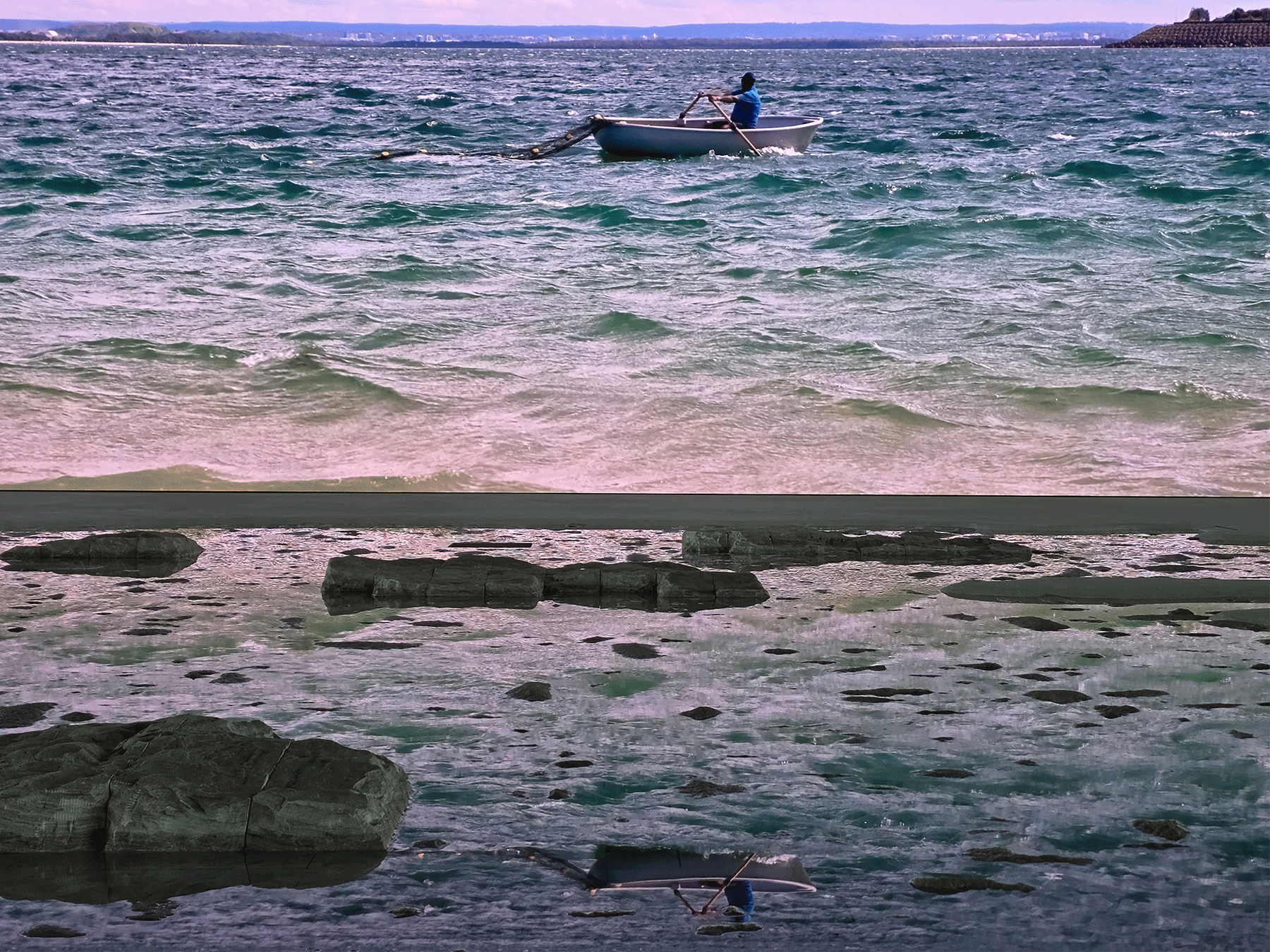
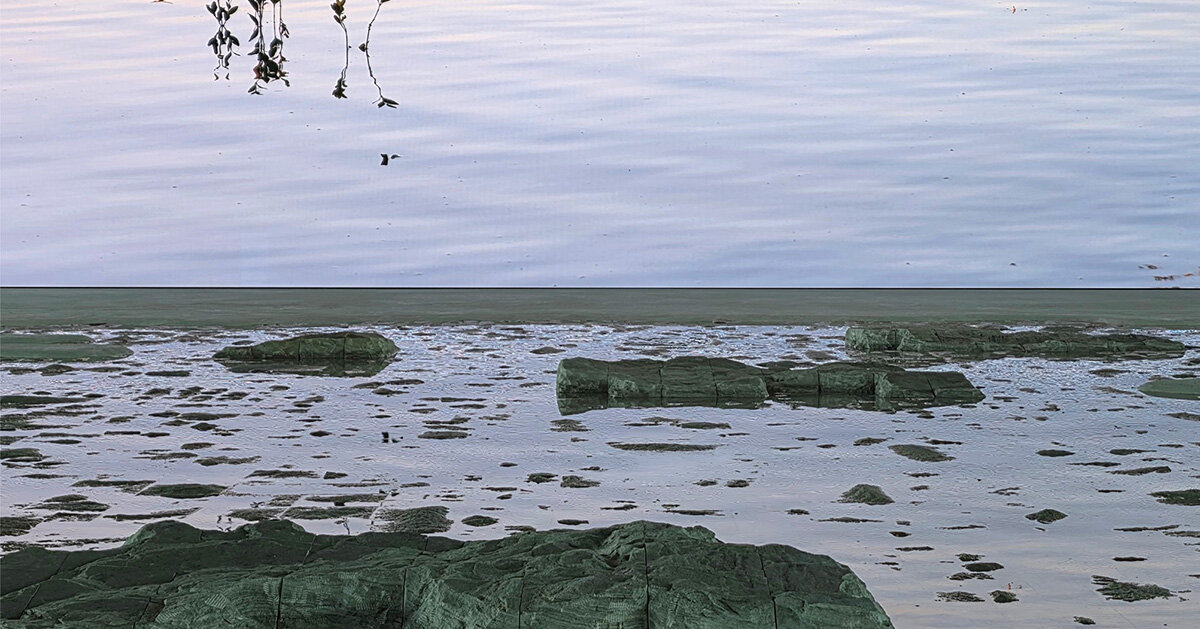
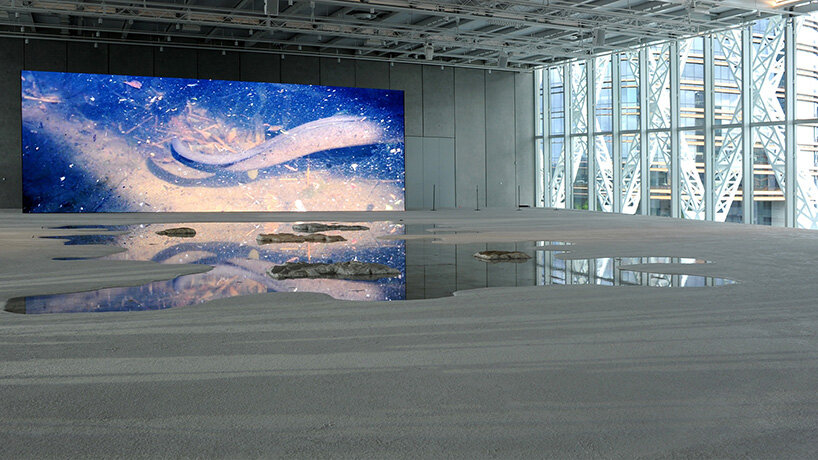
Occupying a gallery space measuring approximately 60 by 40 meters, Overflow shifts the traditional museum-going experience by requiring visitors to remove their shoes and walk barefoot across a shallow, moving pool of water flowing over an abstracted sandstone rock shelf. This sculpted stone surface directly references the geological terrain beneath Parramatta, where a complex river system has shaped the surrounding environment over tens of thousands of years. As water levels rise and recede throughout the day, different sections of the sculpted rock emerge and disappear, creating a living topography that alters the gallery environment in real time.
The movement of the water introduces a delicate play of natural light and shadow across the space. Reflections of the building’s structural steel framework and the shifting sky above appear on the surface of the shallow pool. When the water level rises, the installation forms a broad, glassy reflective plane that mirrors the architecture; when it retreats, the rugged sandstone outcrops reappear, establishing a continuous cycle of revelation and concealment that mirrors natural hydrological processes.
Water Country Beyond the Riverbank
The creative and spatial design executed by Tyrrell Studio draws on a profound, historical understanding of the Parramatta River as an expansive, changing landscape rather than a confined municipal channel. Before European settlement, the regional waterway occupied a vast, interconnected terrain shaped by daily tidal movements, shifting sediment deposits, and the complex ecological mixing point where freshwater met saltwater. Its banks were fluid, permeable zones rather than the rigid, engineered boundaries introduced by contemporary urban infrastructure.
Over generations, European settlement systematically altered this delicate ecological relationship. The introduction of weirs, built-up riverbanks, and concrete drainage channels transformed a naturally volatile and dynamic river into a controlled, highly contained waterway. Tyrrell Studio’s design for Overflow directly responds to this historical shift, encouraging visitors to reconsider the hidden systems and ancient hydrological pathways that lie far beyond the visible concrete banks of the modern city.
By allowing water to gather, spread, and withdraw naturally across the stone floor, the installation makes the invisible processes of the former landscape perceptible once more. The unpredictable interplay of water, changing light, and shifting reflections brings heightened attention to the deep environmental forces that continue to shape the terrain beneath the contemporary urban center, bridging the gap between historical ecology and contemporary spatial design.
Making Space for Country
At the cultural core of Overflow is Emily McDaniel’s foundational concept, which places Aboriginal cultural practices, governance, and stewardship at the center of the visitor experience. Seven distinct Indigenous organizations from across New South Wales contributed their ancestral knowledge and contemporary ecological practices to the project. These participating entities include the Baramadagal Community, Gamay Rangers, The Goondee Aboriginal Keeping Place and Museum, Jagun Alliance, Joonga Land and Water Aboriginal Corporation, Moogahlin Performing Arts, and Naru Aboriginal Corporation.
The vital work of these organizations encompasses a wide spectrum of environmental care, ranging from native species management and sustainable fishing to scientific water monitoring, flood mitigation strategies, indigenous language revitalization, and the assertion of cultural water rights. These practices enter the gallery environment through a series of striking films directed by acclaimed Kamilaroi filmmaker Ivan Sen.
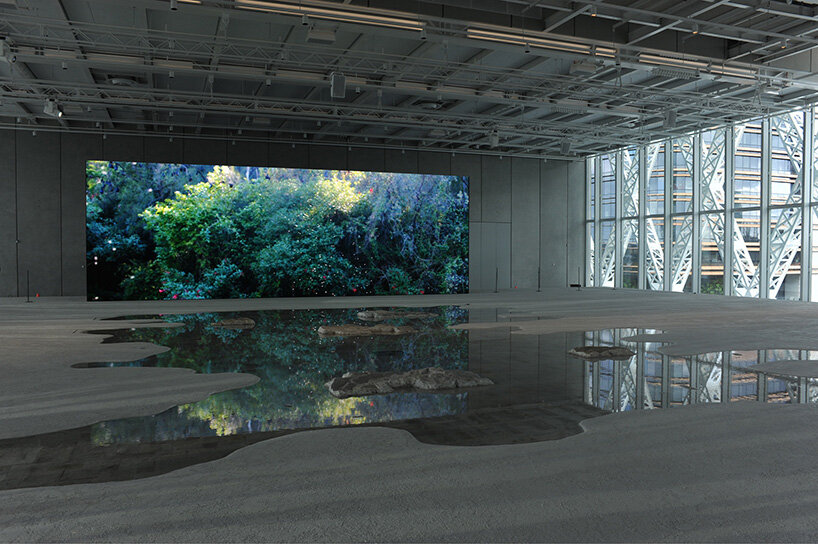
Sen’s cinematic projections bring distant waterways, regional communities, and diverse forms of Indigenous knowledge into a direct, conversational dialogue with the physical architecture of the museum in Parramatta. Projected onto the gallery walls and cast across the surface of the water, the films are continuously disrupted and reformed as ripples travel across the pool, fragmenting the imagery before it reforms across the dry sandstone outcrops and the bodies of walking visitors.
From the Riverfront into the Museum
The indoor environment of Overflow is closely connected to Tyrrell Studio’s broader spatial work immediately outside the museum doors, particularly its permanent 3,000-square-meter riverfront landscape, Ngurra Budyari Ngalawagulang. Developed in close collaboration with Baramadagal elders and Dharug community representatives, this extensive public realm draws deeply upon the cultural and natural history of Water Country.
The outdoor landscape is composed of winding sandstone paths, native vegetation, and engineered rain gardens designed to capture stormwater. Water naturally collects in shallow ground hollows, resilient plants push up through the stone paving, and the exposed materials gradually weather and change with direct exposure to the elements. This approach allows natural ecological processes to dictate the visual and sensory character of the public space, creating a dynamic environment that shifts seamlessly with the weather, the changing seasons, and the passage of time.
Inside the museum galleries, Overflow picks up precisely where the riverfront landscape leaves off. The same raw materials, spatial philosophies, and ecological concepts flow directly into the interior, where water moves freely across sculpted sandstone rather than being restricted to a traditional decorative pool. This connection between the interior and exterior environments is palpable throughout the day, extending even to the early morning hours when natural mist rising from the nearby Parramatta River drifts upward toward the upper architectural levels of the cultural institution.
The project brings together an extensive multidisciplinary team. Exhibition design was led by Mark Tyrrell, Sarah Yates, Gabrielle Veringa, Hadi Abu Ammar, and Dan Sharp of Tyrrell Studio. The curatorial and production framework was guided by the Powerhouse team, including Lisa Havilah, Beau James, Clare Holland, Marco Rinaldi, and Ivan Muniz Reed, with photography documenting the installation provided by Mark Tyrrell.