





Silver—a lustrous, white metallic element designated by the symbol Ag on the Periodic Table—stands as one of humanity’s most vital and enduring resources. Harder than gold yet softer than copper, silver ranks second only to gold in both malleability and ductility. Because of its exceptional resistance to oxidation, it is classified among the noble metals. Throughout history, silver has transcended its physical utility, serving as a cornerstone for jewelry, fine art, and global economies. While modern markets often overshadow silver by pricing it well below gold and platinum, historical analyses reveal that silver’s impact on human civilization, technological innovation, and warfare has arguably surpassed that of its rarer metallic cousins.
Silver Significance
To dismiss silver based on its contemporary affordability is to misunderstand its profound historical weight. At various epochs, silver was valued more highly than gold. Furthermore, the sheer volume of silver utilized in jewelry and decorative objects historically outweighs all other precious metals by a substantial margin. The versatile white metal catalyzed far more technological advances in mining and metallurgy than any other precious substance. Entire economies have risen and fallen on the availability of silver deposits, and access to these subterranean riches has repeatedly shifted the balance of power and altered the course of human history.
Bronze Age Silver
Mesopotamia
The historical narrative of silver begins in the late fourth millennium BCE, when ingenious inhabitants of modern-day Turkey discovered a method to extract silver from lead using the process of cupellation. Though few artifacts survive from this nascent era, those that do demonstrate the remarkable capabilities of Bronze Age silversmiths.
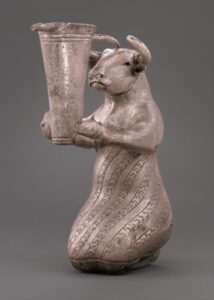
At the dawn of recorded history, silver functioned as a medium of exchange in Mesopotamia. Rather than standardized coins, silver circulated by weight or in the form of rings. The Mesopotamian silversmith’s workshop closely mirrored that of the goldsmith, and the two crafts were frequently practiced in the same establishment. Although silver is slightly less ductile than gold—requiring more frequent annealing during fabrication—it can be cast, hammered into exceptionally thin sheets, engraved, embossed, worked in repoussé, and decorated with delicate filigree and granulation. Archaeological excavations have unearthed high-purity silver vessels, statuettes, and jewelry, revealing objects of remarkable softness and refinement.
Egypt
Ancient Egyptians held a deep fascination for the rare and exotic. Long supply lines were traversed to acquire Afghan lapis lazuli, arguably their most prized gemstone. Along these ancient trade networks, silver also reached the Nile Valley, where it was treated with equal reverence and viewed as an exclusive luxury. While gold was readily accessible nearby in the mountains of the Eastern Desert and Nubia—and electrum may have been sourced locally—pure silver had to be imported. Consequently, pure silver was initially valued more highly than gold, reserved exclusively for the uppermost echelons of society.
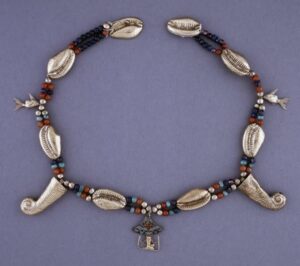
By approximately 1600 BCE, an increase in supply caused the value of silver to drop to roughly half that of gold. By this period, it functioned as an abstract currency of relatively stable value. Its popularity, however, remained subject to the shifting whims of fashion. King Tutankhamun’s tomb contained remarkably few silver objects, whereas Pharaoh Sheshonq II was laid to rest within an entirely silver sarcophagus.
Minoa, Mycenae & Phoenicia
The Minoans and, later, the Mycenaeans operated as prolific traders, frequently handling significant quantities of silver. Consequently, early Greek silver jewelry appears regularly in archaeological excavations across the Greek mainland, Crete, and Cyprus.
Meanwhile, the Phoenicians played a pivotal role in shaping Mediterranean civilization through maritime colonization and widespread trade. They initiated the large-scale exploitation of Spanish silver deposits, distributing the metal throughout the classical world. Their commercial incentives stripped silver of its exclusively rare and exotic status, elevating its availability to unprecedented levels.
Classical Silver
To both ancient Greek and Roman societies, a steady supply of silver was paramount, as their monetary systems—properly minted silver coinage—depended entirely upon it. While archaeological records show fewer surviving silver jewelry items compared to gold, this discrepancy is largely attributed to the heavy recycling and remelting of the metal over the centuries. Surviving examples demonstrate that silver was fashioned into every conceivable type of adornment, including finger rings, anklets, and armlets.
Romans held a particular fondness for niello, a surface decoration technique resembling enameling but executed with silver sulfate rather than glass. Niello yielded a much tougher finish with a distinctive metallic luster rather than a vitreous one. During the Roman occupation of Northern Europe, niello spread across the continent, as evidenced by Anglo-Saxon discoveries in Britain and Eastern Europe.
The Roman author Pliny the Elder captured the cultural obsession with silver in his encyclopedic work, Naturalis Historia. Describing silver ore, Pliny noted that it is found exclusively in deep subterranean shafts without the surface indicators associated with gold. He detailed the extraction process, noting that silver is melted in combination with lead or galena, causing the silver to float on the surface like oil on water.
Pliny observed that while silver was found across Roman provinces, the finest originated in Spain. He marveled that the mines originally opened by Hannibal—such as the mine named Bæbelo—remained operational centuries later, yielding hundreds of pounds of silver daily and requiring continuous, torch-lit drainage operations by relays of workers. Pliny also documented contemporary testing methods, such as placing silver on a white-hot iron shovel to observe color changes, and lamented the extravagant escalation of Roman luxury, contrasting the austere habits of early generals like Scipio Africanus with the immense silver table services and carriages deployed by later generations.
Celtic Silver
Among Celtic tribes, silver and bronze served as the primary metals for personal adornment. Decorated brooches, torcs, and lunulae represented the most common forms of jewelry. Prior to the Roman conquest, Celtic societies did not utilize coinage; instead, they relied on "ring money." These standardized rings—crafted from silver, copper, bronze, or gold—were not intended to be worn as personal ornaments, but functioned strictly as currency.
Medieval Silver
Following the collapse of Roman supply lines, gold grew exceedingly scarce across Europe, causing silver to emerge as the preeminent metal for jewelry and decorative arts. Germanic jewelry transitioned toward functional items such as fibulae, disc brooches, penannular brooches, and belt buckles, frequently fashioned from silver, gilded, or inlaid with precious stones, with garnets reigning as the preferred gemstone.
Beginning around 800 CE, Viking military campaigns along the northwest European coasts channeled vast quantities of silver into Scandinavia, where silversmithing thrived and silver jewelry became a deeply ingrained cultural tradition. The subsequent discovery of Swedish silver deposits around the turn of the first millennium further reinforced the widespread custom of wearing silver.
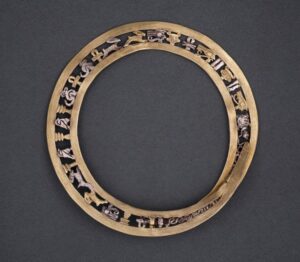
The Roman affinity for niello was inherited by Germanic tribes, who utilized the stark black-and-white contrast to accentuate intricate Germanic engraving patterns. A prime example of this metallurgical artistry is the Fuller Brooch, a 9th-century Anglo-Saxon circular brooch housed in the British Museum. Crafted from hammered sheet metal with a convex section, the brooch is extensively inlaid with niello. It features an openwork outer zone encircling a central roundel divided by broad milled borders into a central lozenge shape surrounded by four subsidiary lentoid fields, punctuated by decorative bosses. The decorative program depicts personifications of the Five Senses—Sight occupying the central field, flanked by representations of Taste, Smell, Touch, and Hearing—set against a dark nielloed ground.
As European society evolved and eastern trade routes reopened, gold reclaimed its status as the preferred metal for fine jewelry. Nevertheless, this same commercial expansion fostered a burgeoning middle class, enabling individuals outside the traditional ruling elite to afford personal adornments. Those of modest means increasingly turned to silver jewelry. The repertoire of silver items expanded beyond functional fasteners toward purely decorative and symbolic pieces, including finger rings, bangles, and pendants. By the late Middle Ages, the trade in silver jewelry and silverware became formally regulated by assaying and hallmarking systems.
Renaissance Silver
The Renaissance, spanning roughly from 1500 to 1600 with roots extending to late 13th-century Northern Italy, was characterized by revitalized trade with the Levant, demographic recovery following the plague, and the rapid expansion of Northern European commercial centers in regions like the Netherlands. Following the fall of Byzantium in 1453, refugee scholars brought long-forgotten classical knowledge to Europe, while Italy flourished under the dual influence of Asian trade wealth and Church patronage.
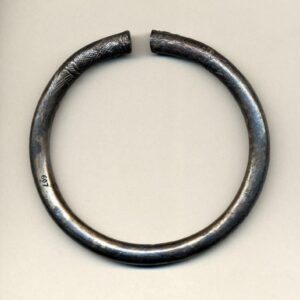
The Age of Exploration radically transformed the global economy. Spanish, Portuguese, French, Dutch, and English explorers laid claim to new territories following Christopher Columbus’s voyages. Spanish conquistadors, including Pizarro in the Inca Empire and Cortés in the Aztec Empire, integrated vast territories into the European sphere. Following the discovery of major silver deposits in modern-day Mexico in 1546, silver mines poured staggering quantities of the metal into international trade networks, with substantial shipments even traveling directly across the Pacific from South America to China in exchange for Asian commodities. While silversmithing techniques largely mirrored medieval practices, the sheer abundance of American silver entering Europe sustained its role as a currency and maintained its affordability for jewelry production.
Baroque Silver
The Baroque period, spanning from 1600 to 1700, witnessed an escalating influx of South American silver into European markets. As England, France, and the Netherlands established colonial outposts in the New World, the newly independent Netherlands emerged as a formidable naval and artistic power, frequently engaging in maritime conflicts with Spain and England over heavily laden silver galleons returning from the Americas.
While manufacturing techniques remained largely consistent with prior centuries, notable innovations emerged. Portable timepieces became a fashionable novelty, frequently housed in silver cases. Additionally, silver was increasingly utilized to set diamonds. The white metal perfectly complemented the absence of color in diamonds, which were arriving in Europe in growing quantities following the establishment of direct trade settlements on the Indian peninsula, bypassing earlier Arabic middlemen.
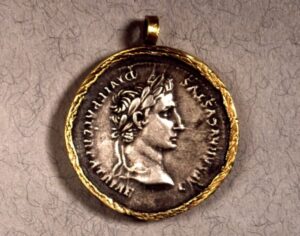
Georgian Silver
During the Georgian era, continuous discoveries of South American silver deposits fueled a booming mining industry. The Baroque practice of setting diamonds in silver became standard workshop procedure. Diamonds flowed into Europe in unprecedented quantities from India and, after 1727, from newly discovered deposits in Brazil. Fine jewelry of the period was frequently executed in gold with silver-topped fronts, though items composed entirely of silver remained common. The characteristic cut-down collet settings of Georgian jewelry were almost universally crafted from silver to enhance the brilliant white appearance of the mounted diamonds.
In 1777, manufacturing operations were revolutionized by the introduction of die striking. This technique involved stamping and cutting precious metal components using steel dies, presses, or drop hammers, after which the stamped elements were hand-assembled into finished pieces. This cost-effective production method birthed the earliest mass-produced jewelry lines, making items significantly more affordable than traditional handmade wares. Naturally, accessible metals like silver were heavily utilized in die-struck production, flooding the market with affordable silver ornaments.
Victorian Silver
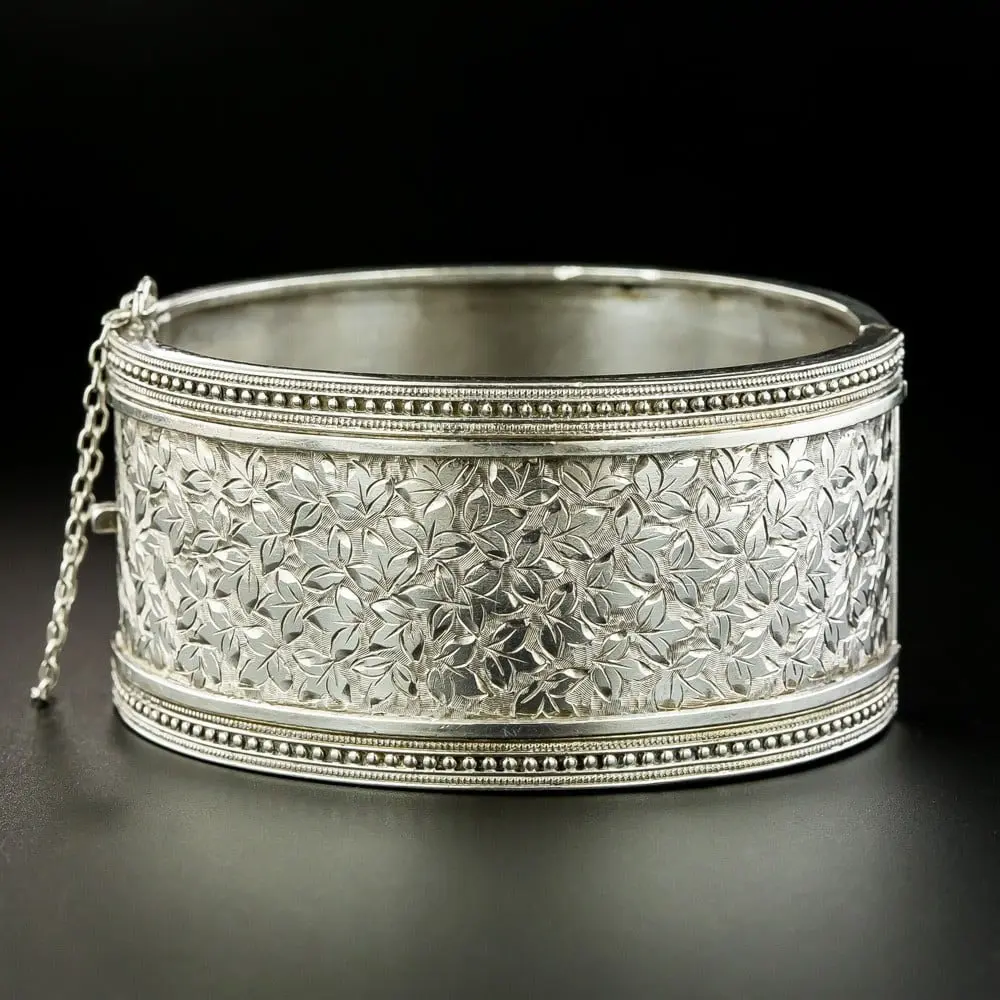
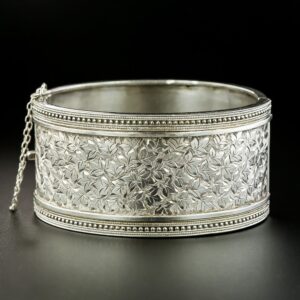
The Industrial Revolution exerted a profound influence on Victorian jewelry manufacturing, with silver serving as a primary medium for mechanized stamping and die-struck production perfected throughout the 19th century. Following Queen Victoria and Prince Albert’s acquisition of Balmoral Castle in Scotland in 1848, Scottish agate jewelry surged into international fashion, typically mounted in silver in accordance with Northern European traditions.
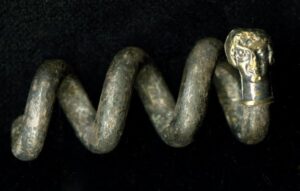
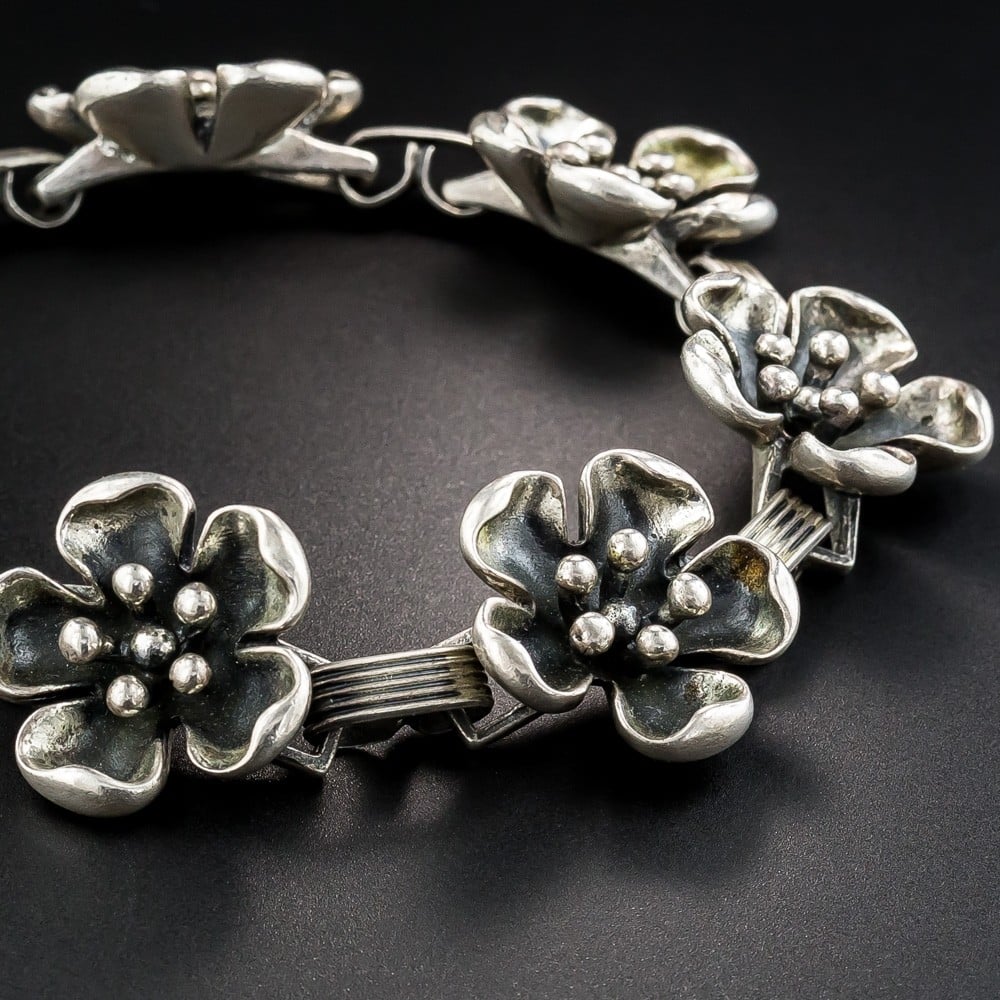
Toward the end of the Victorian era, the Arts and Crafts movement arose as a direct aesthetic reaction against industrial mass production. Arts and Crafts jewelry prioritized artistic design and handcraftsmanship over the intrinsic material value of precious metals and gemstones. Practitioners favored cabochon-cut stones—usually secured in simple bezel settings—and overwhelmingly preferred silver over gold, cementing the metal’s status in modern artistic design.