




For contemporary jeweler Marie-Caroline Locquet, adornment is rarely a celebration of wealth, status, or conventional beauty. Instead, she views her pieces as conceptual provocations. Producing items that function as restraints, defensive weapons, and sculptural armor, Locquet crafts unique wearing experiences designed to explore shared human fragility. By drawing subtle and overt implications from themes of violence and sexual dominance, her work evokes a complex psychological landscape where social discomfort dances on the edge of erotic tension.
This uncompromising vision has earned Locquet recognition as a finalist for the prestigious Young Artist Award. Supported generously by Karen and Michael Rotenberg, the biennial award acknowledges promise, innovation, and individuality in the work of emerging jewelry artists aged 35 or younger. Through this prize, the Art Jewelry Forum (AJF) actively champions fresh, disruptive work intended to inspire the future trajectory of the field.
In a wide-ranging interview with AJF, Locquet reflects on her introduction to the discipline, the conceptual weight behind her pieces, the challenges of working on the fringes of wearability, and what this nomination means for her expanding artistic practice.
A Radical Awakening
Locquet’s journey into the world of contemporary jewelry began during her earliest days in art school. It was there that she encountered radical works by established artists that fundamentally challenged her understanding of what jewelry could be. Rather than pieces centered on traditional prettiness or the display of affluence, she discovered creations that felt strange, uneasy, and inherently dangerous.
Citing the provocative bottle necks of Bernhard Schobinger and the conceptual pieces of Dorothea Pruhl, Locquet explains how these radical shifts in perspective altered her artistic worldview. "It really changed my point of view on art," she notes. "In a way, jewelry interests me as an object of disruption, reflection, and provocation."
This realization propelled her into the field equipped with endless questions and a sharp curiosity. She became consumed by a central, driving question: Why make—and consequently wear—jewelry that seems so disturbing at first sight? What does it mean to create something deemed entirely "unwearable"? That exploration of unwearability quickly evolved into the cornerstone of her entire research-based practice.
Recognition and Validation
Being named a finalist for the Young Artist Award serves as an important milestone for the French artist. Coming years into a dedicated pursuit of an unconventional artistic path, the nomination provides validation for the rigorous, sometimes abrasive concepts she brings to the medium.
"Being selected as a finalist is a meaningful recognition of a direction I have been pursuing for several years," Locquet shares. "It gives me confidence to keep going radical, pushing things further, and challenging myself, the wearer, and the viewer."
Exploring Violence, Confinement, and Fragility
Growing up in the north of France, Locquet experienced firsthand the social pressures of self-demonstration and the subtle camouflage of social affiliations through everyday adornment. This early exposure fostered a conceptual interest in jewelry, prompting her to approach the medium more as a subject of sociological and psychological study than from a place of aesthetic affinity.
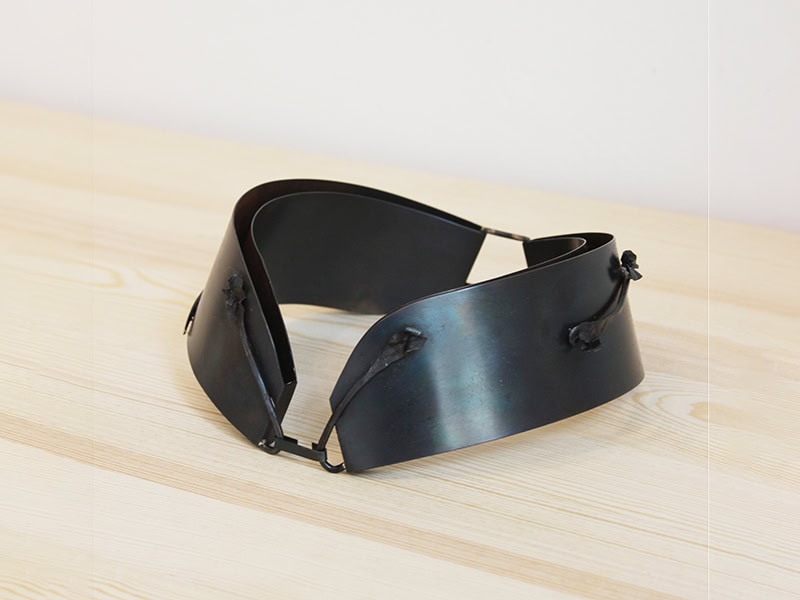
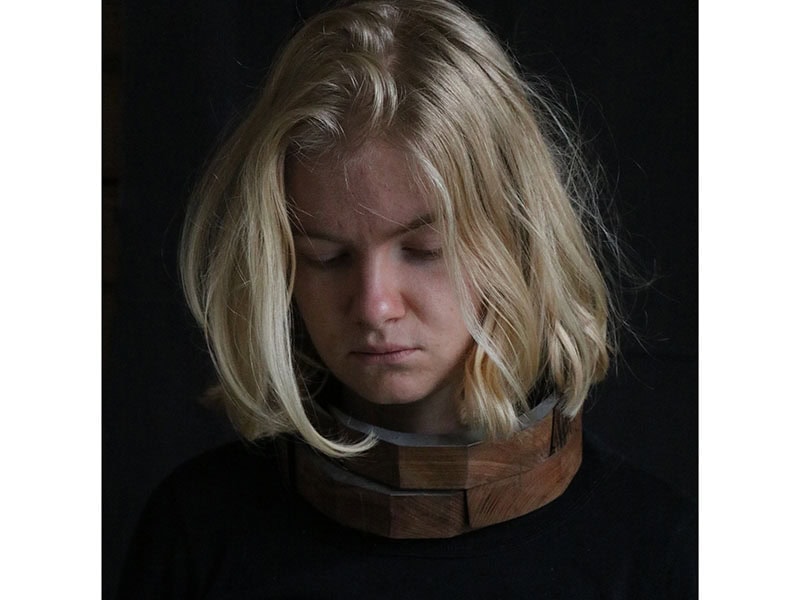
In her practice, each piece consciously redefines the status of jewelry. Rather than functioning as a showcase object highlighting power or wealth, her work acts as a confrontation with high disruptive potential in public spaces. The creations sidestep seduction or passive representation, leaning instead into disturbance, violence, vulnerability, and confinement.
By pushing materials to their absolute limits, Locquet forces them to bare their true nature. The resulting forms evoke a chilling duality of desire and death. Whether functioning as defensive weapons or physical restraints, her pieces offer a unique wearing experience that continuously maintains a razor-thin tension between social discomfort and the temptation of an embrace.
The Anatomy of Hands
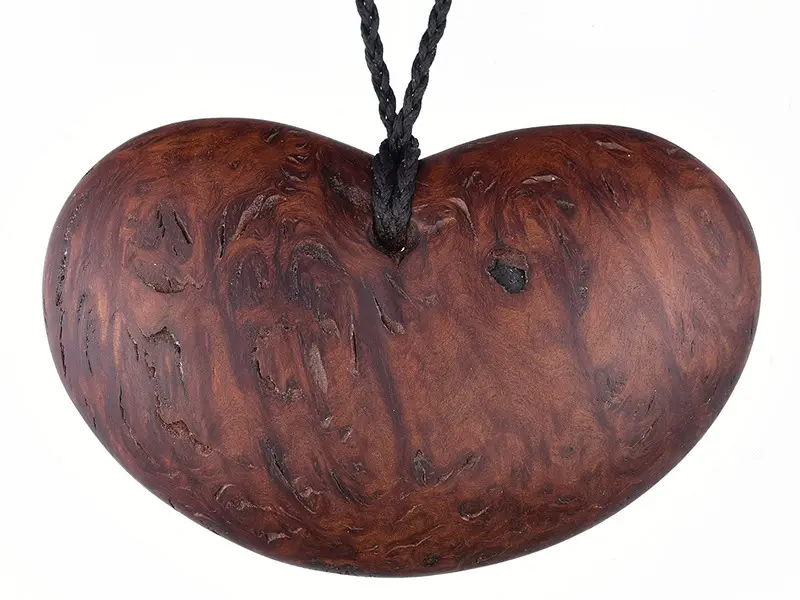
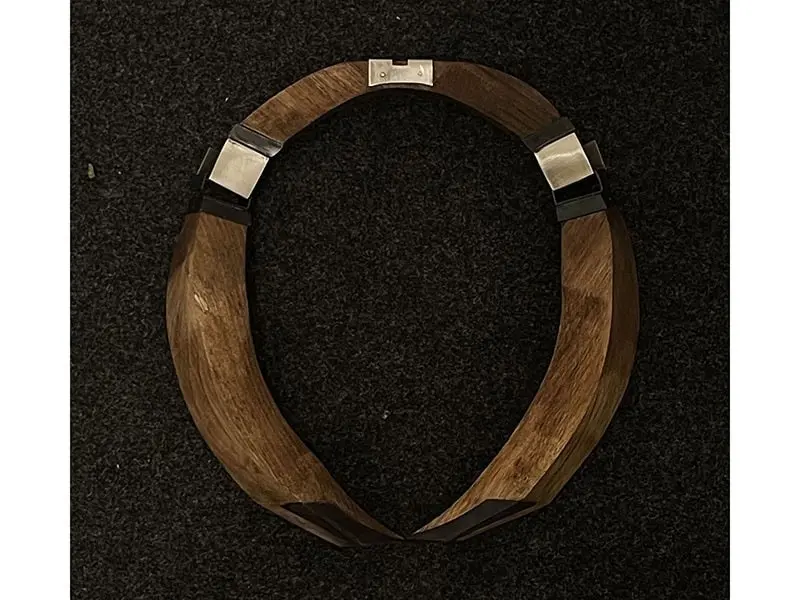
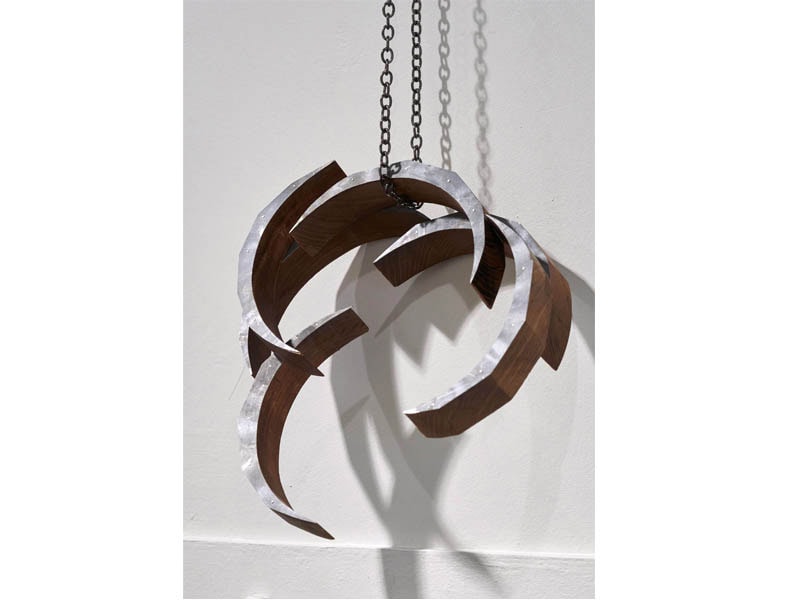
To understand Locquet’s artistic methodology, one need only look closely at her application pieces, such as Hands, a 2024 neckpiece crafted from elm wood, zinc-plated steel, and silver. Her past investigations into the confinement, violence, and vulnerability induced by certain historical artifacts have drawn from varied cultural references. These include the collier d’appartenance—a collar given within submissive relationships—as well as the 19th-century Norman and Auvergnat "slave collar" tradition, historically given to women at marriage as a token of possession, alongside animal labor tools like the horse collar.
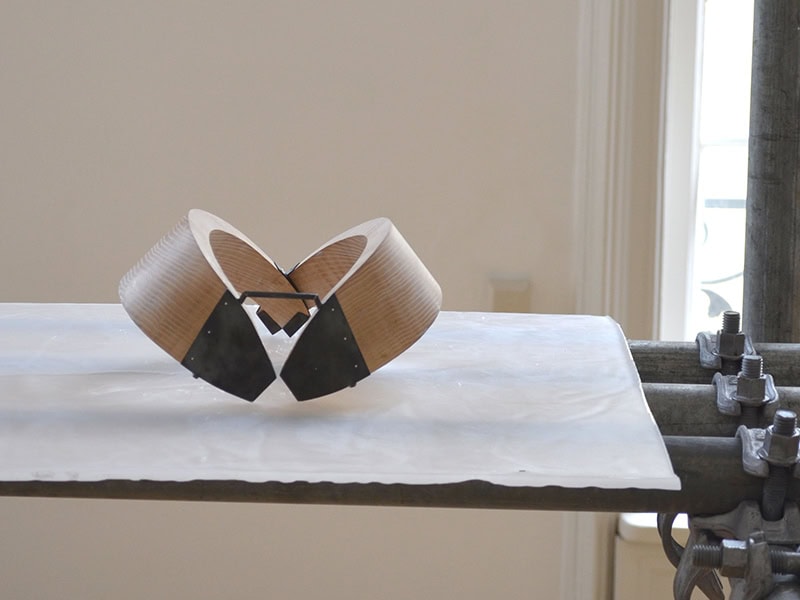
Hands synthesizes these threads while exposing the multi-layered nature of her research. The piece highlights her obsessive focus on complex mechanisms, movements, clasps, and the fragile border separating jewelry from standalone sculpture.
"The piece unfolds and occupies the space like a complex mechanical object, before closing around the neck… like an act of strangulation," Locquet explains. "It’s my most complex and intimate piece, expressing confinement and violence."
The Broad Societal Mirror of Adornment
What excites Locquet most about art jewelry is its capacity to host a complete ecosystem of thought. The medium allows her to seamlessly connect the physical object with deep academic research and spatial design, creating environments where the jewelry truly resonates.
More broadly, she is fascinated by how body ornamentation shapes societal self-image. Every item humans wear draws upon the references, boundaries, and values of the surrounding culture. This interest culminated in an extensive iconographic research project and collection titled "Unwearable"—adornment is impure, makeup is obscene, disguise is an abomination.
Through this ongoing project, Locquet explores how ornamentation, when brought into direct contact with the human body, reveals volumes about social representation and cultural norms, constantly shifting across the boundaries of intimacy, the private sphere, and the public space.
Confronting the Risks and Perceptions of the Field
Despite her passion for the discipline, Locquet acknowledges certain persistent frustrations within the contemporary jewelry community. Reflecting on an exhibition she co-curated with student colleagues during Munich Jewelry Week (MJW) in 2018 titled Jewelry Is Still a Risky Business—a nod to a work by Paul Derrez—she firmly believes that jewelry should retain its inherent riskiness.
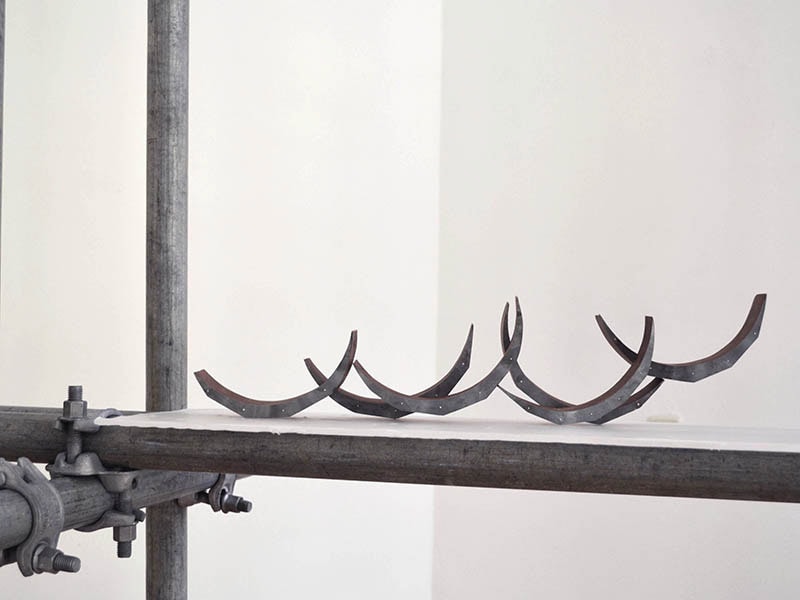
She has frequently encountered the lingering expectation within fine art circles that contemporary jewelry must continually justify its presence. During her studies at a French fine art school, she often met attitudes dismissing the medium as "lesser," superficial, or niche.
While she recognizes this outsider status as a potential strength that fosters fresh perspectives, she also questions whether it creates an unfortunate distance between the field and broader audiences. This very tension informs why some of her pieces, such as Panicroom Vector I, lean into a more literal presentation, serving as accessible entry points for viewers unfamiliar with contemporary art jewelry.
Looking Ahead
Five years removed from her graduation, Locquet expresses deep satisfaction with the evolution of her career. Her practice has recently expanded beyond the standalone object, incorporating spatial dynamics to create immersive environments, a direction she plans to showcase in upcoming exhibitions.
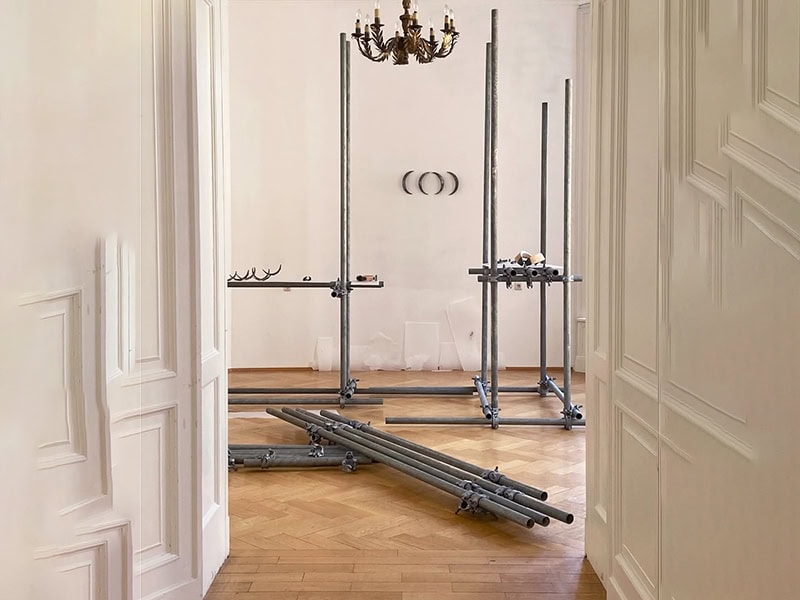
Looking forward, she intends to maintain her artistic momentum through international residencies, collaborative projects with fellow artists, and continued material research. Furthermore, she harbors a strong interest in teaching and academic research, viewing educational spaces as vital environments for pushing the collective definition of body ornament forward.
As she navigates the road ahead, Locquet remains grounded in her process and deeply appreciative of the community supporting her work. "Let’s see what happens in the future," she concludes. "I trust the process, will keep working, and want to thank everyone who supports my work. They have my endless gratitude."