







The modern landscape of personal audio is dominated by smooth surfaces, minimalist silhouettes, and software-driven interfaces. Whether adjusting volume, toggling active noise cancellation, or fine-tuning an equalization curve, listeners today typically interact with their headphones through touch-sensitive panels or hidden companion apps running on smartphones. Industrial design studio Préssec is challenging this digital hegemony with a compelling new concept known as the Tune X3. By imagining a complete return to the tactile controls of traditional audio equipment, the studio has created a headphone design that replaces virtual sliders and software menus with physical, knurled dials and mechanical switches integrated directly into the earcups.
The Tune X3 concept reimagines the way users engage with their music by physically placing a dedicated control marked for bass and treble right at the listener’s fingertips. Rather than forcing users to navigate complex mobile applications or memorize multi-tap gesture controls, Préssec’s design philosophy argues for a more immediate, instinctive relationship between the listener and their sound system. In doing so, the studio draws inspiration from the familiar, hands-on interfaces of vintage stereo receivers and professional mixing consoles, bringing the physical experience of hardware tuning directly to the side of the head.
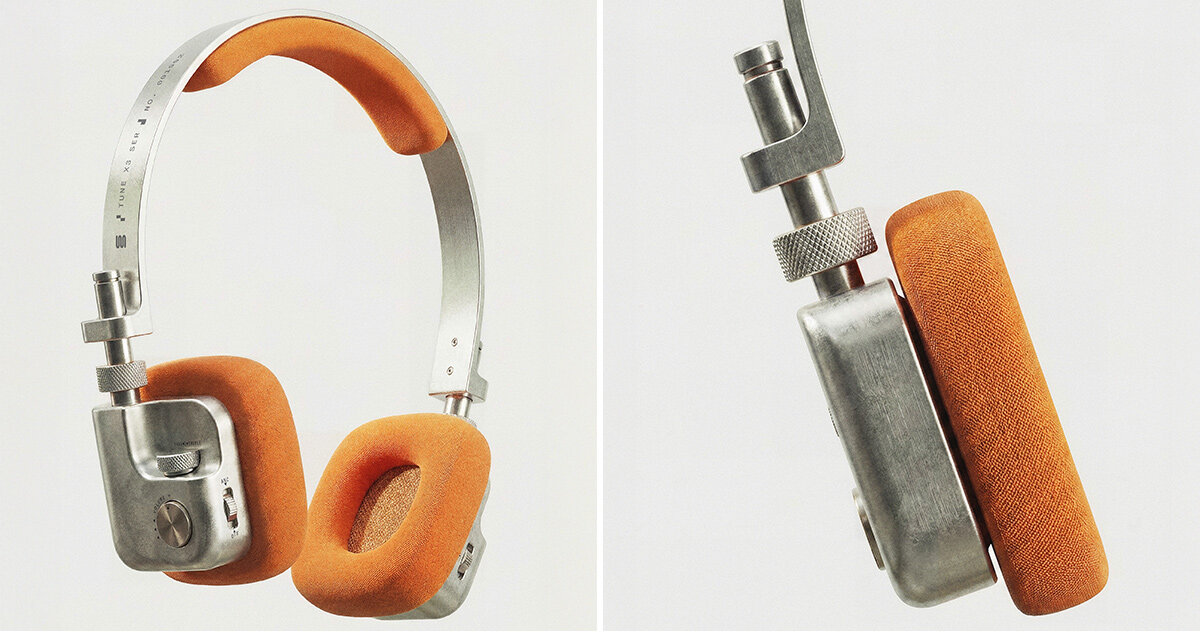
Brushed Aluminum and Vivid Orange Fabric Echo Classic Studio Hardware
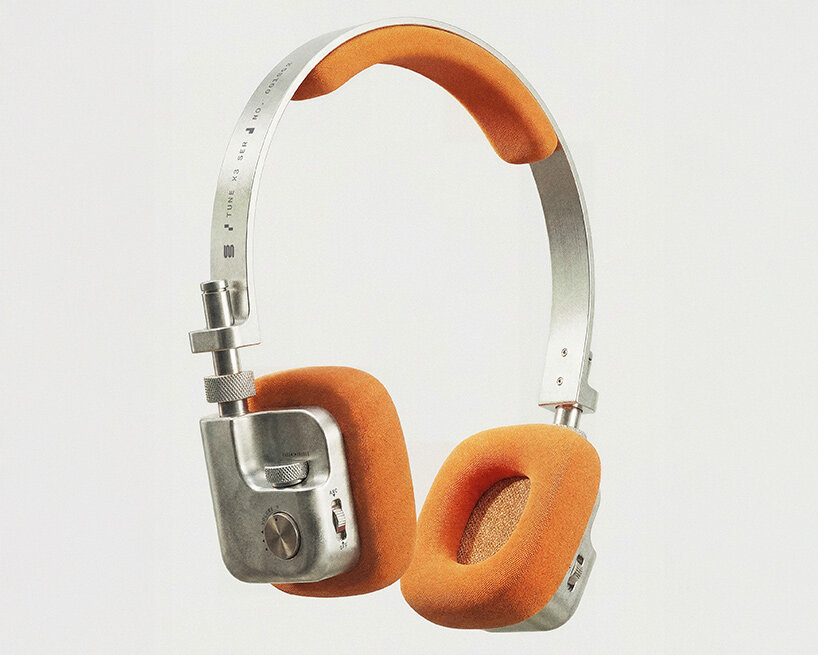
At first glance, the Tune X3 headphones evoke the heavy-duty aesthetic of old studio hardware and professional broadcast gear. The concept features robust brushed aluminum housings paired with vivid orange textile padding across the plush ear cushions and the headband. The design team at Préssec Design deliberately leaves the construction details visible, highlighting the mechanical nature of the product. From the small fasteners aligned along the cold metal body to the cylindrical fittings that connect the substantial earcups to the slender headband, every structural element is proudly displayed.
This deliberate choice of materials creates a striking visual and tactile contrast. The soft, vibrant orange fabric cushions sit against the hard, brushed metallic surfaces of the earcups, while the slender connecting hardware gives the relatively bulky earcups a lighter, more balanced profile. Even the physical controls contribute significantly to this industrial composition. The textured, ridged edges of the mechanical dials interrupt the smooth circular housings, signaling precision engineering and professional utility while maintaining a playful, inviting edge. The overall arrangement feels right at home alongside vintage reel-to-reel tape recorders, massive studio monitors, and classic stereo amplifiers from a bygone era of audio engineering.
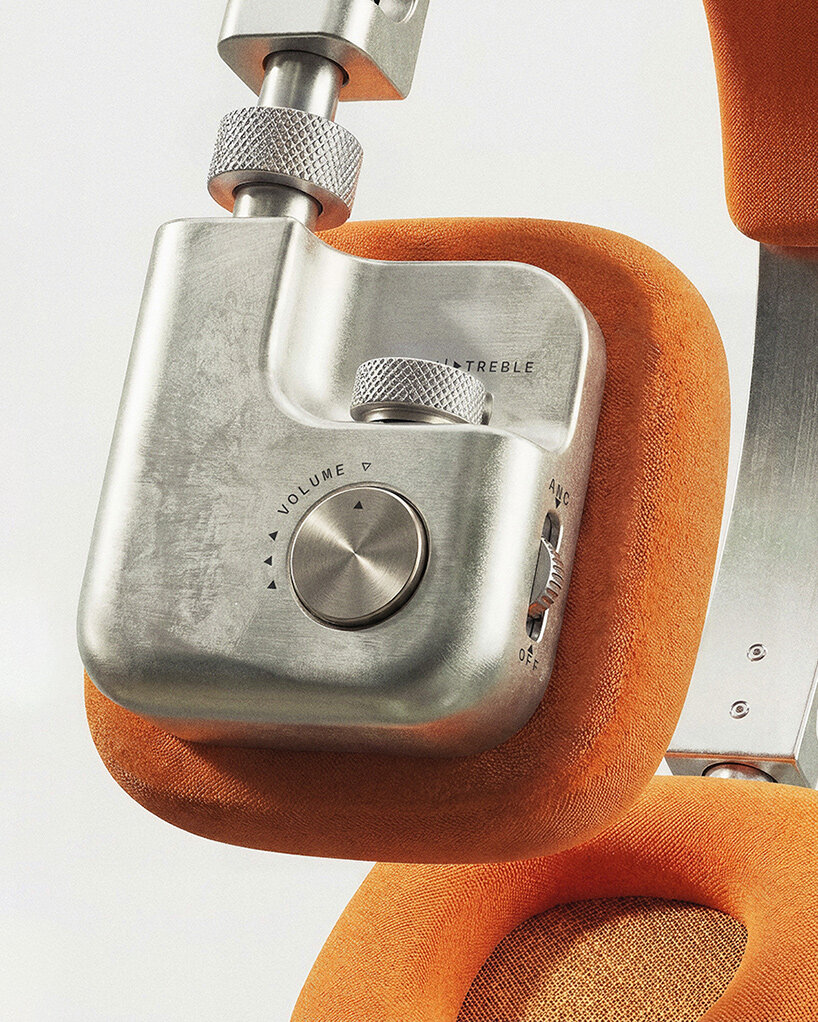
The integration of these physical controls is central to the product’s identity. Volume management, active noise cancellation, and frequency adjustments are all granted their own dedicated, tangible mechanisms. The bass and treble adjustments stand out as the most prominent and engaging detail of the design. Each dial features a carefully ribbed edge designed to offer a satisfying amount of physical resistance beneath the fingertips. Furthermore, the varying shapes and sizes of the dials help users easily distinguish one function from another purely by touch, minimizing the need for guesswork while the headphones are being worn. This tactile variety gives the headphones an unusually hands-on character, successfully recalling an era when interacting with music involved the physical act of turning knobs and flipping switches.
Préssec Explores a Broader Family of Imaginary Electronics
The Tune X3 does not exist in a vacuum; it belongs to an expansive, fictional product family conceptualized by Préssec to explore alternative industrial design trajectories. Alongside the Tune X3 headphones, the studio has developed the CINE X3 camera concept, sharing a cohesive visual language built upon metallic finishes, exposed hardware, and a blend of retro-industrial aesthetics adapted to modern functional requirements. To bring these conceptual ideas to life, the design team utilized modern digital creation tools such as Vizcom during the design process, allowing them to rapidly iterate and explore how an established set of visual references and material palettes could inform multiple diverse products within the same imagined collection.
For now, however, the Tune X3 remains firmly in the realm of speculative design. Its technical specifications, internal acoustic architecture, and concrete production plans have yet to be established. Fundamental questions regarding the overall weight of the metal components, long-term wearing comfort, and the actual acoustic performance of the drivers are deliberately left open by the designers. Despite these unknowns, the interface proposed by the Tune X3 offers a deeply compelling proposition for the future of personal audio design. By making controls completely visible, mechanically intuitive, and physically gratifying, the concept suggests a pathway toward a more intimate and less abstract relationship with consumer electronics. It invites prospective listeners to imagine the simple satisfaction of reaching up to twist a dedicated bass dial halfway through a favorite record, bridging the gap between nostalgic analog charm and modern listening habits.