




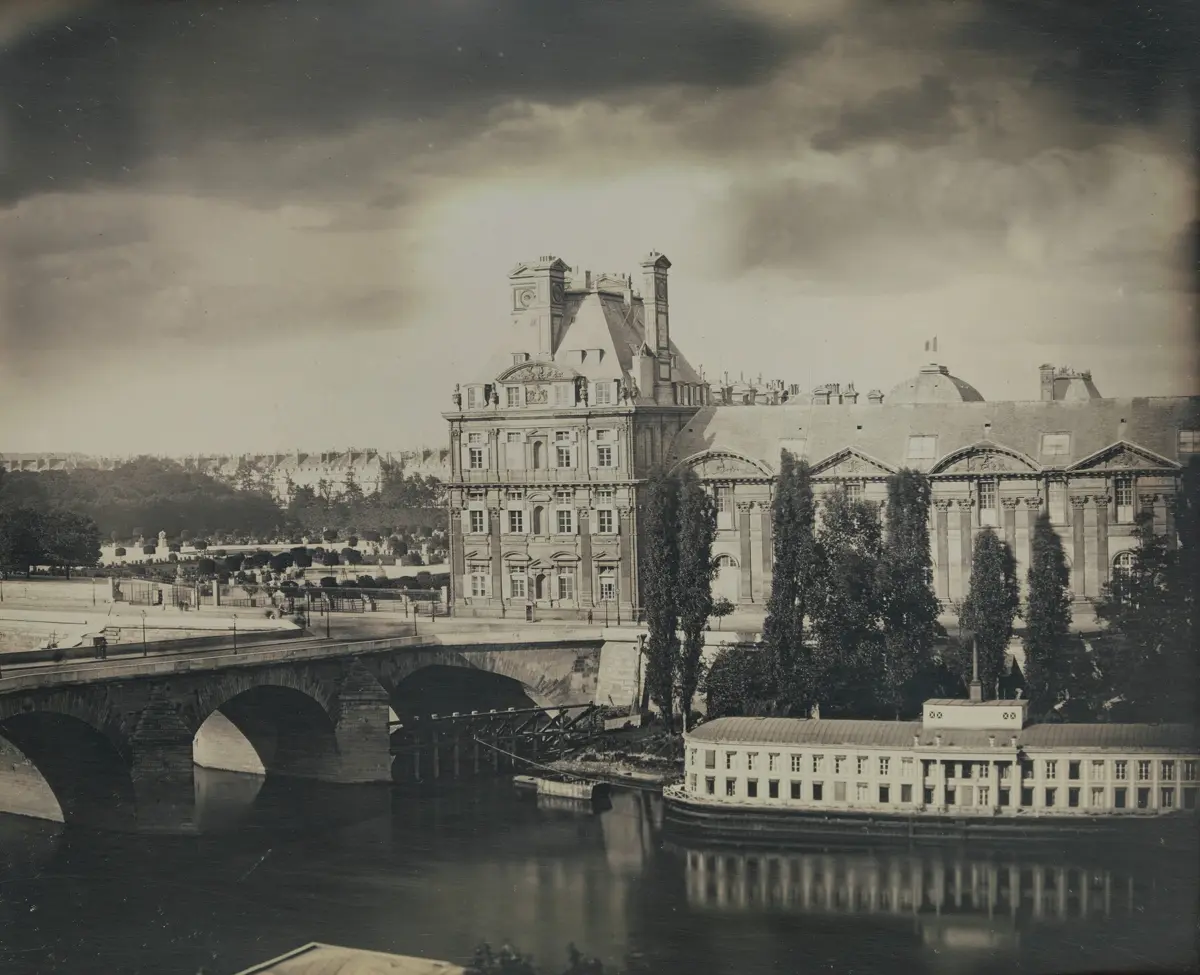
Long before the invention of the camera, humanity was already finding elaborate, ingenious ways to transform the ephemeral world into a permanent image before truly looking at it. Consider the small, blue-tinted mirror featured prominently in the new exhibition Chasing Clouds at The Metropolitan Museum of Art in New York. Known as a Claude mirror, this historical artifact once demanded a novel physical interaction from its user: instead of facing an expansive landscape directly, the beholder would hold the convex glass over their shoulder, turning their back to the vista so that the scenery behind them emerged as a miniature, framed reflection.
The mirror’s slightly convex surface compressed the sweeping view while its dark glass dramatically deepened the natural colors. Artists utilized them to frame compositions, but tourists carried them as well, consuming the world through a pre-engineered lens. Curated by Stephen C. Pinson, Chasing Clouds follows more than a century of people looking upward, tracing an artistic trajectory from plein air painters studying the shifting, volatile skies around 1800 to Alfred Stieglitz pointing his camera almost exclusively at clouds in the 1920s.
While the subject of the sky is familiar enough to routinely disappear into the background of everyday life, the exhibition uses this atmospheric familiarity as an invitation to ask what happens when human beings genuinely take the time to look. "Around 1800, you have this convergence of scientific study of the clouds," Pinson explains, "and then painters also going out into nature and trying to capture clouds."
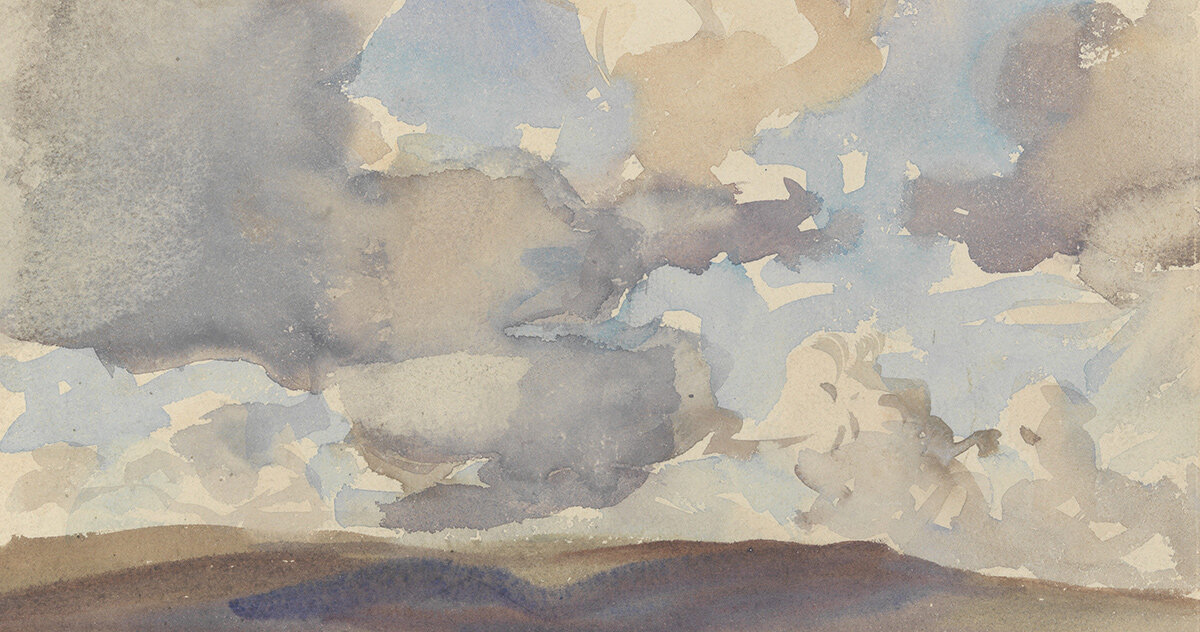
The Sky Becomes an Observatory
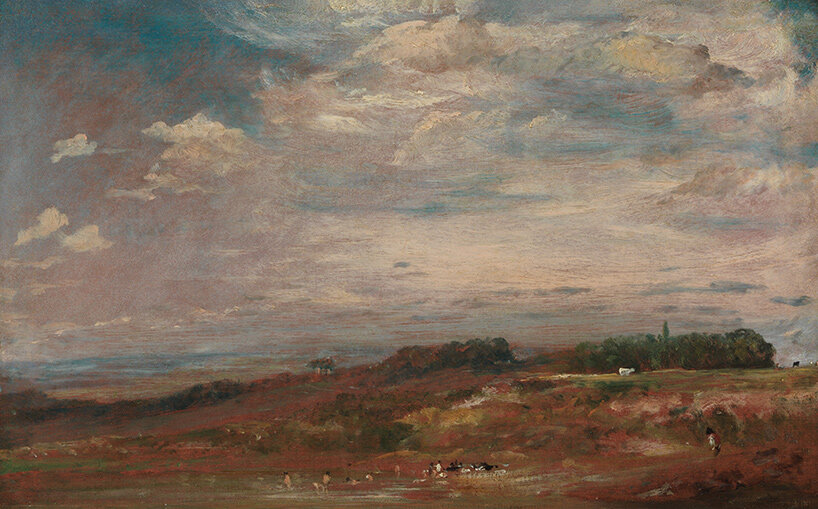
During the 1820s, British painter John Constable made looking into a rigorous practice of its own. He repeatedly visited Hampstead Heath in London to execute detailed cloud studies, returning at various hours of the day and under radically changing weather conditions. With meticulous dedication, Constable sometimes inscribed the environmental conditions directly onto the work itself—noting the exact time of day, the prevailing wind direction, and the direction he was facing. He referred to this singular artistic exercise simply as "skying."
Hampstead Heath effectively transformed into something closely resembling a natural observatory, even though the resulting images retained all the loose, expressive energy of paint moving quickly across paper. "For him, the sky and the light in the sky was the most important part of the picture," Pinson notes during a preview of the exhibition at The Met.
Significantly, Constable was looking up at the sky at the exact historical moment when scientists were attempting to organize and categorize what they saw above them. In 1802, meteorologist Luke Howard proposed the very cloud classifications that remain familiar to the public today, including foundational terms like cumulus and cirrus. Howard’s groundbreaking ideas traveled far beyond the realm of meteorology. The German polymath Johann Wolfgang von Goethe wrote impassioned responses to Howard’s theories and actively circulated his work among his artist friends, while poetic meditations on clouds began to proliferate throughout Romantic literature.
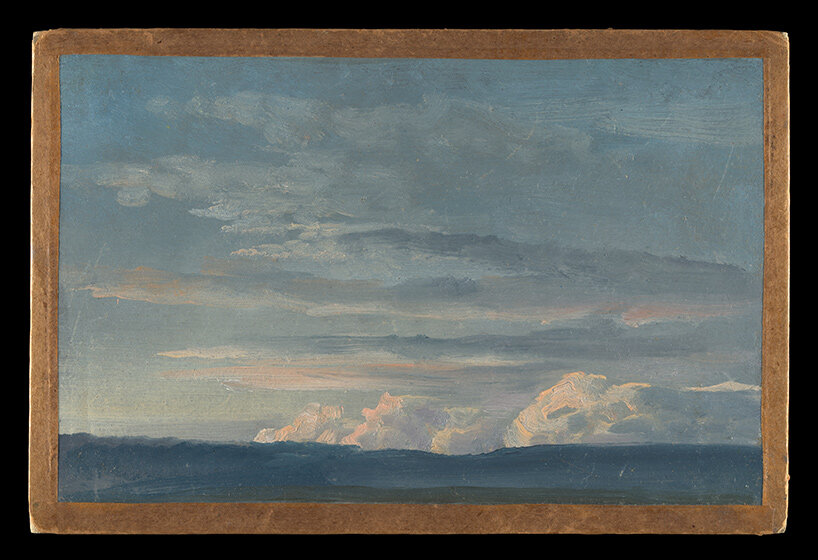
"It was something that people were actually paying attention to and sharing amongst friends and colleagues," Pinson observes. Over the course of the early 19th century, the sky had fundamentally transformed from an untamed expanse into a dedicated subject of scientific study, systematic naming, artistic painting, and deep philosophical contemplation.
When Photography Struggled to See the Sky
When photography emerged in the 19th century, it initially promised an easier, more objective answer to the challenges of visual representation. Enthusiasts believed a mechanical machine could effortlessly record the physical world directly in front of it, entirely bypassing the subjective hand of the painter. However, the open sky quickly exposed the severe technical limits of that early photographic premise.
Early photographic chemistry reacted poorly to ultraviolet and blue light. Consequently, an exposure time properly calibrated to capture the terrestrial landscape below would inevitably overexpose and completely wipe out the delicate clouds hovering above.
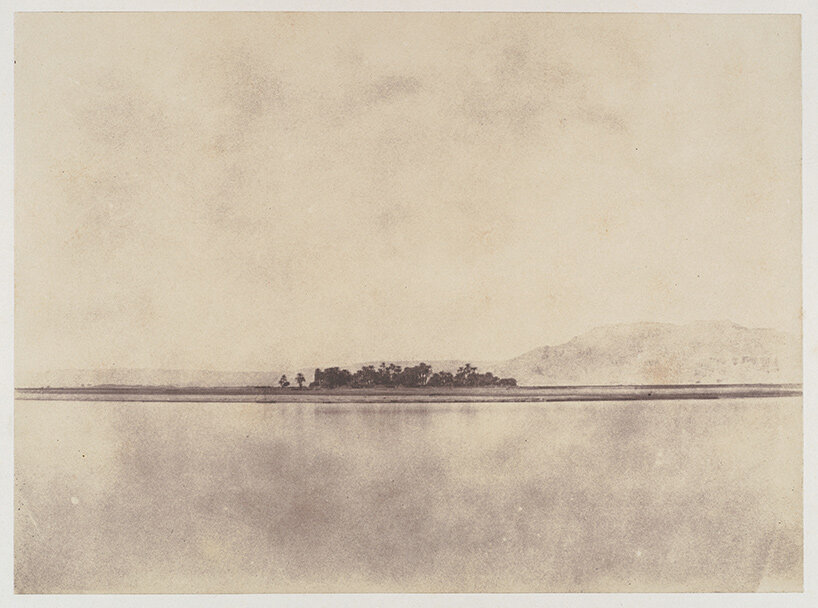
In the pioneering photographs of Egypt captured by John Beasley Greene during the 1850s, this frustrating technical limitation produced something unexpectedly stunning. The sea and the sky break apart into mottled, uneven fields of tone, almost dissolving the photographic composition into pure abstraction. "It’s exquisite and it looks very modern," Pinson says of the phenomenon. What modern viewers now read as an intentional, expressive image actually emerged partly from a primitive camera desperately struggling to see the entire visible spectrum.
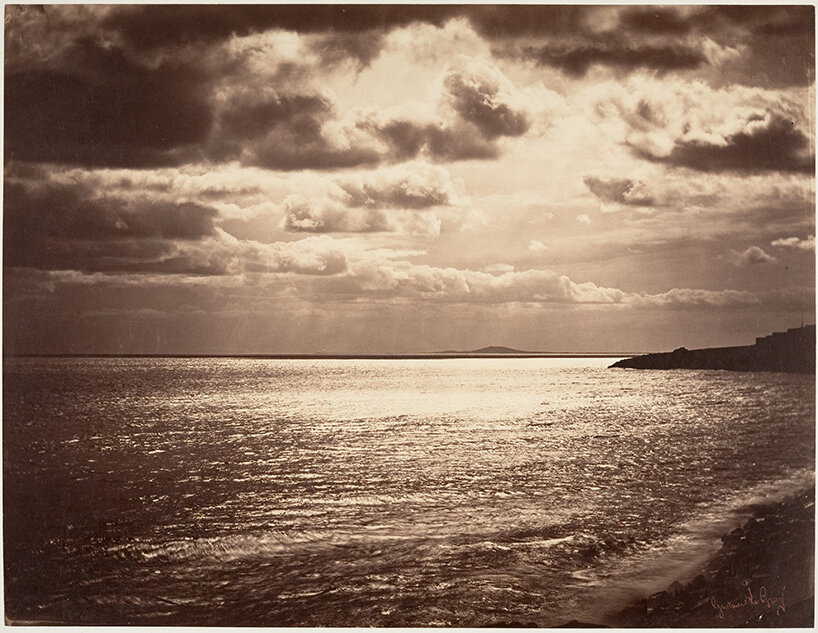
Photographers soon began constructing the sky themselves to overcome these chemical shortcomings. Édouard Baldus painted the skies away entirely on his photographic negatives, leaving a stark, blank white field overhead. Gustave Le Gray pioneered a far more complex approach, joining one negative specifically exposed for the sea with a second negative made separately for the clouds. Le Gray became so exceptionally skilled at this darkroom technique that he maintained an extensive library of custom skies to swap across different pictures. "You might find the same clouds over a different ocean completely," Pinson notes.
The Camera Begins Constructing the Sky
There is something strikingly contemporary about this early photographic trickery. The photographic medium carried an implicit cultural expectation of absolute truth almost from its inception, yet its earliest practitioners were already cutting the visible world apart in the darkroom and stitching it back together to manufacture an ideal reality. The viewer standing before a finished print had little historical reason to suspect that the depicted ocean and sky had ever existed independently of one another in time or space.
Elsewhere within the galleries of Chasing Clouds, photographers can be found painting clouds directly onto their negatives, while painters simultaneously begin producing canvases that clearly absorb photography’s strange, abrupt cropping and tonal effects. The invention of the camera irrevocably altered how human beings looked at their environment, and painting evolved in a continuous, reciprocal dialogue right alongside it.
The cloud studies of Roger Fenton push this artistic exchange into deeply emotional territory. Fenton deliberately allowed the ground beneath his compositions to fall into deep, obscured shadow in order to properly preserve the brilliant sky above, producing photographic prints vastly different from the architectural and documentary work for which he originally became famous.
Pinson describes Fenton’s atmospheric images as being "more about capturing a feeling or an emotion" rather than recording the physical scene in front of the lens with cold, scientific objectivity. By this advanced stage in the exhibition’s narrative, the early historical distinction between objective seeing and subjective interpretation becomes nearly impossible to maintain.
Decontextualized Clouds Become Abstractions
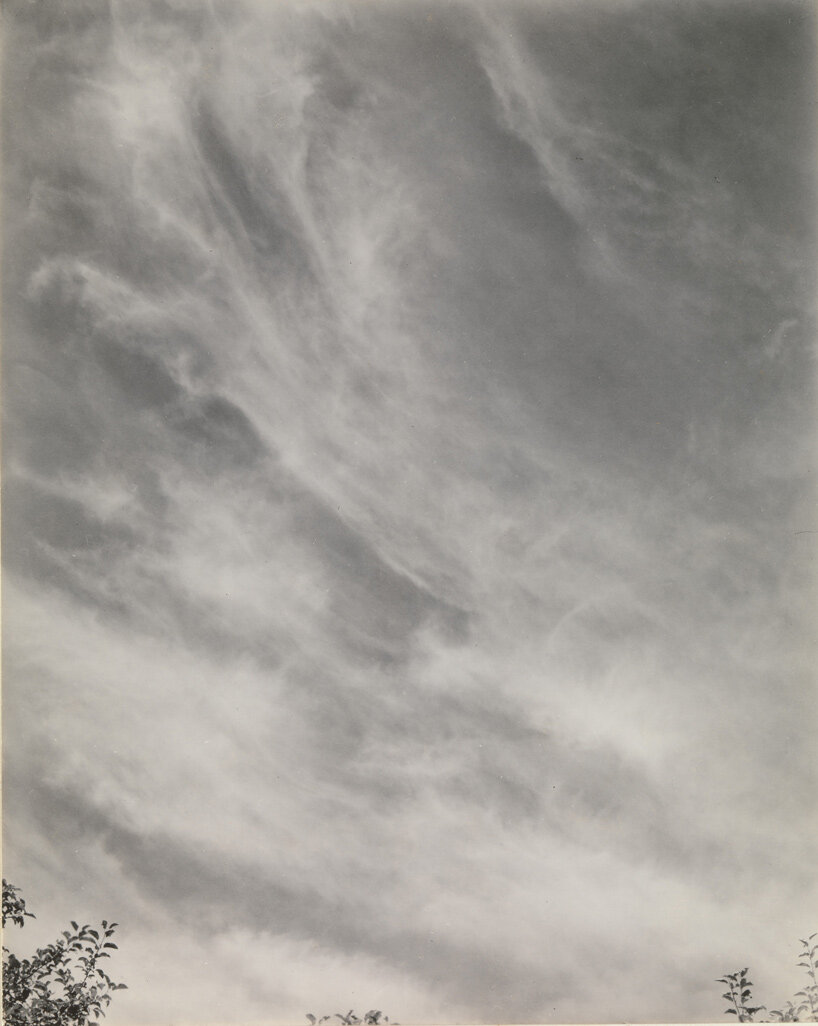
The exhibition ultimately culminates as Alfred Stieglitz points his camera upward and systematically removes almost every contextual terrestrial cue. Working at Lake George in the 1920s, Stieglitz began photographing clouds completely divorced from the familiar horizons or landscapes that typically anchored them. He initially titled this ongoing, revolutionary series Music. Eventually, these images evolved into what he termed his Equivalents.
By the 1920s, photographic technology could capture the sky with effortless technical precision, meaning the artistic challenge had fundamentally shifted. The cloud became a vehicle for an interior human experience that the camera could never record directly through physical observation.
"He was not trying to capture this sort of objective reality," Pinson explains. "It was for him a representation of his emotional state at the time that he made the photographs."
It serves as a fitting place for Chasing Clouds to conclude its historical sweep. Across the span of the exhibition, generations of artists and thinkers continually invented new technologies for seeing the exact same atmospheric phenomenon overhead—moving from a darkened piece of pocket glass to increasingly capable cameras. Yet each new device complicated the human view just as much as it sharpened its focus. By the time Stieglitz finally removed the solid ground beneath the cloud entirely, the act of looking had firmly established itself as an act of psychological projection. The sky remains unchanged above us, but what we perceive within it depends, as it always has, entirely upon who is doing the looking.