



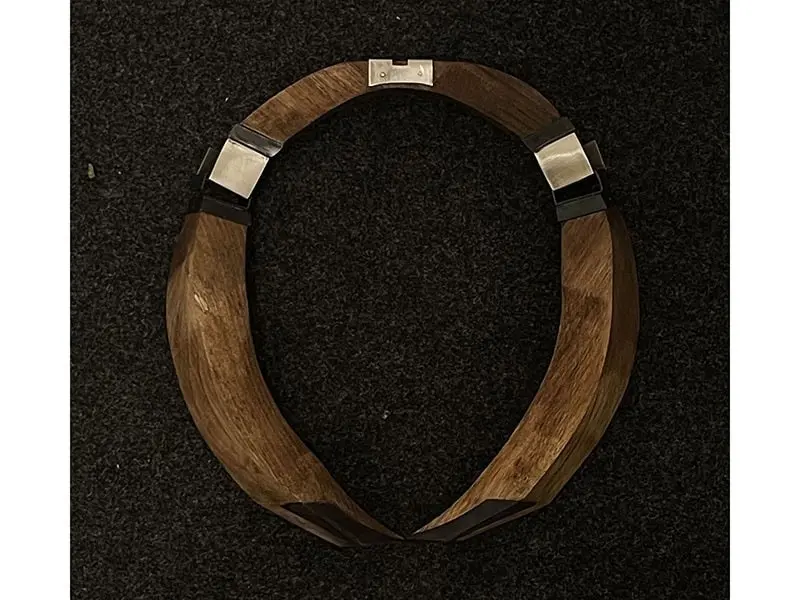
For contemporary jeweler Marie-Caroline Locquet, adornment is rarely about luxury, wealth, or conventional beauty. Instead, her practice treats jewelry as a conceptual provocation, transforming wearable objects into restraints, defensive weapons, and instruments of psychological tension. By exploring the thin line between vulnerability and control, Locquet’s radical creations challenge how society views the body, power dynamics, and the traditional parameters of art jewelry.
Her uncompromising vision has recently earned her recognition as a finalist for the prestigious Young Artist Award. Supported by Karen and Michael Rotenberg, this biennial prize acknowledges promise, innovation, and individuality in the work of emerging jewelry artists aged 35 or younger. Through the award, Art Jewelry Forum (AJF) champions exciting new talent capable of steering the field toward future developments.
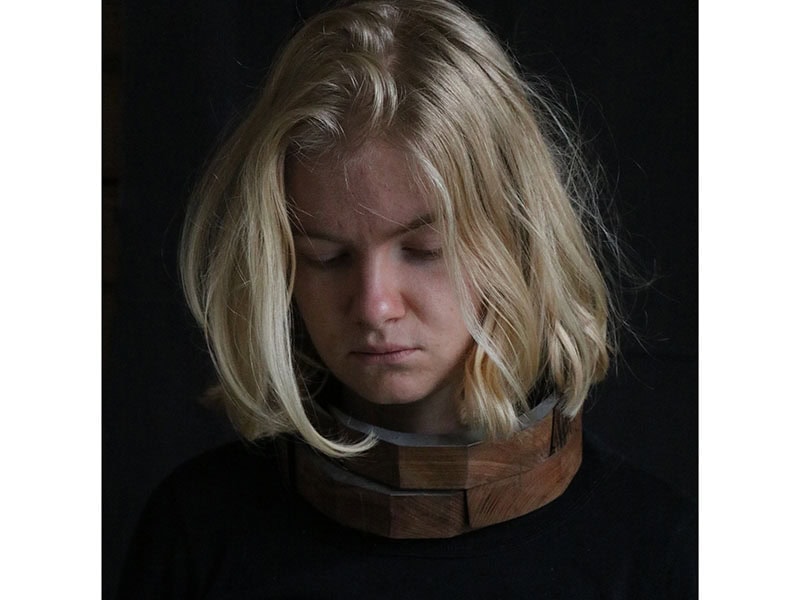
In a recent conversation, Locquet discussed her artistic origins, her fascination with unwearability, and the psychological weight embedded within her striking metallic and wooden neckpieces.
Challenging the Boundaries of Jewelry
Locquet’s journey into the discipline began during her foundational art studies, where she encountered works that fundamentally upended her understanding of what adornment could achieve. Rather than gravitating toward pieces that signified status or aesthetic harmony, she was drawn to objects that felt strange, unsettling, and inherently dangerous. She cites the pioneering work of Bernhard Schobinger and Dorothea Prühl as pivotal influences that shifted her perspective, demonstrating how jewelry could function as an agent of disruption and critical reflection.

This introduction filled the young artist with questions. She wanted to understand why an artist would create—and a wearer would choose to don—pieces that appear intensely disturbing at first glance. More importantly, she questioned the cultural implications of creating things deemed "unwearable." This line of inquiry ultimately established the core foundation of her artistic research.
Growing up in the north of France, Locquet had developed an early sensitivity to the social weight of self-presentation and the ways clothing and accessories serve as camouflage for social affiliations. This socio-cultural observation steered her toward jewelry not out of a simple aesthetic affinity, but as a compelling subject for rigorous study.
Recognition and Radical Direction
Being selected as a finalist for the Young Artist Award serves as a profound validation of the trajectory Locquet has pursued over the past several years. For an artist working at the outer edges of traditional craft and sculpture, such institutional acknowledgment provides vital encouragement. It reinforces her commitment to remaining radical, pushing boundaries further, and continuously challenging herself alongside both the wearer and the viewer.
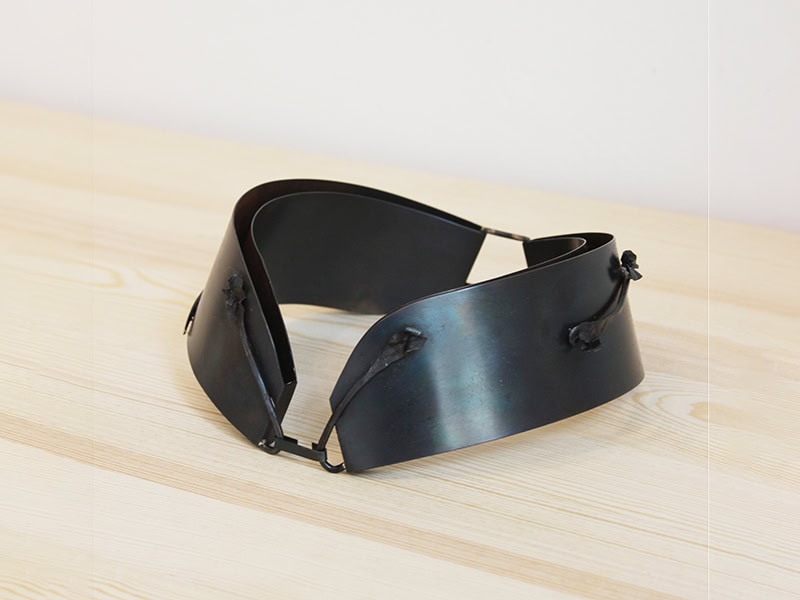
Her submitted portfolio reflects a unified conceptual framework. Rather than acting as showcases for precious materials, her pieces confront public spaces with a high potential for disruption. They bypass traditional notions of seduction and representation to probe themes of disturbance, violence, fragility, seduction, domination, vulnerability, and confinement. By pushing materials to their absolute limits, Locquet allows them to reveal their raw nature through forms that evoke both intense desire and underlying mortality. Whether fashioned as defensive weapons or intricate restraint devices, each creation offers a unique wearing experience designed to probe our shared human fragility while maintaining a tense balance between social discomfort and the temptation of an embrace.
Exploring Confinement Through Hands
Locquet’s practice frequently draws inspiration from historical and social artifacts of control and submission, including the collier d’appartenance—a collar historically given in submissive relationships—and the nineteenth-century Norman and Auvergnat "slave collar" tradition, once presented to women at marriage as a token of possession. She also examines the utilitarian mechanics of animal-labor tools, such as horse collars.
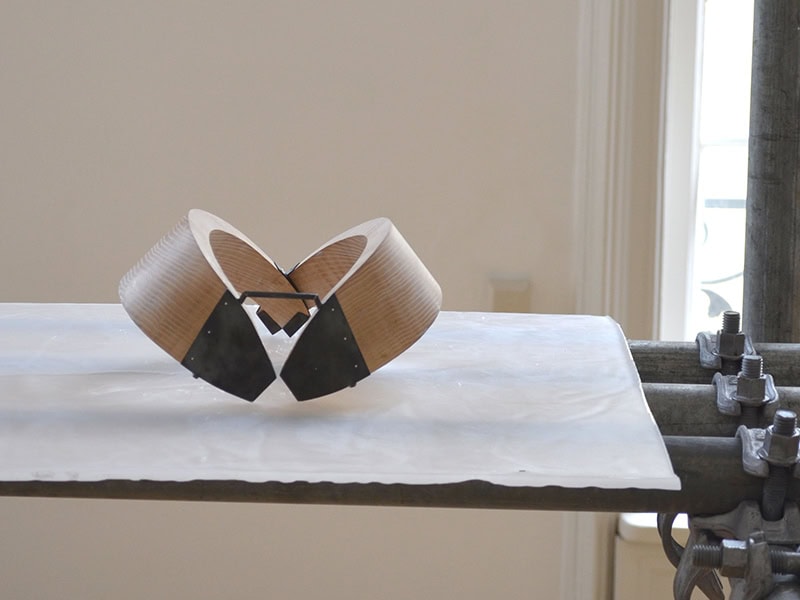
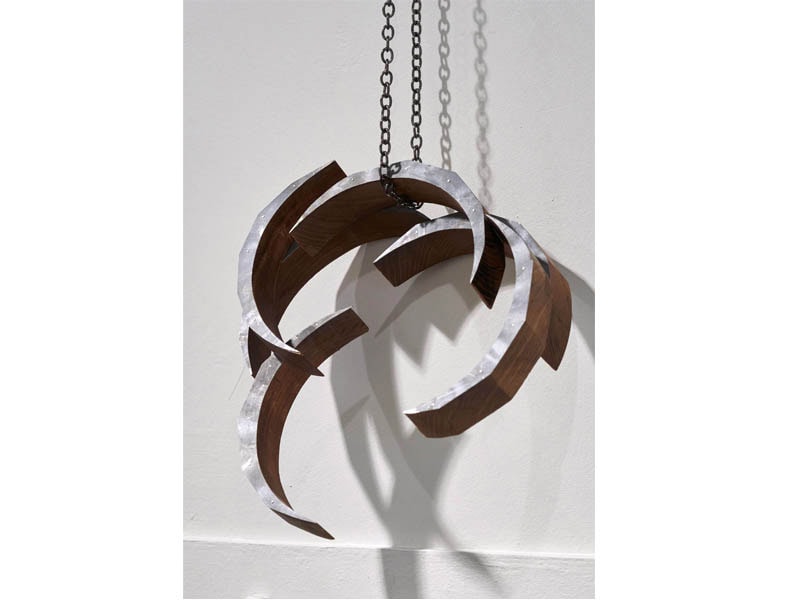
These complex themes converge dramatically in her 2024 neckpiece Hands, crafted from elm wood, zinc-plated steel, and silver. The work exemplifies her obsessive investigation into mechanical systems, movement, clasps, and the fluid border separating jewelry from sculpture. When viewed at rest, the piece unfolds and occupies space much like a complex piece of machinery before dramatically closing around the neck in a gesture reminiscent of an act of strangulation. Described by the artist as her most complex and intimate work, Hands confronts themes of confinement and violence head-on.
The Societal Mirror of Adornment
What excites Locquet most about the field of art jewelry is its capacity to anchor a comprehensive artistic approach—bridging the physical object, deep academic research, and the spatial environments designed to resonate with it. More broadly, she views body ornamentation as a vital mirror reflecting the image of society. Everything humans wear draws upon the references, boundaries, and values of their inhabiting culture.
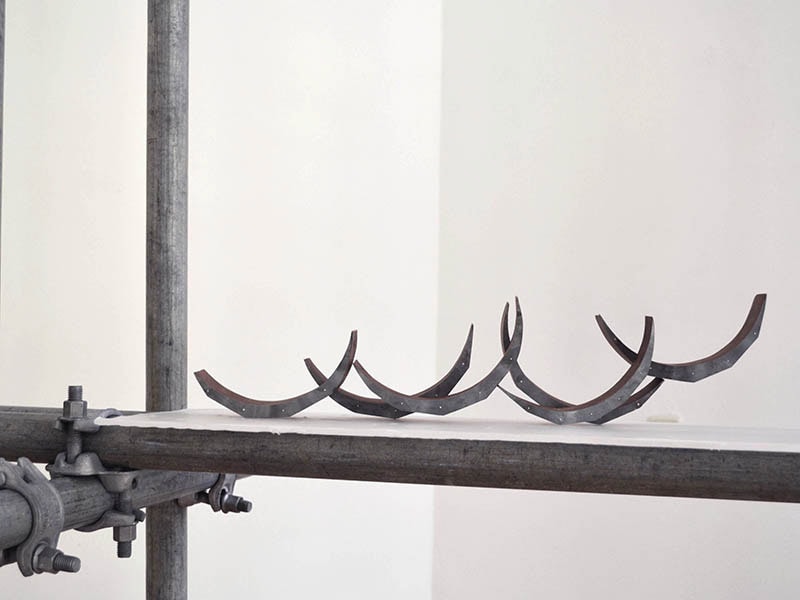
This philosophy inspired her ongoing iconographic research project and collection titled "Unwearable—adornment is impure, makeup is obscene, disguise is an abomination." Through this project, Locquet investigates how ornamentation, when bound to the flesh, communicates volumes about social representation and cultural norms, constantly oscillating between the private intimacy of the body and the scrutiny of public space.
Confronting the Skepticism of Contemporary Art
Despite the vibrant potential of the medium, Locquet remains candid about the frustrations inherent in the contemporary jewelry landscape. Referencing an exhibition she co-curated with student colleagues during Munich Jewellery Week in 2018 titled Jewelry Is Still a Risky Business, she maintains that the field must retain its capacity for risk.
She notes that contemporary jewelry is frequently burdened with the expectation to justify its legitimacy within the broader fine art world. During her studies at a French fine art school, she routinely encountered dismissive attitudes branding jewelry as "lesser," superficial, or niche. While she acknowledges that this outsider status can be a strength that fosters innovative thinking, it also exposes a persistent gulf between the specialized art jewelry community and the wider public.
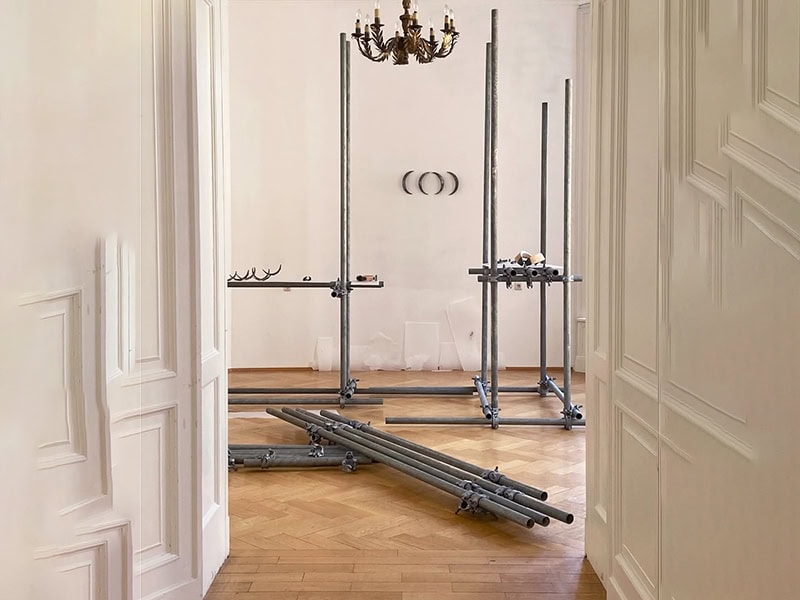
To bridge this gap, some of her works, such as Panicroom Vector I, deliberately adopt a more literal approach to serve as accessible entry points for viewers. Moving forward, she remains determined to stay the course—exploring new territories, generating meaningful experiences for audiences, and expanding the definitions of the medium.
Looking Ahead
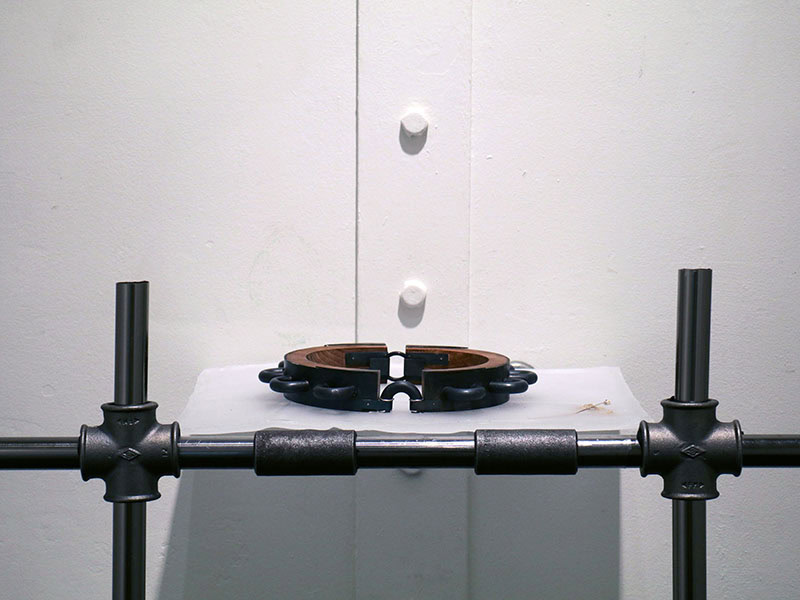
Reflecting on her career path five years after graduation, Locquet expresses deep satisfaction with her artistic evolution. Having recently expanded her sculptural vocabulary to engage directly with architectural space—an approach set to debut in an upcoming exhibition—she plans to continue applying for international residencies, collaborating with fellow artists, and deepening her material language.
Looking toward the horizon, she also expresses a strong interest in research and teaching, viewing academic environments as ideal spaces to reinvent and push forward collective understandings of body ornamentation. Trusting the artistic process and expressing profound gratitude to her supporters, Marie-Caroline Locquet stands poised to continue challenging, disrupting, and redefining the boundaries of what jewelry can be.