




Back in 1996, the French publishing landscape looked bleak. Fashion and news magazines were folding left and right, swept up in shifting economic tides and changing consumer habits. It was a climate of risk aversion and financial contraction, making it an entirely counterintuitive moment to launch a brand-new print publication. Yet, it was precisely against this turbulent backdrop that industry veterans Tiziana Humler and Christian Ravera decided to take a bold gamble. They founded Mixte, a biannual publication designed to give idled, restless photographers a radical platform where they could express themselves freely, completely unshackled by the rigid commercial constraints of traditional mainstream publishing.
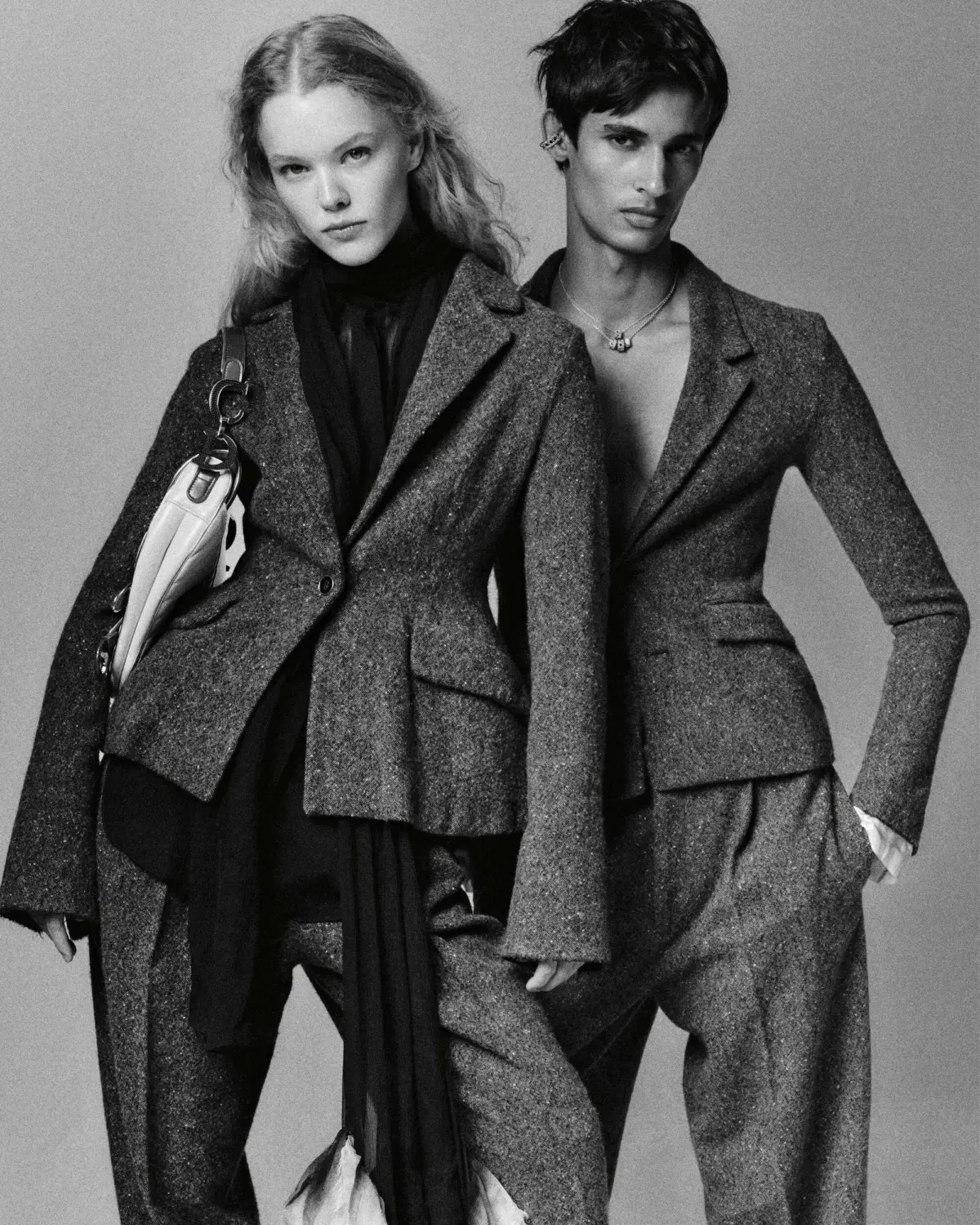
It was the peak era of the global CK One fragrance phenomenon, a time when maverick designer Jean Paul Gaultier was turning runway gender norms on their head and redefining the visual language of fashion. Recognizing this cultural shift toward fluidity, the founders knew their project had to break the mold. “If we were going to launch a fashion magazine, it had to be different. So the idea was to be unisex,” Tiziana Humler-Ravera related in an interview, recalling the genesis of the publication. Her spouse and creative partner, Christian Ravera, brought a seasoned eye to the endeavor as a veteran art director formerly with Vogues Hommes International.
Initially, their uncompromising unisex concept flummoxed conservative advertisers who were accustomed to strictly segregated men’s and women’s luxury markets. Yet, despite early skepticism from corporate boardrooms, the biannual publication carved out an enduring niche. Today, Mixte is still going strong, marking its latest major milestone with a massive 500-page anniversary issue—the thickest in the publication’s storied history—alongside a celebratory multi-media exhibition in Paris opening on November 6 for a three-day run.

Spanning photography, video installations, and long-form text, the Paris display is organized thematically. It is meticulously designed to demonstrate how Mixte has long flown the flag for free creative expression while serving as a reliable incubator for emerging talents who would later shape the global cultural conversation.
From its very first edition, the magazine established a reputation for avant-garde casting and groundbreaking visual direction. Babeth Djian, who would go on to found the influential Numéro magazine in 1999, served as the editor in chief of Mixte’s debut issue. That historic first edition was fronted by the iconic Stella Tennant and actor Vincent Gallo, both photographed wearing the exact same pinstriped jacket with matching center-parted hair—a striking visual statement that encapsulated the publication’s fluid, gender-neutral ethos from day one.
That launch issue was merely the beginning of an extraordinary talent pipeline. Over the decades, a constellation of visionary contributors passed through the pages of Mixte, later rising to even greater heights of fashion fame. Among them are industry titans such as Carine Roitfeld, Emmanuelle Alt, Olivier Zahm, and Loïc Prigent, all of whom honed their editorial sensibilities during an era when the magazine operated as a wild west of creative experimentation.
Mixte quickly earned a reputation for cultural immediacy and peerless access. The magazine nabbed supermodel Naomi Campbell for a striking cover as early as 1997. Furthermore, it conscripted some of the most acclaimed photographers in the history of the medium, including Paolo Roversi, Peter Lindbergh, Jean-Baptiste Mondino, and Jean-Paul Goude. Goude famously captured the Icelandic pop icon Björk for one of his signature limb-lengthening collages, a testament to the publication’s willingness to blur the lines between high fashion, performance art, and contemporary music.

However, the magazine was never merely a glossy portfolio of pretty pictures. Substantive, investigative pieces tackling serious social issues served as a foundational calling card for the publication. An early, hard-hitting feature delved deeply into the repressive conditions faced by women in Iran, proving that the founders viewed fashion not in a vacuum, but as part of a broader, complex cultural landscape. This commitment to depth extended across disciplines, routinely showcasing pioneering talents in music, film, art, and fashion. “Not just the brands that are advertisers,” Humler-Ravera pointed out, emphasizing the editorial independence that kept the magazine grounded in authentic cultural commentary rather than pure commercial pandering.
Throughout its history, Mixte has also prided itself on orchestrating unexpected, paradigm-shifting encounters. In one of their most memorable publishing coups, the founders conscripted Karl Lagerfeld to conduct a live televised interview with French astronaut Thomas Pesquet. The chat took place shortly after Lagerfeld’s spectacular fall 2017 fashion show featuring a towering indoor rocket ship—and the interview itself happened while Pesquet was actively floating in zero gravity on board the International Space Station.
“[Lagerfeld] did a lot of shoots for us, and he shot a series that focused on space and the moon. That’s how we came up with the idea,” Humler-Ravera related, illustrating how the magazine’s deep relationships with creative geniuses often yielded moments of singular cultural magic.
Despite sweeping structural changes in the global media landscape, the digital revolution, and the ongoing challenges facing print journalism, Mixte maintains a steady and resilient footprint. The magazine still reliably prints 60,000 copies per issue, with an impressive 40 percent of those copies sold outside of France, proving that a fierce commitment to unisex vision, editorial independence, and uncompromising artistic freedom remains globally resonant nearly three decades after its improbable launch.