






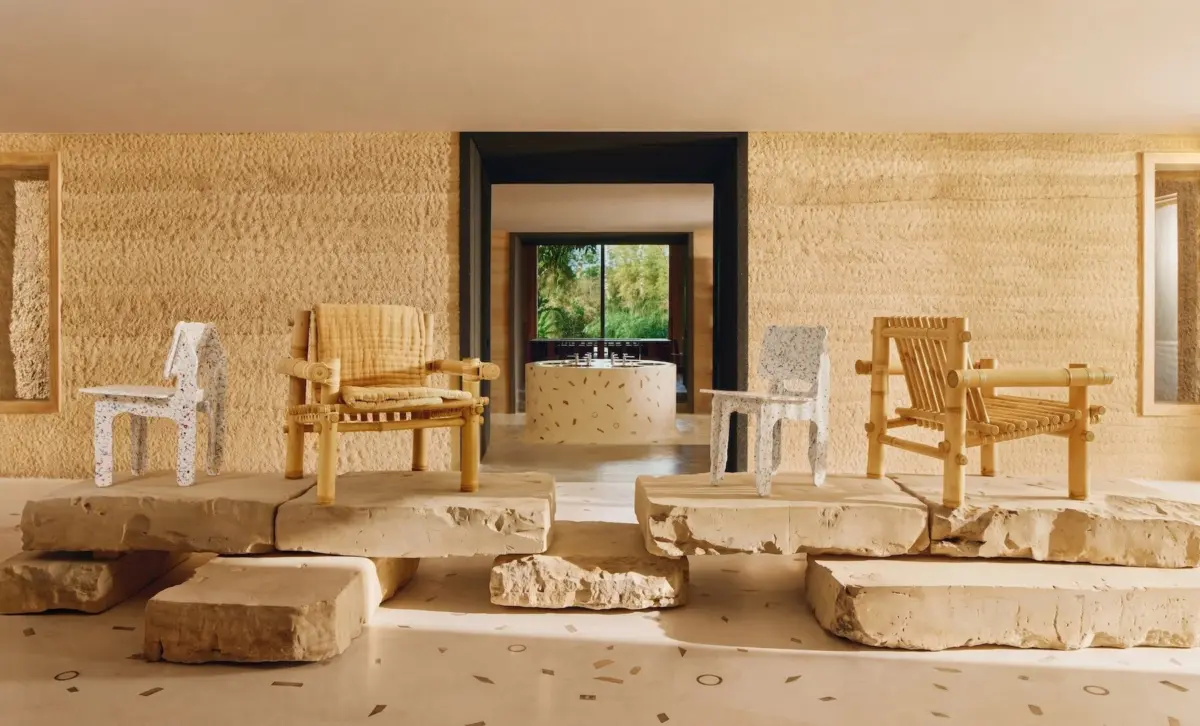
In the vibrant coastal enclave of Seminyak, Bali, a new architectural and cultural destination is challenging conventional ideas of consumerism. Renowned architecture practice OMA has teamed up with hospitality trailblazers Potato Head to open the Good Times General Store, located within the sprawling cultural and lifestyle hub of Desa Potato Head. Designed to be much more than a conventional retail outlet, the permanent space functions simultaneously as a community craft center, a living material archive, and an interactive workshop where purchasing an item is merely one entry point into a broader educational journey.
Rather than enforcing the traditional barrier between production and consumption, the project invites visitors to pull back the curtain on modern manufacturing. It encourages guests to discover how everyday items are made, where their underlying raw materials originate, and what environmental trajectory awaits them after their initial lifecycle concludes. By embedding artisanal production, material experimentation, and public engagement directly into the retail floor, the project reframes the act of shopping as a collaborative dialogue between makers, materials, and consumers.
Architecture Rooted in Local Tradition and Circularity
The foundational philosophy driving the project is mirrored directly in its physical construction. Developed by OMA in close collaboration with Ade Herkarisma, Potato Head’s Group Head of Architecture and Development, the building draws deeply from rich Balinese construction traditions while integrating cutting-edge circular design principles. The exterior is anchored by a traditional alang-alang thatch facade, a regional vernacular element that speaks to the island’s architectural heritage. This is complemented by robust rammed-earth walls crafted from local clay, reclaimed timber framing, and tactile terrazzo floors that incorporate recycled bamboo offcuts.
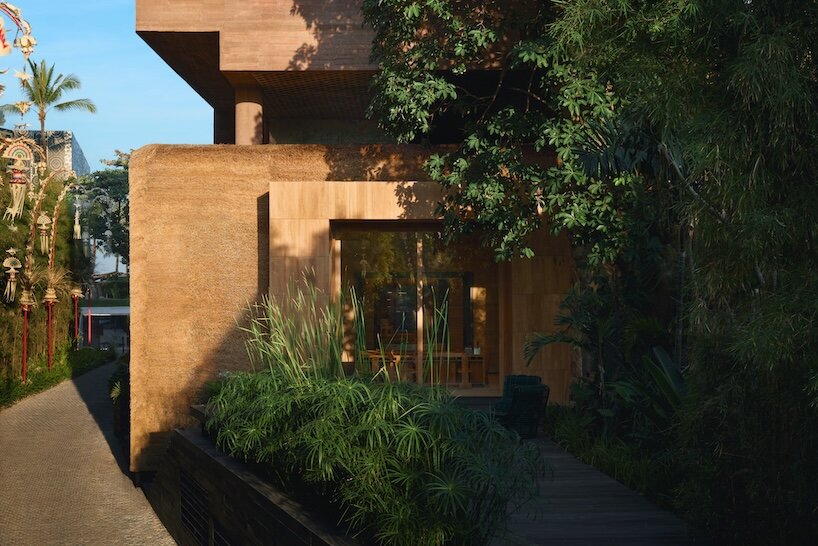
Inside the store, fragmented earthen blocks help organize the spatial layout while intentionally blurring the boundaries between distinct programmatic functions. The result is a deeply tactile and honest environment where building materials do much of the narrative work on their own, eliminating the need for elaborate or artificial finishes. Every surface tells a story of provenance, reflecting a deliberate effort to minimize the carbon footprint of the build while maximizing the sensory connection between the visitor and the space.
Five Bays Bring Indonesian Craft and Recycled Design Together
The interior spatial arrangement is meticulously divided into five interconnected bays, each tracing a different stage in the lifecycle and evolution of designed objects. Conceived by OMA, this sequential layout seamlessly bridges retail, traditional craftsmanship, and forward-looking material experimentation within a single unified environment.
The journey begins in the first bay, which introduces visitors to a curated selection of artisan souvenirs, independent books, rare records, and lifestyle objects created by local and regional independent makers. The second bay shifts focus to Potato Head’s proprietary clothing and travel collection, featuring apparel and accessories inspired by the relaxed yet conscious lifestyle of Bali. The third bay houses the celebrated "Wasted" collection, designed by Max Lamb, which transforms discarded plastics and other industrial and consumer waste materials into striking, functional furniture and homeware pieces. Together, these initial spaces present a spectrum of design approaches, ranging from timeless Indonesian craft techniques to contemporary experiments in industrial resource recovery.
The remaining two bays pivot away from finished commodities to spotlight the active processes of creation and transformation. One of these spaces hosts a working natural dye studio, where artisans extract rich pigments from plants and organic food waste collected from across the hospitality operations of Desa Potato Head. This studio actively invites visitors to experiment alongside makers with natural dyeing, painting, and textile pattern-making techniques.
Adjacent to the dye studio stands a striking feature wall composed of shredded high-density polyethylene (HDPE) plastic. Recovered through a network of local waste collectors and upcyclers across Bali and Java, this material anchors a dedicated workshop space equipped for plastic molding and material research. The programming within these interactive zones is designed to expand continuously, with additional ateliers dedicated to traditional weaving, upcycling, and advanced sewing scheduled to launch in the coming year.
OMA Connects Circular Architecture with Hands-On Workshops
The Good Times General Store does not exist in isolation; rather, it is deeply plugged into Desa Potato Head’s broader, pre-existing sustainability infrastructure. This includes the resort’s ongoing Waste Lab, a research and processing hub where discarded materials are systematically investigated and repurposed, as well as the popular "Follow the Waste Tour," which guides visitors through the complex journey of resources moving across the resort ecosystem.
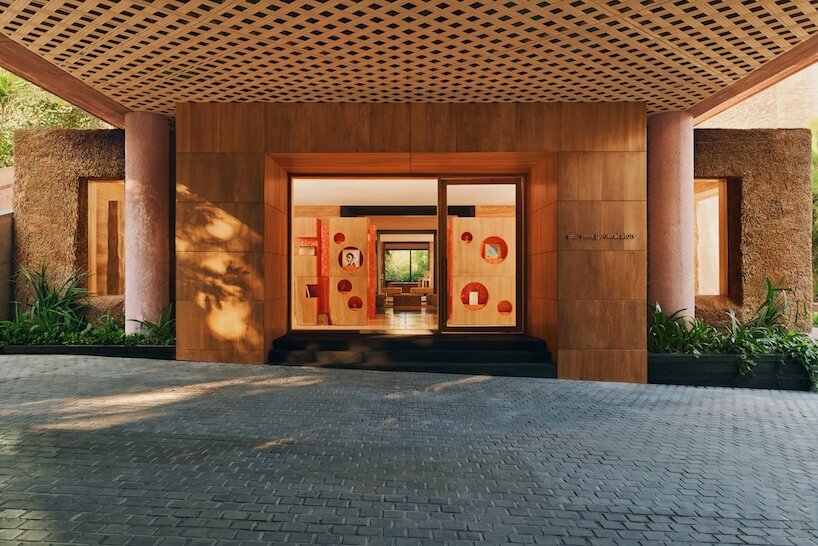
This commitment to sustainability extends organically into the architecture itself, serving as a real-world demonstration of how locally sourced, non-traditional, and reclaimed materials can successfully shape contemporary commercial spaces. Retail can and should be significantly more than a sterile financial transaction, notes Potato Head founder Ronald Akili. By highlighting the human element behind every object—understanding precisely who crafted it, what raw inputs went into its creation, and what potential future awaits it—the project champions a more mindful approach to material culture.
For OMA, the completion of the Good Times General Store represents the latest chapter in a long-standing creative collaboration with Potato Head. The partnership has previously yielded several visionary spaces across the Desa Potato Head campus, including the resort’s hotel architecture and the acclaimed Klymax Discotheque. However, while previous collaborations focused primarily on hospitality, leisure, and entertainment, this latest venture shifts its attention to the everyday relationship that people maintain with the goods they consume.
By uniting traditional craftsmanship, industrial recycling, and public participation within a single cohesive architectural framework, OMA and Potato Head have proposed an entirely different kind of retail experience. It is a space where visitors are just as likely to leave with a newly acquired handmade skill or a deeper ecological awareness as they are with a physical shopping bag. In this context, the bag itself is no longer the primary takeaway; instead, the lasting impression is a transformed perspective on waste, value, and the lifecycle of design.