Silver, a brilliant white metallic element, has long occupied a unique and essential place in human history, industry, and the decorative arts. Represented on the Periodic Table of the Elements by the symbol Ag, silver is harder than gold yet softer than copper, ranking second only to gold in its exceptional malleability and ductility. Because of its outstanding resistance to oxidation, it is classified as one of the noble metals. While it is often viewed today as an inexpensive alternative to gold and platinum, historical perspectives reveal a metal that has frequently outvalued gold, fueled geopolitical conflicts, and driven groundbreaking technological advances in mining and metallurgy. Throughout the ages, entire economies have depended on its availability, making silver one of the most consequential materials ever utilized by mankind.
Bronze Age Silver: Mesopotamia, Egypt, and the Mediterranean
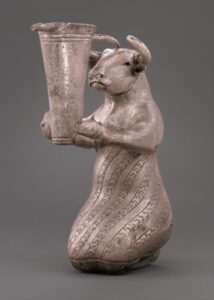
The documented story of silver begins in the late fourth millennium BCE, when inhabitants of modern-day Turkey discovered a revolutionary metallurgical technique: extracting silver from lead through cupellation. While relatively few artifacts from this dawn of metallurgy have survived, those that remain offer a window into the advanced capabilities of Bronze Age silversmiths.
In Mesopotamia, silver quickly emerged as a form of currency. Rather than circulating as standardized coins, it was measured by weight or shaped into portable rings. The workshops of Mesopotamian silversmiths closely mirrored those of goldsmiths, and the two crafts were frequently practiced by the same artisans. Although silver is slightly less ductile than gold and demands more frequent annealing during creation, it can be cast, hammered into paper-thin sheets, engraved, embossed, worked in repoussé, and decorated with intricate filigree and granulation. Archaeological discoveries of ancient vessels, statuettes, and jewelry confirm that high-purity silver was widely utilized, resulting in remarkably soft objects.
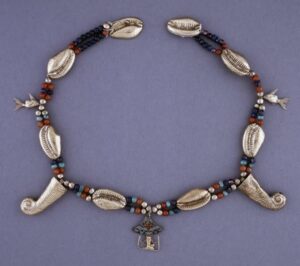
In ancient Egypt, value was dictated by rarity and exotic origin. Because gold could be readily sourced close to home from the mountains of the Eastern Desert and Nubia, and possibly supplemented by natural electrum, pure silver had to be imported along perilous trade routes—such as those that also brought prized Lapis lazuli from Afghanistan. Consequently, early Egyptian silver was valued far above gold and reserved exclusively for the societal elite.
By approximately 1600 BCE, however, the global supply of silver had expanded significantly, causing its market value to drop to roughly half that of gold. At this juncture, it began functioning as an abstract currency of relatively constant value. Fashion trends heavily dictated its popularity; for instance, the legendary tomb of King Tutankhamun contained almost no silver items, whereas Pharaoh Sheshonq II was laid to rest in an astonishing all-silver sarcophagus.
Meanwhile, maritime civilizations such as the Minoans and Mycenaeans incorporated silver heavily into their extensive trade networks, leaving behind a rich legacy of early Greek silver jewelry across the mainland, Crete, and Cyprus. Later, the Phoenicians transformed the Mediterranean landscape by initiating the large-scale exploitation of Spanish silver deposits. Their extensive colonization and distribution networks effectively stripped silver of its exclusively exotic status, saturating the classical world with unprecedented quantities of the metal.
Classical Silver: Greece, Rome, and the Rise of Niello
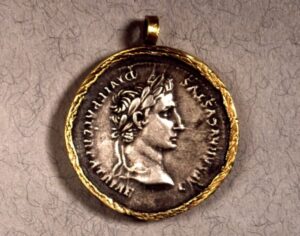
For both Greek and Roman societies, a steady supply of silver was an absolute necessity, as their monetary systems relied heavily on properly minted silver coinage. While surviving archaeological evidence suggests that gold was preferred over silver for personal adornment—partly due to the high rates at which silver jewelry was melted down and recycled over the centuries—the surviving pieces reveal a wide array of rings, anklets, and armlets.
The Romans developed a particular fondness for niello, a surface decoration technique strikingly similar to enameling, executed with silver sulfate rather than glass. Niello yielded a much tougher finish with a distinctive metallic luster, a technique that subsequently spread across Northern Europe during the Roman occupation, leaving a lasting imprint on Anglo-Saxon and Eastern European craftsmanship.
Roman historian Pliny the Elder captured the cultural obsession with silver in his encyclopedic work Naturalis Historia. Detailing everything from mining operations to extravagant displays of wealth, Pliny documented how deep-shaft mining in Spain—including operations originally established by Hannibal that yielded hundreds of pounds of silver daily—fueled the empire’s vast economy. He also chronicled the evolving Roman taste for silver plate, noting how historical figures like the younger Scipio maintained relatively frugal households, while later citizens displayed astonishing ostentation, spanning from elaborate banqueting couches plated in silver to the Emperor Nero’s wife, Poppaea, shoeing her favorite mules with gold. Pliny further detailed traditional testing methods used by Romans to ascertain the purity of silver, involving extreme heat or exposure to human breath to observe condensation and color reactions.
Celtic and Medieval Silver
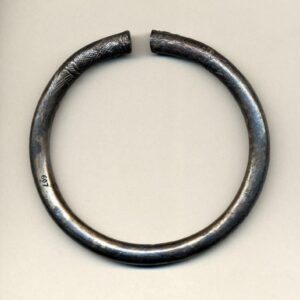
Celtic tribes across Europe utilized silver extensively alongside bronze to craft decorated brooches, torcs, and lunulae. Prior to Roman incursions, Celtic economies relied on "ring money"—rings made of silver, copper, bronze, or gold specifically cast for monetary exchange rather than personal wear.
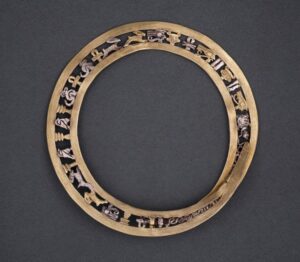
With the collapse of Roman supply lines and trade networks, gold grew exceedingly rare across Europe, propelling silver to the forefront of jewelry production. Germanic jewelry during this era favored functional items such as fibulae, disc brooches, penannular brooches, and belt buckles fashioned from silver, occasionally gilded or inlaid with garnets.
By the ninth century, Viking expansion into northwest Europe directed vast quantities of silver northward into Scandinavia, sparking a flourishing tradition of silversmithing that was further sustained by the discovery of Swedish silver deposits around the turn of the first millennium. The Germanic tribes enthusiastically adopted the Roman niello technique, utilizing the dramatic contrast of black and white inlay to accentuate intricate native engraving styles, as famously exemplified by the ninth-century Anglo-Saxon Fuller Brooch housed in the British Museum.
As European society evolved and eastern trade routes reopened, gold reclaimed its status as the premier metal for fine jewelry. Nevertheless, this economic expansion fostered a burgeoning middle class whose members began adopting personal adornment styles previously restricted to wealthy rulers, frequently turning to affordable silver jewelry. By the close of the Middle Ages, the proliferation of silver objects necessitated formal regulation, leading directly to the establishment of silver assaying and hallmarking systems.
Renaissance and Baroque Silver Transformations
The Renaissance brought profound cultural shifts originating in Northern Italy during the late thirteenth century, galvanized by renewed trade with the Levant, population recovery following the plague, and the influx of exiled scholars following the fall of the Byzantine Empire in 1453. Concurrently, the Age of Exploration unlocked vast new horizons. Following Christopher Columbus’s voyage, Spain and Portugal spearheaded European expansion into the New World, leading to the conquests of the Incas by Pizarro and the Aztecs by Cortés. The discovery of monumental silver deposits in modern-day Mexico in 1546 flooded Europe with unprecedented quantities of the metal, ensuring that silver remained a vital currency and an accessible medium for decorative arts.
During the Baroque period spanning the seventeenth century, South American silver continued to pour into European ports as maritime powers like England, France, and the Netherlands fiercely competed for global dominance and intercepted treasure fleets. While silversmithing techniques largely mirrored those of preceding centuries, stylistic innovations emerged, most notably the creation of silver timepieces and the revolutionary practice of setting diamonds in silver. The cool, white tone of the metal perfectly complemented the absence of color in diamonds, which were arriving in substantial quantities directly from India following the establishment of European trading posts.
Georgian and Victorian Silver: Industrialization and Mass Production
The Georgian era witnessed booming silver production driven by ongoing discoveries in South America and, from 1727 onward, newly discovered deposits in Brazil. The practice of setting diamonds in silver became ubiquitous. While fine jewelry continued to be crafted predominantly in gold with silver-topped fronts, entirely silver items remained common, and the distinct cut-down collet settings of Georgian jewelry relied heavily on silver to enhance the brilliance of the stones.
A major technological turning point arrived in 1777 with the introduction of die striking. This manufacturing method utilized dies, presses, and drop hammers to stamp and cut out precious metal components that were subsequently assembled by hand. This innovation birthed the world’s first mass-produced jewelry lines, significantly lowering retail prices and flooding the market with accessible silver pieces.
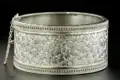
As the Industrial Revolution accelerated into the Victorian era, die-stamping techniques were further perfected. Cultural trends, such as Queen Victoria and Prince Albert acquiring Balmoral Castle in 1848, sparked a massive craze for Scottish agate jewelry, predominantly executed in silver. Toward the end of the Victorian period, the Arts and Crafts movement emerged as a direct ideological reaction against the industrialization of manufacturing. Emphasizing handcraftsmanship and artistic design over the intrinsic material value of gemstones and metals, Arts and Crafts artisans championed silver over gold and favored bezel-set cabochon stones, cementing silver’s enduring legacy as a medium of immense artistic expression.