



The late 19th century bore witness to a profound cultural transformation, one driven by a widespread disillusionment with the heavy conventions, rigid fashions, and industrial furnishings of the early Victorian era. As society sought a way out of past constraints, artists, craftsmen, and progressive thinkers looked toward a refined artistic taste that valued individual expression and intrinsic beauty over industrial mass production. Championed initially by figures like William Morris and later institutionalized by the formation of the Art Workers’ Guild in 1884 and the Arts and Crafts Exhibition Society in 1886, this philosophical and aesthetic rebellion swept across Europe and the United States. It ultimately redefined the landscape of fine jewelry, shifting the medium away from heavy, imitative historical revivals toward a delicate, nature-inspired, and distinctly modern idiom known as the Aesthetic Period.
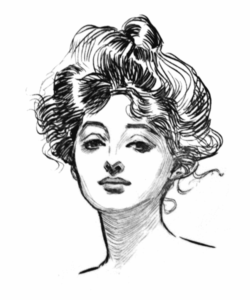
This artistic evolution mirrored drastic changes in the daily lives, social roles, and fashions of women. By 1890, the cultural archetype of the "Gibson Girl," immortalized in pen-and-ink drawings by Charles Dan Gibson, presented women in an entirely new light. Independent, fun-loving, self-aware, and self-assured, the modern woman of the fin de siècle era engaged in higher education, participated actively in politics, and embraced new sporting pastimes such as bicycling and golf. This newfound mobility necessitated dramatic wardrobe adjustments. To accommodate active lifestyles while keeping hands free, long gold and silver chains became absolute necessities, holding practical items such as coin purses, pocket watches, and lorgnettes. Meanwhile, ingenious accessories like whistle bracelets allowed women taking long countryside rides by themselves to summon assistance from a two-mile radius.
The socio-political landscape was shifting just as rapidly. Women organized fiercely to secure civic rights, founding the Primrose League in 1885 and the Women’s Liberal Federation in 1886. Younger generations flooded college campuses and sought leisure activities traditionally reserved for men. Culturally, fashionable women cultivated an aura of daring independence—projecting a slightly frivolous, modern persona that signaled a decisive break with Victorian propriety.
Despite the emergence of these practical jewelry accessories, the overall quantity of adornment worn by women decreased significantly. Daytime wear favored minimalism, and diamonds were widely perceived as vulgar during daylight hours. By 1890, the Jewellers’ Association grew deeply concerned that women had abandoned fine jewelry altogether. In a bid to revive public interest, they appealed directly to the Princess of Wales, who purchased several pieces to set a fashionable example. Nevertheless, outside of grand dress balls and nights at the opera, daylight displays of heavy jewels remained largely out of favor.
International expositions throughout the nineteenth century played a pivotal role in broadcasting these shifting tastes to a broader public. Celebrating the 400th anniversary of the discovery of America, the 1893 Colombian Exposition in Chicago captivated visitors with breathtaking electrical illuminations and showcases by premier American designers like Tiffany & Co. and Gorham. Attendees met the new wave of Victorian jewelry with immense enthusiasm. Unlike the weighty ornaments of prior decades, these pieces were lighter, more delicate, and smaller in scale. Elaborate, heavy brooches gave way to dainty pins scattered across dress bodices, while diamond brooches migrated to the hair for evening wear. Modern hairstyles exposed the ears, making small stud earrings highly desirable.
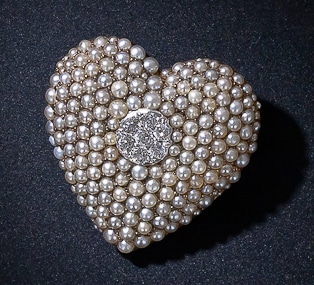
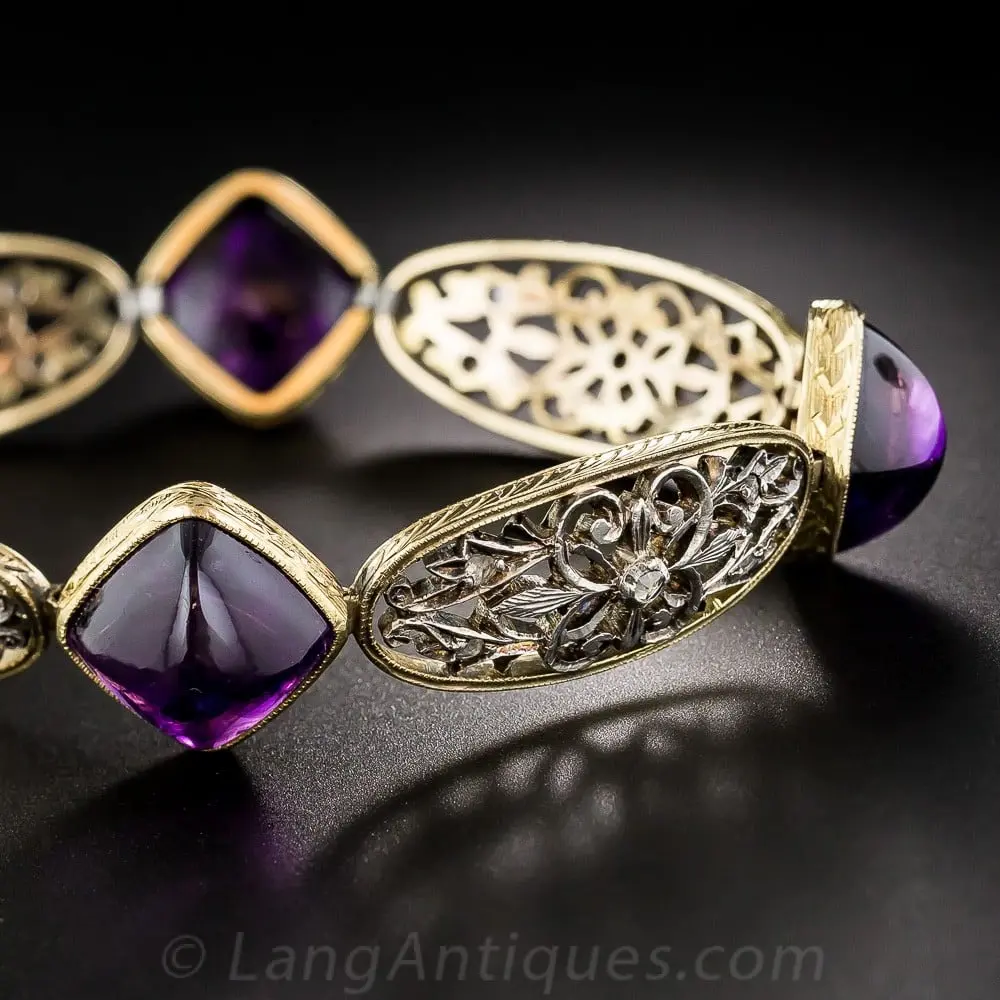
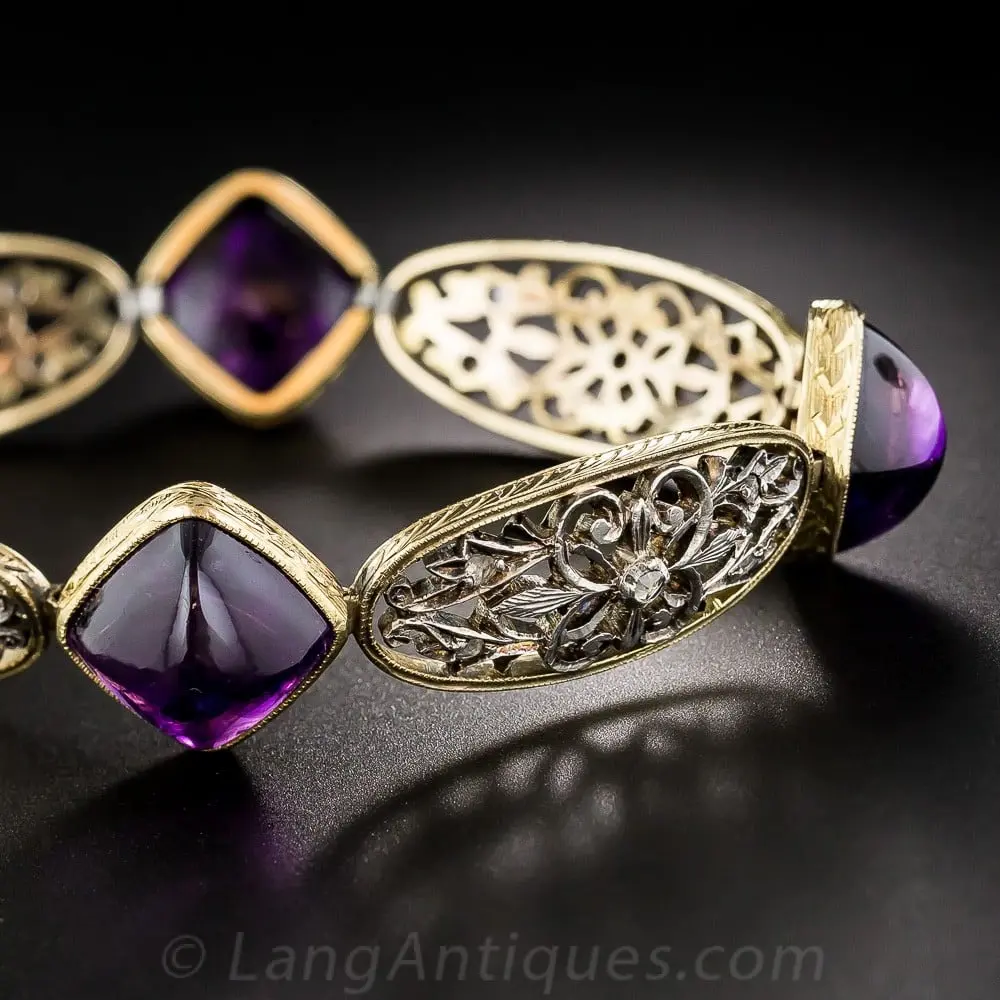
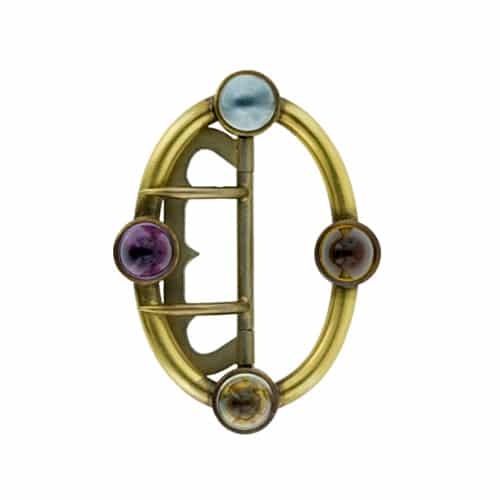
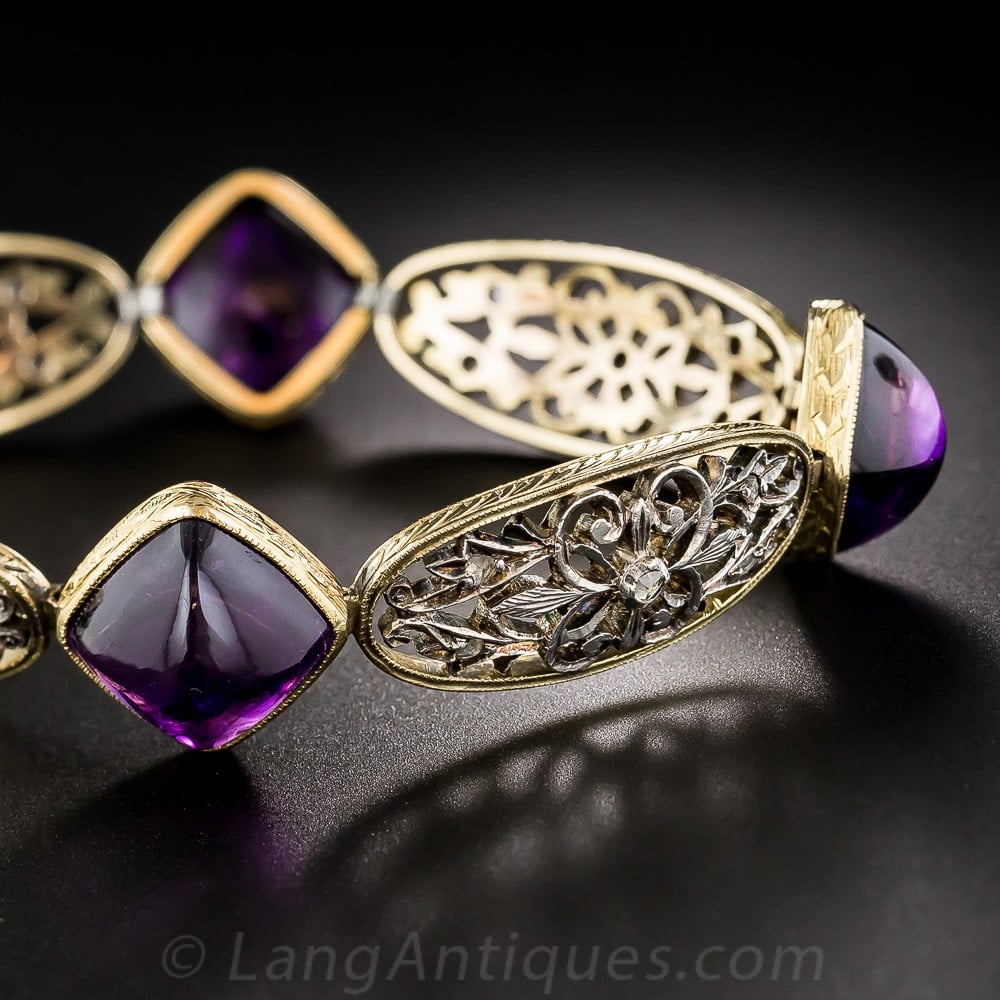
This new generation of jewelry designers felt profound disdain for the blatant copying of historical artifacts and the heavy-handed creations of their predecessors. They sought to break completely with tradition, favoring soft curves, natural shapes, and subdued, delicate color palettes. Gemstones were increasingly cut en cabochon, with a distinct preference for amethysts, emeralds, and opals. C.R. Ashbee, a prominent leader of the Arts and Crafts movement, argued that jewelry should be designed for its intrinsic beauty rather than its monetary value. He championed pink topaz and amethysts set in dull silver or gray gold, inspiring a legion of contemporary jewelers to adopt similar philosophies.
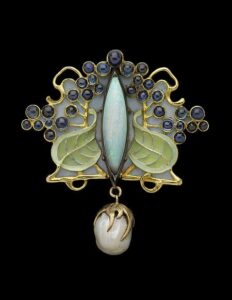
Simultaneously, the Art Nouveau style was taking root in France. René Lalique emerged as a visionary pioneer, incorporating feminine faces with long waving hair, soft-colored gemstones, simple floral motifs, and delicate enamels into his work. Lalique introduced a whimsical fantasy and organic originality that completely rejected derivative designs. Across the English Channel, his creations were celebrated as the ultimate realization of the modern aesthetic, making his distinctive jewelry an instant sensation among progressive Victorian women.
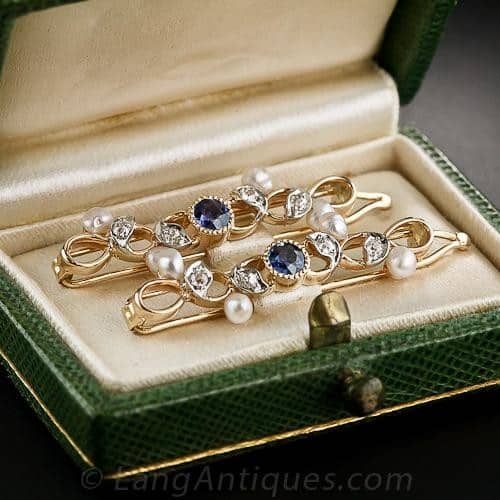
Even as avant-garde movements flourished, more conventional styles retained a loyal following, though they too underwent a simplification process centered around a single feature gemstone. Diamonds remained the ultimate choice for special occasions, manifested in delicate diamond rivières, tiaras, and bracelets crafted in silver-topped gold. These pieces utilized airy, open-work settings that minimized visible metal to let the stones shine. Gold standards also evolved; from the mid-1850s through the early 1930s, 12K gold rendered in a bloomed style enjoyed widespread popularity. By the late 1880s, manufacturing advancements finally made platinum a viable and favored mounting material for diamonds. However, near the close of the century, the Boer War temporarily severed the supply of South African diamonds, allowing alternative colored gemstones to regain prominence.

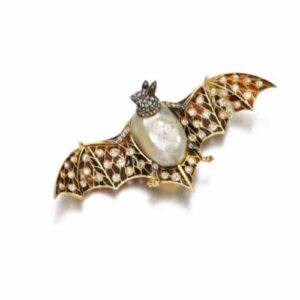
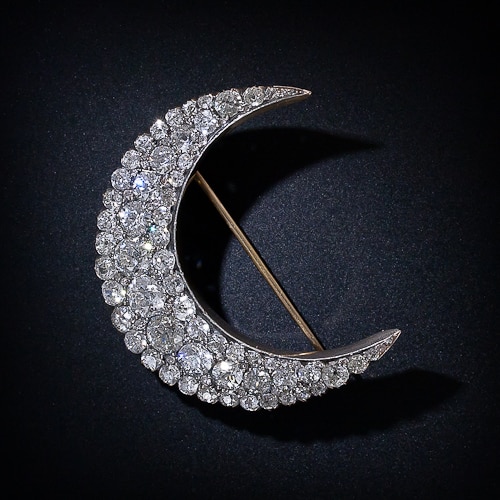
Novelty jewelry remained a driving force within the commercial market, continually refreshed by inventive designs. The "honeymoon" brooch—depicting a delicate bee perched upon a crescent moon—became an enduring favorite, accompanied by whimsical diamond-set chickens, jeweled lizards, frogs, and owls. Small functional items like lace pins, short bar pins, and delicate pendant necklaces decorated with shamrocks, dimensional stars, knots, and hearts captured the public imagination.
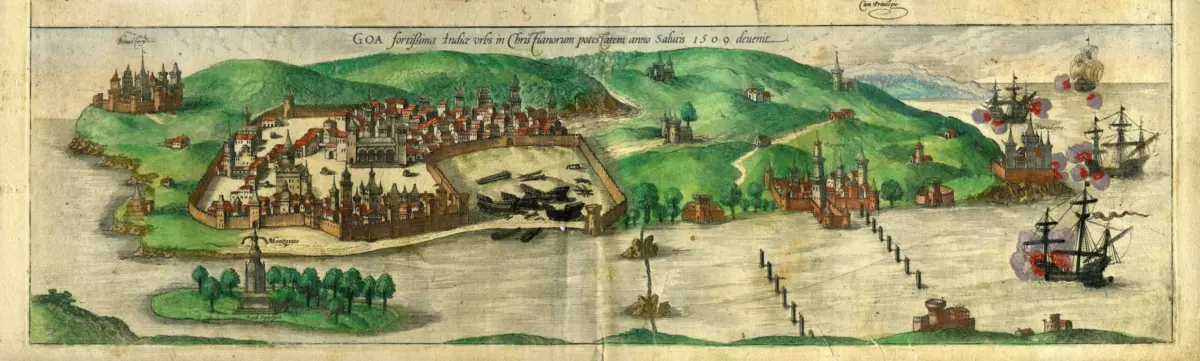
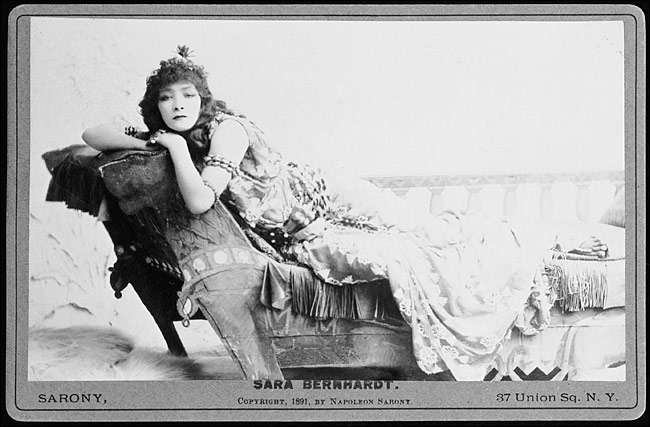
External cultural influences further fueled this diversification of style. When the legendary actress Sarah Bernhardt starred in Cléopâtre in 1891, she donned Egyptian-motif jewelry featuring turquoise set in silver. Her immense global popularity instantly sparked a widespread revival of Egyptian-styled ornaments. Similarly, the 1886 Indian Exhibition introduced English audiences to handmade, asymmetrical, and imprecise Indian metalwork. Rather than attempting to replicate these objects with strict classical precision as they had done with Greek and Etruscan antiquities, British jewelers embraced the organic charm and raw freshness of the craftsmanship. Additionally, a clever upcycling trend emerged between 1885 and 1889, wherein artisans repurposed hand-pierced escapement covers—originally designed to protect the balance wheels of sixteenth- and seventeenth-century verge pocket watches—into unique earrings, bracelets, and pendants.
The extended British Royal Family continued to exert immense influence over global fashion trends. The signature dog-collar necklaces—known in France as colliers de chien—and cascading ropes of pearls worn by the Princess of Wales were emulated across Europe and the United States, often used effectively to conceal scars or gracefully elongate the neck. Upon the passing of Queen Victoria in 1901, King Edward VII and Queen Alexandra seamlessly carried their trendsetting influence into the dawn of a new century, cementing the legacy of an era defined by artistic freedom, modern femininity, and exquisite design innovation.