





Last week, the Grand Prix d’Horlogerie de Genève (GPHG) officially announced the finalists for its 2026 edition, setting the stage for watchmaking’s premier awards ceremony to be held in Geneva on November 7. For participating brands, securing a finalist spot can be a major milestone, and for small, independent first-timers making their debut, it can represent a true watershed moment. This year’s list of finalists has been eagerly anticipated by collectors, industry professionals, and enthusiasts alike.
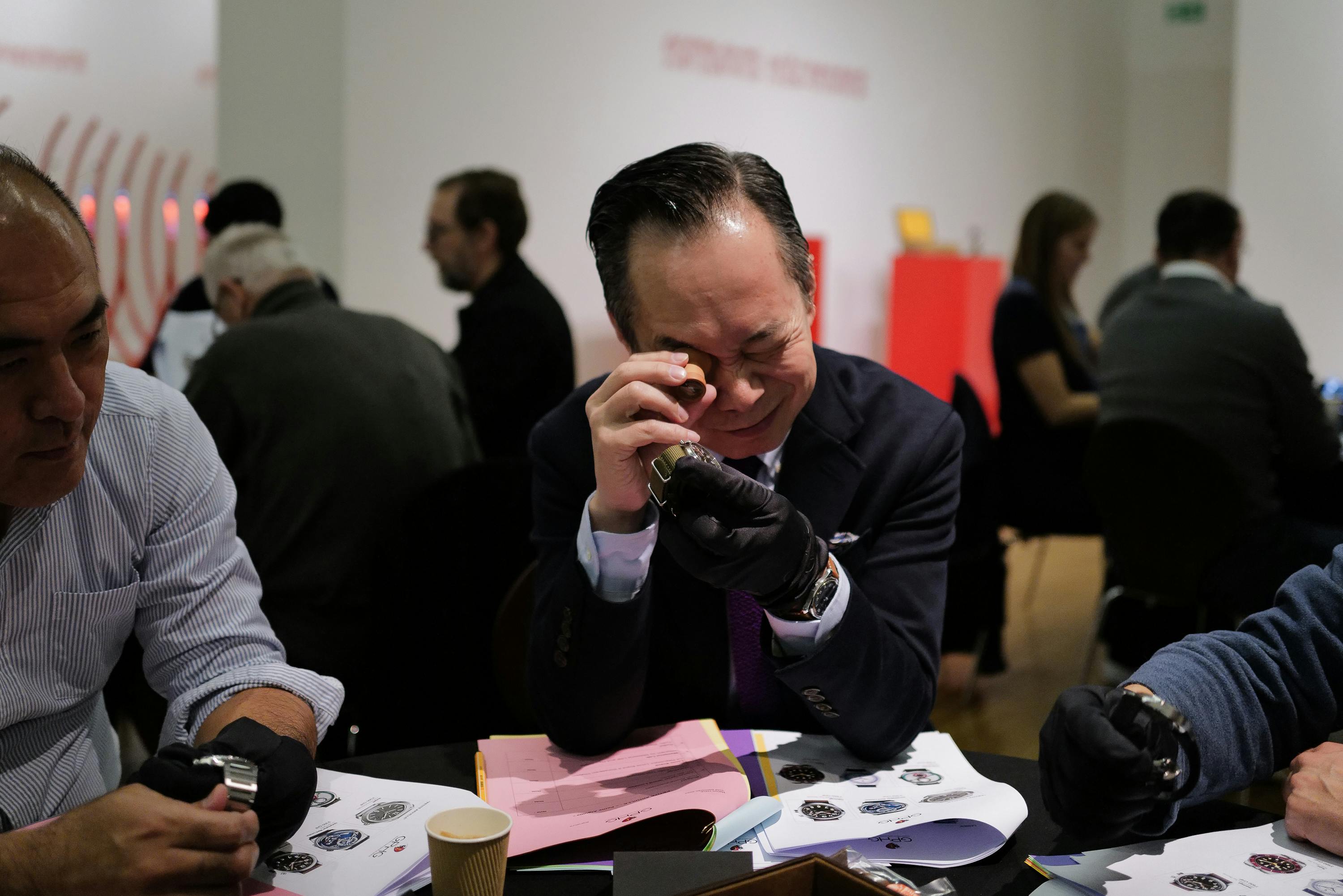
This year brings a personal connection to the proceedings, as Mark Kauzlarich joins a 24-member jury composed of journalists, collectors, and watchmaking industry veterans. The jury is led this year by its first-time president, Wei Koh, founder of Revolution and The Rake. Among the other distinguished jurors are Michael Tay, Group Managing Director of The Hour Glass in Singapore; Hind Abdul Hamied Seddiqi, CEO of Dubai Watch Week; acclaimed watchmaker Rémy Cools; automaton maker François Junod; writer Justin Hast; and artist Wes Lang, alongside several other prominent figures from the global watch community.

Serving on the jury highlights the immense dedication, heart, and soul that independent watchmakers and established houses pour into their craft. The GPHG plays a vital role in acknowledging hard work and elevating underappreciated, overlooked, or emerging watchmakers in ways that can fundamentally alter their careers. While the absence of certain brands remains a regular topic of discussion, the overarching mission of the GPHG is to celebrate excellence and honor the technical and artistic achievements defining contemporary horology.
As the winner of the coveted Aiguille d’Or last year, Breguet is represented on the jury by its CEO, Gregory Kissling, which means Breguet itself cannot compete in this year’s cycle. The complete jury lineup encompasses sharp business owners, technical minds, and discerning collectors who bring diverse perspectives to the evaluation process.

Some Changes to the GPHG, Plus How It Works Broadly Speaking
The transition in leadership, with Wei Koh taking over the presidency from author and journalist Nicolas Foulkes, has coincided with several notable updates to the GPHG framework. Most prominently, this year’s awards ceremony will be conducted entirely in English in an effort to reach a broader, more global audience.
Several categories have also been updated, including the removal of gendered terms in favor of streamlined designations such as "Essential" and "Complication." The "Iconic" prize is now open to any brand, including those that have not formally submitted entries. Additionally, the scope of the "Special Jury Prize" has been expanded to recognize any person, institution, or brand—even those not actively competing—for significant watchmaking developments or exemplary approaches to ethics and sustainability. Moving forward, only two categories, Jewellery Watch and Mechanical Clock, will permit unique, one-off timepieces.
As in previous years, notable absences remain part of the landscape. Industry heavyweights like Rolex do not participate, and Patek Philippe has remained absent for years. Tudor last competed in 2024, while F.P. Journe swept multiple top prizes before halting entries in 2010. The Swatch Group participates selectively, though Breguet took home the top prize last year, and Blancpain has entered this cycle. Richemont brands largely remain unrepresented, a point of disappointment given recent standout releases from maisons like Vacheron Constantin and Jaeger-LeCoultre.
The entry and selection process begins earlier in the year when members of the 1,000-plus-person Academy submit nominations, alongside direct entries from brands. Participants pay an initial entry fee of CHF 800, followed by CHF 7,000 for each finalist piece, fees that the GPHG notes directly fund competition organization, international exhibitions, communication, and marketing services for the nominated timepieces. Between July and August, the Academy votes on the competing pieces to narrow the field down to the top six finalists across 14 distinct categories.

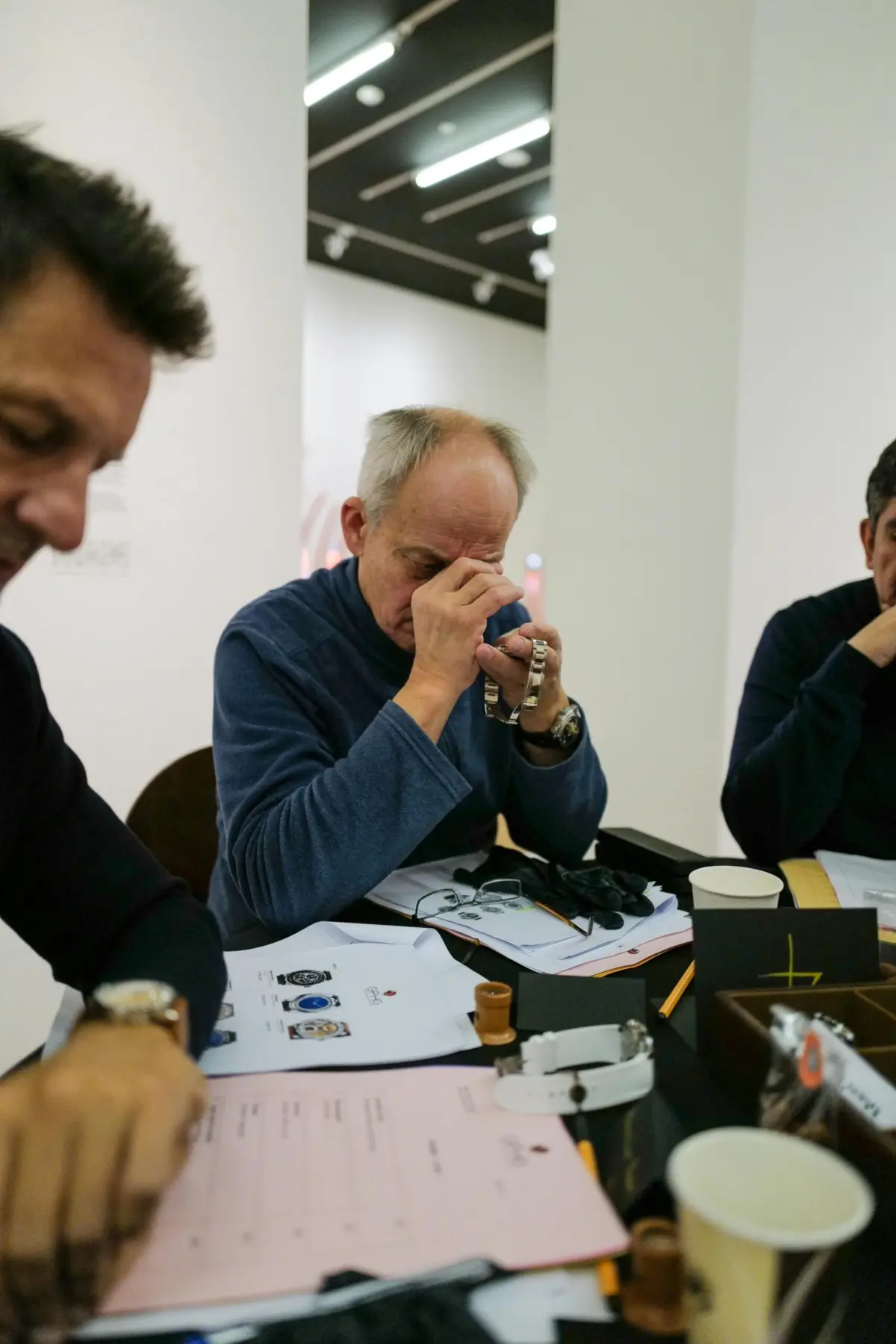
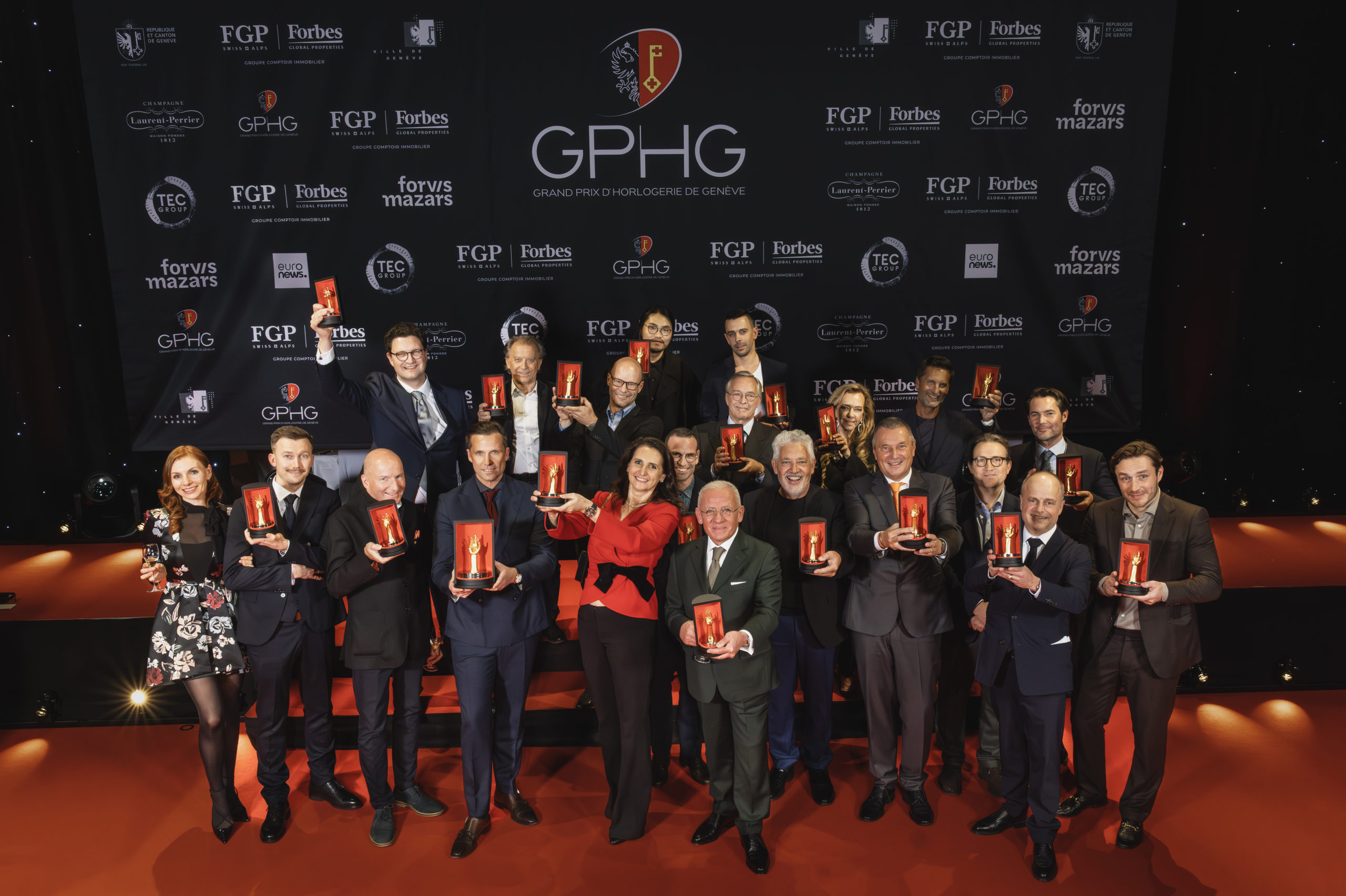
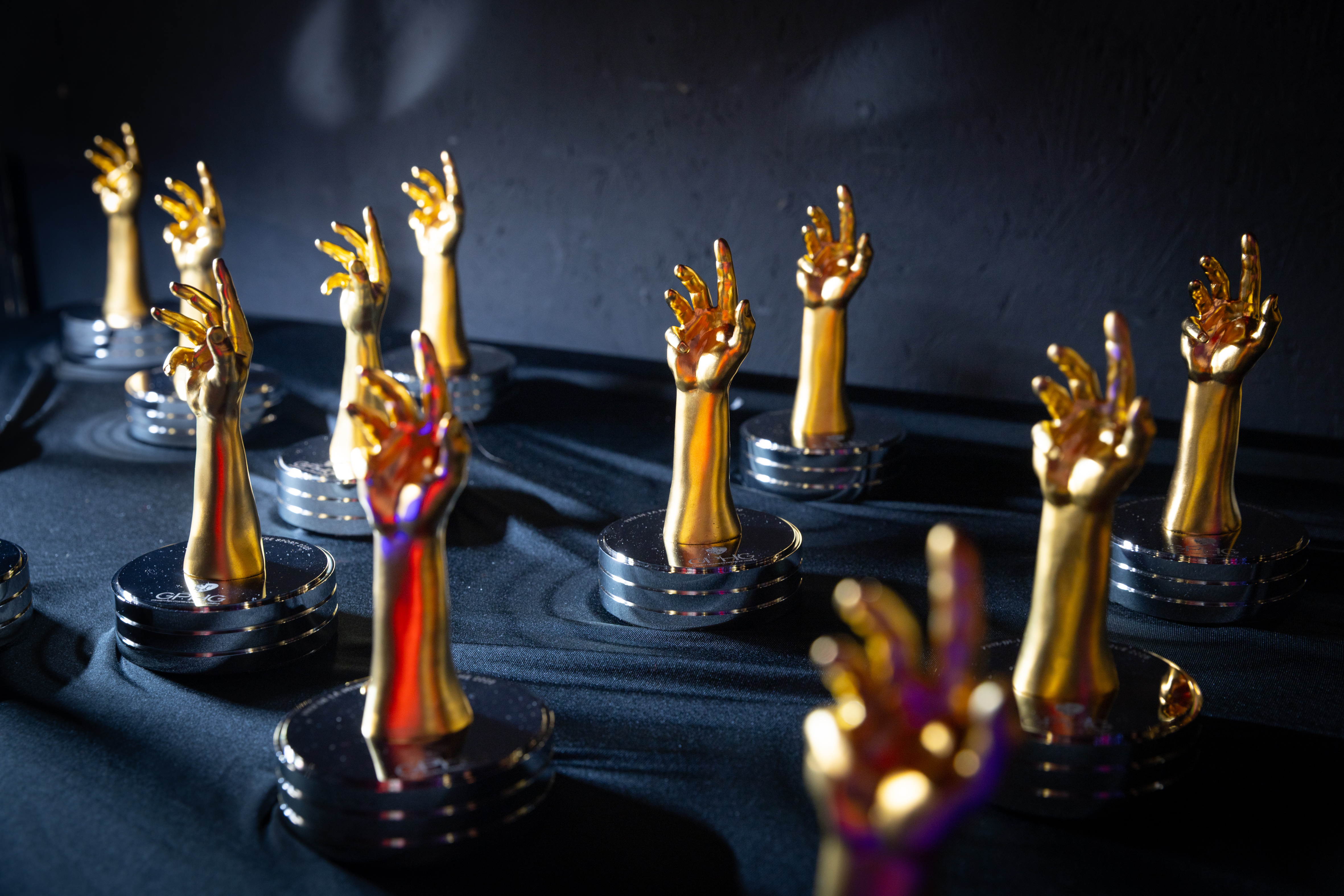
On November 1, the full jury will convene in Geneva to conduct hands-on evaluations of all the nominated timepieces, engage in rigorous debates, and cast their votes. Jurors directly involved in the development of a specific watch naturally recuse themselves from voting in that category. The jury’s evaluation accounts for two-thirds of the final score, while ranked choices from the Academy make up the remaining third. On the same day, the jury will select the winners for the Audacity, Horological Revelation, Chronometry, Iconic, and Special Jury prizes, as well as the ultimate Aiguille d’Or for the best watch of the year. The winners will be officially announced on November 7 at the Bâtiment des Forces Motrices in Geneva.
Evaluating the 14 Categories
Time Only
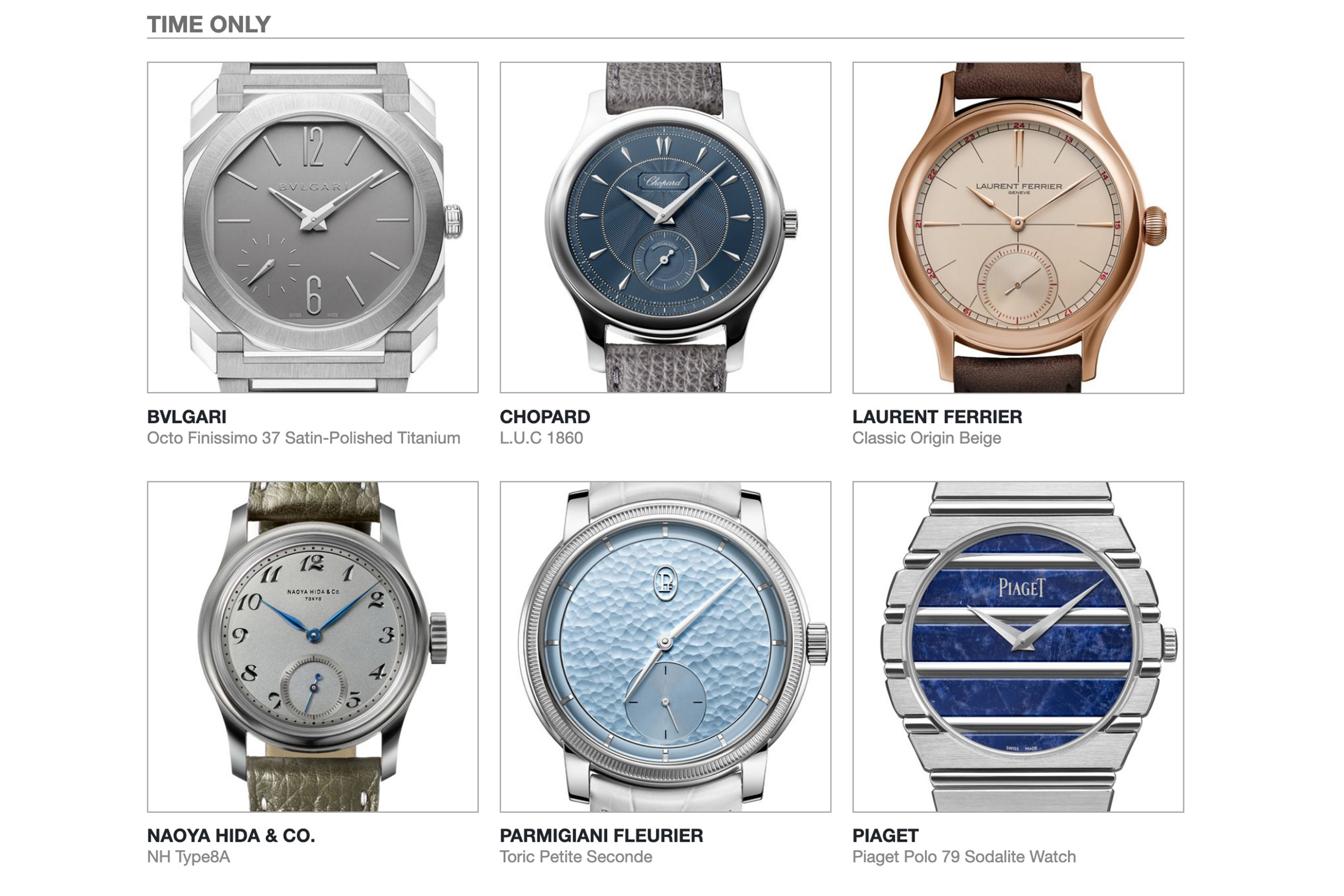
As defined by the GPHG, this category is reserved for watches displaying exclusively analog time indications—hours, minutes, and seconds—via two or three hands on a solid dial, completely devoid of any other complications or gem-setting. While not explicitly restricted to dress watches, the category naturally trends in that direction due to the separate "Sports" category.
Notable finalists include the Bulgari Octo Finissimo 37 in satin-polished titanium and the Naoya Hida Type 8A. Both represent true novelties for their respective brands, introducing new case designs and movements, whereas several competing entries are variations in dial color or case material. While material variations have their merits, mechanical and structural novelty remains a vital consideration in recognizing the standout watch of the year.
Essential
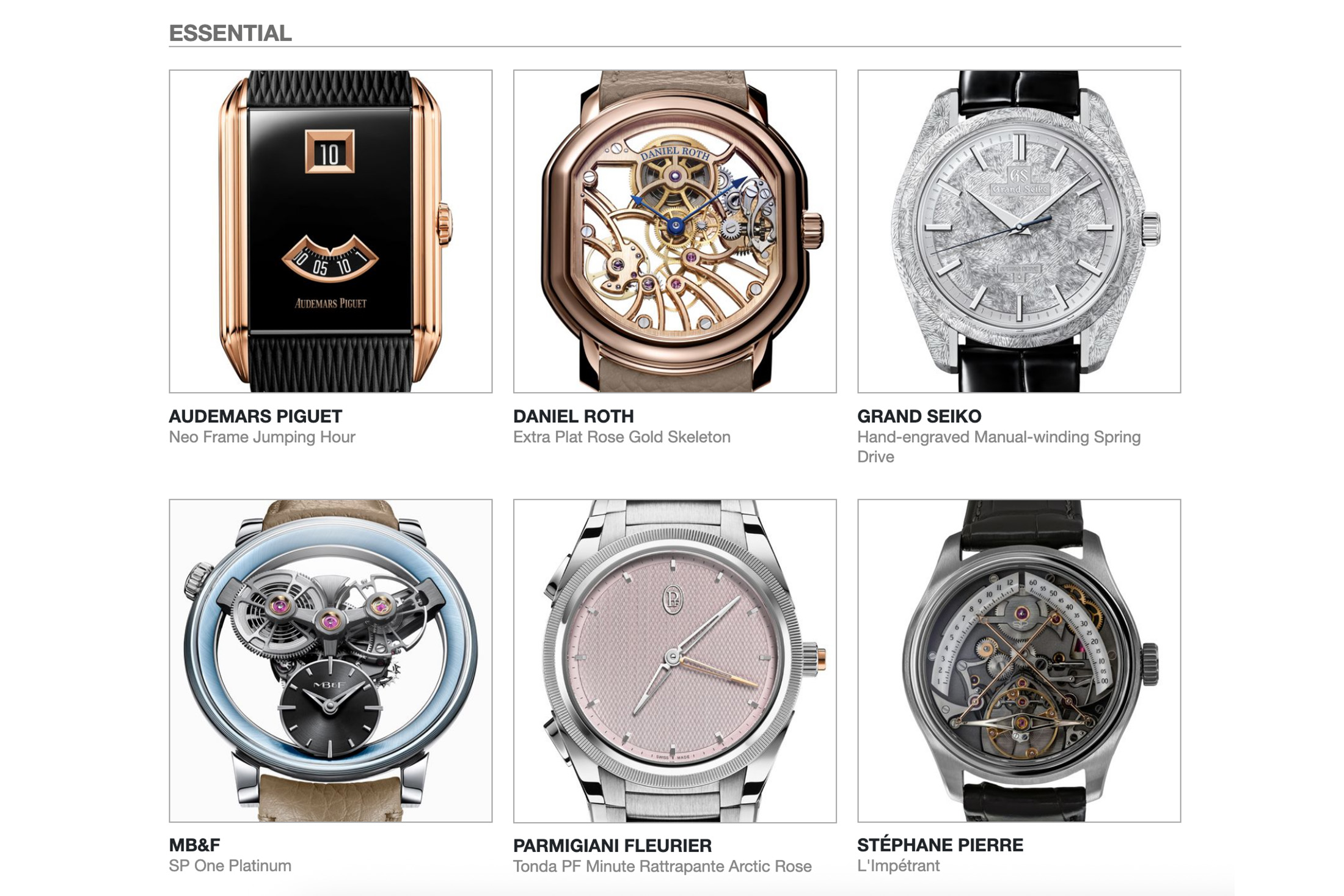
The "Essential" category shares proximity with "Time Only," but allows for watches displaying one or more specific practical indications: hours, minutes, seconds, the date, a power-reserve indicator, classic moon phases, or a day/night indicator. Digital or retrograde displays are also permitted, provided they do not cross into the dedicated Complication or Gemset definitions.
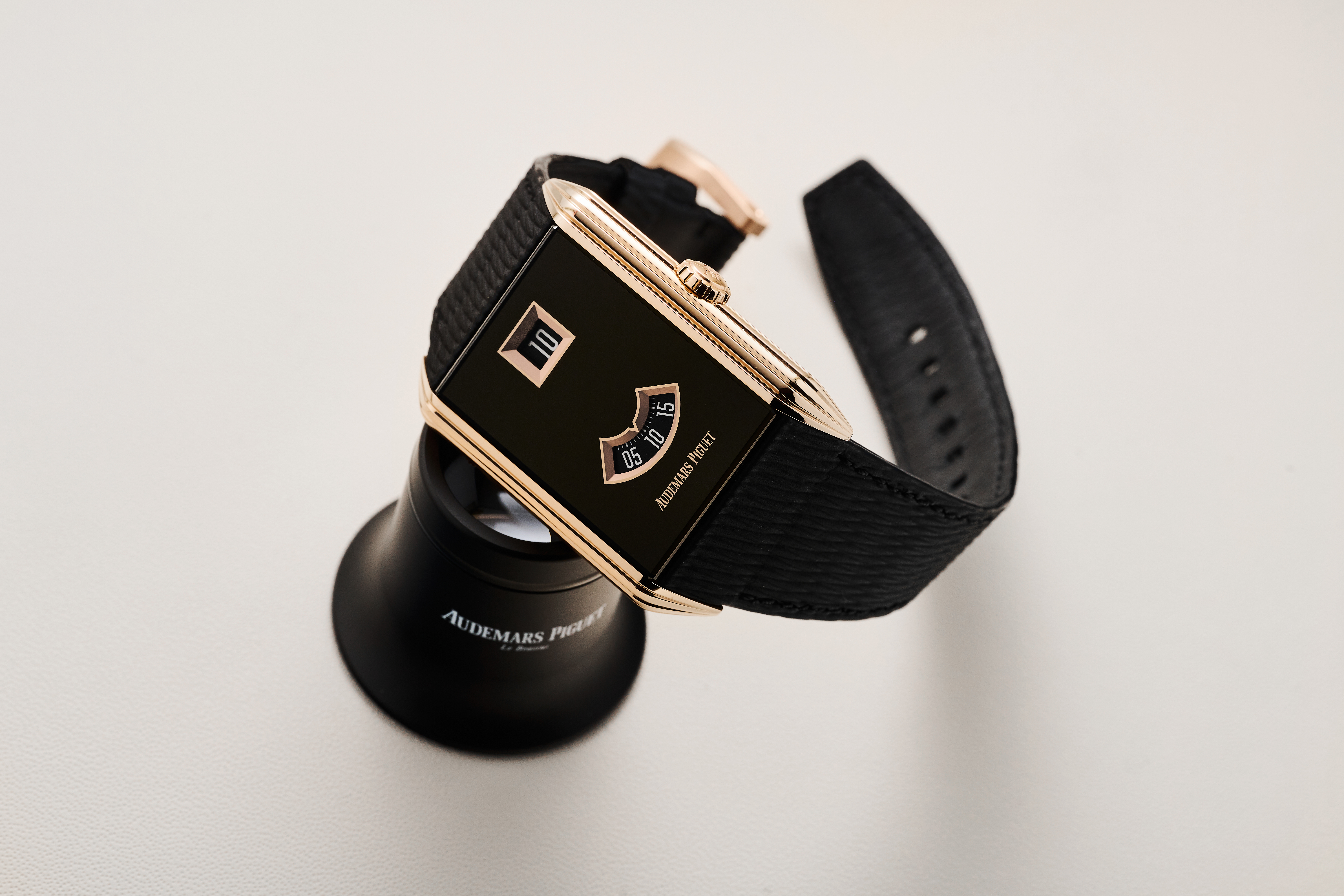
This is a robust category featuring diverse interpretations, though the finalists lean away from complex moon phase or calendar displays this year. Recognizable brands often benefit from name recognition among the large Academy voter base, but the nominated pieces nevertheless showcase strong design and execution. Standouts include Audemars Piguet’s Neo Frame Jumping Hour, an MB&F release representing a major new collection direction for the independent brand, and an exquisitely crafted Daniel Roth Extra Plat Skeleton in rose gold. Stéphane Pierre’s inaugural bi-retrograde watch also commands strong attention as a contender for both the category win and the Horological Revelation prize.
Complication
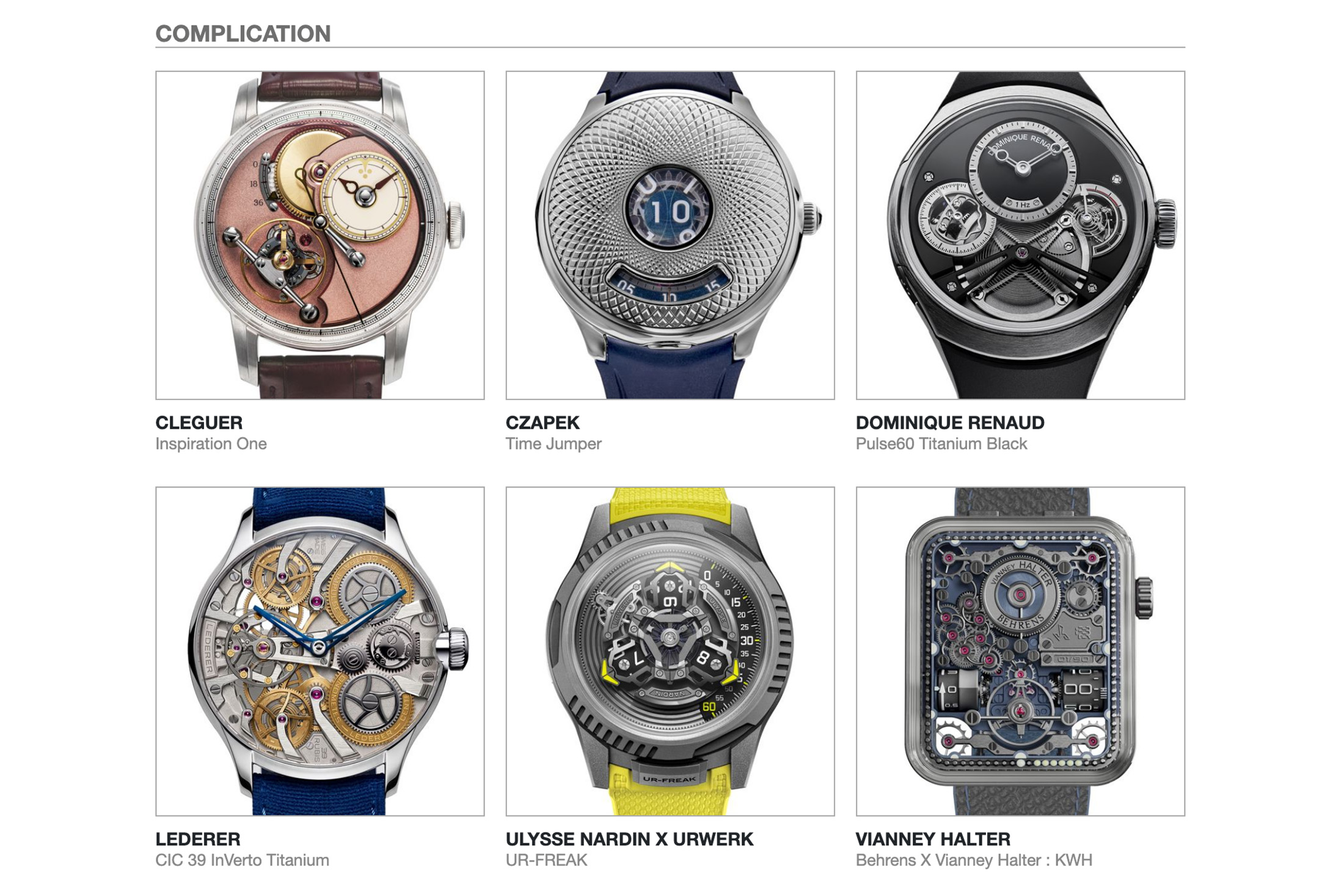
This category encompasses watches distinguished by creativity and mechanical complexity, featuring a wide array of complications and indications such as world time or dual-time displays, while remaining distinct from the Essential and Mechanical Exception groups.

The category sparks considerable debate regarding categorization, with pieces featuring unique displays or escapements sometimes blurring the lines with mechanical exceptions. Vianney Halter’s collaboration with Behrens represents a pure traditional embodiment of the category with a full suite of practical complications, including a date, moon phases, power reserve, and day/night indicator, giving it a strong conceptual edge for debate among the jury.
Mechanical Exception
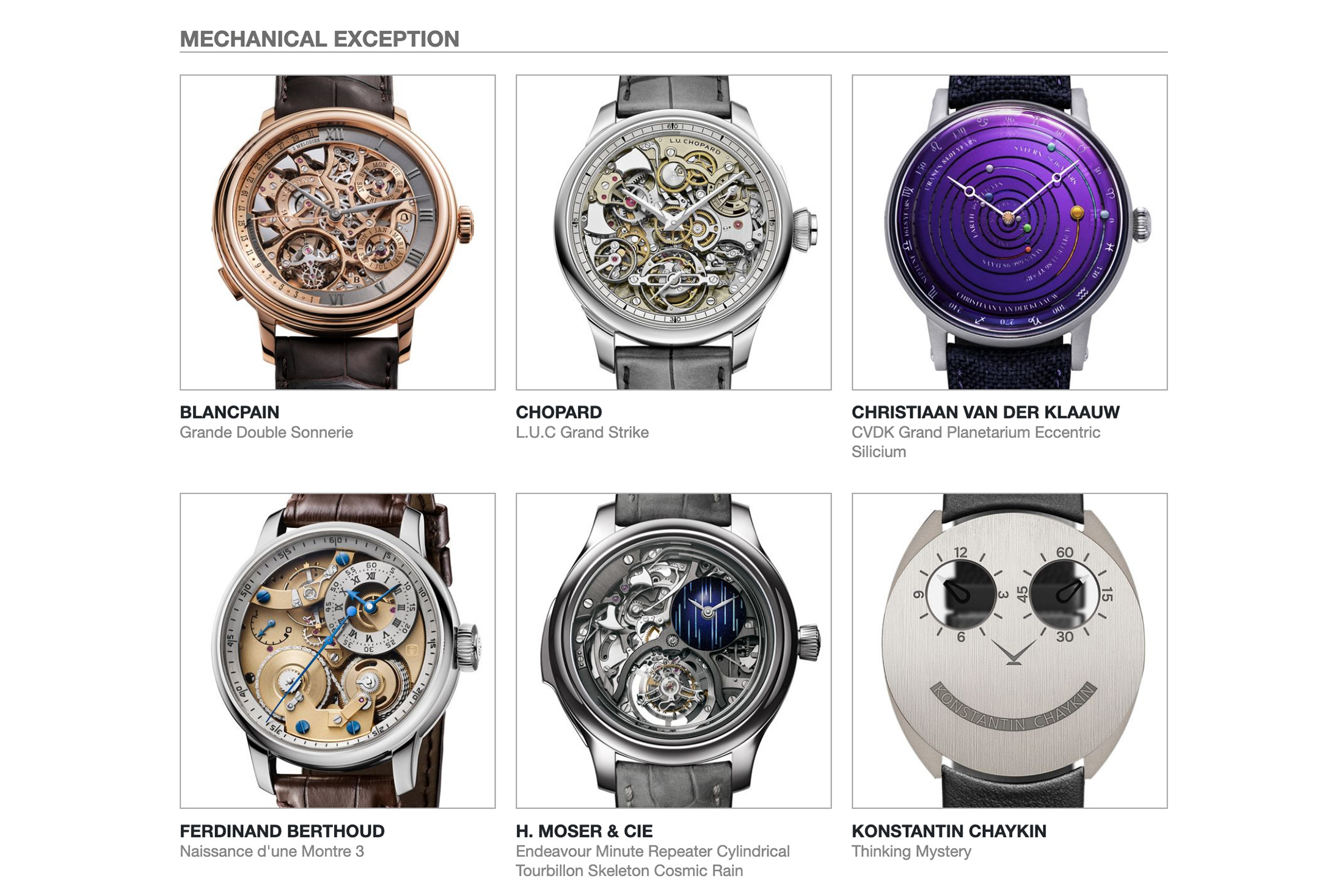
Arguably one of the most technically demanding groups of the year, the "Mechanical Exception" category highlights watches featuring special mechanisms, sophisticated displays, automata, striking acoustic functions, or original horological concepts.
The field features two rare grande et petite sonnerie wristwatches: Blancpain’s Grand Double Sonnerie and the Chopard L.U.C. Grand Strike, positioning them as natural favorites. However, the competition is fierce. The Ferdinand Berthoud Naissance d’une Montre 3 is entirely handmade and incorporates a fusée-and-chain transmission. Konstantin Chaykin pushes boundaries with the world’s thinnest mechanical watch, while Christiaan van der Klaauw presents the Grand Planetarium Eccentric Silicium, capable of displaying real-time orbits for all eight planets in the solar system.
Gemset Watch and Jewellery
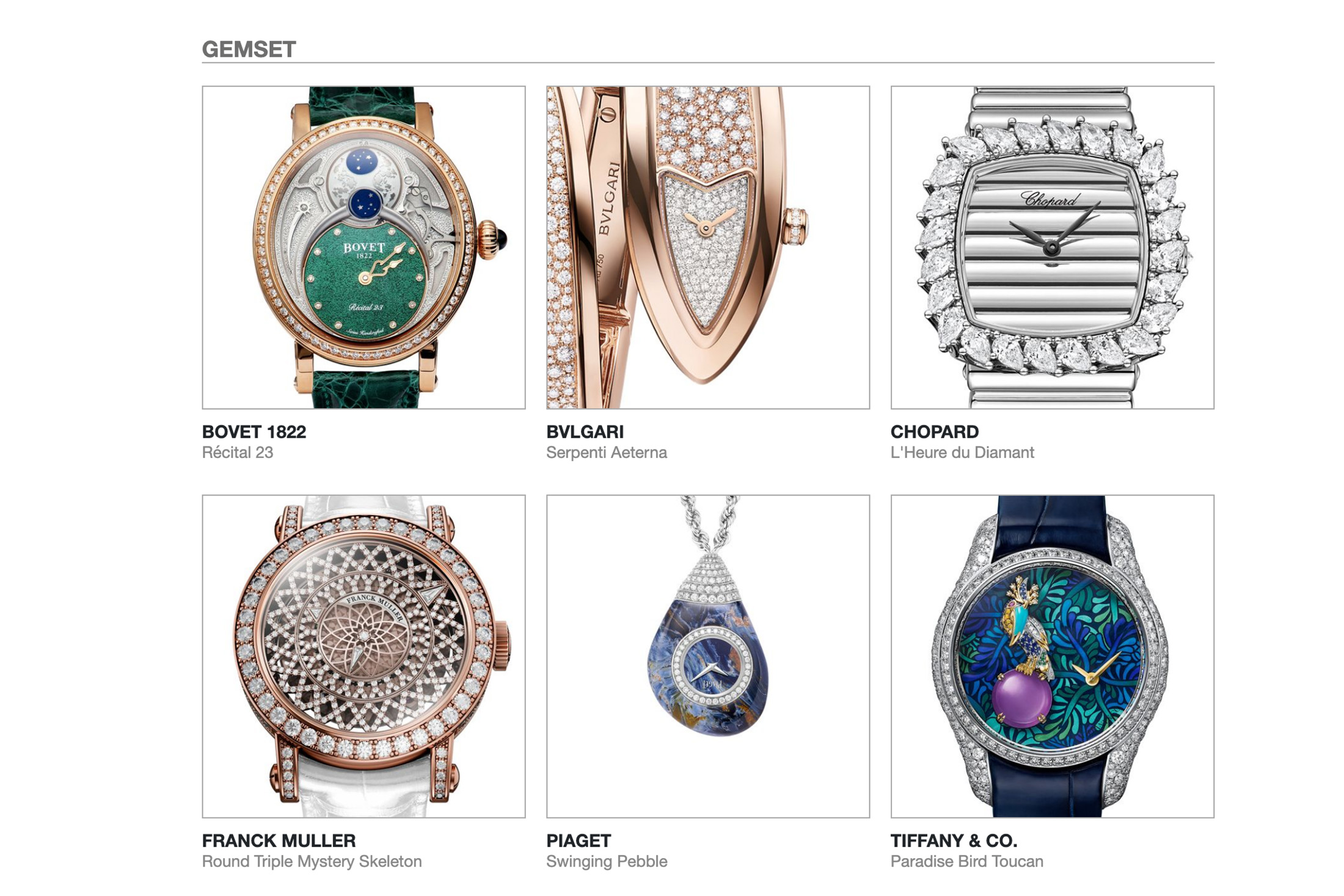
The GPHG features distinct tiers for gemstone-decorated timepieces. The Gemset category is limited to watches set with up to six carats of gemstones and basic time indications, designed to accommodate dress and everyday watches with elevated finishing. The Jewellery category, conversely, removes carat limits entirely, allowing for maximalist creations where high jewelry artistry takes center stage. In both categories, the evaluation focuses heavily on gem-setting technique, structural integration, and overall aesthetic harmony under magnification.
Tourbillon
The tourbillon category gathers a diverse range of escapement-focused creations spanning sporty, dressy, and highly experimental designs. Independent watchmakers and established houses alike bring unique architecture to the table, requiring close examination of technical execution, cage construction, and overall chronometric performance.
Chronograph
The chronograph category is exceptionally competitive this year, featuring innovative approaches to elapsed-time measurement. Standouts include Parmigiani Fleurier’s central hour and minute counter layout and TAG Heuer’s novel use of a bi-stable nickel-phosphorus component to replace traditional hammers and levers. Heavy architectural weight is also carried by Audemars Piguet’s RD#5 and Rexhep Rexhepi’s latest horological statement, both of which push the boundaries of instantaneous counters and flyback integration.
Calendar and Astronomy
This category gathers complex calendar and astronomical timepieces, ranging from annual and perpetual calendars to complex planetary displays. Independent creations and high-horology complications offer distinct interpretations of tracking celestial and calendar cycles, testing the limits of mechanical memory and gear train design.
Sports
The "Sports" category accommodates timepieces linked to physical exercise and athletic endeavors, requiring durability, specialized materials, and ergonomic design. The diverse price points and robust constructions in this group reflect the wide variety of modern sports watchmaking, from high-complication titanium models to rugged daily wearers.
Artistic Crafts
Dedicated to traditional artisanal techniques, this category highlights exceptional mastery in enameling, lacquering, engraving, engine-turning (guilloché), marquetry, and skeletonization. In the absence of perennial entrants like Kari Voutilainen, the field opens up to a fresh group of enameled pieces, hand-engraved components, and miniature masterpieces from independent artisans and heritage houses alike.
Petite Aiguille and Challenge
These two price-capped categories consistently capture wide audience interest. The Petite Aiguille covers watches priced between CHF 4,500 and CHF 10,000, showcasing independent darlings, innovative dial treatments, and creative bracelet designs from brands like Ming, Josh Shapiro, Otsuka Lotec, and independent collaborations.
The Challenge category is restricted to watches priced under CHF 4,500, focusing squarely on accessible mechanical value and inventive design. Independent microbrands and accessible labels showcase creative displays and mechanical ingenuity at price points designed to reach a broad collector base.
Mechanical Clock
Rounding out the competition, the Mechanical Clock category highlights standalone mechanical timekeeping instruments such as longcase and table clocks where wristwatches are strictly prohibited. These large-format creations allow master horologists to explore architectural freedom, complex gear trains, and intricate synchronization mechanisms free from the spatial constraints of the human wrist.
As the jury prepares for its hands-on deliberations in Geneva on November 1, the collective focus turns to studying the technical specifications, pricing, and craftsmanship of every finalist before the final votes are cast ahead of the November 7 awards ceremony.