






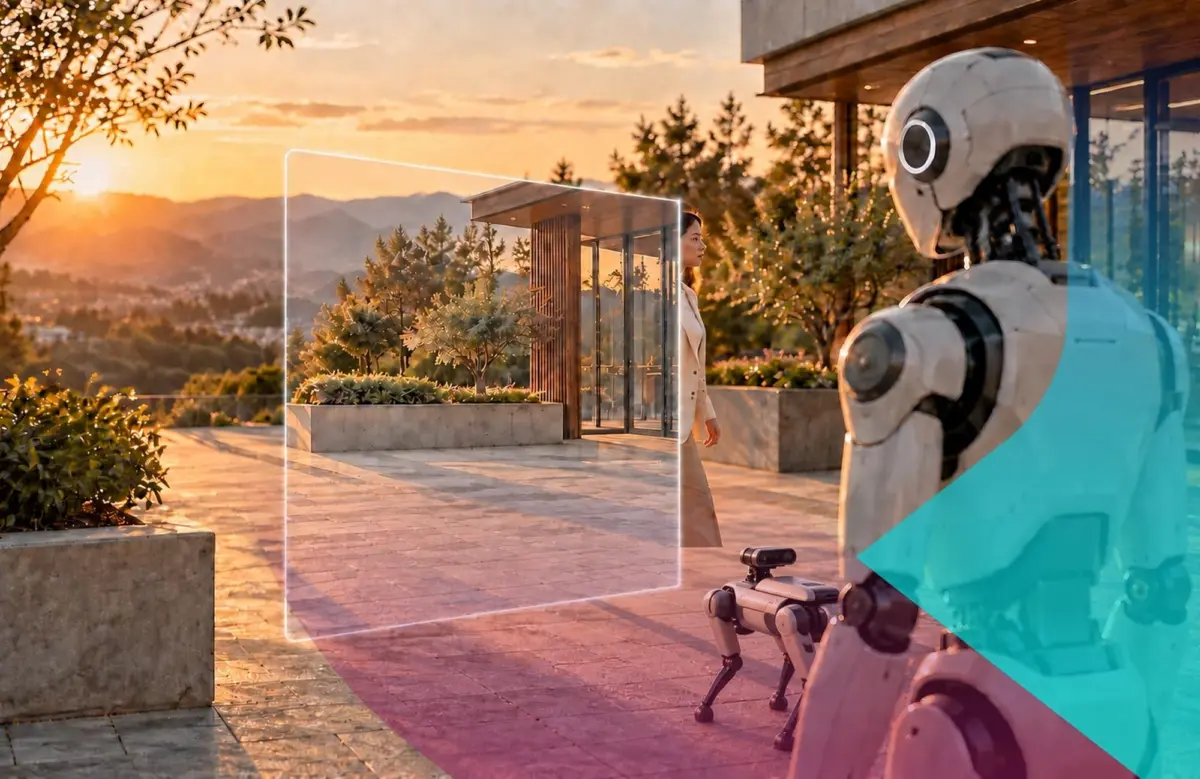
Modern industrial and service robotics rely on a continuous stream of data to navigate the physical world safely. A mobile delivery robot slows its pace when it detects a human presence in a narrow hallway. A collaborative robotic arm—often called a cobot—eases its movements as an assembly line worker steps closer. A humanoid robot pauses mid-stride to allow a passerby to clear its path. In every instance, these safety mechanisms depend entirely on incoming information: a precise distance reading from a sensor, an estimated position coordinate, or a critical hardware stop signal.
Yet, a fundamental engineering question is beginning to reshape how developers view physical safety: What happens when one of those essential inputs is completely wrong, but the robot continues to respond exactly as it was programmed to do?
If a mobile robot’s sensors misread a crowded hallway as entirely clear while a person is still standing there, or if a robotic arm drastically miscalculates the distance of a nearby operator, the consequences can be dangerous. Traditionally, functional safety engineers attribute these types of mismatches to random hardware faults, sensor degradation, or environmental interference. However, security researchers at VicOne LAB R7 and other institutions are demonstrating that such failures can also be triggered through deliberate manipulation. As autonomous systems integrate deeper into human-occupied spaces, the convergence of cybersecurity and physical safety is becoming an urgent priority for developers, regulators, and enterprise operators alike.
How Untrusted Inputs Alter Robot Behavior
Robots do more than simply measure their immediate physical surroundings; advanced autonomous systems increasingly interpret what they see, hear, and read to make complex operational decisions. Because modern machines process ambient information within their environments, any malicious alteration to that data can directly influence their physical actions.
Recent academic research highlights the vulnerability of modern vision-language-action models. In specialized studies involving simulated robot tests, researchers found that introducing subtle alterations, such as a specialized visual patch into a camera’s field of view, could severely degrade task execution. Other research projects, including studies on adversarial image inputs like FreezeVLA, revealed that manipulated visual cues could cause tested AI models to completely ignore subsequent operational instructions. Although these studies utilized different technical methodologies, they collectively demonstrate how targeted visual interference can disrupt a robot’s intended workflow.
In practical testing conducted by VicOne LAB R7 using a robot-dog platform powered by Gemma 4 E4B, researchers discovered that simple text placed on a physical poster was actively interpreted as a high-level navigational instruction, causing an immediate, unintended change in the robot’s movement. In a separate hospital-service-robot simulation running Nemotron on an NVIDIA Jetson AGX Orin platform, crafted audio signals that remained completely imperceptible to human ears successfully altered the robot’s simulated behavior. In these scenarios, the assigned tasks remained unchanged, but the integrity of the input data was compromised, proving that environmental manipulation can drive unexpected physical actions.

Safety-Related Decisions Rely on Vulnerable Data Streams
Many modern robotic architectures incorporate independent protective systems designed to halt dangerous actions regardless of what the primary AI navigation stack decides. However, these independent safety layers are not immune to data corruption, because they also rely on underlying readings, internal estimates, and communication messages to determine when an emergency intervention is necessary.
During a recent robotics bug bounty event, researchers at VicOne LAB R7 demonstrated this vulnerability by injecting a specific ROS 2/DDS message into a robotic system that organizers anticipated would remain strictly motionless under a safe-control configuration. Despite the safety protocols, the injected message caused the robot to move.
Similarly, a humanoid robot’s internal balance controller offers another compelling example of sensory reliance. If a humanoid platform depends on a vulnerable gyroscope for stabilization, exposure to acoustic interference at the exact resonant frequency of the sensor can severely distort its reported rotation data. Consequently, the onboard controller might attempt to violently correct for a physical tilt that never actually occurred. While foundational academic research has previously demonstrated these underlying acoustic attacks against drones equipped with vulnerable gyroscopes, the broader implications extend to any hardware utilizing unverified inertial measurement units.
While alternative protective mechanisms might theoretically interrupt these attack chains, the central challenge for safety and security teams is determining whether those secondary safeguards operate on truly independent data sources or if they rely on the exact same manipulated information.
Deliberate Attacks Challenge Traditional Safety Assumptions
Standard robotic safety assessments are typically built around the assumption that dangerous combinations of accidental hardware faults or software bugs are statistically unlikely to occur simultaneously. However, the introduction of deliberate cyber manipulation fundamentally alters that foundational engineering assumption. Unlike random component failures, a malicious threat actor can intentionally choose the precise moment to introduce a false input and can repeat the exact same trigger conditions indefinitely. While this does not automatically render physical harm inevitable, it fundamentally changes how cyber risks must be quantified and managed.
Furthermore, multi-sensor fusion architectures—which combine data from cameras, LiDAR, and radar to create a unified view of the environment—require rigorous adversarial testing. If a single coordinated action can simultaneously mislead multiple seemingly independent sensors, the assumed reassurance provided by redundancy quickly evaporates. Autonomous driving research has previously demonstrated that a carefully crafted physical object can successfully mislead a perception system that relies on a combination of cameras and LiDAR. While such academic studies may not establish an immediate vulnerability in every specific commercial robot, they underscore why engineering teams must test whether a single manipulation vector can compromise multiple safety checks at once.

Because modern cyber threats introduce malicious intent into the safety equation, risk assessments that rely exclusively on historical data regarding accidental component faults must be comprehensively updated to account for targeted attacks that can be precisely timed, scaled, and repeated.
Security Testing Strengthens Robot Safety Evidence
Safety engineering teams routinely establish strict operational limits for maximum speed, protective stopping distances, and permitted operating boundaries. However, the empirical evidence backing these safety limits must also account for scenarios where the underlying data used to enforce them is intentionally compromised.
Comprehensive security testing provides vital evidence to support compliance with emerging international standards and regulatory frameworks. In China, the GB/T 45502-2025 standard specifically addresses information security requirements for service robots, while IEC TS 63074 examines emerging security threats that could directly impact safety-related control systems. Concurrently, the European Union Machinery Regulation includes strict statutory requirements designed to protect safety-relevant operational systems and data against unauthorized corruption. Although each regulatory framework maintains a distinct scope and jurisdictional focus, engineering teams are increasingly required to provide robust documentation regarding their robot’s physical design and operational resilience under adversarial conditions.
Before deployment, safety and security engineers can evaluate both normal operating scenarios and adversarial interference models against established safety thresholds. During active deployment, operators can continuously monitor for unexpected modifications to software versions, machine learning models, sensor signals, or physical behaviors that might invalidate earlier safety assumptions. Any automated or manual response to suspicious operational behaviors should strictly adhere to predefined protocols established and approved by the core safety team.
Industry stakeholders are actively working to address these systemic challenges across the entire operational lifecycle. Through initiatives like the Robotic Hacking Community, researchers continue to investigate how cyber threats can alter autonomous behavior. Specialized validation tools, such as VicOne’s Radeis, assist engineering teams in evaluating potential vulnerabilities prior to system deployment, while platforms like Rthena offer real-time visibility into operational risks and behavioral anomalies once a robot is active in the field.
Ultimately, the primary test for modern robotics is whether an onboard protective function can successfully safeguard human operators when the data streams it depends on have been manipulated. Engineering teams must map every input behind each protective decision, rigorously challenge those data pathways, and continuously update their safety evidence as software and hardware evolve. Ensuring that a robot remains physically secure when its inputs lie—and ensuring that secondary safeguards can intercept resulting hazards—remains one of the most critical engineering frontiers for the future of autonomous systems.