






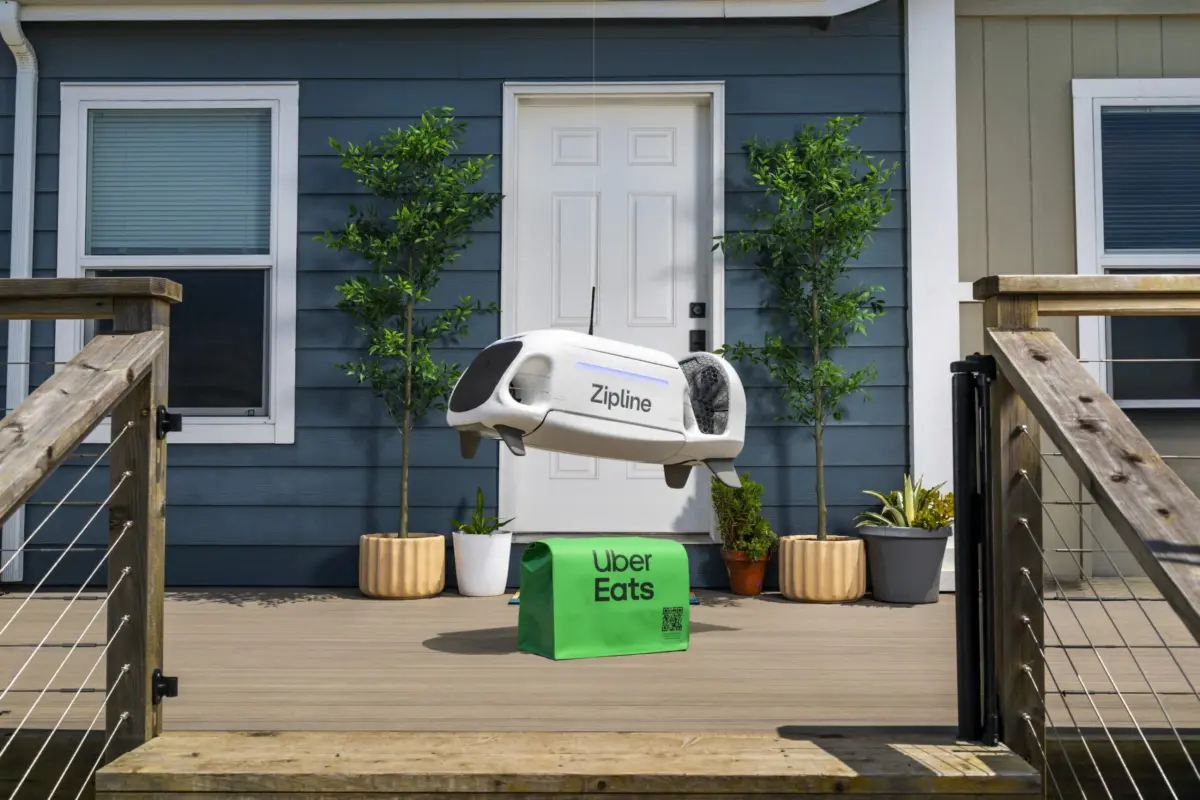
Uber Technologies is deepening its bet on aerial logistics by investing in and partnering with drone delivery pioneer Zipline, setting an ambitious target to execute one million deliveries per day using the startup’s autonomous aircraft by the end of 2029.
The collaboration marks a significant escalation in Uber’s push to dominate ultra-fast local commerce. According to the companies, Zipline drones will begin fulfilling orders on the Uber Eats platform before the end of this year. The initial rollout will take place in markets where Zipline already maintains an active operational presence, with a broader roadmap aimed at expanding the service into dozens of U.S. cities. Financial terms of Uber’s strategic investment in Zipline were not disclosed by either party.
This alliance represents the latest move in Uber’s broader platform strategy, mirroring the playbook the ride-hailing giant has successfully deployed for robotaxis and other autonomous vehicle services. Rather than building proprietary technology from scratch, Uber is systematically bringing as many third-party autonomous hardware and software developers onto its platform as possible.
Over the past several years, this ecosystem-building approach has allowed Uber to remain at the absolute forefront of emerging transportation technologies, even after shedding some of its own internal development programs. Notably, Uber previously divested its aerial ridesharing division, Uber Elevate, and its Autonomous Technologies Group, which was dedicated to building self-driving car systems. Instead of internal research and development, Uber has leaned heavily into strategic investments, committing more than $10 billion to dozens of different autonomous vehicle and delivery providers.
However, this platform-centric strategy is not without its complications and friction points. Uber recently clashed with one of its most prominent autonomous vehicle partners, Waymo, resulting in strains that suggest the two companies may part ways when their current contractual agreements expire in 2028. Furthermore, Uber and Waymo have found themselves on opposing sides of a rapidly escalating regulatory battle concerning the oversight and governance of autonomous vehicles on public roads.
Despite these high-profile policy and partnership hurdles, Uber remains deeply committed to exploring alternative delivery channels to drive the next wave of growth for Uber Eats. The company initially tested the waters of aerial logistics during the existence of its Elevate division and revived its interest in the space late last year through a partnership and minor investment in Israeli drone startup Flytrex.
The partnership with Zipline, however, represents a massive leap in scale and ambition. Uber executives believe that Zipline’s advanced drone technology will enable the fulfillment of Uber Eats orders within an astonishing window of five to ten minutes, transforming the economics and consumer experience of local delivery.
Dara Khosrowshahi, CEO of Uber, emphasized the massive market opportunity presented by ultra-fast fulfillment during an interview with The Wall Street Journal, noting that truly quick commerce is proving to be an even bigger market than the original prepared-food delivery sector. He added that the company views drone delivery as an enormous tailwind that will power the next leg of growth for the Eats platform.
San Francisco-based Zipline enters this partnership from a position of considerable financial strength. The company recently closed an extended Series H funding round totaling $800 million, bringing its total corporate valuation to a robust $7.6 billion. The influx of capital has fueled Zipline’s aggressive expansion plans across healthcare, retail, and food logistics, positioning it as one of the undisputed leaders in commercial drone delivery infrastructure.
Keller Cliffton, co-founder of Zipline, highlighted the historical significance of the partnership in a prepared statement, pointing out that every great transportation revolution has fundamentally altered where people live, how businesses operate, and how economies grow. Together with Uber, Cliffton noted, the companies are taking the next definitive step toward building a world where obtaining what you need is as fast and effortless as sending a text message, regardless of geographic location.