





For those outside the world of paddling and whitewater sports, Astral Designs might remain a relatively well-kept secret. While the brand has spent more than two decades carving out a distinct reputation in the outdoor industry, it has only recently expanded its footprint into the broader category of high-performance trail shoes and technical apparel. Yet, the company’s origins are rooted in a mission that was radical for its time: producing an entirely PVC-free and phthalate-free life jacket. Over the years, that foundational ethos drove the company to push further. By 2008, Astral had completely eliminated neoprene from its manufacturing processes, and by 2021, the entire supply chain had adopted the rigorous bluesign standard, systematically reducing the climate and environmental impacts of every step in their production cycle.
Astral’s eventual expansion into footwear was born out of a stark contradiction. Founder Philip Curry recognized that the existing market for water shoes—and eventually, trail shoes—was fundamentally antithetical to the company’s core philosophy. Enthusiasts head out into nature to experience and protect the wilderness, yet the gear they wear is frequently built from petrochemicals that cause long-term harm to the very environments they are enjoying. This realization inspired the creation of better-gripping paddle shoes that, in Curry’s mind, demanded the same radical materials rethink that he had previously brought to life jackets.
That trajectory eventually led to the development of the Nosobo, noted as the first outdoor-specific performance shoe featuring a replaceable midsole—the component of a shoe that typically wears down long before the outsole. While the concept of interchangeable midsoles was not entirely unprecedented in the broader footwear industry—notably appearing in the Nike Kobe 8 back in 2012—Astral’s Nosobo marked a pioneering milestone by bringing the innovation directly to the outdoor performance market.
That design philosophy reaches a new milestone with the introduction of the Techyak, a modern low-carbon trail shoe that incorporates a knit upper constructed entirely from 100 percent recycled PET. Furthermore, the shoes are engineered completely without glue. Traditional chemical bonding agents are notoriously problematic from an environmental standpoint, and as Curry points out, water is remarkably brutal on adhesives, making them the perennial failure point in outdoor footwear.
To bring this vision to life, Curry partnered with legendary footwear designer Tuan Le. A Vietnamese refugee whose early life was defined by an all-consuming obsession with sneakers, Le’s journey into the industry is the stuff of legend. As a child, he was so devoted to footwear that he famously slept with a pair of Nike Cortez sneakers instead of a traditional stuffed animal and even named his pet gerbil Nike. Decades later, Le grew up to become a transformative force in sneaker design, breaking through with iconic creations like the Reebok Stomper—the aerobics shoe famously worn by actress Sigourney Weaver in the sci-fi classic Aliens.

Le’s extensive resume spans decades of shaping the footwear landscape. He invented the Mizuno Wave Rider running shoe, designed signature footwear for NBA superstars Stephon Marbury and Vince Carter during the short-lived but culturally impactful run of the brand And1, and has collaborated since the early 2000s with a diverse array of global brands ranging from UGG and Bogs to Jack & Jones. His influence even extended to elite athletes breaking away from industry giants; most notably, NBA legend Kevin Garnett famously walked away from a lucrative Nike endorsement specifically to wear the And1 sneakers designed by Le.
When approaching the design of the Techyak, Le notes that he initially riffed off the classic silhouette of a skate shoe, but quickly pushed himself into entirely new creative territory as Astral doubled down on its commitment to zero-drop designs. This geometry places the foot in a more natural, athletic position rather than elevating the heel. The shoes feature toes that are opened up and more rounded, a deliberate choice intended to counteract the restrictive nature of conventional footwear that often makes it difficult for the human foot to achieve natural, anatomical movement.
As an avid runner himself, Le brings a runner’s critical eye to structural integrity. He points out that a typical running shoe built with a traditional EVA foam midsole begins breaking down from its very first day of use, despite being tasked with acting as the primary structural backbone of the shoe. Together, Le and Curry sought to give the Techyak a much stronger spine, ensuring robust structural support without introducing unnecessary weight or bulk. The final design had to remain thin enough to preserve a svelte, lightweight profile while standing up to the demands of rugged terrain.
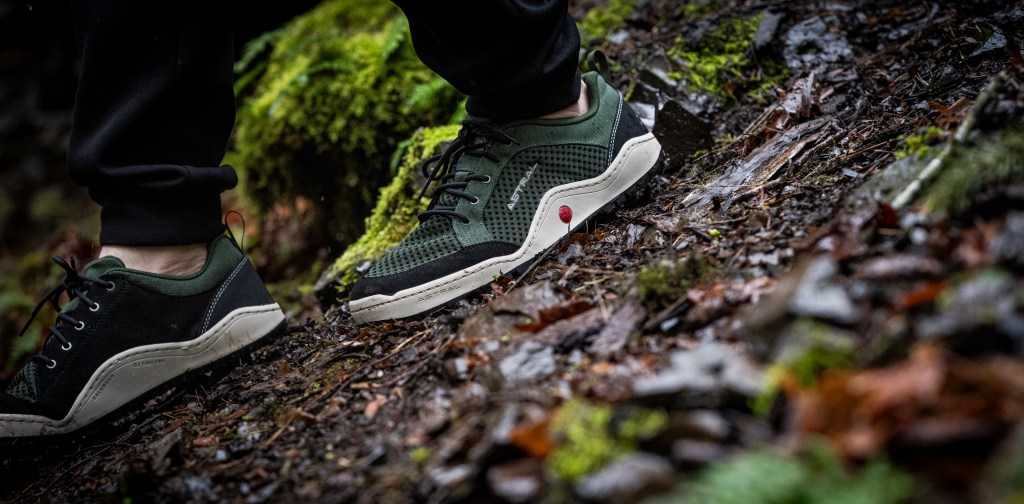
Developing a shoe for high-output athletic use also requires a deep fluency in anatomical language. Le explains that any successful performance shoe must incorporate a clear, visual flex point—the precise location where the toes naturally hinge during movement, whether the wearer consciously notices it or not. From there, designers must ensure that the arch support is positioned exactly where the human foot requires it.
Reflecting on his decades-long career designing footwear for global markets, Le likens the creative process to composing music. He has translated functional requirements into languages ranging from Danish to Japanese across numerous client partnerships. The core vocabulary remains constant—traction, cushioning, and flexibility—because human biomechanics dictate the same fundamental functional needs. Yet, the final product depends entirely on the unique tune the designer chooses to play with those elements.
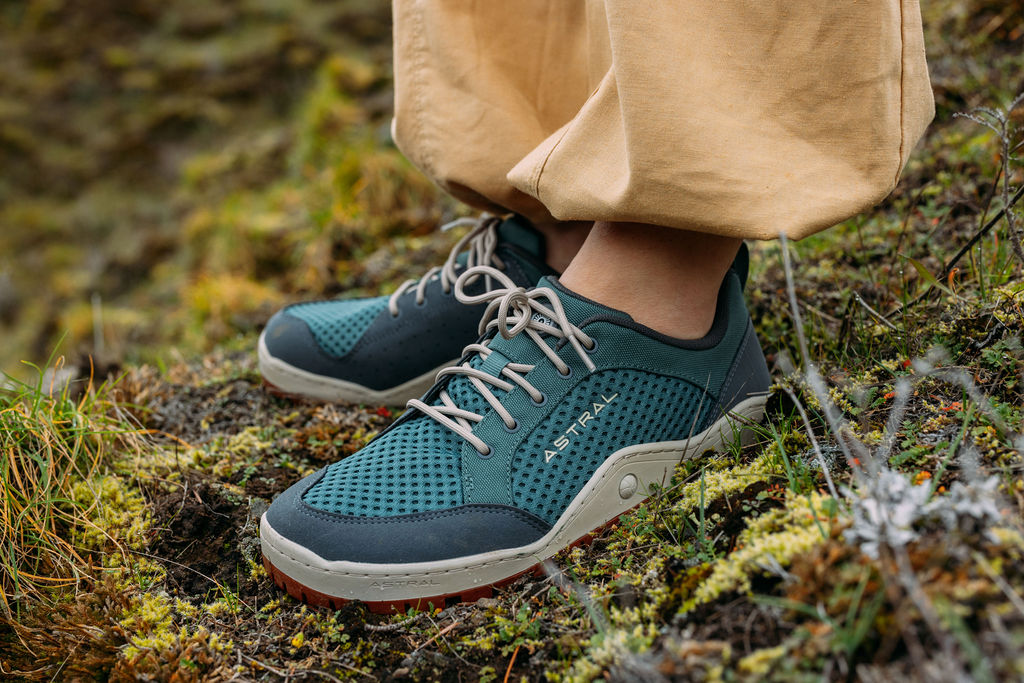
Beyond structural performance and sustainability, Curry points out another critical visual and conceptual component of the brand: color theory. The design process always begins with the perspective of a person standing in the middle of water, ensuring that a signature water color is perpetually represented in the product line. From that starting point, the aesthetic philosophy expands outward to encompass soil and plant life. The resulting colorways are deliberately organic, taking direct inspiration from the surrounding flora rather than fleeting fashion trends.
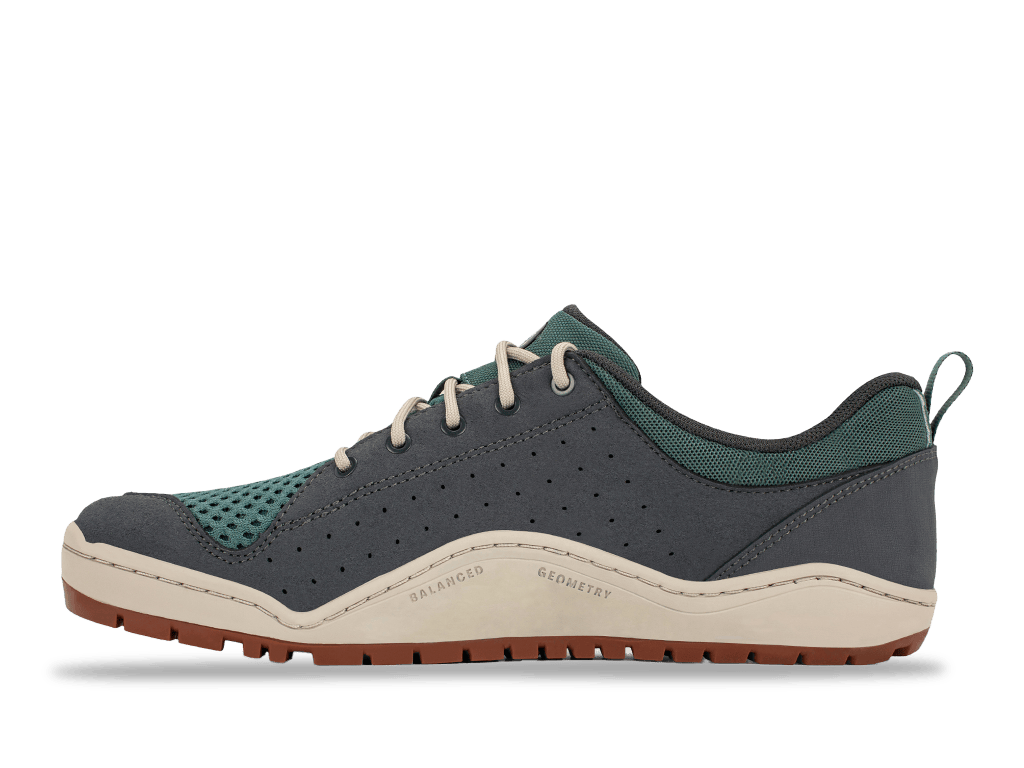
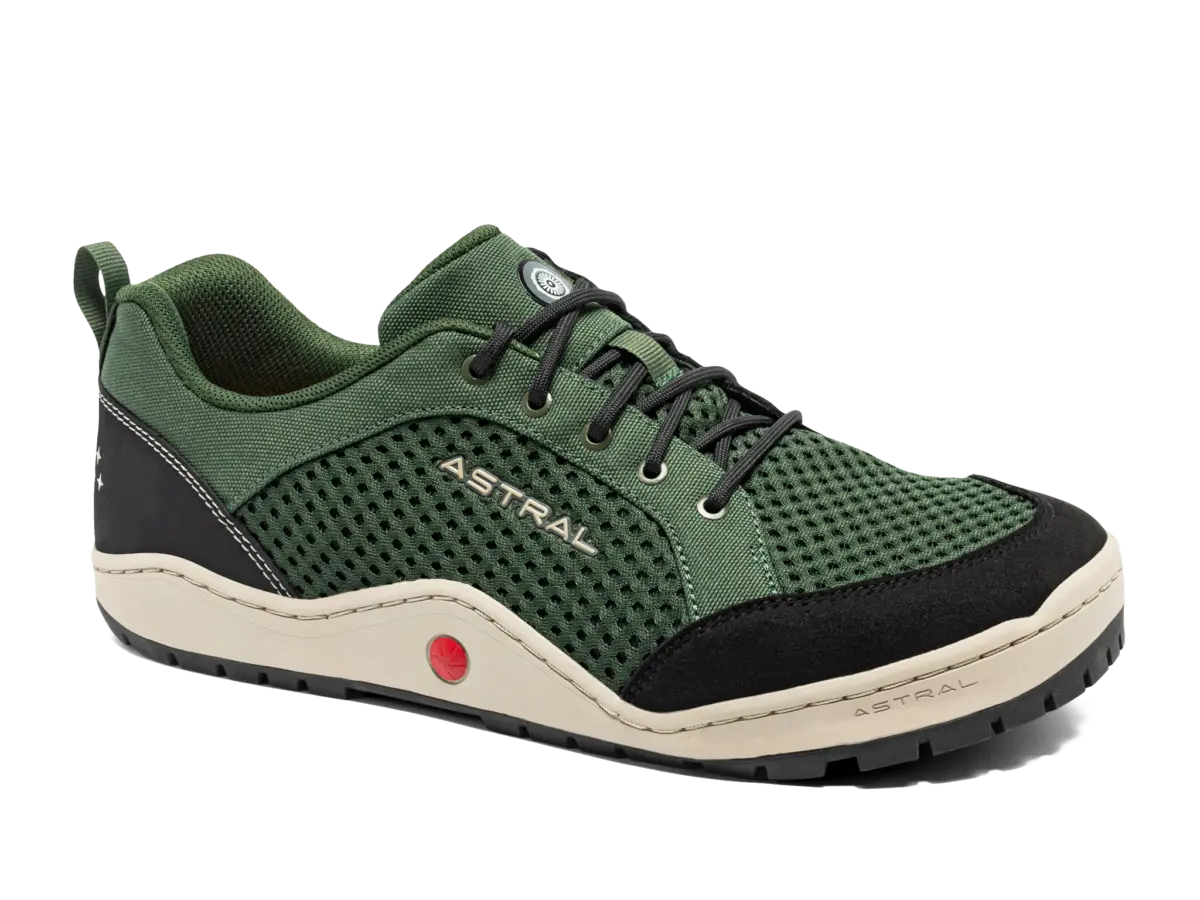
The aesthetic details also tell a story of evolution. The shoe’s original red dot detail was initially inspired by Astral iconography and the complex relationship between a rock, the sea, and the moon. However, because that splash of red proved overly unusual for retail buyers in certain markets, Le revised the visuals. The tiny icon is evolving into a lotus flower, a shift that Le embraces with philosophical ease. Reflecting on his craft, he notes a deep appreciation for the creative partnership that turns his concepts into reality, expressing a simple enjoyment in sketching ideas and letting the factory bring them to life while continuously evaluating what the design demands next.