





Long before the Swedish concept of lagom—the pursuit of optimal balance—captured the global imagination, authors, wellness advocates, and travelers had been attempting to unpack the subtle yet powerful ethos driving Nordic lifestyles. International bestselling authors like Lola Akinmade, whose book lagom went on to be published in more than 15 foreign editions, spent years championing the quiet, intentional ways of living found across Northern Europe.
From soothing Swedish massages to the searing heat of Finnish saunas, the Nordic region has long been synonymous with holistic wellbeing. Each Scandinavian and Nordic nation has offered the world a distinct philosophical pillar for healthy living: Denmark introduced hygge to emphasize intentional presence and coziness, Norway shared friluftsliv to encourage open-air living and immersion in nature, Finland gave us sisu to represent deep-seated grit and resilience, and Iceland pioneered the concept of "Viking wellness" through its centuries-old tradition of alternating hot geothermal baths with bracing cold dips.
Beneath these varied local terms, however, lies a shared cultural foundation. What makes wellness trends originating from the Nordic region particularly captivating on a global scale is not merely their branding, but the egalitarian, deeply practical values upon which they are built. These lifestyles are rooted in sustainability, a return to simplicity designed to curb undue stress, and a profound respect for the environment.
A cornerstone of this philosophy is government-sanctioned free access to nature—such as Sweden’s Allemansrätten, or the right to roam—which actively fosters a symbiotic relationship between humans and the outdoors. Because these societies are built on strong egalitarian principles, their wellness practices are designed to be universally accessible. The overarching communal goal is to promote a form of holistic wellbeing that can be sustained over the long term by every demographic, ranging from professional athletes at the peak of their physical performance to elders maintaining their mobility in later life.
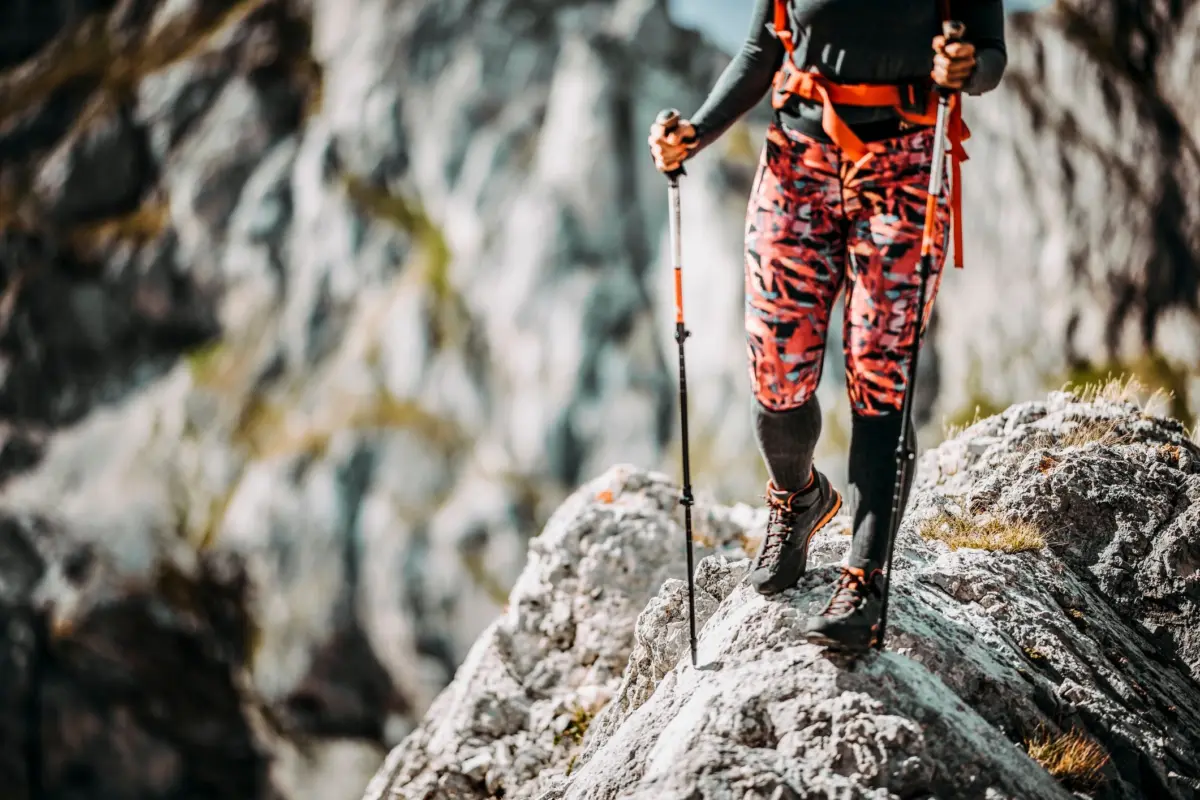
The latest Nordic wellness trend to capture international attention, however, has remarkably practical and athletic origins. For decades, observers have wondered how elite cross-country skiers managed to maintain their peak conditioning during the warm summer months when snow is entirely absent. The answer is Nordic walking—a specialized form of fitness walking that should not be confused with casual hiking or walking with standard trekking poles.

According to the International Nordic Walking Federation (INWA), the governing body founded in the year 2000, Nordic walking is now actively practiced across more than 40 countries. Participants embrace the discipline for its numerous health benefits, overall fitness conditioning, recreational enjoyment, social connection, and even as a competitive sport. The practice traces its roots back to the 1930s, when competitive cross-country skiers began utilizing ski poles alongside running shoes for off-season summer training regimens. However, it was not until 1966 that Leena Jääskeläinen, a physical education teacher, introduced the concept to the general public, marking the first documented use of ski poles outside of strict athletic training environments.
Aki Karihtala, president of the INWA, recalls taking up the practice more than two decades ago. "I started Nordic walking in 1998 because it is a fun, social, and efficient form of physical activity," Karihtala shares. At the time, he was heading the sports division at Exel, a Finnish sporting goods manufacturer that stands as the world’s largest producer of cross-country ski poles.
It was Karihtala himself, working alongside his development team at Exel, who officially coined the term "Nordic walking." Since its formal introduction, the activity has been widely embraced across international borders. "Regardless of age, religion, and culture, because there are no boundaries," Karihtala notes, emphasizing the universal accessibility of the sport.
In 1997, Exel engineered the first dedicated Nordic Walker poles specifically designed for the activity rather than cross-country skiing. Just a year later, more than 500,000 Finns—out of a total population of roughly five million at the time—had tried Nordic walking. Fitness experts attribute its high efficacy to the fact that it engages the entire upper and lower body simultaneously, while significantly reducing physical pressure on the knees thanks to ergonomically designed poles. To ensure safe and correct form, the federation subsequently developed the progressive INWA 10 Step Method to teach individuals the simple technique effectively.
For trend and branding experts who grew up surrounded by the Nordic landscape, the current global fascination with Scandinavian wellness feels both natural and slightly surreal. Katja Presnal, a Finnish lifestyle expert who spent two decades studying global trends and running a digital platform read by millions annually, represents a new wave of converts to the practice. Growing up in the Turku archipelago, surrounded by sheltered bays and lush forests, Presnal spent years traveling the globe before deciding to pivot away from observing trends to fully embodying a slower lifestyle.

Seeking a quieter pace, Presnal purchased a 100-year-old former dairy tucked away in the Finnish countryside, surrounded by lakes, forests, and tranquil walking trails. "It was about making everyday life a wellness regimen and creating my own 365-day retreat," Presnal explains, noting that these were precisely the types of slow-living experiences her family once sought out in places like Tuscany during their travels. "So I have, in essence, returned to my Nordic wellness roots, which in hindsight was the richness of my childhood."
The low-threshold accessibility of Nordic walking, both from a physical and financial perspective, is precisely what makes the ritual so appealing to contemporary wellness seekers and newcomers like Presnal. Unlike expensive boutique fitness classes or high-tech recovery gadgets, Nordic walking requires little more than a pair of specialized poles, a sturdy pair of walking shoes, and an open outdoor space. Beyond the physical conditioning, Presnal points out that the activity fosters a vital sense of human connectivity.
"People are now discovering Nordic lifestyles," Presnal explains, reflecting on how native practices are viewed by those who grew up practicing them instinctively. "You don’t recognize your Nordic way of living as something special that could become a global trend or could be taught and shared with somebody because it’s just a part of who you are."
As more people around the world look for low-impact, highly effective ways to stay fit while reconnecting with the natural environment, this unpretentious Finnish ritual appears primed to follow in the footsteps of lagom and hygge, cementing the Nordic approach to daily wellness as a permanent fixture in the global consciousness.