






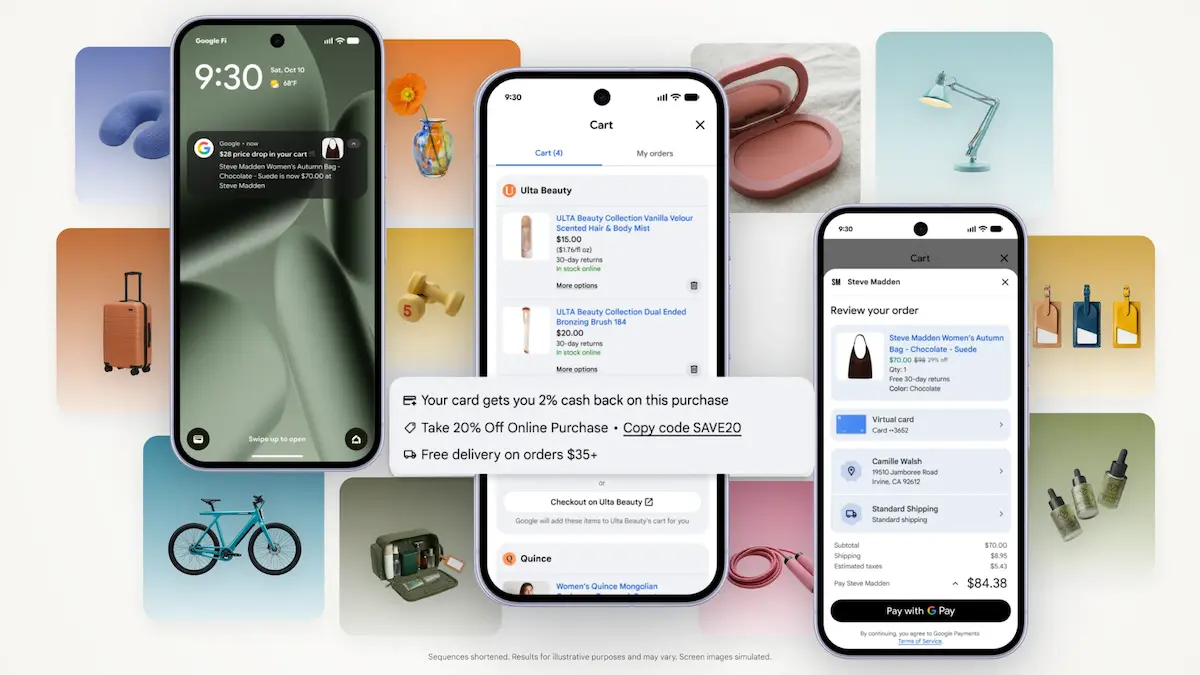
Google announced on Thursday that "Universal Cart," a centralized tool designed to let users collect, monitor, and manage products found across Google Search and the Gemini application, is now officially available to users in the United States. The release follows the tech giant’s initial preview of the feature earlier this year at the Google I/O developer conference in May, where it was introduced as a major step forward for consumer e-commerce navigation.
The core concept behind Universal Cart is to alleviate the friction and fragmentation often associated with modern online shopping. Consumers frequently bounce between multiple tabs, different retail websites, and disparate platforms while researching potential purchases. With Universal Cart, a user can find an item they like across the web, save it directly to their centralized cart, and continue browsing without losing their place. When they return to their cart later, their items and overall shopping progress are preserved, eliminating the need to hunt down previously viewed products or restart search queries from scratch. By aggregating items from multiple different retailers into a single interface, the tool functions as an overarching hub for browsing and tracking prospective buys.
Beyond simply storing items, Google has engineered the cart to act as an active assistant that helps shoppers stay informed about changing market conditions. The utility is equipped to send automated notifications to users when a saved product experiences a price drop or when an item that was previously out of stock becomes available for purchase again. This proactive approach aims to give consumers timely insights without requiring them to manually check individual store pages day after day.
The platform is also built to provide tailored, intelligent assistance during the final stages of the shopping journey. According to Google, Universal Cart can factor in specific credit card perks and rewards when helping users evaluate and select their preferred payment methods. Furthermore, the tool automatically surfaces relevant promotional codes and discounts, ensuring that shoppers can optimize their spending directly within the interface.
When it comes to completing a transaction, checkout functionality is tightly integrated with Google’s Universal Commerce Protocol, commonly referred to as UCP. This open standard was introduced by the company earlier in the year to establish a common language and framework for digital commerce. UCP is specifically designed to enable artificial intelligence agents and independent retailers to seamlessly collaborate across various phases of the shopping journey, culminating in a streamlined and secure checkout experience.
Universal Cart arrives as the latest addition to Google’s rapidly expanding ecosystem of artificial intelligence-driven shopping features. The company has steadily deepened its investments in AI-powered commerce, integrating new capabilities across its platforms to make online purchasing more intuitive and convenient. Universal Cart now joins other advanced features such as conversational product discovery within Search’s AI Mode. It also complements specialized utilities like "Let Google Call," an innovative tool that uses an intelligent AI agent to contact local brick-and-mortar stores on behalf of the user to check whether a specific product is physically in stock before they make a trip.
Google is far from alone in its pursuit of agentic commerce and AI-driven retail solutions. The broader technology sector has seen a wave of similar developments as major corporations look for innovative ways to make conversational chatbots and artificial intelligence systems useful for everyday transactional tasks, moving far beyond simple question-and-answering interactions. Rivals including Amazon and OpenAI have introduced their own agentic shopping systems and third-party store integration tools, igniting a fierce competition to capture the future of digital retail through intelligent automation.
As these AI systems become more deeply embedded in how consumers discover, evaluate, and purchase goods, tools like Universal Cart represent a significant shift toward a unified, agent-driven shopping experience across the entire internet.