





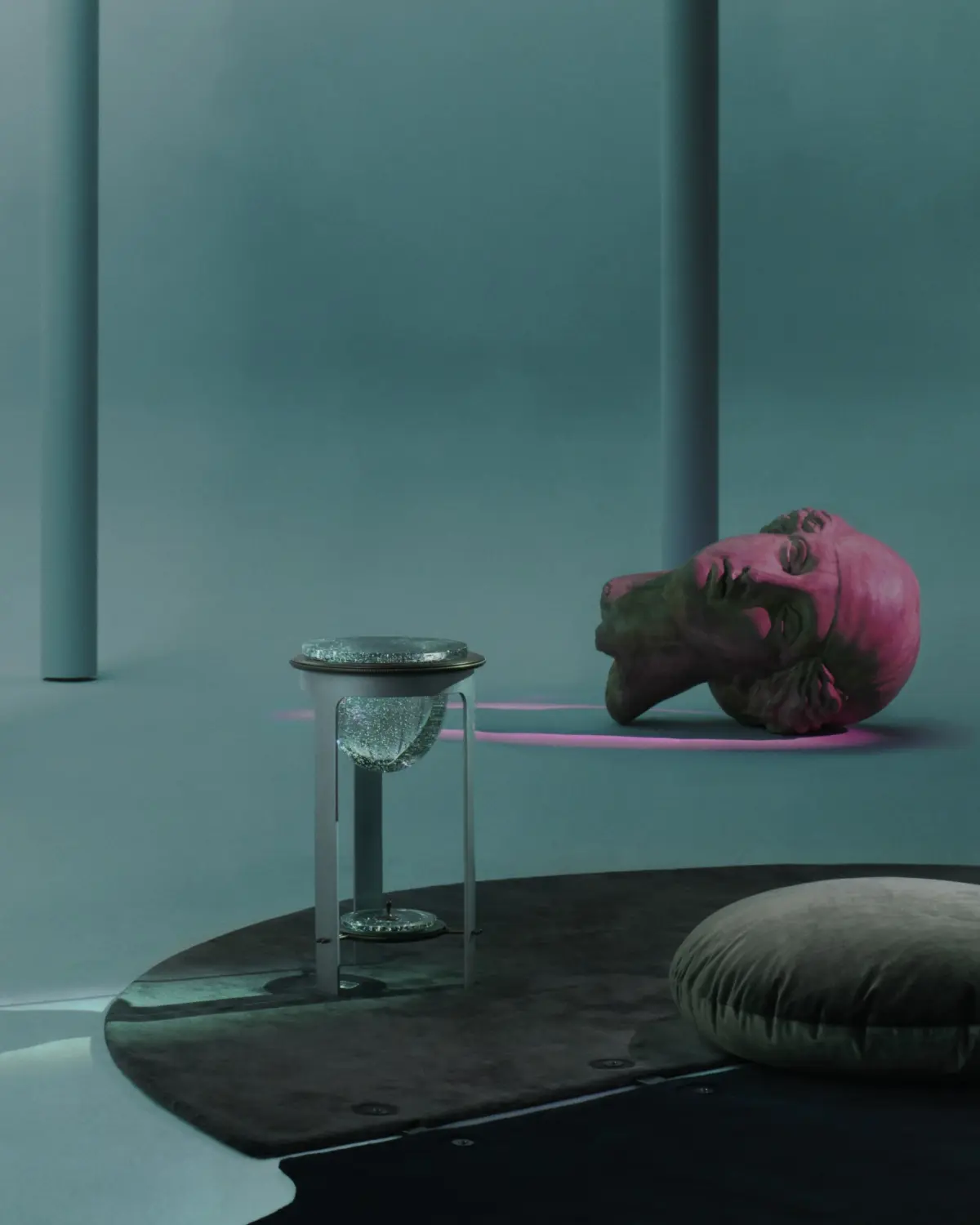
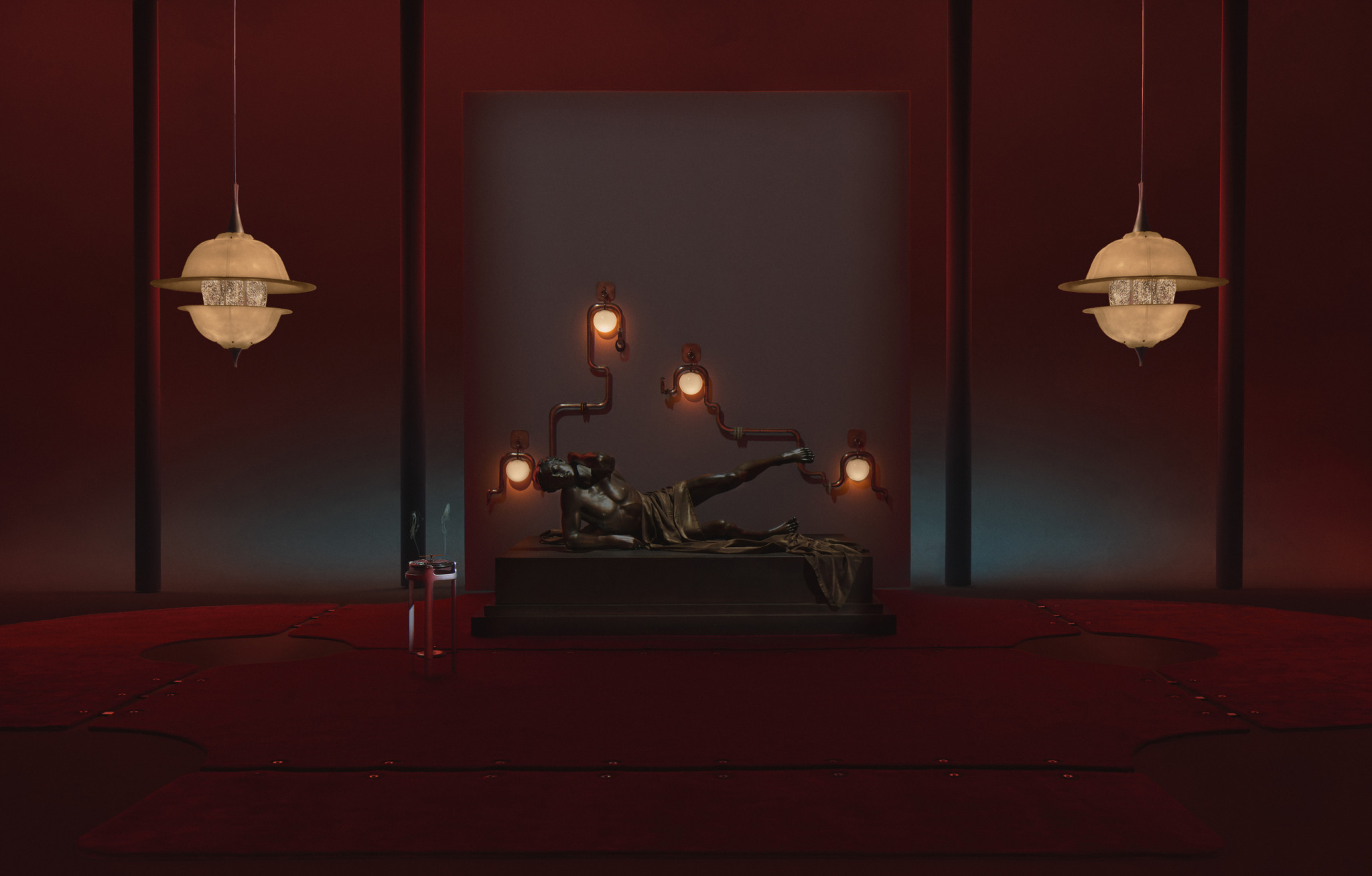
Five years after releasing its last major collection, the renowned New York-based design studio Apparatus has officially entered a bold new chapter. The celebrated studio has unveiled Act V: Afsaneh, an expansive new collection comprising lighting, furniture, and decorative objects that draw deep inspiration from Persian mythology, personal history, and the cyclical nature of human life. Conceived and directed by Apparatus artistic director Gabriel Hendifar, the collection serves simultaneously as a heartfelt tribute to his mother and as a profound exploration of the divine feminine as an enduring wellspring of creativity, knowledge, and renewal.
The name Afsaneh carries a dual significance that anchors the conceptual weight of the entire launch. In Persian, the word translates directly to “fable,” yet it is also the personal given name of Hendifar’s mother. This dual linguistic and personal foundation provides the blueprint for a collection structured deliberately as a modern fable, divided into four interconnected chapters that trace an emotional and philosophical journey from creation to universal connection.
Reflecting on the overarching vision for the launch, Hendifar explains that life is inherently shaped by cycles of creation, destruction, separation from the self, and eventual return. He notes that it is precisely within these rhythms that the collection finds its pulse, mirroring how a seed transforms into a flower, how people gather to celebrate its brief dance with the sun, and how everyone can recognize the divine feminine at the center of this beauty as the ultimate source of nurturing creative force.
Each chapter of the collection is named after a Persian word that explores a distinct phase of this cyclical narrative. The first chapter, titled “Esfand: The Seed,” represents origins, fertility, and protection. Named after the twelfth month of the Persian calendar, Esfand also nods to a traditional seed used in cultural practices to ward off the evil eye. In this segment, the motif is expressed through rich lacquered finishes that capture the spectrum of nature’s palette, moving fluidly from milk and honey to pomegranate, sky, dusk, and night.

The narrative progresses into bloom with the second chapter, “Gol: The Flower,” which examines growth and transformation. Here, molded fiberglass is masterfully employed to fabricate delicate, membrane-like surfaces that catch and diffuse light. The floral motif transcends purely physical objects through the introduction of Afsaneh, a bespoke namesake fragrance blending damask rose, oud, and frankincense. By incorporating scent as a tangible material, Apparatus introduces an ephemeral dimension to functional objects that are otherwise engineered to endure for generations.
The fable takes a contemplative turn with the third chapter, “Rahvi: The Serpent,” which symbolizes the active pursuit and transmission of knowledge. Sinuous lines of water-formed brass and blown glass trace fluid movements, while carefully selected semiprecious stones introduce vivid color and profound symbolic weight. Materials such as tiger’s eye, black onyx, quartz, honey agate, red jasper, lapis lazuli, and aventurine are integrated as modern amulets, tying the shifting form of the serpent to timeless concepts of wisdom and spiritual protection.

The concluding chapter, “Jahaan: The World,” broadens the narrative scope outward toward community and collective gathering. Bronze and aluminum intertwine seamlessly with cast glass, generating monumental forms that reference the cosmos and the shared human experience. While the earlier chapters focus intently on individual origins, internal transformation, and the acquisition of knowledge, Jahaan reflects on the resonant power of bringing those accumulated experiences together in shared spaces.
Throughout Act V, familiar materials from the classic Apparatus design vocabulary are pushed into uncharted territory. While brass, glass, and bronze remain foundational to the studio’s identity, advanced manufacturing and artisanal techniques—such as water-forming and fiberglass molding—introduce radical new possibilities for shape, surface texture, and kinetic movement. The resulting pieces hover delicately between the architectural and the organic, utilizing sweeping curves, suspended structures, and layered media to give physical form to the collection’s heavy symbolism.

This intimate relationship between physical objects and the broader human experience has long defined Hendifar’s distinct approach to design. Rather than conceiving individual pieces in isolation, he consistently imagines complete, immersive environments where lighting, bespoke furniture, and decorative artifacts contribute harmoniously to a unified atmosphere. Act V advances this philosophy further by employing a strict narrative structure to bind the physical materials and forms together into a cohesive theatrical presentation.
The storytelling ambition of the launch extends far beyond the physical boundaries of the showroom objects. Apparatus forged a creative collaboration with the legendary Martha Graham Dance Company to produce five short films that interpret the collection entirely through movement. For Hendifar, whose work consistently investigates the intricate dialogue between inanimate objects and the living human body, contemporary dance offers a natural extension for expressing the abstract ideas underpinning Afsaneh.

Explaining the rationale behind the film project, Hendifar notes that he considers the core mission of his work to be crafting the structural envelope for human experience, observing that there is no more purely distilled expression of that experience than Martha Graham’s legendary language of movement. These cinematic interpretations are scheduled to be released episodically, allowing the narrative arc of the collection to unfold progressively over time rather than through a single traditional launch event.
Act V: Afsaneh celebrated its world premiere in New York City, with subsequent presentations planned for major cultural capitals including London, Miami, and Los Angeles. Each city will host its own unique spatial interpretation of the collection, reinforcing the curatorial concept of a narrative that continually evolves as it travels across different physical and cultural landscapes.

For Hendifar, the ultimate significance of Afsaneh lies in the dynamic relationship between creative output and human perception. Although the individual pieces carry explicit references to ancient mythology, personal memory, and the natural world, their ultimate meanings remain intentionally fluid. Much like the fabled stories that inspired their creation, these objects are designed to integrate into daily life and become living parts of the personal stories unfolding around them.