






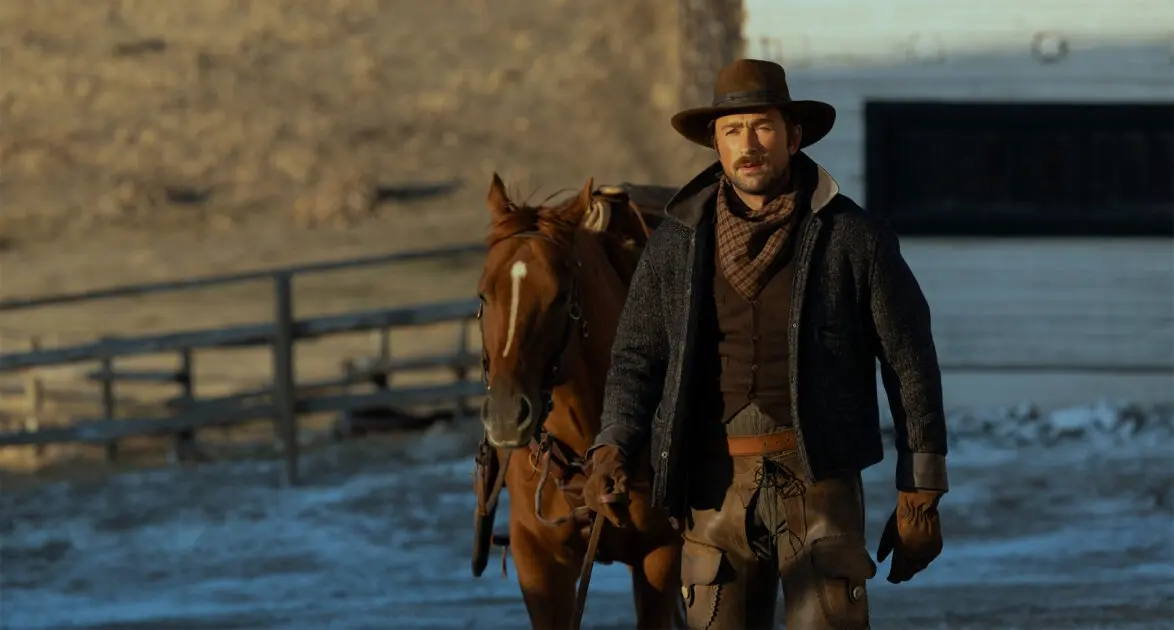
When Taylor Sheridan’s modern Western epic Yellowstone premiered on the Paramount network in 2018, it quickly established itself as a seismic cultural phenomenon, though few industry insiders could have predicted the unprecedented juggernaut it would eventually become. Anchored by a powerhouse lead performance from Hollywood icon Kevin Costner, the series chronicled the high-stakes, often brutal struggles of the Dutton family. As the stewards of the largest contiguous cattle ranch in the United States, John Dutton and his children fought relentlessly on multiple fronts: defending their ancestral land from ambitious, dubious corporate entities, fending off greedy urban developers, and constantly navigating deeply strained, politically fraught relationships with both the neighboring national park and the local Native American reservation situated along their borders.
What began as a promising flagship drama for a network that was still finding its definitive footing in the fiercely competitive television landscape swiftly exploded into a sprawling entertainment empire. The monumental success of Yellowstone paved the way for an expansive television universe, spawning a succession of critically acclaimed prequels and companion series. Among these were 1883, a gritty historical drama led by country music superstars Faith Hill and Tim McGraw that explored the arduous journey of the earliest Dutton ancestors; 1923, a prestige period piece anchored by legendary actors Harrison Ford and Helen Mirren as they steered the ranch through Prohibition and the Great Depression; and Dutton Ranch, featuring fan-favorite stars Kelly Reilly and Cole Hauser, which was recently renewed for a robust second season.
Given the astonishing, multi-platform runaway success of the entire franchise, it remains one of the most glaring miscalculations in modern television history that any major streaming platform would turn its back on the project. Yet, industry reality proves that even the most astute executives can miss the mark, as two of the biggest players in the entertainment industry famously passed on the opportunity to bring Sheridan’s vision to life.
The Rejection That Shaped Modern Television
Long before the Dutton family name became a household staple and a cornerstone of contemporary pop culture, creator Taylor Sheridan was tirelessly shopping his ambitious neo-Western script around Hollywood. During the initial development phase, the project was pitched directly to two of the most dominant content creators in the industry at the time: HBO and Netflix. To the enduring astonishment of media analysts, both prestige powerhouses declined to pick up the series.
According to reports from cinema and television trade analysis site 3DVF, HBO—which was coasting comfortably on a golden era defined by monumental cultural touchstones like The Sopranos and the global fantasy juggernaut Game of Thrones—evaluated the script and concluded that a contemporary Western would simply fail to resonate with modern television audiences. Network decision-makers reportedly viewed the genre as too niche or fundamentally misaligned with the cutting-edge, high-concept prestige dramas that dominated their programming strategy at the time.
Similarly, Netflix—which was rapidly expanding its global subscriber base and aggressively acquiring original content—also opted to pass on the pitch. While HBO chose to double down on urban crime and high fantasy, and Netflix sought out alternative avenues for growth, it was Paramount—then a fledgling brand desperately attempting to carve out a distinct identity in an increasingly crowded streaming marketplace—that decided to take a massive gamble. They placed their faith in Sheridan’s singular creative voice, greenlighting the project and ultimately reaping rewards that far exceeded their initial projections.
Netflix’s Ongoing Pursuit of Western and Regional Drama
In the years since passing on Sheridan’s billion-dollar concept, Netflix has spent a considerable amount of time, creative energy, and financial capital attempting to recapture or replicate the unique formula that made Yellowstone a multi-generational hit. The streaming giant has consistently tested the waters of rural dramas, regional crime thrillers, and historical epics, looking for that elusive lightning-in-a-bottle appeal that keeps audiences hooked week after week.
The year 2025 served as a clear testament to this ongoing strategic initiative. Within a single twelve-month window, the streaming giant rolled out a trio of ambitious projects aimed squarely at audiences with an appetite for rugged, character-driven storytelling set against vast landscapes. The platform released The Waterfront, a gritty family-dynamics drama; Ransom Canyon, a contemporary ranch-based series that drew immediate, inevitable comparisons to the Dutton family saga; and American Primeval, a sweeping historical drama exploring the untamed American frontier. These varied releases were subsequently followed by a fresh adaptation of the timeless classic Little House on the Prairie. Each of these titles achieved varying degrees of critical and commercial success, proving that while viewer appetite for the genre is undeniably robust, cracking the specific code of Sheridan’s storytelling remains a formidable challenge.
A High-Stakes Adaptation Takes Center Stage
This week, however, Netflix debuted what is arguably its splashiest, most high-profile attempt yet to capture the prestige historical drama market: a major television adaptation of John Steinbeck’s classic American literary masterpiece, East of Eden.
The new series carries considerable artistic pedigree, led creatively by the granddaughter of legendary filmmaker Elia Kazan, who famously directed the acclaimed 1955 cinematic adaptation of the novel that helped cement James Dean as an enduring cultural icon. Both Steinbeck’s original literary work and the new television adaptation explore themes and time periods that run roughly parallel to the historical terrain covered in Sheridan’s 1883 and 1923. Set against the breathtaking and fertile backdrop of the Salinas Valley in California, the narrative intricately traces the complex, intertwined lives of the Trask and Hamilton families across generations, examining deep-seated themes of generational trauma, sibling rivalry, and the eternal struggle between free will and predestination.
To bring this weighty literary classic to life, the production has assembled a stellar ensemble cast. The series features acclaimed actress Florence Pugh in the complex, pivotal role of Cathy Ames, while rising talents Mike Faist and Christopher Abbott step into the shoes of the troubled Trask brothers, bringing a fresh, contemporary intensity to Steinbeck’s timeless characters. As this ambitious adaptation rolls out to viewers worldwide, it stands as the latest chapter in a broader industry-wide scramble to command the lucrative territory of sweeping, character-driven American epics—a landscape that might have looked entirely different had those initial network passes never been written.