





AMSTERDAM — Dutch security and intelligence agencies have issued a stark warning regarding the evolving tactics of far-right organizations in the Netherlands, stating that extremist groups are increasingly utilizing euphemistic language and mainstream political channels to introduce discriminatory and racist concepts into public discourse.
According to a joint assessment released by the General Intelligence and Security Service (AIVD) and the National Coordinator for Security and Counterterrorism (NCTV), right-wing extremist factions are engaging in what authorities describe as "façade politics." This strategy is deliberately designed to mask radical and anti-democratic ideologies behind more palatable terminology, making them more acceptable to the broader public and lowering the barriers to entry for mainstream political debates.
At the core of this linguistic shift is the strategic deployment of sanitized terms. Chief among them is "remigration," a concept that has steadily transitioned from fringe online forums into the official platforms of several prominent right-wing political organizations.
The security agencies noted that over the past decade, various groups operating under the banner of "identitarian resistance"—itself recognized by intelligence officials as a calculated euphemism for white supremacism—have established a firm foothold in the country. Organizations explicitly cited in the assessment include White Lives Matter, Active Club Dietsland, and the Greater Netherlands Student Union (GNSV).
"In reality, many identitarians are convinced of ‘white superiority’ and show an aversion to other cultures and religions, as well as white people who think differently, such as feminists and LGBTI+ people," the intelligence and counter-terrorism agencies stated in their report.
Rather than relying solely on overt fringe activism, these networks have diversified their operations. Security officials report that far-right actors are increasingly infiltrating local demonstrations against asylum seeker centers, organizing transnational conferences to share tactics, and attempting to exert ideological influence on established political parties.
The integration of these ideas into the broader political sphere has become a growing concern for Dutch authorities. In last October’s general election, a bloc of right-wing parties—namely JA21, the Forum voor Democratie, Geert Wilders’ Party for Freedom (PVV), and the Farmer-Citizen Movement (BBB)—captured roughly 30 percent of the total vote. Notably, all four of these political entities incorporated the term "remigration" into their respective election manifestos, illustrating how language once confined to extremist circles has found a path into legislative agendas.
Weekend Riots Highlight Growing Volatility on the Ground
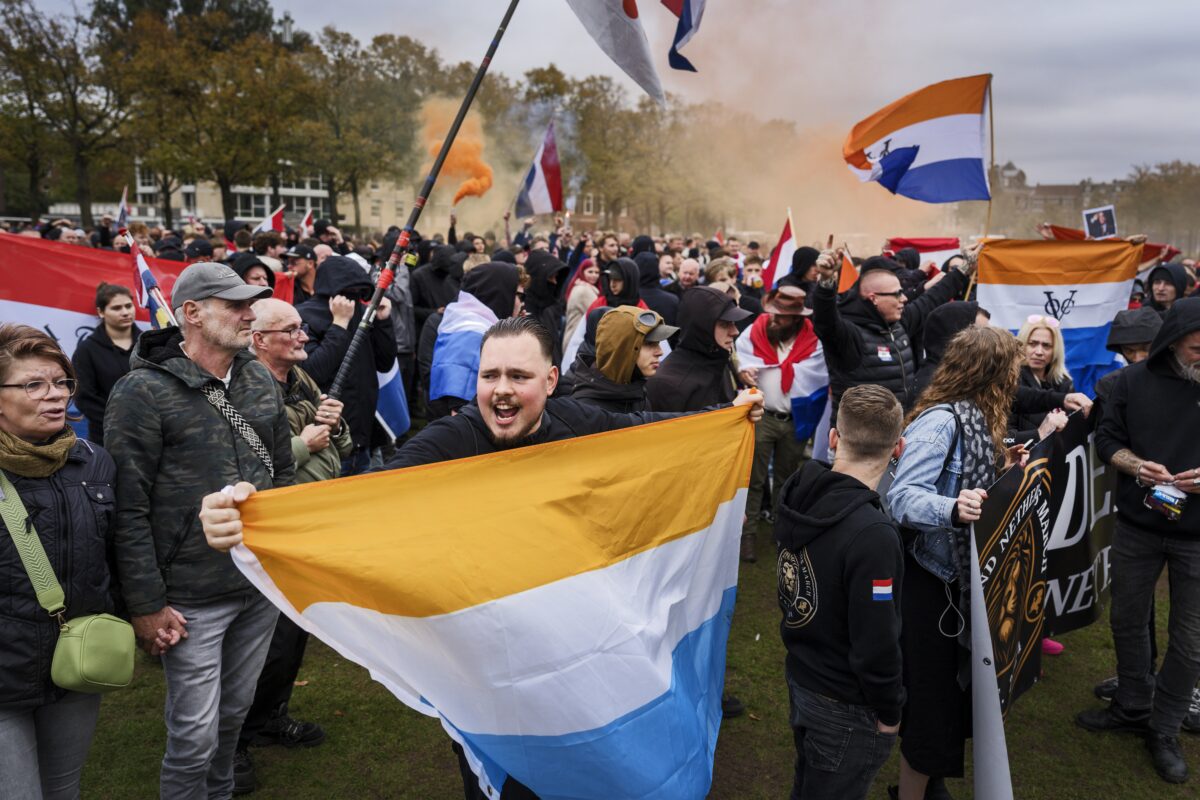
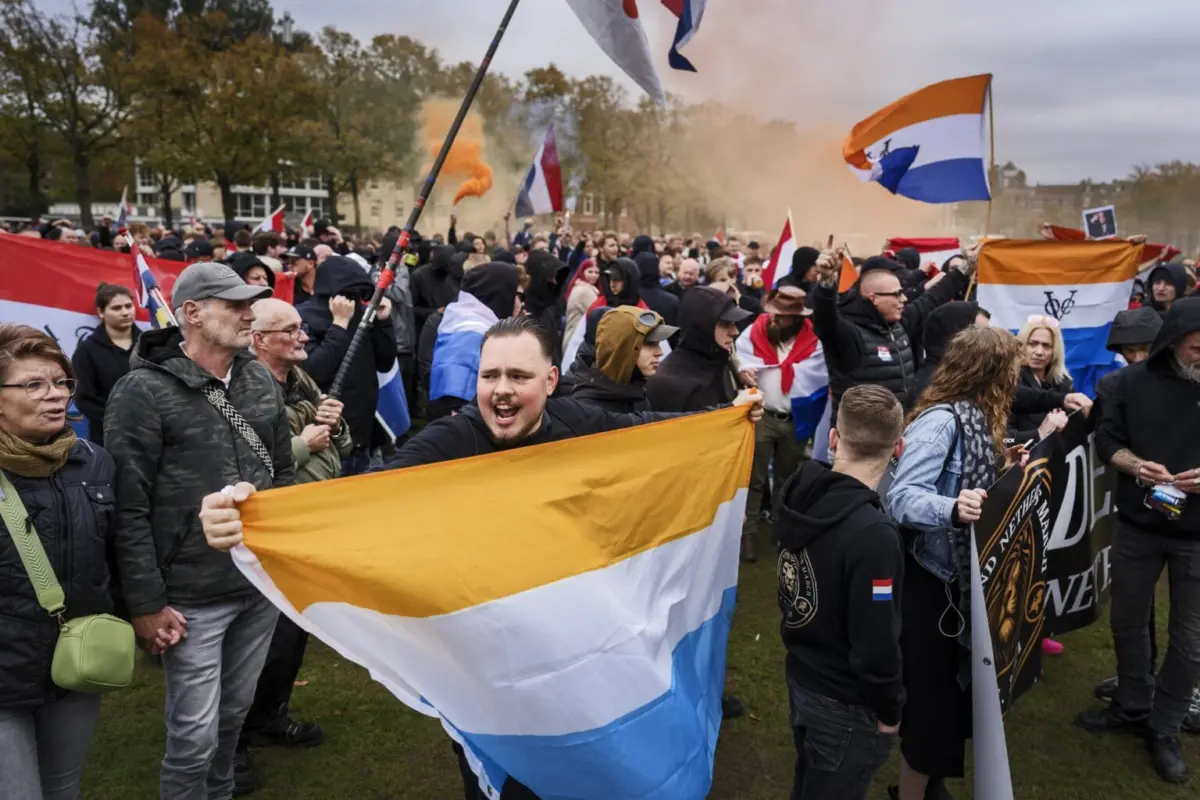
The release of the intelligence assessment closely followed a weekend of intense civil unrest in The Hague, where approximately 300 individuals gathered for an anti-immigration demonstration organized by a group calling itself Wij Zijn Het Volk ("We are the people").
The protest quickly devolved into chaos as participants engaged in extreme rhetoric and provocative displays. According to police reports, demonstrators performed Nazi salutes, chanted anti-Semitic slogans, and carried large banners bearing polarizing messages, including the phrase "blanke mannen vooraan" ("white men first").
The situation escalated when law enforcement officers ordered protesters to remove their face masks, a directive that prompted violent clashes. Rioters attacked police officers, leading authorities to officially cancel the demonstration for public safety reasons. A total of 24 people were arrested in connection with the violence.
The disturbances marked the second consecutive year that an anti-immigration rally held on the city’s Malieveld has triggered violent confrontations between activists and police forces, underscoring a persistent and volatile security challenge in the administrative capital.
A Dual Threat: Street Violence and Long-Term Institutional Erosion
While violent street protests continue to pose immediate operational challenges for local law enforcement, the AIVD and NCTV emphasized that physical altercations represent only one dimension of the broader far-right phenomenon.
The AIVD estimates that several hundred individuals across the Netherlands are actively involved in right-wing terrorist networks, warning that there remains a tangible probability some will transition from online radicalization to physical violence.
However, security officials cautioned that the more insidious danger may lie in the deliberate attempt to erode the foundations of the democratic system by stealth. Far-right movements are increasingly exploiting digital platforms, including social media networks like TikTok and X, to disseminate extremist narratives, normalize prejudice, and recruit younger demographics.
"The effect in the long term can be greater than a terrorist attack," the report concluded, highlighting how the gradual shifting of political and societal norms poses a fundamental test to the resilience of Dutch democratic institutions.