





Silver, the lustrous white metallic element represented by the chemical symbol Ag, occupies a unique and monumental place in the history of human civilization. Harder than gold yet softer than copper, silver is second only to gold in its exceptional malleability and ductility. Because of its superior resistance to oxidation, it is classified among the noble metals. While modern consumers often view silver as an affordable alternative to gold or platinum, historical realities paint a vastly different picture. Throughout various epochs, silver has served as the backbone of global economies, triggered technological breakthroughs in mining and metallurgy, and even shifted the tides of war.
The story of silver is inextricably linked to the evolution of human artistry and commerce. Usually alloyed with other metals to provide the structural integrity needed to maintain fine details and shapes, silver has been utilized for millennia in the production of jewelry, functional currency, and exquisite objets d’art. Its journey from ancient subterranean ores to the refined workshops of Europe and the Americas reveals a metal whose value, utility, and cultural significance have constantly evolved.
Bronze Age Silver and the Dawn of Metallurgy
The historical narrative of silver begins near the end of the fourth millennium BCE, when ancient inhabitants in the region of modern-day Turkey discovered a revolutionary metallurgical technique known as cupellation. This process allowed artisans to successfully extract silver from lead ores. Although surviving silver artifacts from this nascent period are exceedingly rare, those that remain provide profound insights into the remarkable capabilities of Bronze Age silversmiths.
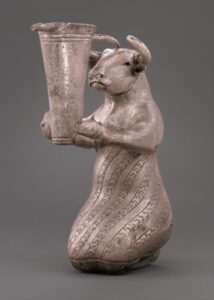
At the very dawn of written history, silver emerged as a primary form of currency in Mesopotamia. Rather than circulating as standardized coins, silver was weighed out or utilized in the form of rings for trade. The Mesopotamian silversmith’s workshop frequently mirrored that of the goldsmith, sometimes occupying the exact same physical space. Although silver is slightly less ductile than gold and demands more frequent annealing during the manufacturing process, ancient artisans quickly mastered its properties. They discovered it could be cast, hammered into exceptionally thin sheets, engraved, embossed, shaped through repoussé work, and lavishly decorated with intricate filigree and granulation. Archaeological excavations have unearthed vessels, statuettes, and jewelry crafted from high-purity silver, resulting in objects of striking delicacy.
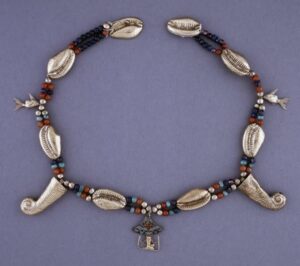
In ancient Egypt, where rare and exotic materials were intensely coveted, silver was held in the highest regard. While gold was readily accessible from nearby sources in the Eastern Desert and Nubia, pure silver had to be imported along arduous trade routes, such as those that brought prized Lapis lazuli from Afghanistan. Consequently, early Egyptian silver was often deemed more valuable than gold, reserved exclusively for the upper echelons of society.
By approximately 1600 BCE, however, the market value of silver in Egypt began to stabilize, sinking to roughly half that of gold as global supplies expanded. During this era, it functioned as an abstract currency of relatively constant value. The popularity of silver frequently fluctuated with the shifting tides of fashion. For instance, the legendary tomb of King Tutankhamun contained very few silver items, whereas later pharaohs, such as Sheshonq II, were entombed with magnificent all-silver sarcophagi.
Across the Mediterranean, the Minoans and Mycenaeans actively engaged in maritime trade, handling significant quantities of silver. This commercial activity is reflected in the early Greek silver jewelry discovered at archaeological sites across the Greek mainland, Crete, and Cyprus. Meanwhile, the Phoenicians played a pivotal role in shaping Mediterranean civilization by establishing colonies and trade routes that reached deep into the Iberian Peninsula. By initiating the large-scale exploitation of Spanish silver deposits, the Phoenicians transformed silver from an exclusive, exotic novelty into a widely distributed commodity available on an unprecedented scale.
Classical Silver in Greece and Rome
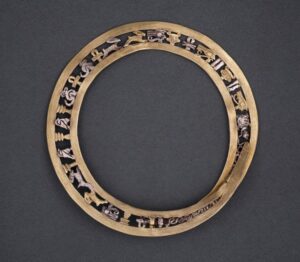
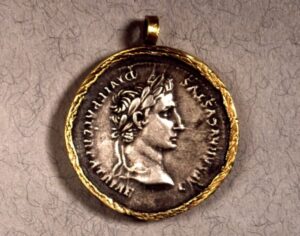
For both ancient Greek and Roman societies, the continuous availability of silver was an absolute economic necessity, as their monetary systems relied heavily on properly minted silver coinage. While surviving archaeological evidence suggests that gold was preferred over silver for certain types of jewelry—partly due to the common practice of remelting and recycling older pieces—what remains demonstrates that silver was used for a diverse array of personal adornments, including finger rings, anklets, and armlets.
The Romans developed a particular fondness for niello, a surface decoration technique closely related to enameling. Instead of powdered glass, niello utilizes silver sulfide, yielding a much tougher finish with a distinctive metallic luster rather than a vitreous one. During the Roman occupation of Northern Europe, the technique spread across the continent, leaving a lasting legacy in Anglo-Saxon and Eastern European artifacts.
The Roman perspective on silver is vividly captured in the writings of the natural philosopher Pliny the Elder within his monumental work, Naturalis Historia. Pliny documented the extensive mining operations across Roman provinces, noting that the finest silver ore originated in Spain, where Hannibal once operated mines that yielded massive daily quantities of silver and required continuous, torch-lit drainage operations by armies of workers. Pliny also detailed the extravagant Roman appetite for silver plate, recounting how the fashion for elaborate banqueting tables, silver-plated couches, and meticulously chased vessels came to symbolize both the height of luxury and the moral decay of the republic following the conquests of Asia and Greece.
Celtic and Medieval Silver Traditions
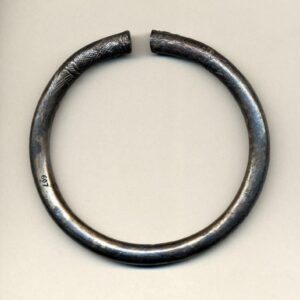
Celtic tribes across Europe utilized silver extensively alongside bronze to fashion decorative brooches, torcs, and crescent-shaped lunulae. Before the arrival of Roman expansion, the Celts relied on "ring money"—standardized rings composed of silver, copper, bronze, or gold—which functioned strictly as a medium of exchange rather than personal wear.
Following the collapse of Roman supply lines, gold temporarily vanished from common circulation in Western Europe, thrusting silver into the position of the premier metal for jewelry and decorative arts. Germanic jewelry of the early medieval period focused heavily on functional items such as fibulae, disc brooches, penannular brooches, and belt buckles, frequently fashioned from silver, gilded, or inlaid with garnet gemstones.
The expansion of Viking trade and conquest around 800 CE funneled vast quantities of silver into Scandinavia, where silversmiths established thriving artistic traditions. This influx was further augmented around the turn of the first millennium by the discovery of rich Swedish silver deposits. Artisans continued the Roman tradition of utilizing niello to create striking black-and-white contrasts against intricate Germanic engraving patterns, a stylistic triumph exemplified by masterpieces like the Anglo-Saxon Fuller Brooch housed in the British Museum.
As medieval society evolved and trade routes to the East reopened, gold gradually reclaimed its status as the preferred medium for elite jewelry. Nevertheless, flourishing trade networks enabled a burgeoning middle class to afford silver jewelry, democratizing personal adornment in ways previously reserved exclusively for ruling elites. By the end of the Middle Ages, the trade in silver items became strictly regulated through the establishment of official assaying and hallmarking systems.
Renaissance, Baroque, and Georgian Innovations
The Renaissance brought profound cultural and economic shifts across Europe, fueled by revived trade with the Levant and the massive influx of silver from the New World. Following the Spanish conquests in the Americas led by figures like Pizarro and Cortés, newly discovered silver mines—particularly those in Mexico starting in the mid-16th century—flooded European markets with unprecedented quantities of the metal. This abundance ensured that silver remained accessible for coinage and affordable jewelry production amid a growing, prosperous population.
During the Baroque period spanning the 17th century, maritime powers including England, France, and the Netherlands fiercely contested control of Atlantic trade routes, frequently targeting galleons laden with South American silver. While traditional metalworking techniques persisted, technological and stylistic innovations emerged. Portable timepieces frequently featured silver cases, and silversmiths began utilizing silver to set diamonds. This white metal perfectly complemented the colorless sparkle of diamonds, which were arriving in increasing quantities from newly established trade outposts in India.
The Georgian era witnessed a continuation of this boom in South American silver production alongside the discovery of major diamond deposits in Brazil in 1727. While fine jewelry continued to utilize gold foundations with silver-topped fronts, entirely silver pieces remained popular, particularly in specialized mountings like cut-down collet settings designed to maximize the brilliance of white diamonds. Furthermore, the introduction of die-striking techniques in the late 18th century revolutionized manufacturing. By stamping and cutting precious metal components using mechanical presses, artisans could rapidly assemble jewelry pieces, paving the way for the first mass-produced, more affordable silver jewelry lines.

The Industrial Era and Victorian Silver
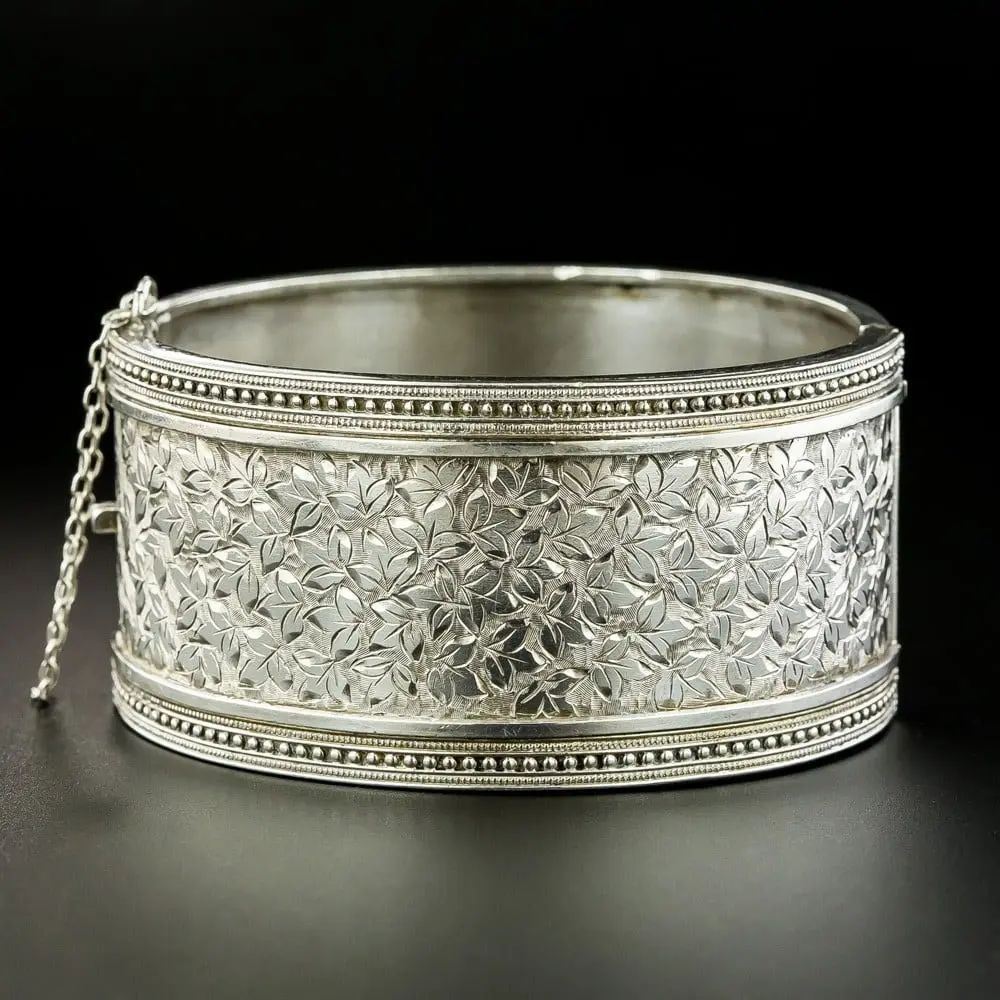
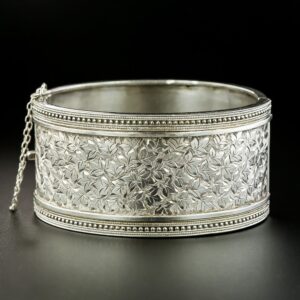
The Industrial Revolution of the 19th century profoundly transformed jewelry production, with silver playing a central role in mechanized stamping and die-striking processes perfected throughout the Victorian era. Cultural shifts also dictated fashion trends; following Queen Victoria and Prince Albert’s acquisition of Balmoral Castle in 1848, Scottish agate jewelry set in silver surged in popularity across Northern Europe.
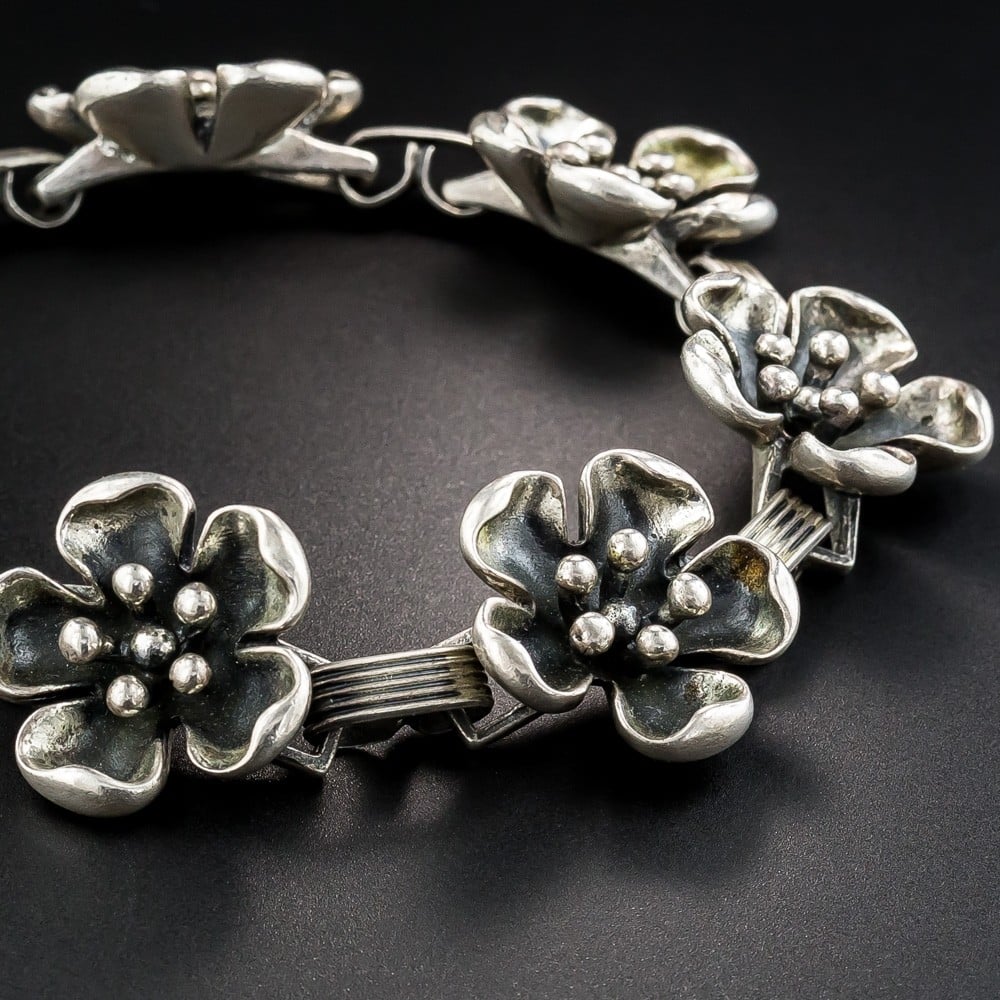
Toward the end of the Victorian period, the Arts and Crafts movement emerged as a direct aesthetic reaction against mass industrialization. Artisans in this sub-movement prioritized artistic design and handcraftsmanship over the intrinsic financial value of raw materials. Rejecting faceted stones in favor of bezel-set cabochons, Arts and Crafts jewelers overwhelmingly favored silver over gold, celebrating the metal’s understated beauty and cementing its enduring legacy in the history of human adornment.