




When Highland Park Master Whisky Maker Marc Watson sat down to develop the second release in the distillery’s collaborative "Between You and I" series, he was working entirely from a brief. His task was to sift through more than 80 aging casks at the historic Orkney distillery and curate a flavor profile that would evoke a profound sense of home for the designated collaborator.
That collaborator was Laila Gohar, a celebrated New York-based artist widely known for her elaborate, sculptural culinary installations, butter sculptures, gravity-defying seafood towers, and immersive dining tables that read more like contemporary art exhibitions than meals. However, when Watson began his exhaustive search through the distillery’s inventory, he and Gohar had never crossed paths. In fact, they had never even been in the same room together.
"I actually didn’t meet Marc until after he created the whisky," Gohar reflects on the unconventional partnership. "He interpreted my background and Egyptian heritage in his own way. When I tasted it, I immediately thought of the Gayer-Anderson Museum in Cairo, where I spent a lot of time as a child."
That first sip served as a portal, transporting her across decades and thousands of miles to a historic building etched into her earliest memories. Rather than receiving a pre-formulated tasting wheel or a standard set of promotional talking points, Gohar was handed a finished spirit as her primary creative medium. Instead of traditional marketing notes, her visceral reaction to the liquid became the foundation for an entirely new artistic exploration.
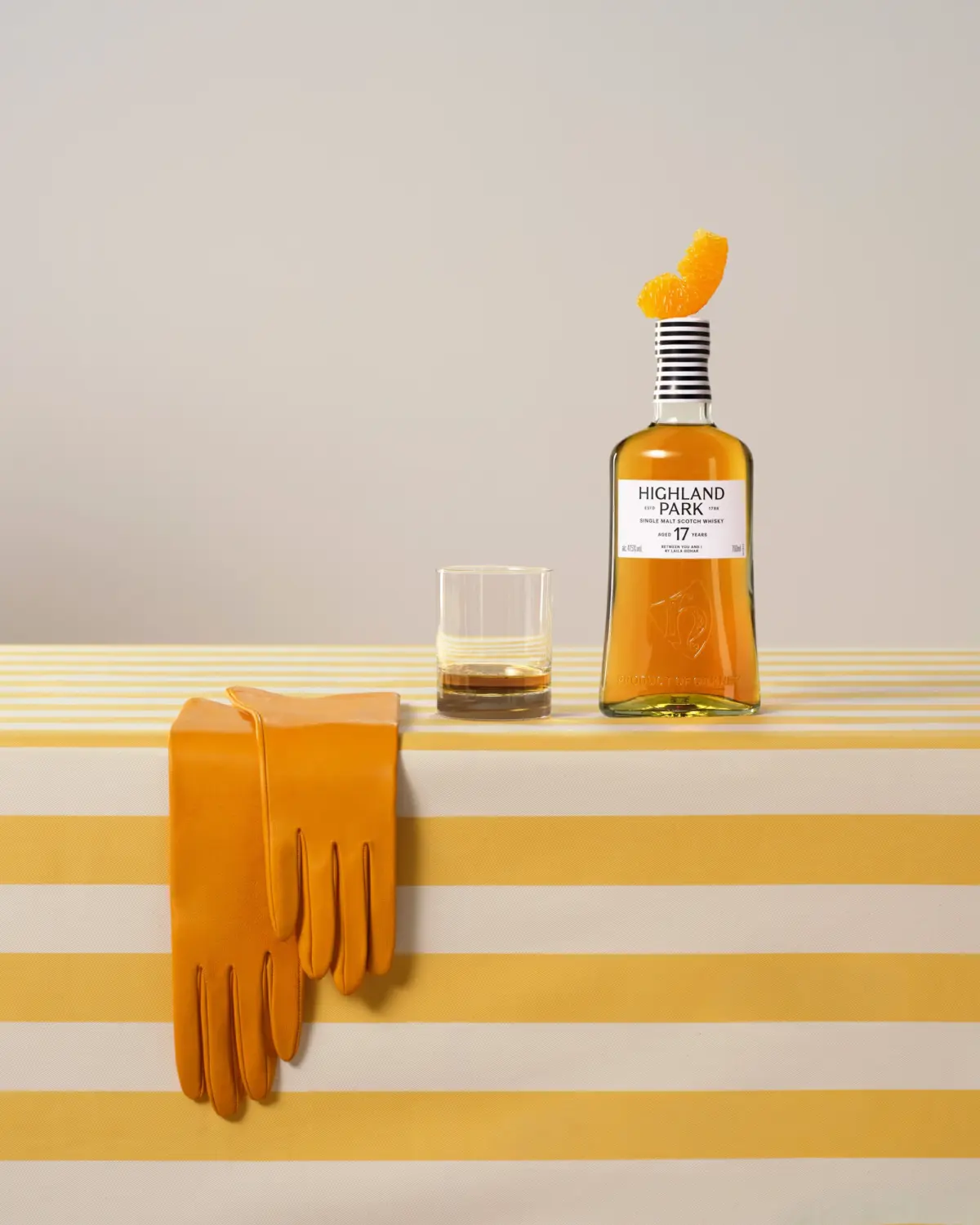
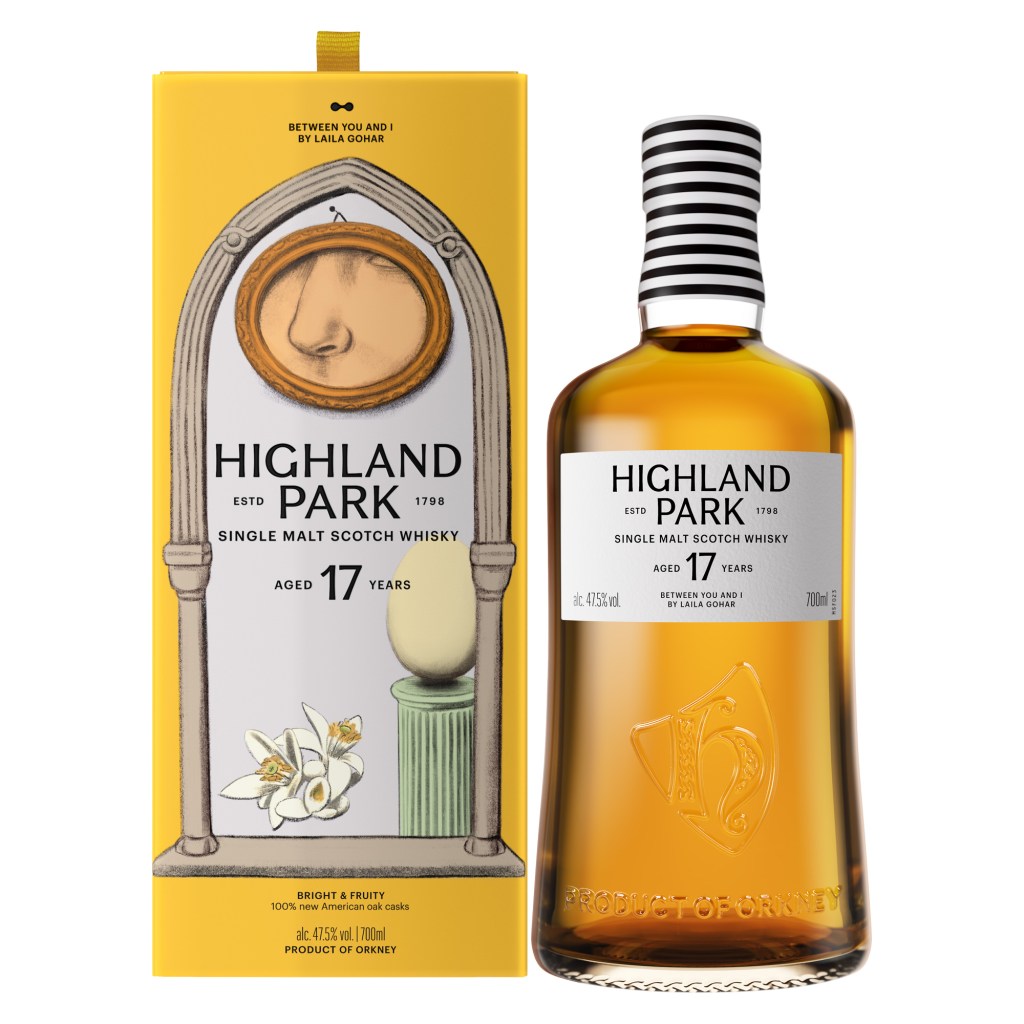
The resulting expression, titled Between You and I, by Laila Gohar, represents the sophomore bottling in Highland Park’s boundary-pushing series that bridges the worlds of single malt Scotch with visionaries from the realms of food, art, and fashion. Released on September 24 at a retail price of $160, the 17-year-old single malt spent 11 years maturing in refill casks before receiving a finishing period in unseasoned American oak. This specific wood regimen coaxes forward vibrant notes of orange blossom, rich leather, and warming baking spices, which weave seamlessly over the windswept distillery’s signature subtle peat smoke.
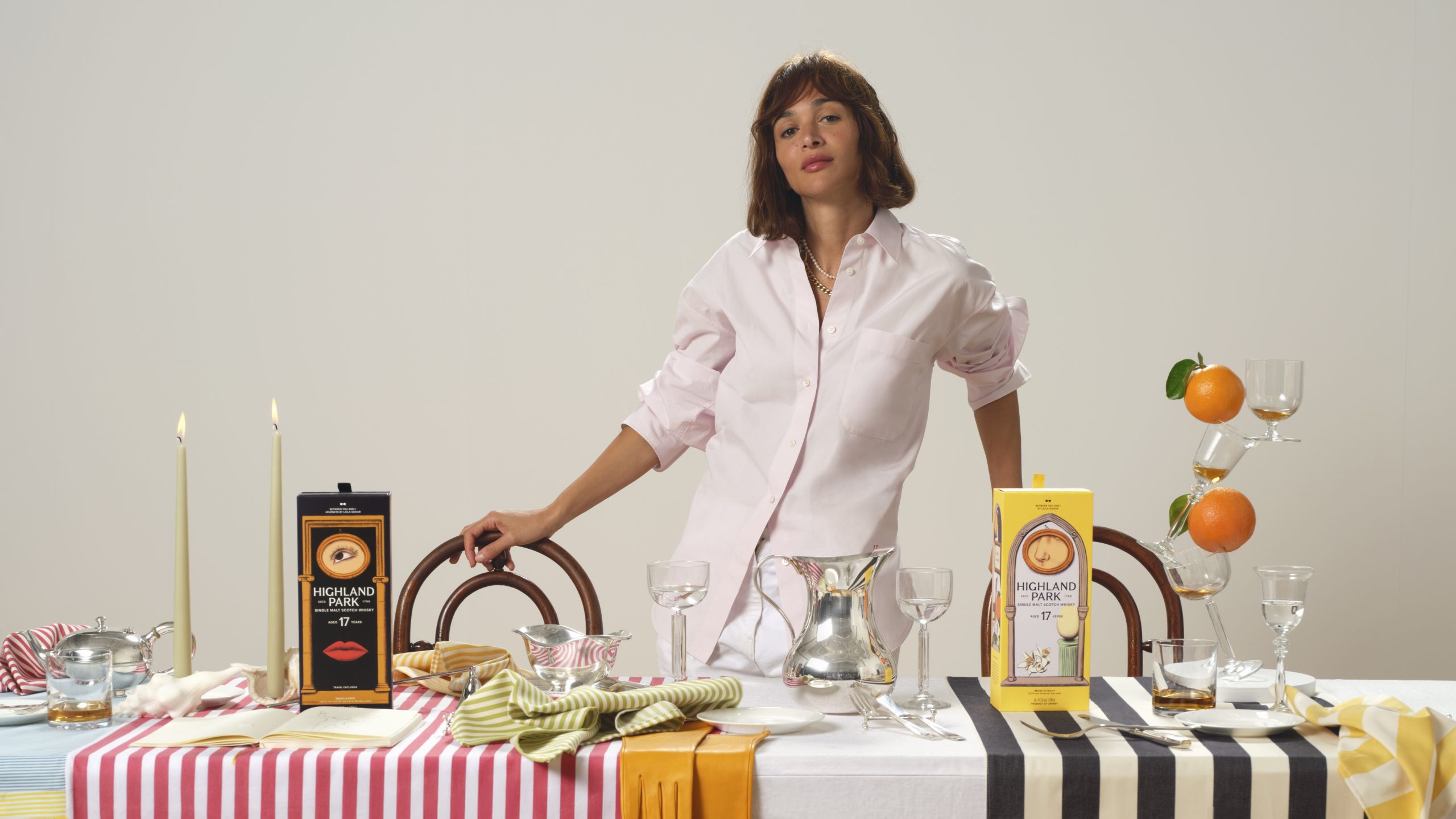
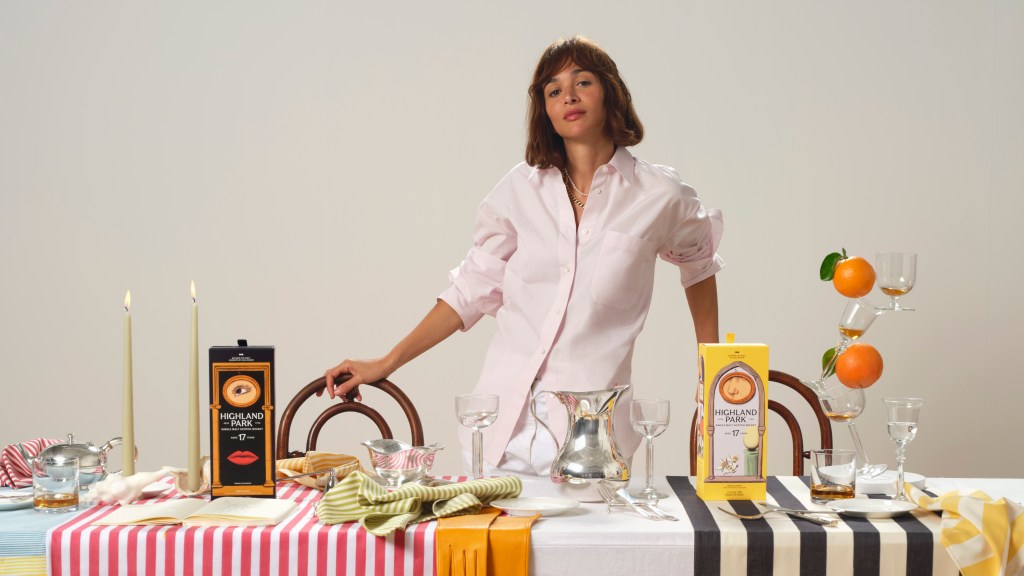
Gohar marked the official launch with an intimate gathering held at her apartment in Tribeca, keeping the debut grounded in the personal, hospitable environment that characterizes much of her career.
Yet her initial encounter with the whisky was a solitary and contemplative experience. "I tasted it on my own at home and wrote down whatever came to mind without overthinking it," she explains. "I wasn’t trying to identify traditional tasting notes. The flavors immediately became starting points for memories and images, some familiar and some completely unexpected."
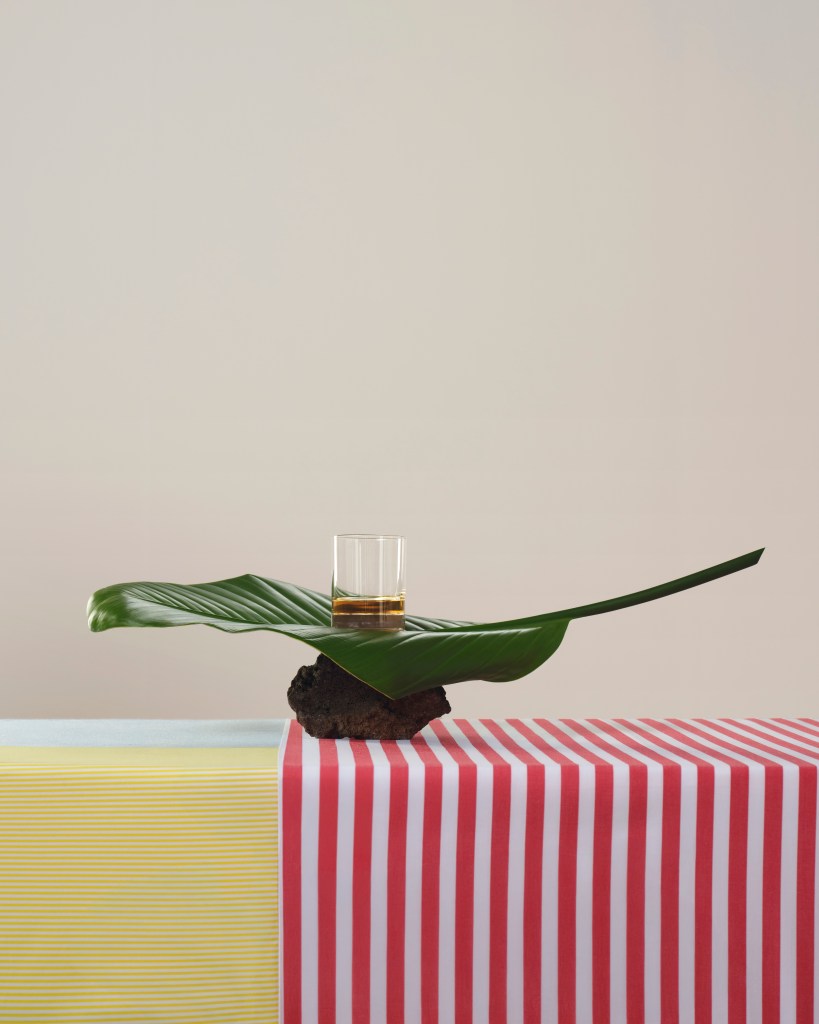
Those unfiltered impressions quickly evolved into distinct narratives. The leather note in the profile conjured the scent of ancient, preserved artifacts resting quietly within a Cairo museum. The bright pop of orange blossom translated into the vibrant memory of a sun-drenched courtyard nestled in Andalusia. Meanwhile, the rich vanilla undertones evoked the distinct, sweeping slope of a tropical volcano standing stark against a velvet night sky.
These three evocative scenes now form the conceptual backbone of the release, appearing explicitly on the packaging and within a dedicated booklet housed inside each box.
Orkney and Cairo occupy starkly opposite ends of the geographical and cultural map. Highland Park has been distilling single malt Scotch whisky on the same windswept site in the far north of Scotland since 1798, leaning heavily on centuries of unbroken tradition, local climate, and artisanal craft. Watson had to navigate this rigid, historic sense of place and bend it toward a narrative born from an entirely different hemisphere.
"I love that whisky has such a strong sense of place, is made in the same place, with the same care, for so many years," Gohar notes, expressing deep admiration for the centuries-old Scottish craft. "Marc took that history and tradition and interpreted my own background through it."
For Gohar, whose career is largely defined by the ephemeral nature of food—where elaborate sculptures and grand banquets vanish by the end of an evening—the permanence of a bottled spirit offers a fascinating contrast.
"The permanence is actually quite special to me because so much of my work is ephemeral," Gohar observes. "Even though the bottle remains, the experience of drinking it changes depending on who is drinking it, where they are, and what it brings to mind. I like that the object can last while the experience around it keeps changing."
In keeping with her unique approach to design, Gohar chose to discard traditional tasting notes in favor of storytelling. Inside each retail package sits a booklet containing short vignettes penned by the artist, with each text corresponding to one of the three core scenes inspired by the liquid.
"Flavor can take each person somewhere completely different, which is what I wanted the prose to capture," she says. By providing these literary starting points rather than rigid flavor descriptors, a reader is given a gentle push into their own imagination, leaving the final destination entirely up to them.
The striking visual presentation on the packaging was born from an iterative, back-and-forth creative dialogue with illustrator Silja Goetz. "Working with Silja is very collaborative," Gohar explains. "We played off each other’s ideas and used my memories and associations with the whisky as a starting point, rather than trying to literally illustrate a flavor. We wanted it to feel colorful, surreal, and a little mysterious, while still leaving enough space for your own imagination." The resulting artwork offers visual hints of a memory without ever pinning one down definitively.
The project’s title underscores the conversational nature of the experience. Gohar emphasizes that the true dialogue does not happen between the maker and the consumer, but rather in the private space opened up within the drinker. "I think it’s really a conversation between the person drinking it and whatever the whisky brings up for them," she says. "Hopefully the person across the table has their own story to add to it."
When it came time to introduce the bottling to the public, hosting the event at her own home felt like the only natural choice. "Hosting it at home made the evening feel personal, which felt right," she remarks. "I wanted the table to feel generous and inviting, with the whisky naturally part of the experience rather than something overly presented. For me, the best tables are the ones that make people want to stay, taste, and talk."
Ultimately, the collaboration has opened up new avenues for Gohar’s creative inquiries regarding taste, perception, and memory. "I’m interested in how far you can take food beyond the act of eating it," she concludes. "Flavor, memory, and imagination can exist without necessarily needing a plate or an object to contain them. This project made me think more about that space between something you taste and something you imagine, and I’d like to keep exploring it."