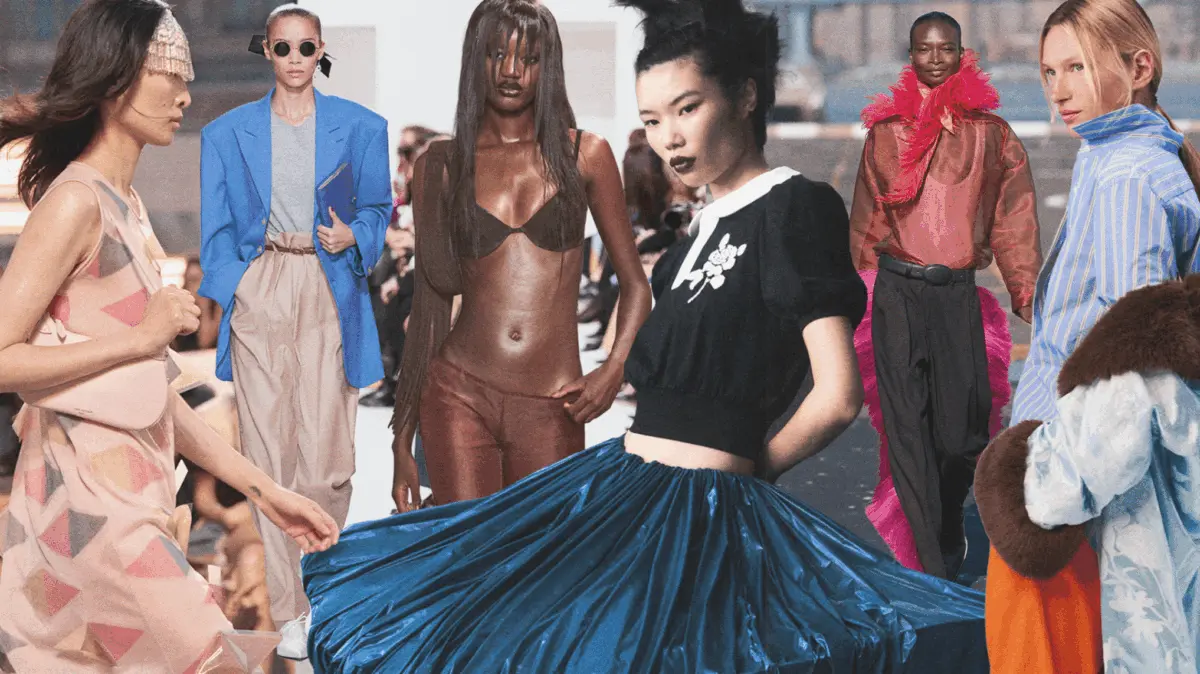
The fashion capitals of the world—stretching from Tokyo and Copenhagen to New York, London, Milan, Paris, and Shanghai—have delivered their verdicts for the spring 2027 ready-to-wear season. Drawing from hundreds of comprehensive collection reviews filed by the Vogue Runway team, the global design community has collectively signaled a profound shift in direction. Rather than leaning heavily into abstract fantasy, escapism, or elaborate character dressing, creators across the globe are pivoting toward a more grounded philosophy.
This season’s through lines have been meticulously organized into five distinct yet interconnected pillars: a renewed commitment to realism, a purposeful pursuit of joy, an embrace of wabi-sabi imperfections, a deliberate push for physical and visual lightness, and moments of uninhibited glamour. Together, these themes capture a global design landscape responding directly to the complexities, environmental realities, and dark headlines of the modern era.
At the very top of this season’s mindset is a definitive back-to-reality approach. Designers are prioritizing relatability and wearability above all else, ensuring that high fashion feels accessible and functional for everyday life. As Tokyo-based designer Viviano Sue eloquently noted when discussing the philosophy behind the Viviano brand, "Fashion is supposed to be something people can wear, no matter how crazy it is."
Realism
This sentiment of practical grounding reverberated across multiple international houses. Miuccia Prada, speaking on her vision for Miu Miu, highlighted the immediate necessity of designing for the present. "It was the idea of being in the moment, in this time. What I was mainly interested in is working for people now," she explained.
At Moschino, creative directors Loris Messina and Simone Rizzo echoed a similar urgency, stating flatly, "The moment we’re living in calls not for fashion magic but for fashion realism."
Meanwhile, at Loewe, Jack McCollough and Lazaro Hernandez addressed the challenge of merging high-concept brand building with tangible wardrobe choices. "We’re really looking at how to translate all these ideas we’ve been having into a bit more reality and a way of dressing," they shared, reflecting on the transition from establishing a new brand universe over the past two seasons to finally bringing clothes directly into that ongoing conversation.

For Glenn Martens at Maison Margiela, realism involved channeling the historical ethos of Martin Margiela’s anti-fashion origins from the late 1980s. By working with contradictions in fabric—balancing the hard and the soft—Martens sought to deliver a strong, consistent conceptual narrative in every garment without alienating the wearer. "I’m trying to really figure out how can we bring a strong concept in and be really consistent in the concept in every garment, but without being also scary," he noted.
Mowalola Ogunlesi focused her refinement at Mowalola inward, letting shapes and garments speak for themselves while allowing models to transform into authentic characters. Ogunlesi credited her own evolution as a woman and a reconsideration of her personal wardrobe desires as the catalyst for this direct push. Keisuke Yoshida, heading Keisukeyoshida, observed that high fashion had drifted out of reach for the average consumer, driving his desire to pass on the richness and joy of fashion to the next generation.
Joy
To counter the steady stream of global bad news, many prominent creative directors adopted a glass-half-full mindset for spring 2027, injecting poetry and optimism back into their collections. Chanel’s Matthieu Blazy offered a philosophical defense of beauty during troubled times. "Not to go too philosophical, but I think there is a space for poetry, beauty, joy, and it’s a good remedy to the dark time," he mused. "I think fashion should give this to women."
Patricio Campillo sought to freeze fleeting moments of happiness, turning them into romantic objects and ideas meant to outlive both the creator and the garment itself. At Jean Paul Gaultier, Duran Lantink emphasized that while fashion is undeniably serious work, the design process must retain a sense of humor and fun. "It’s serious work. But there is a type of fun, and I think there should be humor because when we are doing fittings, we’re having so much fun. But we do take it very seriously," Lantink said.
Alejandro Gómez Palomo of Palomo Spain continued to champion his signature utopian vision. His design universe remains rooted in constructing an ideal society where everyone is welcomed, glamorous, and living peacefully.
Wabi-sabi
Spontaneity and the deliberate celebration of imperfection also emerged as defining characteristics of the season, spearheaded by Celine’s Michael Rider. For Rider, accidental and spontaneous styling represents a natural instinct that cannot be faked. "That’s what turns me on. I think that’s how I am, and I don’t know how not to do that. That’s what I respond to when I see those things on other people in the world and when the studio and I are out living. I love when real clothes are worn spontaneously," he explained.

This rejection of sterile, factory-made perfection was shared by Matt Empringham of A Letter, who intentionally left strange imperfections in patterns and fits. Aaron Esh simplified the philosophy with a succinct maxim: "Things don’t need to match. They need to attract." Similarly, Daniel Lee at Burberry noted a preference for designs that feel youthful and cool rather than rigidly perfect, while Stuart Vevers at Coach leaned into memory as a nonlinear and inexact source of inspiration.
Kozaburo Akasaka explored the tension between sensitivity and brutality by highlighting the history of broken things and adding value to them. In New York, Rachel Scott of Proenza Schouler found inspiration in the local freedom of dress, where rigid traditional rules separating daywear and eveningwear have completely dissolved. Staud’s Sarah Staudinger echoed this sentiment, describing her collection around the concepts of up-down, east-west, and then-now, noting that eveningwear and daytime attire are no longer bound by strict temporal rules. Uma Wang reinforced this rejection of convention by prototyping directly on the body, embracing unexpected mistakes in cutting rather than following traditional methods.
Let There Be Lightness
Addressing a warming planet and the physical realities of severe weather, numerous designers set out to engineer garments defined by airiness and physical ease. Jonathan Anderson focused on lifting the historical heaviness of Christian Dior, working to find opposing solutions that felt fresh. At Hermès, Nadège Vanhée based her entire collection around the literal and conceptual notion of air, exploring how something can be simultaneously perceptible and imperceptible.
Simon Porte Jacquemus looked to his children for inspiration, returning to a palette of light, vibrant colors reminiscent of ice cream, complete with stripes, polka dots, and water-friendly slippers. Nicolas Ghesquière at Louis Vuitton sought to express ultimate simplicity and purity, noting that the impression of minimalism masks a deeply complex construction process aimed at maximizing lightness. Lizzie Owens of 6397 designed solutions for intense summer urban weather, balancing the needs of a busy working woman with the desire for chic escape. Meanwhile, Hillary Taymour at Collina Strada leaned heavily into an unapologetic abundance of delicate details.
Glam
Even within a season centered on realism and practicality, an irrepressible desire for glamour surfaced across the runways. Comme des Garçons’s Rei Kawakubo captured this intersection by questioning the boundary of when royal life and real life seamlessly merge. Dries Van Noten’s Julian Klausner pointed to a universal human desire to periodically feel like a star, while Meryll Rogge at Marni described a distinct aesthetic that is simultaneously sexy and "absolutely not sexy."
Richard Quinn turned toward an 80s-inspired hyper-glamour, and Caroline Bille Brahe at Caro Editions aimed for blinding luminosity, stating that her models should emerge sparkling like giant glitter balls. Finally, Tory Burch looked to the therapeutic power of escape, anchoring her collection in opulent femininity while maintaining a sharp, contrasting tension with utilitarian sportswear.