





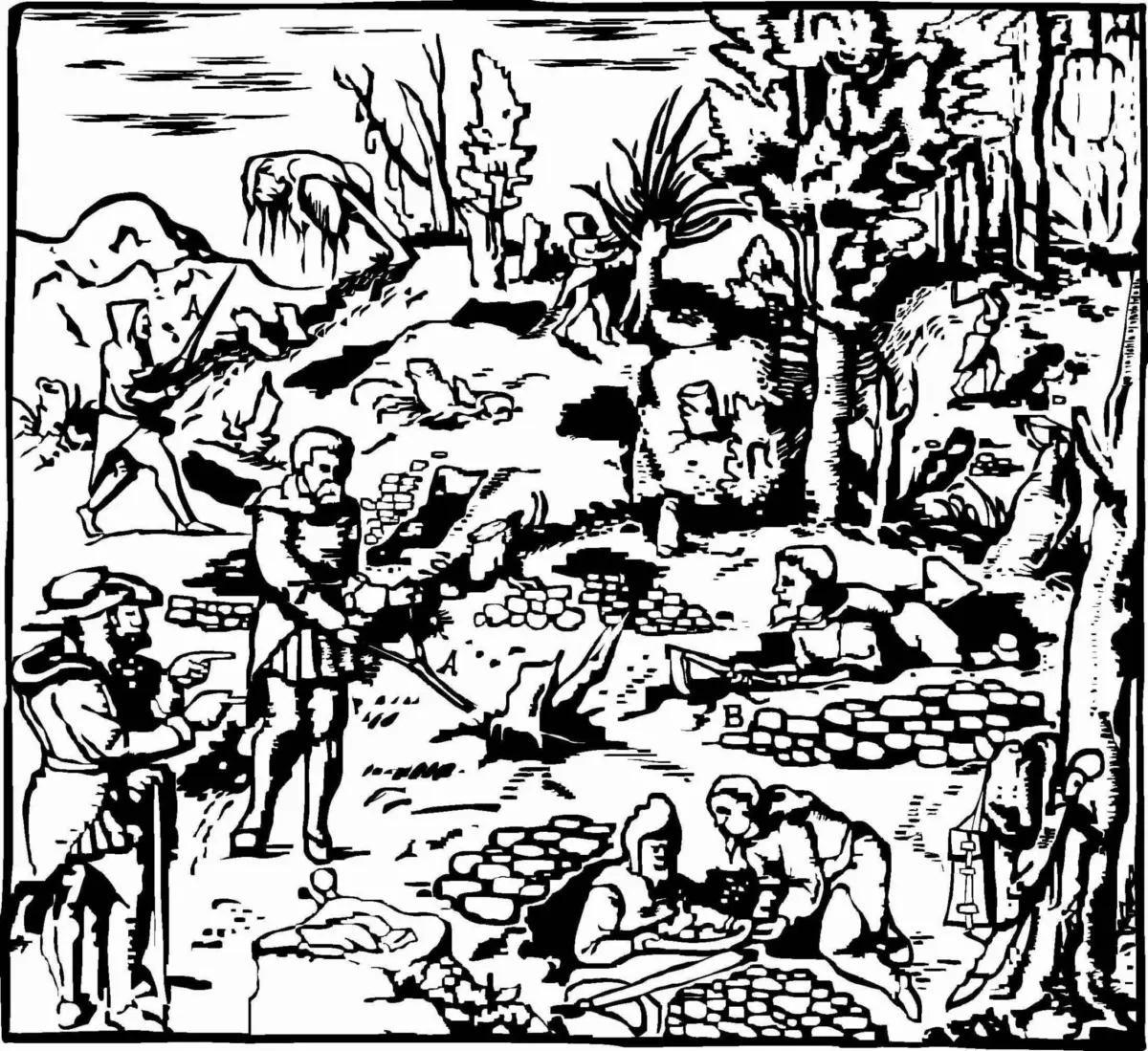
References to gemstones appear in many ancient writings. They may be mentioned as decoration, a means of barter, a symbol of wealth, the source of power and magic or the objects of adoration. In these earliest records, the gem was auxiliary to the primary topic and not a subject in and of itself. It was not until the writings of Aristotle (384-322 B.C.) that the physical world and its constituent parts became worthy topics of study and documentation.
Aristotle’s division of philosophy into separate branches—logic, metaphysics, physics, ethics, politics, and art—led to the systematic study of nature. The natural world also was divided into parts or elements, which included earth, water, air, fire, and ether. Gems could then be classified and described in these terms and their properties recorded. The study of gems and minerals began with the recording of observations, documenting of sources, and the cataloging of legends and folklore. The first writings were attempts to compile all that was known at the time. Along the way, a mix of science and pseudo-science filled the works produced. As the understanding of the natural sciences grew, so did the sciences of mineralogy and gemology.
Origins
Theophrastus (ca. 372-287 B.C.), a student of Plato and successor to Aristotle as head of the Peripatetic school of philosophy, is credited with writing the first known treatise dedicated to gems. Of his Peri Lithon (Of Stones), only a fragment of the original work is preserved. This Aristotelian mix of physics and metaphysics is credited as the source for much of the lore passed along in latter works. The first English translation of Peri Lithon by John Hill is superseded by two modern translations, the first of these by E. R. Caley and J. F. C. Richards and the second by D. E. Eichholz.
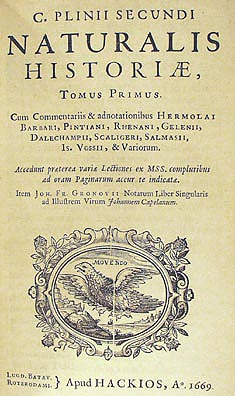
Later, the Roman author and historian Gaius Plinius Secundus, known as Pliny the Elder (23-79 A.D.), compiled the Naturalis Historia (Natural History) from a reported two thousand sources. This thirty-seven-volume work, published in 77 A.D., embraces the domain of natural history in the broadest sense, including astronomy, geography, and meteorology. Beyond what is today considered natural history, it also encompasses fine arts, inventions, and human relations, standing as a chief source from which future historians have obtained informative descriptions of life in the first century.
Much of Pliny’s information on gems was not written from direct observation. His studies were often a retelling from second-hand sources now lost in antiquity, leading him to lump many stones together by color, mining location, or attributes passed down through legends. His recounting of myths and assumptions drawn from them formed the basis of much writing in the Middle Ages. He became the most often quoted writer on the subject, and his information was relied upon and repeated without question in book after book. In the first thirteen centuries of European history, little scientific information was added to the limited knowledge of gems garnered from Pliny’s accounts, though many later authors embellished the writings and added their own speculations.
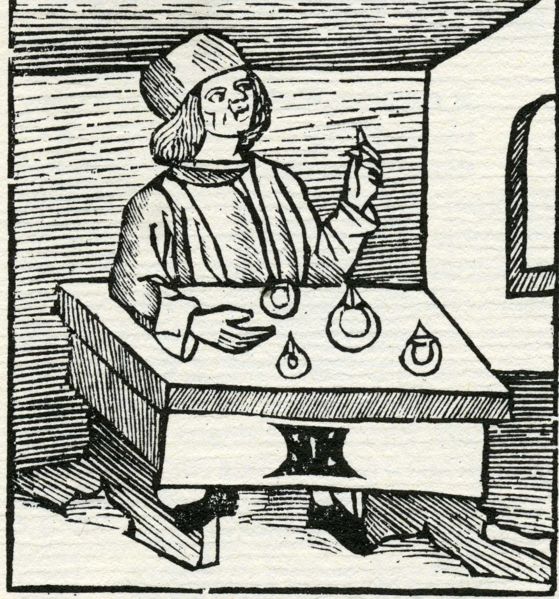
Pliny is credited with attempting to classify gems according to color and observable external characteristics. This led to the practice of assigning the attributes of one stone to all stones of similar color or appearance, such as the green stones named smaragdus in Latin. Pliny classified most green stones as varieties of emerald, listing twelve varieties in all, including green sapphire, turquoise, smithsonite, malachite, jasper, and even glass. However, he is also credited with making astute classifications, such as recognizing the connection between beryls and emeralds, noting that beryls are of the same nature as emeralds, or at least very similar.
Since the original Latin version, over two hundred and fifty editions of his classic have been published in numerous languages. The first complete edition of Natural History was published in Venice in 1469, and the first critical edition was offered by Hardouin in 1685. The most detailed study of Pliny’s gemstone accounts is a work by S. H. Ball.
Christian Lapidaries
Saint Epiphanius (ca. 315-420 A.D.), Bishop of Constantia in Cyprus, wrote the first treatise dealing with the gemstones mentioned in Biblical writings. This work served as a model for the treatment of Biblical gems in future lapidaries and provided the first reference to the possible composition and significance of the twelve stones in the Breastplate of Aaron. Epiphanius traveled extensively throughout the Eastern Mediterranean and studied in Egypt and Palestine. Lynn Thorndike writes that these early opinions concerning the stones of Aaron’s Breastplate perhaps gave an excuse and set the fashion for Christian medieval lapidaries.
Dorothy Wyckoff notes in her studies of lapidaries that even though the Church had banned heathen worship and superstitious practices, even devout Christians could not entirely shake off the old belief that precious stones possess supernatural powers or significance. This interest was legitimized by focusing attention on the stones mentioned in the Bible, specifically those in the breastplate and the foundations of the New Jerusalem. The entire text of Epiphanius’s Biblical Lapidary was first printed as part of De Omne Rerum Fossilium by Conrad Gesner of Zurich in 1565.
Isidore, Bishop of Seville (ca. 560-636), was the leading clergyman of his day and exerted considerable influence over medieval thought and literature. His Etymologiarum sive Originum Libri XX (Etymologies) was an encyclopedic work containing more than one thousand manuscripts dealing with the collected knowledge of the day. Intended to serve as a dictionary rather than an instructional manual, his descriptions and classifications made his writings the standard reference for scholars into the twelfth century and beyond.
The eleventh-century Bishop of Rennes, commonly referred to as Marbod (ca. 1035-1123), wrote Libellus de lapidibus, also known as Lapidaire en Vers, which is considered the most important and influential work of its kind. Lynn Thorndike calls it the classic on the subject of the marvelous properties of stones. The poetic work consists of seven hundred and thirty-four hexameters concerning sixty kinds of stones, prefaced by lines describing its source of information as Damigeron or Evax, King of Arabs. F. D. Adams states that it is the earliest lapidary of the Middle Ages, and the one quoted most widely.
Albertus Magnus (1193-1280), Bishop of Ratisbon, teacher, and lecturer, applied science and the scientific method to theology. A teacher at the University of Paris who counted Thomas Aquinas among his students, Magnus is known as a founder of Scholasticism. His De Mineralibus is characterized by Dorothy Wyckoff as an impressive attempt to organize the science of mineralogy, though critics note it still included superstition and speculation.
Alfonso X the Learned (1221-1284 A.D.), King of Castile and Leon, composed the first major work on astrology and gemstones, aiming to demonstrate the connections of gemstones and other minerals to celestial bodies. His astrological tables, calculated for the Toledo Meridian based on Arabic translations, became the standard for all of Europe for centuries. Alfonso classed gems by color and placed each under one of the twelve zodiac signs, including remarks on properties, uses, and medicinal virtues influenced by planets and stars.
Introduction of the Scientific Method
Camillus Leonardus, a physician of Pesaro, Italy, gathered information from previously published works and applied scientific methods to distinguish gems. His findings were published under the title Speculum Lapidum in 1502 and later in England as Mirror of Stones in 1750. Leonardus treated physical properties, hardness, specific gravity, compactness, color, form, and geographic origins more thoroughly than previous works, though he still maintained that the virtues and medicinal uses of gems were enhanced or imparted by having their surfaces engraved with suitable symbols and signs.
The Science of Mineralogy
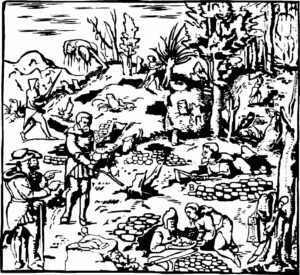
Georgius Agricola (1494-1555) has been called the father of mineralogy. His De Natura Fossilium (1546) is considered one of the most important mineralogical and gemological works of all time. Unlike his predecessors, he provided accurate comments on the nature, properties, and treatment of gemstones based on first-hand knowledge, while occasionally relying on Pliny for stones he could not personally observe. He asserted that minerals and certain rocks originated from petrified juices, referenced scratch tests for hardness, and included precise descriptions of physical characteristics and flaws.
De Omne Rerum Fossilium (1565), compiled by Conrad Gesner (1516-1565), contained eight works on gemstones, including Epiphanius’s treatise and Gesner’s own Lapidum et Gemmarum, which classified stones by external characteristics into fifteen categories. It marked the first time a purely mineralogical work was illustrated with woodcuts of minerals, crystals, fossils, and cut gems. However, it perpetuated the tradition of naming stones by color and place names, such as "Occidental emerald" for true emerald, "Brazilian emerald" for tourmaline, "Oriental emerald" for green sapphire, and "Oriental topaz" for yellow or orange sapphires—misnomers that continue in the jewelry trade today.
Gemmarum et Lapidum Historia (1609) by Anselmus Boëtius de Boodt (ca. 1550-1632) dealt with New World gems and compared them to European and Asian varieties. De Boodt listed five degrees of hardness, speculated on a distinct atomic structure in minerals, and expressed skepticism over mystical and medicinal virtues. His position as royal physician to Rudolph II gave him access to numerous gems, leading F. D. Adams to call his writing in many respects the most important lapidary of the seventeenth century.
Ulyssis Aldrovandi’s Musaeum Metallicum in Libros IV Distributum, published posthumously in 1648, contained little new information, but the term geologia or geology appeared for the first time in its modern context. With this work, the field of gemology split into two distinct disciplines: the science of mineralogy and the romance and lore of gemstones.
The first major work published in English was by Thomas Nicols, titled A Lapidary: or, the History of Pretious Stones, with Cautions for the Undeceiving of All Those That Deal with Pretious Stones (1652). Robert Boyle, English philosopher, chemist, and physicist, followed in 1672 with An Essay About the Origine and Virtues of Gems, covering crystal formation, the insolubility of gems and its effect on medicinal uses, and the use of hydrostatic weighing to ascertain density. London physician Dr. Robert Pitt continued observations on the medicinal value of gems in his 1703 book, The Craft and Frauds of Physick Expos’d, reiterating their insolubility by noting that stones ingested by birds pass through without changes in color or shape.
Modern Gemology
The early eighteenth century saw mineralogy and geology adopted as pure sciences. Improved record-keeping and specialized tools led to more accurate information based on careful observation and experimentation. Gemology, however, largely relied on the retail jewelry industry for research, where the romance and lore of gems were perceived to be good for business.
Research and writings by Dr. George Frederick Kunz in the late nineteenth and early twentieth centuries revived interest in the study of gems through his work cataloging North American gems for Tiffany and founding the mineral collections at the American Museum of Natural History. While his technical writings gained little public notice, his compilations of ancient pseudoscience, including The Curious Lore of Precious Stones (1913) and The Magic of Jewels and Charms (1915), remained popular.
Robert M. Shipley founded the Gemological Institute of America in 1931 and the American Gem Society in 1934, bringing professionalism, standardized information, and rigorous education to jewelers and consumers. The GIA quarterly publication, Gems and Gemology, continues to serve as a primary source for current research.
Over two thousand years of speculation, research, and writing have shaped the sophisticated sciences of gemology and mineralogy. As physics, chemistry, biology, and medicine have evolved, the study of gems has contributed to them all. Today, a renewed interest in the metaphysical powers, healing agents, and personal protection qualities of gems persists alongside modern scientific understanding, demonstrating that much remains to be explored in the collected wisdom of gem history.