



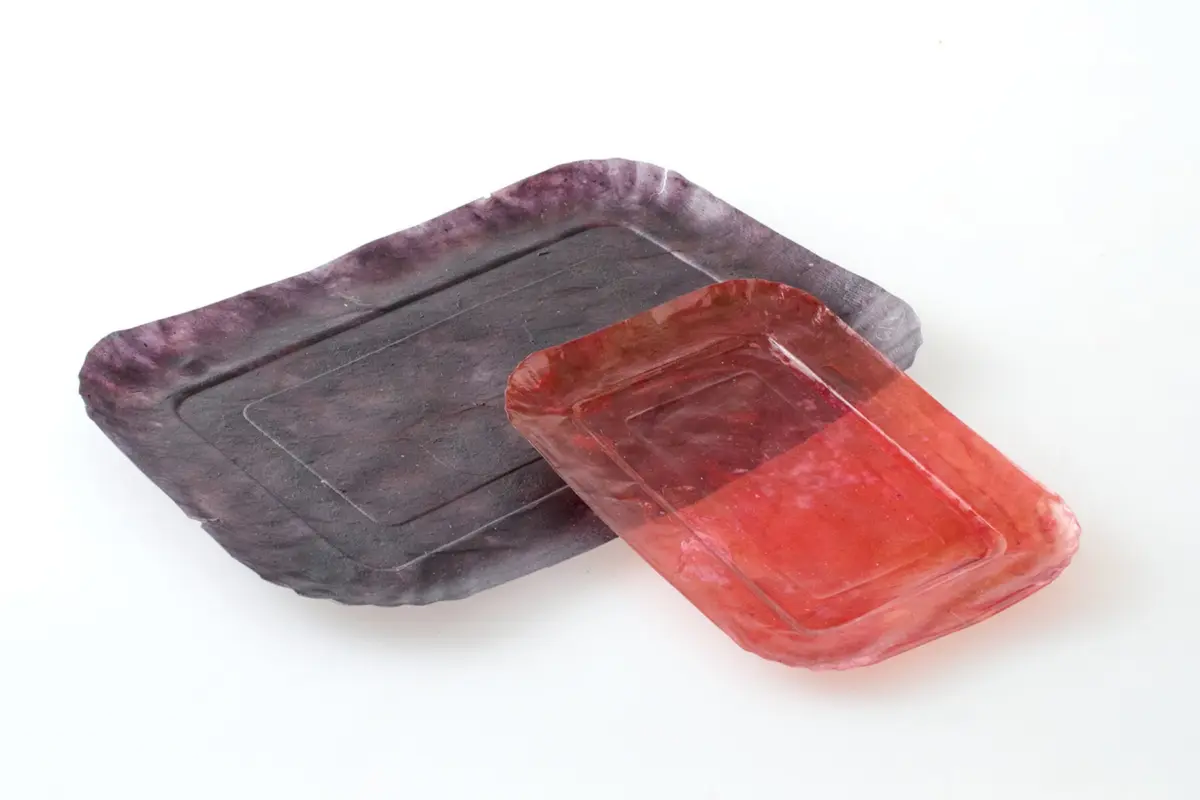
Berlin-based biodesigner Emma Sicher is pushing the boundaries of sustainable design by cultivating materials grown entirely by bacteria and yeast. Turning microbial cellulose into translucent, glass-like packaging and unconventional food prototypes, Sicher’s work offers a glimpse into a future where everyday products are grown rather than manufactured. Through fermentation, microorganisms construct complex biological matrices, resulting in striking materials that resemble crinkled pink glass or glossy, gelatinous spheres, all defined by unusual natural textures and colors.
At the core of Sicher’s multidisciplinary practice is SCOBY, an acronym for a symbiotic culture of bacteria and yeast widely recognized for its role in producing kombucha. When these microorganisms are introduced to a nutrient-rich liquid environment, cellulose-producing bacteria naturally form a resilient, gelatinous membrane directly on the surface. This living layer can be harvested, dried into flexible sheets, or manipulated into various three-dimensional forms, opening up wide possibilities for sustainable material applications and the future of food systems.
When Microbial Cellulose Becomes Food
Sicher’s ongoing research project, titled EATING SCOBY, explores the unexpected culinary possibilities of this cellulose-rich membrane. Developed initially during her master’s degree in Eco-Social Design, the research has involved close collaboration with food microbiologists and professional chefs to test how microbial cellulose might be integrated into modern diets.
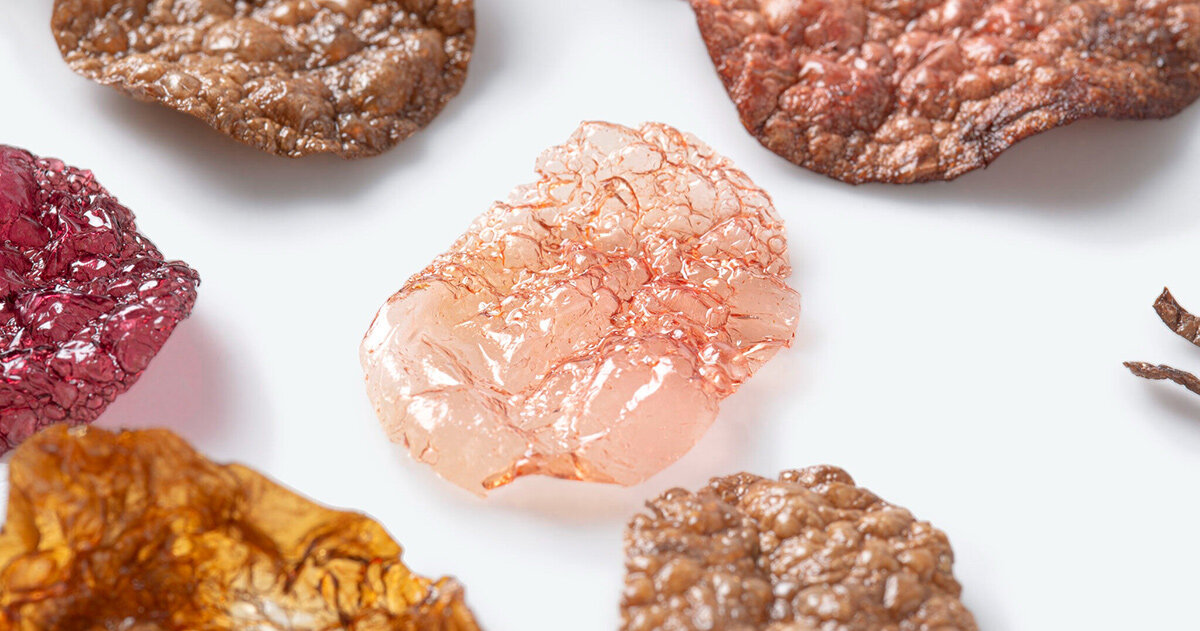
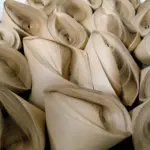
Among her experimental prototypes are SCOBY chips, which offer a unique sensory experience by beginning with a distinct crunch before transforming into a chewy, slightly gelatinous texture in the mouth. Another innovative application is an experimental ice cream cone made from the material, featuring the potential for an interior coating of melted chocolate to hold frozen treats without generating single-use waste.
Taking the exploration in a different direction, Sicher has also developed a double-flavor popsicle that utilizes the material to achieve a mouthfeel she compares directly to blended aloe vera. By framing microbial cellulose within familiar food formats, the designer makes an unusual ingredient much easier to visualize on a plate while simultaneously introducing entirely novel textures and presentations. Though these prototypes remain experimental, they serve as vital explorations into how microbial growth can support and reshape future food ecosystems.
Packaging Grown from Food Waste
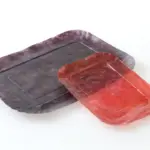
Long before she began crafting edible prototypes, Sicher investigated the potential of bacterial cellulose for industrial applications. In her 2017 project, From Peel to Peel, she proposed a system of biodegradable food packaging grown directly from discarded fruits and vegetables. By using apple peels and beetroot scraps as the primary nutrient sources for microbial cultures, she produced thin, pliable sheets that could be easily dried into eco-friendly wrappers and small containers.
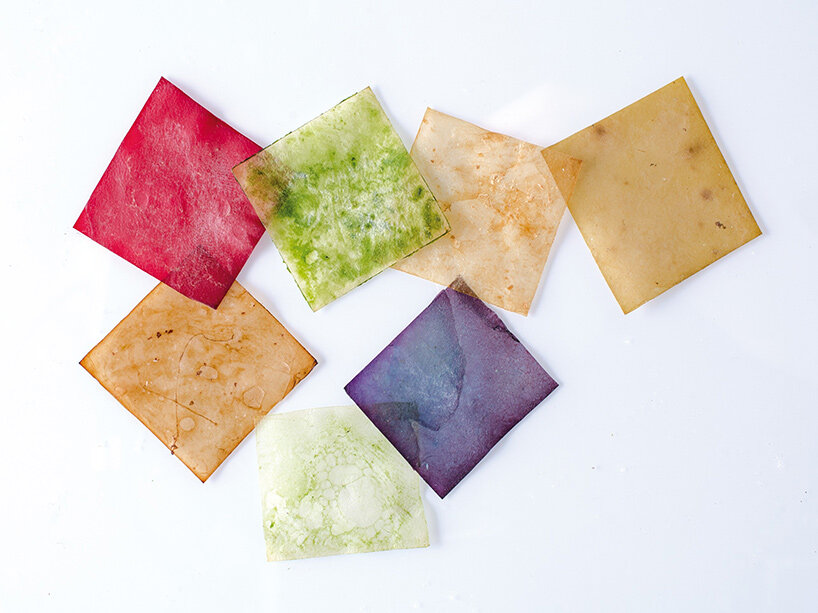
Depending on the specific fruit and vegetable scraps utilized in the fermentation vats, the resulting packaging took on a wide spectrum of natural colors, ranging from pale, muted yellows to deep, vibrant pinks. Once fully dried, the material closely resembled paper or traditional leather, with its final surface finish largely dictated by the texture of the surface upon which it dried during the dehydration process.
While the material’s natural tendency to absorb ambient moisture presents clear technical limitations for conventional packaging—particularly when storing wet or highly perishable foods—the project successfully laid the groundwork for Sicher’s broader design philosophy. It established an approach that continues to define her work today: allowing natural biological processes to dictate and influence the physical properties of a material right from the very beginning of its lifecycle.
Growing Materials from Local Ecosystems
Expanding beyond standard laboratory substrates, Sicher has recently begun investigating how materials can be cultivated using wild microorganisms natively present in specific regional environments. In research shared as part of her ongoing practice, she details experiments involving rowan berries foraged from the wild around Berlin and mirabelle plums collected throughout Brandenburg.
Both local ingredients successfully produced high-quality cellulose membranes through natural fermentation driven by native microbial communities, entirely bypassing the need for conventional kombucha starter cultures. In other iterative experiments, she combined elderberries with a wild fermentation starter derived from regional mirabelle plums, successfully yielding an intensely pigmented, deeply colored membrane.
Sicher’s academic and practical investigations also draw heavily on traditional fermentation practices she studied firsthand alongside local practitioners in Thailand. Together, these global and local inquiries explore how the unique plants and microbial populations of a particular region can directly influence the materials cultivated there, introducing organic, unpredictable variations that would be virtually impossible to replicate through standardized industrial manufacturing.
Designing Alongside Living Organisms
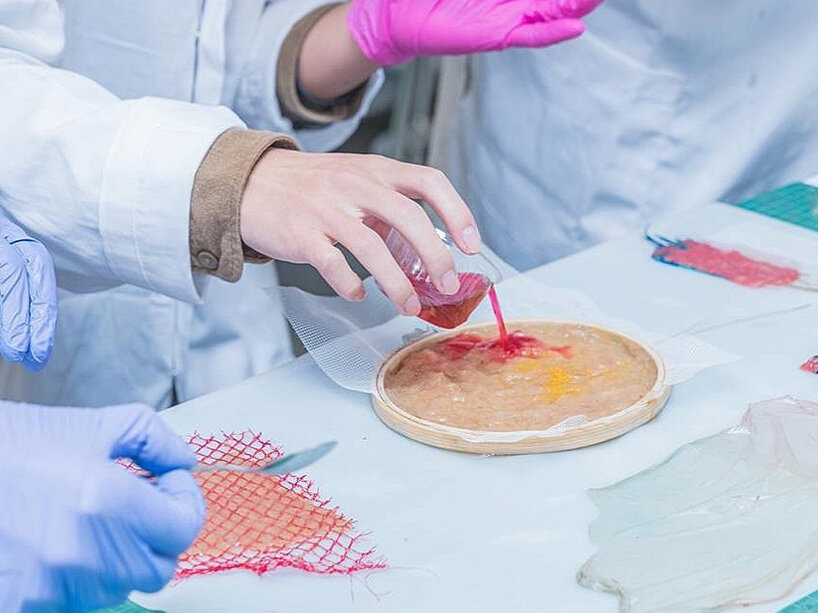
To share her methods and foster broader interest in regenerative design, Sicher frequently integrates microbial experimentation into academic educational workshops. During hands-on sessions, such as a recent workshop held at the Elisava School of Design and Engineering in Barcelona, students learn how to prepare nutrient-dense plant infusions and cultivate their own living SCOBY membranes from scratch. Participants work directly with both wet and dried cellulose, discovering firsthand how physical processing dramatically alters the material’s texture, density, and behavior.
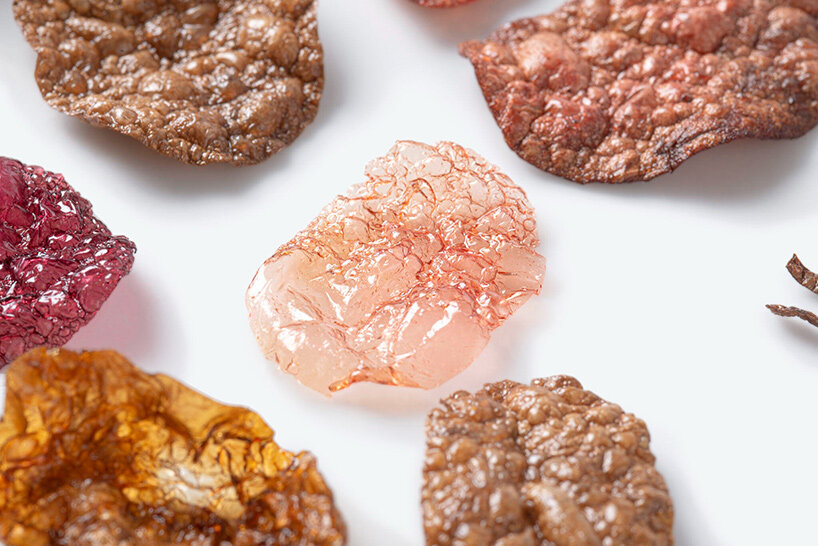
Her broader research into alternative plant infusions has similarly examined how different botanical ingredients can manipulate the structural density and physical characteristics of the grown material. Across all of these diverse experiments, Sicher willingly embraces a collaborative design process that relies fundamentally on the autonomous behavior of living organisms.
While the designer carefully selects the plant inputs and establishes the initial growing environment, the microorganisms ultimately execute the physical formation of the material. What emerges from the vats is shaped entirely by these complex biological interactions, pointing toward an innovative mode of making where the surrounding ecology actively participates in every stage of the design process. Sicher’s work forms part of broader explorations into materials that question traditional human-centric production, offering sustainable paradigms for the future of design.