





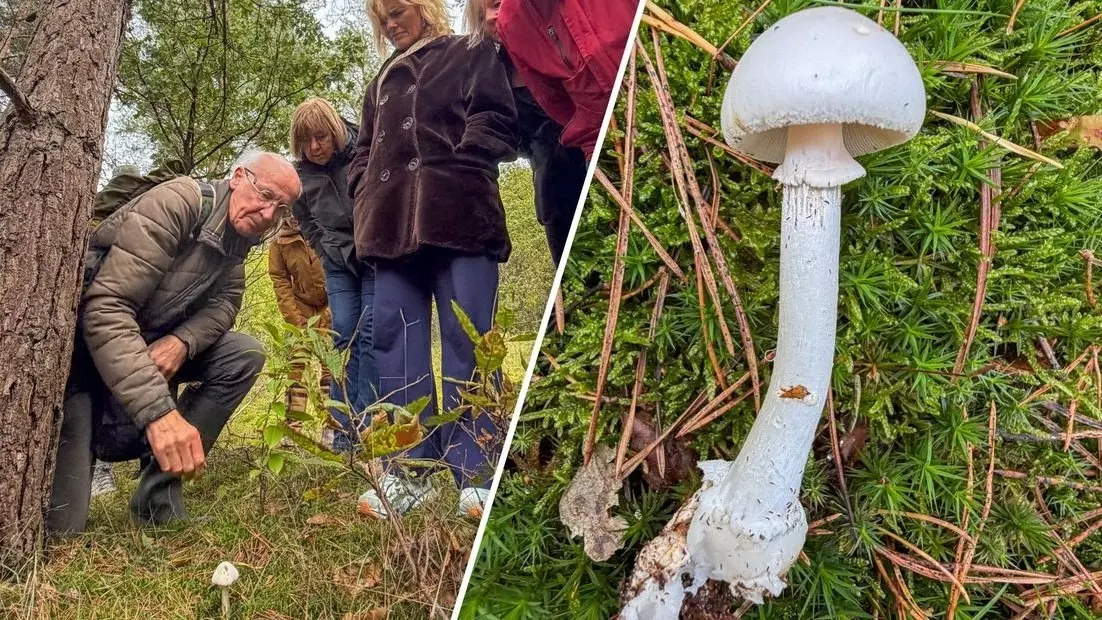
October 27, 2026 — An exceptionally rare and notoriously poisonous fungus known widely as the “angel of death,” or formally classified by mycologists as Amanita virosa, has been discovered growing in the municipality of Soest, located within the scenic Utrecht countryside in the Netherlands.
The startling discovery of this perilous organism has sent ripples of excitement—and caution—through local ecological and mycological circles. According to regional broadcaster RTV Utrecht, the fungus is considered a legendary species among mushroom experts not only for its staggering toxicity, which can easily prove fatal to humans, but also for its extreme rarity. Prior to this recent sighting, the species was largely presumed to have vanished from the region entirely and currently holds an official designation as an endangered organism within Dutch ecosystems.
The remarkable find was made by experienced local mycologist Rob Chrispijn. While leading an educational guided nature tour across the historic De Paltz estate in Soest, Chrispijn stumbled upon the ghostly white fruiting body growing quietly amidst the woodland floor. Recounting the moment to RTV Utrecht, Chrispijn admitted that he literally “jumped for joy” upon realizing what he was looking at, recognizing the immense scientific significance of the encounter despite the ominous nature of the organism itself.
The dramatic decline of the Amanita virosa across Dutch landscapes over recent decades has not occurred in a vacuum. Mycologists and environmental scientists link the disappearance of sensitive fungal species directly to broader ecological pressures, most notably the escalating acidity of the soil. This problematic shift in soil chemistry is widely understood to be heavily tied to the ongoing national and regional nitrogen crisis, which continues to alter traditional habitats, disrupt delicate nutrient balances, and threaten the survival of numerous indigenous plants, insects, and fungi across the Netherlands.
The danger posed by the angel of death cannot be overstated. Mycologists and nature officials emphasize that the fungus bears a dangerous resemblance to certain edible mushrooms, particularly common button mushrooms that are frequently harvested or purchased for culinary use. Mistaking the toxic lookalike for a harmless edible variety before picking and consuming it can have life-threatening consequences. Because fungi absorb nutrients and minerals from their environment and synthesize complex biochemical compounds, toxic species like Amanita virosa contain potent amatoxins and phallotoxins that attack human physiology with devastating efficiency.
Detailing the harrowing progression of poisoning associated with the species, Chrispijn explained that victims do not experience immediate distress upon consumption, which can dangerously delay recognition of the poisoning. Instead, a deceptive window of time passes before severe clinical symptoms manifest. Following initial digestion, individuals typically suffer from intense gastrointestinal distress, severe cramping, and unrelenting nausea. However, the true peril unfolds days later. Chrispijn noted that after roughly two days, the systemic toxins heavily compromise the vital organs, specifically inflicting profound damage upon the liver and kidneys. In many cases, the resulting organ failure or cellular damage leaves victims with permanent health consequences or proves fatal.
Despite the extreme danger carried by the mushroom, public safety concerns remain measured. During the survey of the De Paltz estate, only two specimens of the angel of death were discovered growing in the wild. Demonstrating the careful balance between scientific research and conservation, one of the discovered mushrooms was carefully collected and is currently undergoing detailed examination for ongoing research purposes. The second specimen was intentionally left undisturbed, remaining securely in the ground where it first sprouted.
When asked about the remaining mushroom left exposed on the estate grounds, Chrispijn expressed confidence that the public would not fall victim to its allure. He stated that he is not particularly worried that anyone walking the estate trails will be careless or reckless enough to harvest and consume it, allowing the remaining fungus to complete its natural biological lifecycle in the quiet woods of Soest.