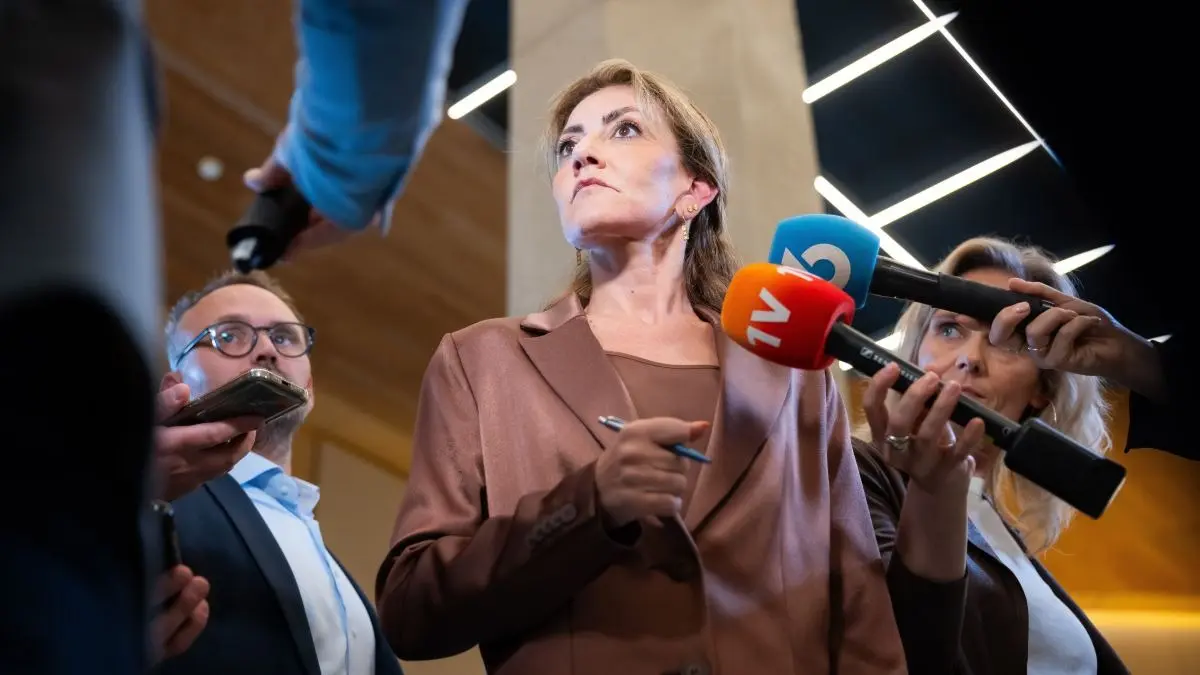
The Hague — Dutch Defence Minister Dilan Yeşilgöz has broken with longstanding diplomatic convention by formally describing Russia as "the enemy" rather than "the aggressor." The significant linguistic shift, announced during parliamentary proceedings on Thursday, highlights a hardening stance in The Hague as European nations grapple with an intensifying wave of hostile state activity, though the minister emphasized that the updated terminology does not herald an immediate overhaul of national security operations.
Speaking to public broadcaster NOS during a recess in the parliamentary debate concerning the national defence budget, Yeşilgöz explained that the mounting volume of hostile actions—ranging from infrastructure sabotage and mysterious drone incursions to systematic political intimidation across the European continent—demands a more direct and unvarnished assessment of the geopolitical landscape.
"It is very clear that Russia is presenting itself as the enemy," Yeşilgöz told NOS during the broadcast interview. "That does not mean we are at war or that we will suddenly take a completely different approach."
The right-wing liberal VVD minister’s remarks arrive during a period of profound strategic re-evaluation within the Netherlands and the wider European Union. Russia has remained a primary security concern for Western nations since its full-scale invasion of Ukraine, but Dutch officials note that the nature of the threat has evolved beyond traditional battlefield aggression into a persistent, gray-zone conflict targeting the foundations of democratic societies.
This shifting threat matrix prompted the Dutch cabinet to publish a sweeping draft legislative package in August designed to dramatically expand the operational capabilities of the country’s intelligence apparatus. Under the proposed framework, both the General Intelligence and Security Service (AIVD) and the Military Intelligence and Security Service (MIVD) would be granted powerful new instruments to counter foreign threats emanating from states such as Russia, China, and Iran.
A ‘New Reality’ and Ongoing Vigilance
Elaborating on her choice of words during the parliamentary session, Yeşilgöz described the current security environment as a "new reality." She noted that while Moscow has long been recognized as the most severe threat to European stability and security, the danger has metastasized into a multifaceted campaign designed to probe the resilience of Western institutions.
"Putin is testing how strong our alliance is," Yeşilgöz remarked, adding that security experts and intelligence professionals had advised her to abandon diplomatic euphemisms and call things by their proper names.
Despite the stark language, the defence minister stressed that the Netherlands has not been caught flat-footed. She pointed out that consecutive Dutch governments have steadily increased defence expenditures and deepened operational integration with European and NATO allies since the outbreak of the war in Ukraine.
"We were not naive before and we will not become naive now," she stated, defending the continuity of the country’s strategic posture while acknowledging the severity of the escalating tensions.
The urgency underpinning the minister’s comments echoes warnings issued earlier in the year by the Dutch intelligence community. In April, the AIVD published its annual report for the preceding year, concluding unequivocally that Dutch national security was facing a level of pressure unprecedented since the conclusion of the Second World War. The report detailed widespread cyber espionage, covert influence operations, and industrial sabotage efforts orchestrated by hostile foreign powers seeking to undermine Dutch and European interests.
Controversial Legislative Powers and Oversight Concerns
The rhetorical pivot toward more confrontational language coincides with intense domestic debate over the proposed expansion of the AIVD and MIVD’s statutory powers. The draft legislation currently moving through the political pipeline would introduce mechanisms allowing the intelligence agencies to officially designate specific foreign entities or actors as "evident adversaries"—such as a Russian intelligence directorate or an associated proxy group.
Once an entity is classified under this designation, the services would be empowered to take operational measures against individuals reasonably believed to be acting on behalf of that adversary. Crucially, these preventative actions could be executed without requiring prior authorization from an independent judicial watchdog. Instead, a newly established regulatory body would perform an ex-post review, evaluating the lawfulness of the intelligence services’ actions after the fact.
Furthermore, the proposed laws would grant the AIVD and MIVD the authority to compel private and public organizations—including major financial institutions, universities, telecommunications companies, and online platforms—to hand over data and cooperate with intelligence-gathering initiatives.
While proponents argue that modern hybrid warfare moves at a velocity that renders traditional, slow-moving judicial oversight obsolete, the proposals have sparked severe pushback from civil liberties advocates and independent legal watchdogs.
Critics contend that stripping away the requirement for prior judicial sign-off fundamentally weakens the system of checks and balances designed to protect civil rights in a democratic society. Last month, these concerns were voiced publicly by Hugo Hillenaar, chair of the CTIVD, the independent committee that reviews the activities and lawfulness of the Dutch intelligence and security services. Hillenaar warned NOS that the sweeping nature of the proposed powers and the shift toward retrospective oversight could pose a direct threat to the democratic rule of law itself.
As the parliamentary debate on the defence budget continues, Minister Yeşilgöz faces the dual challenge of preparing the nation for an increasingly hostile international environment while steering a controversial legislative package through a skeptical legislature concerned with the preservation of constitutional safeguards.