




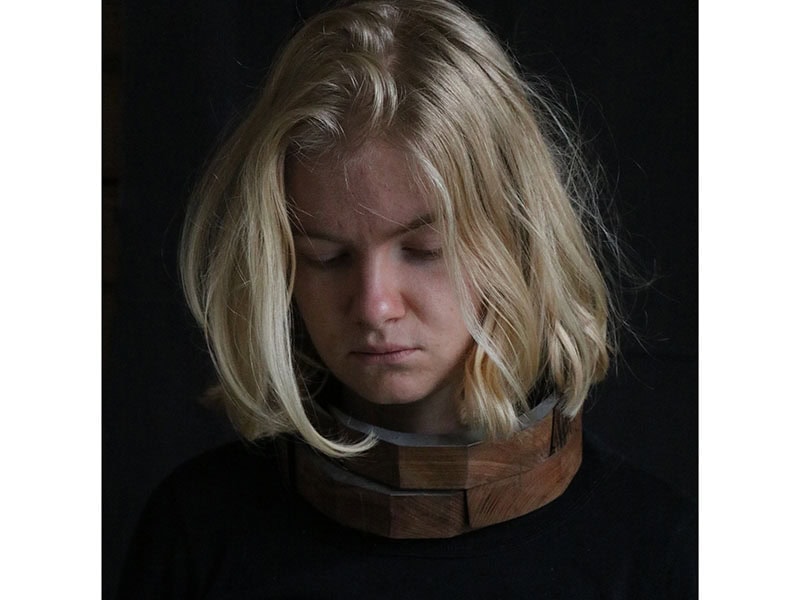
For contemporary jewelry artist Marie-caroline Locquet, adornment is rarely about comfort, beauty, or the quiet display of social status. Instead, her sculptural creations function as conceptual provocations, exploring the delicate and often unsettling intersections of human fragility, confinement, and dominance. Producing works that double as restraints and defensive weapons, Locquet challenges conventional notions of what jewelry can be, transforming an intimate act of wearing into a striking public confrontation.
In recognition of her uncompromising vision, Locquet has been named a finalist for the prestigious Young Artist Award. Supported by Karen and Michael Rotenberg, the biennial award celebrates promise, innovation, and distinct individuality in the work of emerging jewelry artists aged 35 or younger. By highlighting creators who push the boundaries of the medium, the Art Jewelry Forum (AJF) utilizes the prize to support new and exciting works capable of inspiring future developments across the contemporary art jewelry field.
Challenging Perceptions and Redefining the "Unwearable"
Locquet’s artistic journey began during her early foundational art studies, a period when she first encountered works that fundamentally challenged her understanding of jewelry. Rather than gravitating toward pieces designed to accentuate conventional beauty or showcase wealth, she found herself drawn to objects that felt strange, uneasy, and inherently dangerous. Citing radical creators such as Bernhard Schobinger and Dorothea Prühl—whose boundary-pushing pieces fundamentally altered how jewelry is interpreted—Locquet realized that the medium could serve as a powerful vehicle for disruption, reflection, and psychological provocation.
"Everything started at the beginning of my art studies," Locquet reflects. "I discovered works by artists that challenged my vision and the definition of jewelry. The works I am talking about were not about beauty, showing wealth, etc. They were strange, uneasy, somehow dangerous—in fact, radical."

This early exposure planted the seeds for her ongoing investigation into the concept of un-wearability. Driven by curiosity and a desire to interrogate the psychological weight of ornamentation, Locquet began asking fundamental questions about why artists create, and why people choose to wear, objects that provoke immediate discomfort. This exploration ultimately became the core foundation of her artistic research.
A Meaningful Recognition of Radical Direction
Being selected as a finalist for the Young Artist Award marks a significant milestone in Locquet’s career, validating a trajectory she has methodically pursued for several years. Growing up in the north of France, she developed an early awareness of the social pressures surrounding self-presentation and the way individuals use adornment to camouflage their social affiliations. This early sociological observation steered her toward jewelry not from a place of aesthetic affinity, but as a conceptual subject ripe for deep academic and artistic study.
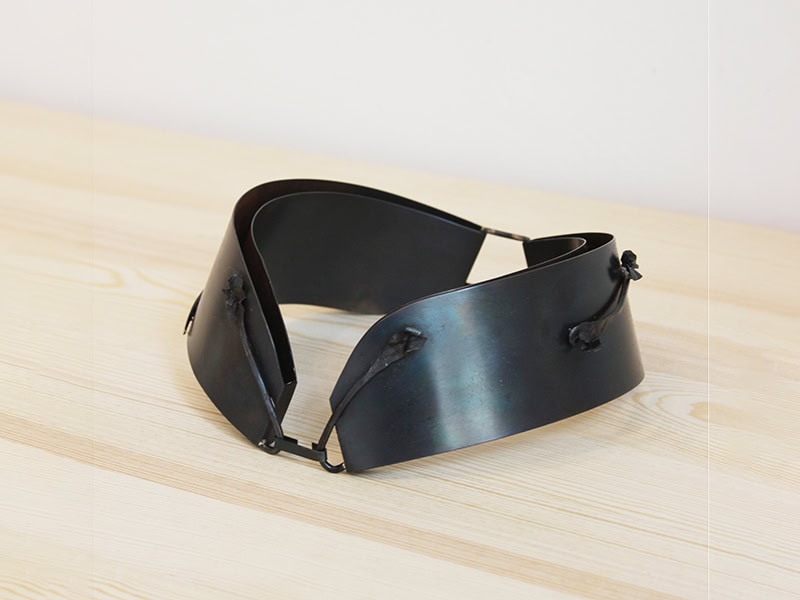
For Locquet, the nomination provides a renewed sense of confidence to continue pursuing a radical path. It reinforces her commitment to pushing boundaries further and continuously challenging herself, the wearer, and the viewer. Her pieces deliberately reject the traditional goals of seduction and representation, opting instead to engage with themes of disturbance, violence, vulnerability, and confinement.
By pushing materials to their absolute limits, her works bare their true nature through forms that evoke both desire and death. Whether functioning as defensive weapons or intricate restraint devices, each piece offers a unique wearing experience that confronts observers and maintains a persistent tension between social discomfort and the temptation of an embrace.
The Anatomy of Confinement: Exploring Hands and Other Works
Locquet’s creative vocabulary draws inspiration from a broad historical and sociological spectrum. In past projects, the themes of confinement, violence, and vulnerability led her to examine historical artifacts such as the collier d’appartenance—a collar associated with submissive relationships—and the traditional "slave collar" originating from 19th-century Norman and Auvergnat traditions, which was historically given to women at marriage as a token of possession. She has similarly explored animal labor tools, such as the heavy-duty horse collar, translating their functional mechanics into deeply psychological human adornments.
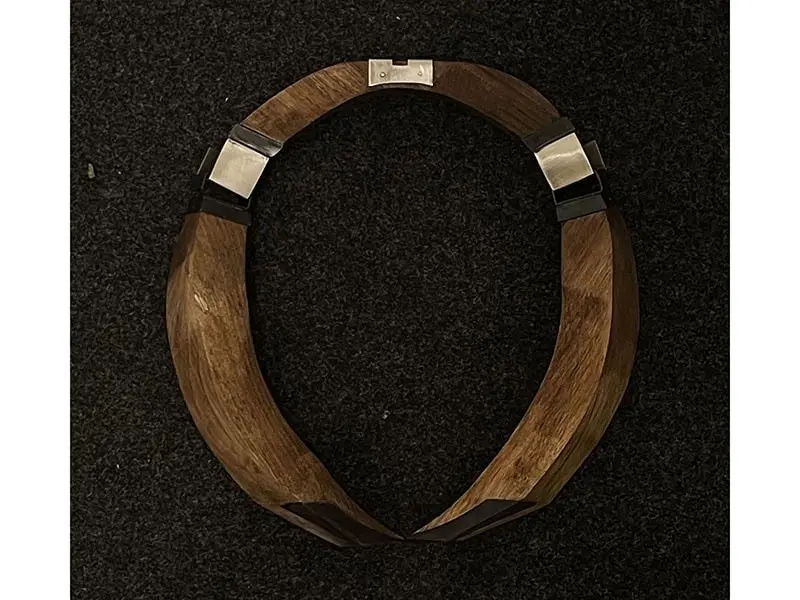
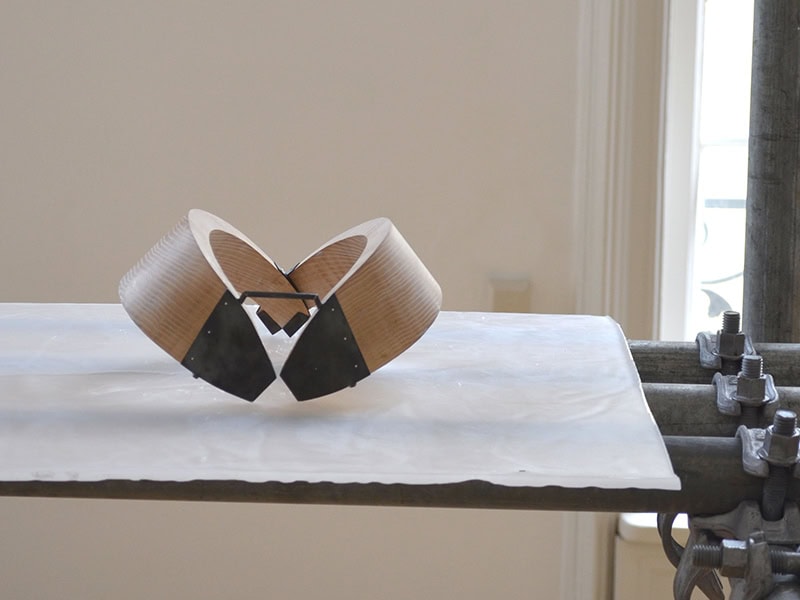
Among her notable application pieces, the 2024 neckpiece titled Hands—crafted from elm wood, zinc-plated steel, and silver—encapsulates many of the primary layers of her practice. The piece showcases her obsessive research into complex mechanical systems, movements, clasps, and the fluid border separating jewelry from sculpture. Hands unfolds and occupies surrounding space like an intricate mechanical apparatus before abruptly closing around the neck in a motion reminiscent of an act of strangulation. Described by the artist as her most complex and intimate work, it serves as a powerful physical manifestation of confinement and violence.
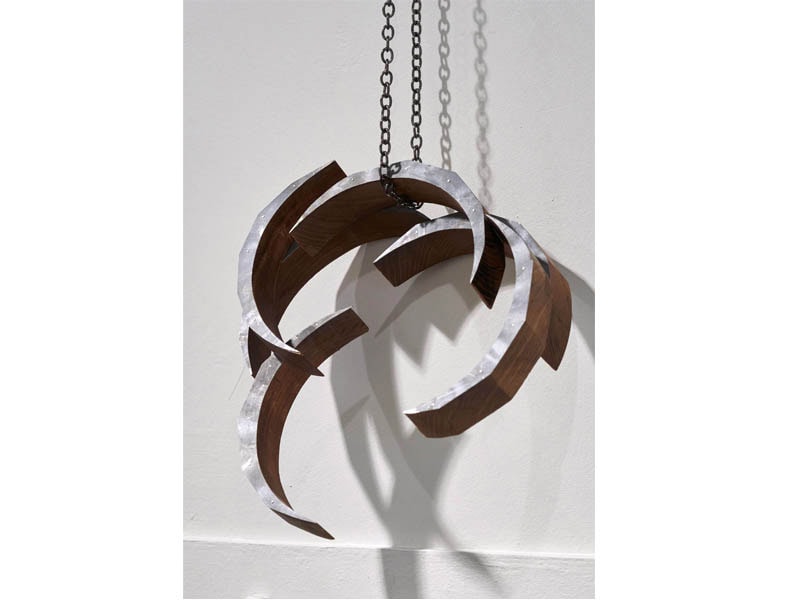
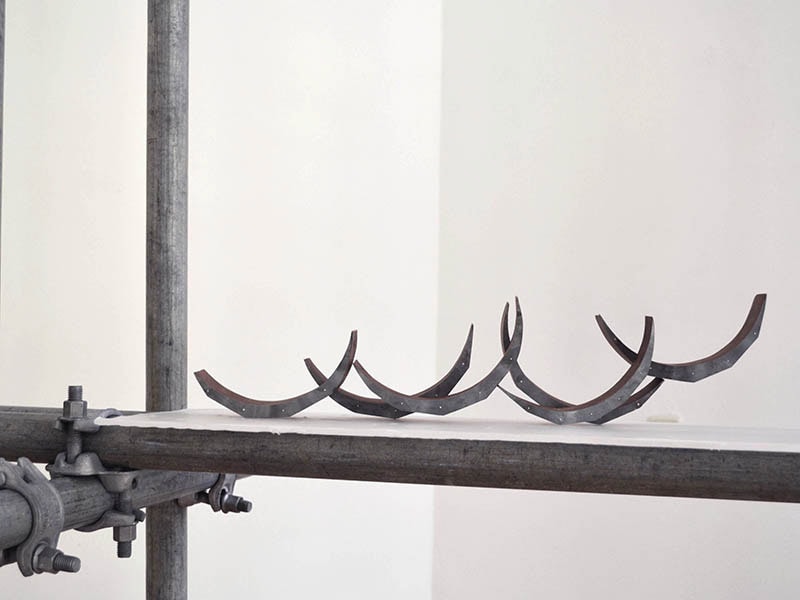
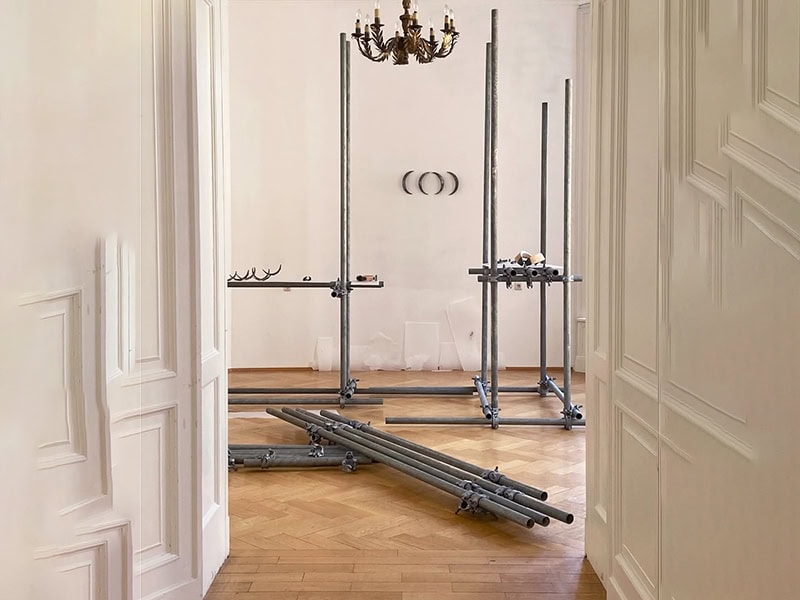
Other notable pieces, such as Panicroom Vector I (2025), utilize iron, elm wood, silver, and rubber to act as more literal entry points for viewers, helping audiences navigate the heavier conceptual territory of her practice. Through installations showcased at international events like Munich Jewellery Week and galleries in Tallinn, Estonia, Locquet’s work consistently bridges the gap between intimate body ornament and expansive spatial installations.
Navigating the Future of Art Jewelry
While Locquet finds immense excitement in how a single body ornament can dictate an entire conceptual approach—stretching from the micro-details of the object itself to the broader exhibition spaces that resonate with it—she remains candid about the challenges facing the contemporary jewelry field. Recalling the exhibition title Jewelry Is Still a Risky Business, which she and her peers curated during Munich Jewellery Week in 2018 as a nod to a work by Paul Derrez, Locquet firmly believes that the medium must retain its capacity for risk.
Reflecting on her time studying jewelry in a French fine art school, she frequently encountered the lingering perception that jewelry was somehow "lesser," superficial, or overly niche compared to other fine art disciplines. While she views this outsider status as a strength that opens up alternative ways of looking and thinking, she also acknowledges the inherent distance it can create between the medium and broader audiences outside its established community.
Looking ahead to the next five years, Locquet aims to build upon the momentum of her recent graduation and subsequent exhibitions. Having recently expanded her practice to merge her wearable sculptures with spatial installations, she plans to continue developing her artistic language, applying for residencies, and collaborating with fellow artists. Furthermore, she expresses a strong interest in academic research and teaching, viewing educational environments as ideal spaces to reinvent and push forward collective ideas surrounding body ornamentation.
As she navigates the road ahead, Locquet remains grounded in the creative process and deeply appreciative of the community supporting her work. Being named a finalist for the Young Artist Award serves as a powerful confirmation that her provocative vision has found its rightful place within the contemporary art conversation.