




For adventure photographer and designer Jeff Johnson, a running internal inventory is standard operating procedure. He keeps a mental catalog of the ultimate versions of everyday essentials—the ultimate board short, the ultimate pair of trousers, the ultimate photographic frame—and waits for the rare moments when concept finally meets execution. During his 13-year tenure at Patagonia, where he spent much of his time behind a camera documenting remote landscapes and athletes, this habit yielded the Rover. A stripped-down, highly functional running and climbing shoe, the Rover ultimately earned the coveted Gear of the Year designation from Outside magazine, proving that Johnson’s pursuit of utility and simplicity carried commercial and critical weight.
When Steven Tiller—the founder, chief executive officer, and chief designer of footwear brand SeaVees—reached out in 2020 to propose a creative partnership, Johnson already possessed a mental blueprint. He didn’t need to start from scratch. The pair had first crossed paths roughly a decade prior when Tiller sought out the gritty skateboarding photography that would eventually anchor Johnson’s 2018 book, Way High Kick Turn. Discovering a shared aesthetic sensibility and the serendipity of both living in Santa Barbara, California, where SeaVees is headquartered, the two men agreed to collaborate on a footwear project even though the exact nature of the product remained undefined at the time.
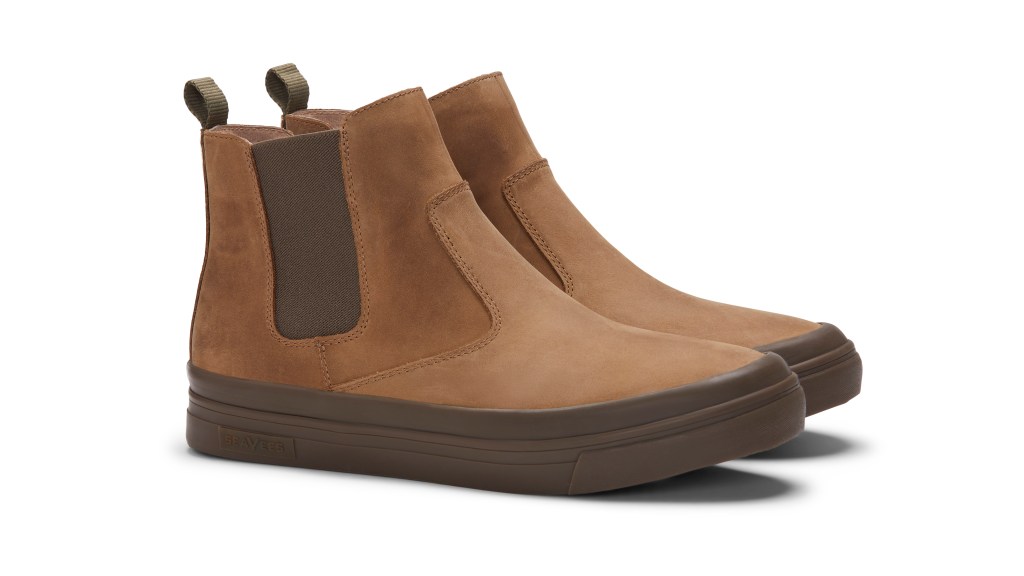
Raised on the skate-centric culture of Vans, Johnson viewed his eventual transition to SeaVees as a natural evolution—what he affectionately describes as “growing up a little.” By the time the collaboration materialized, Johnson had already collected individual design elements that would eventually coalesce into his co-created boot. He owned fragments of what would become the ideal footwear piece: the Coronado, a low-profile Chelsea boot, and the Mariners, defined by its vulcanized rubber foxing stretching high up the leather upper. Merging these distinct influences created the foundation of the Beyond & Back Boot, a minimalist slip-on that marries the clean, nostalgic profile of a 1950s sandlot sneaker with the rugged structural integrity of a modern utility boot.
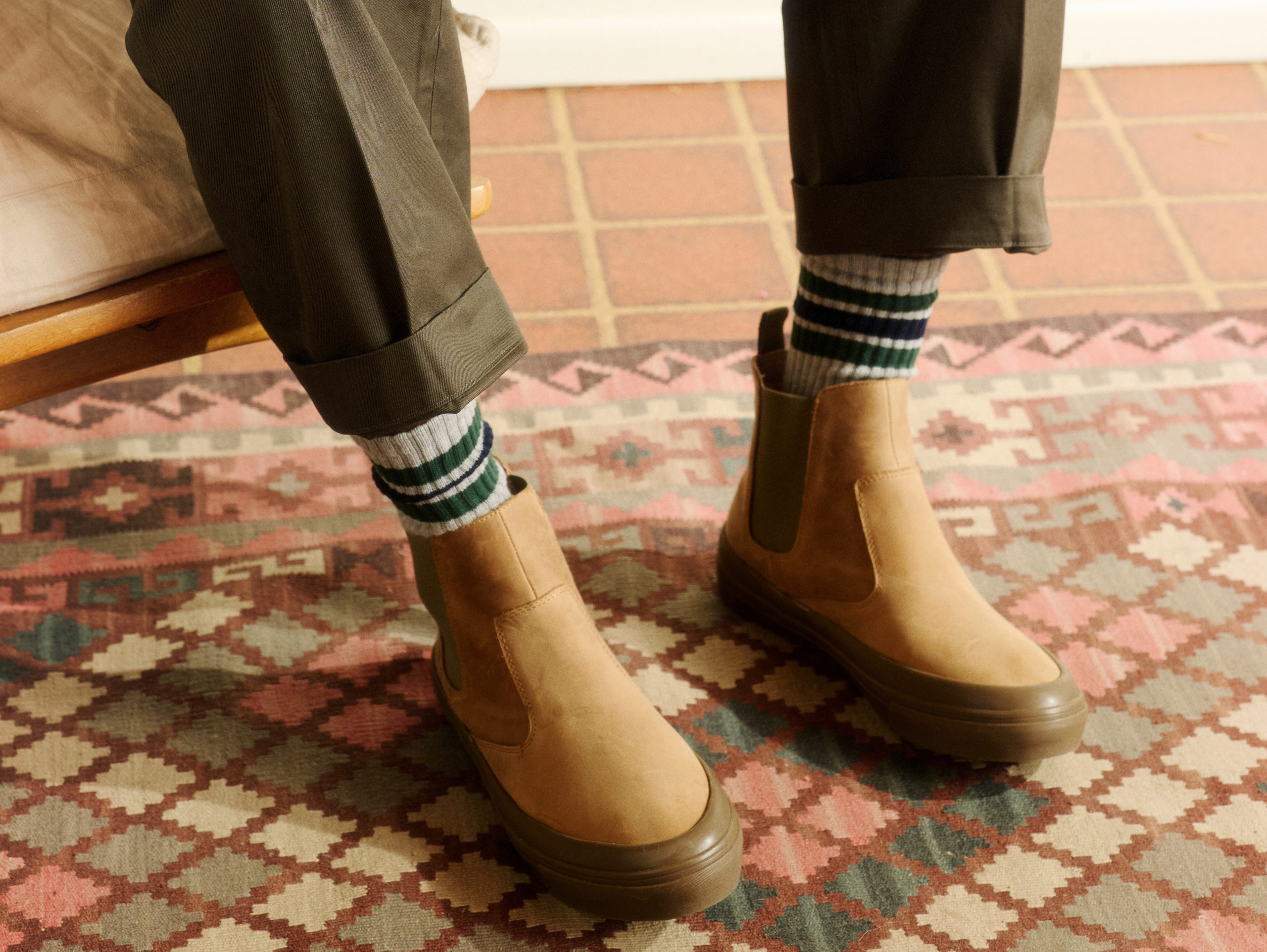
Initially conceived as a limited, single-run capsule project, the footwear unexpectedly transformed into the brand’s all-time best-selling style, shattering internal sales velocity records for SeaVees. Now, several seasons into its lifecycle, the newly launched V2 iteration introduces a custom Vibram sole that Johnson had envisioned from the very beginning, alongside a fresh palette of colorways. COOL HUNTING recently spoke with Johnson to discuss his design philosophy both inside and outside the footwear industry, the enduring creative influence of Patagonia founder Yvon Chouinard, and what it truly takes to bring a distinct artistic vision to life in a crowded marketplace.
The Bold Detailing That Almost Wasn’t
The original iteration of the Beyond & Back Boot featured a non-negotiable, vibrant flash of orange—a design choice that nearly ended up on the cutting-room floor due to last-minute hesitation. Reflecting on the creative process, Johnson explains that orange remains one of his favorite visual accents, though he draws the line at wearing an entirely monochromatic orange outfit. When Tiller initially mocked up a prototype featuring light-colored leather paired with a streak of bright orange on the elastic side gore, Johnson was immediately smitten.
However, the reality of commercial footwear design quickly set in. After the design was ostensibly finalized, Johnson experienced a sleepless night driven by self-doubt rather than business pragmatism. Wondering aloud who would realistically embrace such a bold hue on their footwear, he placed a late-night phone call to Tiller, frantically expressing concern that they were making a commercial misstep. Tiller, steadfast in his vision for the project, grounded the collaboration by reminding Johnson that the entire exercise was meant to build the ideal shoe tailored specifically to Johnson’s personal tastes, reassuring him to trust the initial instinct.
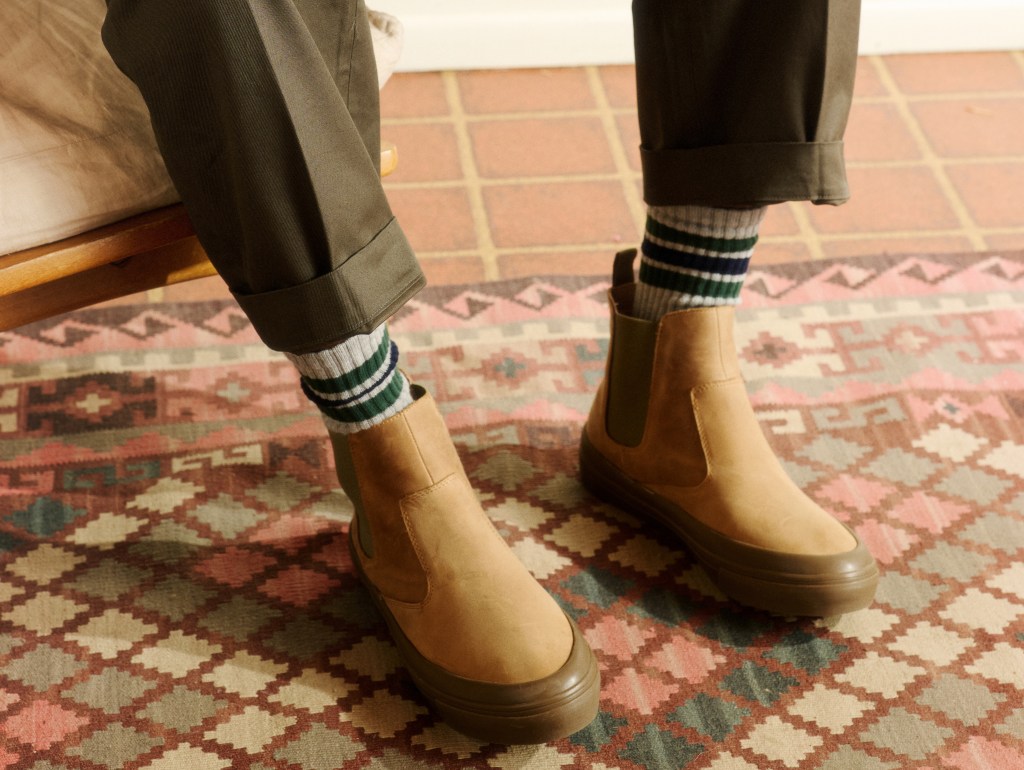
That vote of confidence paved the way for production, though both creators initially anticipated a quiet, one-off release rather than a commercial phenomenon. The market response, however, completely upended those modest expectations. The Beyond & Back Boot quickly transcended its niche origins, maintaining strong momentum even through off-season summer months—a retail anomaly that forced SeaVees to scramble for emergency stock to keep pace with unexpected consumer demand. Now well into its fifth season, the project has allowed the duo to experiment with an evolving array of seasonal colors, cementing its status as an unexpected retail staple.
Engineering a Custom Vibram Partnership
A major highlight of the V2 release is the integration of a specialized sole, fulfilling a core ambition Johnson held from the inception of the project. From day one, he wanted to utilize Vibram rubber for its superior traction and durability. Early on, however, that ambition hit a structural wall. Because Vibram requires manufacturers to utilize proprietary molds, and because the brand did not possess an existing Vibram mold compatible with a vulcanized footwear construction, Tiller initially dismissed the idea as an impossibility.
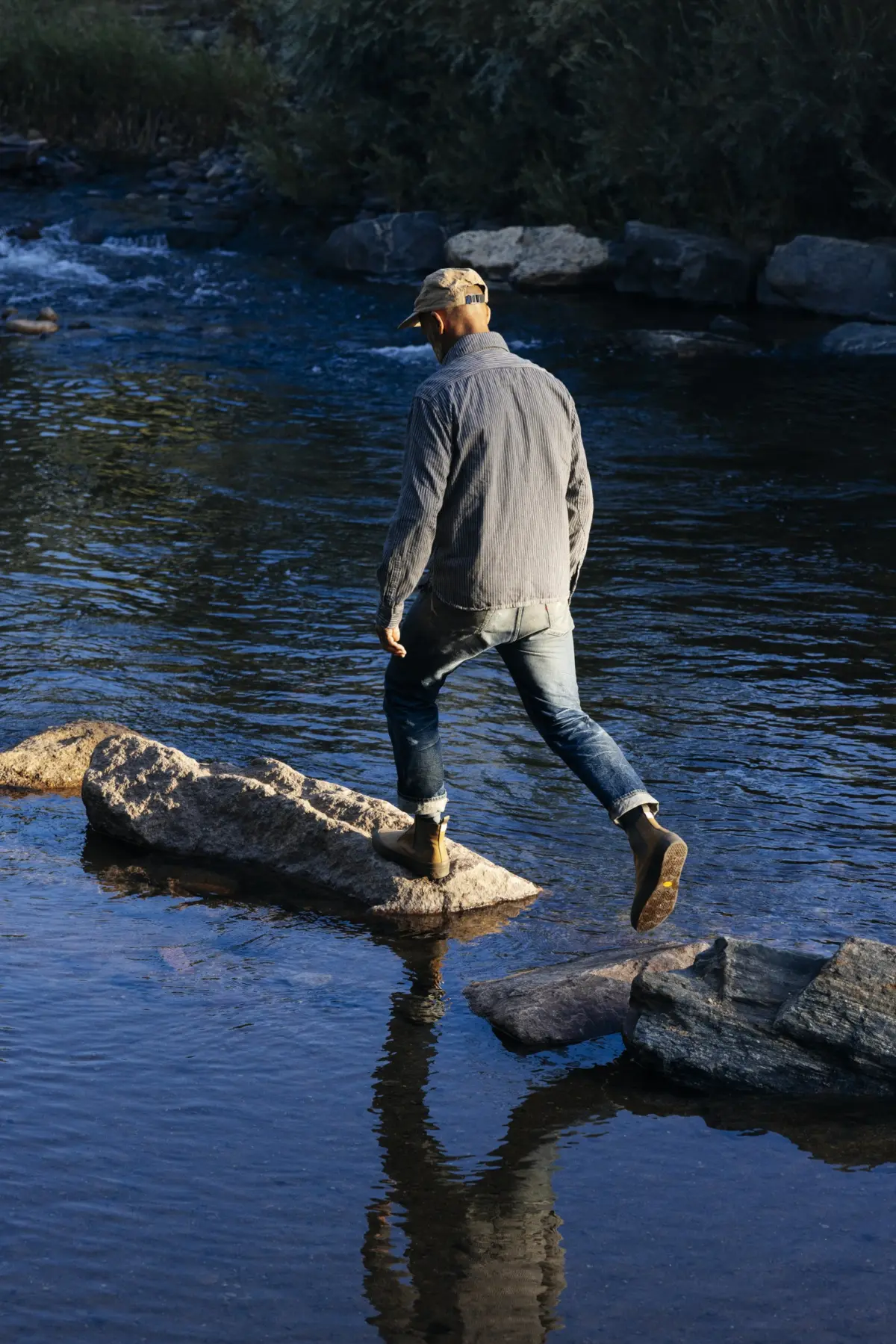
Persistence eventually paid off. When Tiller re-approached Vibram ahead of the V2 development cycle, the sole manufacturer was already familiar with the cult-classic status of the boot. Recognizing the unique cultural footprint of the collaboration, Vibram agreed to develop a custom, vulcanized sole specifically for the shoe. For Johnson, who frequently finds himself navigating precarious mountain terrain and loose riverbeds while carrying camera equipment, the technical upgrade is more than just an aesthetic flourish. While not designed as a heavy mountaineering boot, the sticky rubber compound provides essential grip for rock-hopping and traversing slick granite slabs in the field.
Simplicity, Discernment, and the Threat of Noise
In an era increasingly dominated by algorithmic noise and AI-generated imagery and designs, Johnson’s creative philosophy offers a stark counter-perspective. Whether behind the camera lens or at the drawing board, successful design relies heavily on ruthless editing, simplicity, and discernment. This design ethos draws a direct parallel to the teachings of Antoine de Saint-Exupéry, the French poet, aviator, and mail-run pilot who penned The Little Prince. Patagonia famously adopted one of Saint-Exupéry’s most famous observations for its corporate mission statement: “Perfection is achieved, not when there is nothing more to add, but when there is nothing left to take away.”
Johnson interprets this philosophy to mean that the most effective design is invariably the simplest. By stripping away all frivolous, non-essential elements down to the foundational basics, form naturally follows function, resulting in an inherent aesthetic beauty. He applies this strict minimalist filter to his photographic framing as well. While some photographic approaches intentionally seek to capture visual chaos or the hectic nature of a bustling environment, Johnson’s work consistently favors a clean, graphic simplicity. Over the past two decades, a clear through-line has governed his creative output, anchored by the ongoing pursuit of reduction.
This commitment to reduction mirrors another foundational tenet frequently cited by Patagonia founder Yvon Chouinard: “The more you know, the less you need.” Johnson observes this principle in the natural world, noting that athletes operating at the highest levels of their disciplines—whether climbing sheer rock faces or surfing—routinely shed extraneous gear as their mastery grows. By carrying fewer tools, climbers move faster and lighter; by leaving the surfboard leash behind when conditions permit, a surfer embraces a purer, simpler relationship with the ocean. While everyday life with children remains wonderfully complicated, Johnson maintains that carrying this mindfulness into photography, outdoor pursuits, and product design ensures that simplicity remains the ultimate guiding standard.