



Contemporary jewelry has long been associated with traditional notions of wealth, status, beauty, and personal adornment. However, a new generation of makers is actively challenging these conventions, reframing the medium as a platform for conceptual critique and physical disruption. Among the most striking voices in this movement is Marie-caroline Locquet, a finalist for the prestigious Young Artist Award. Supported by Karen and Michael Rotenberg, the biennial award recognizes promise, innovation, and individuality in the work of an emerging jewelry artist aged 35 or younger, highlighting new and exciting directions that will inspire future developments in the field.
For Locquet, jewelry is not an object standing in for power or prestige, but rather a form of provocation. Her work encompasses restraints and defensive weapons, producing what she describes as a unique wearing experience that explores our shared fragility. By invoking themes of violence, sexual dominance, discomfort, and erotic tension, Locquet’s pieces confront the viewer and the wearer alike, transforming wearable art into an instrument of social and psychological inquiry.
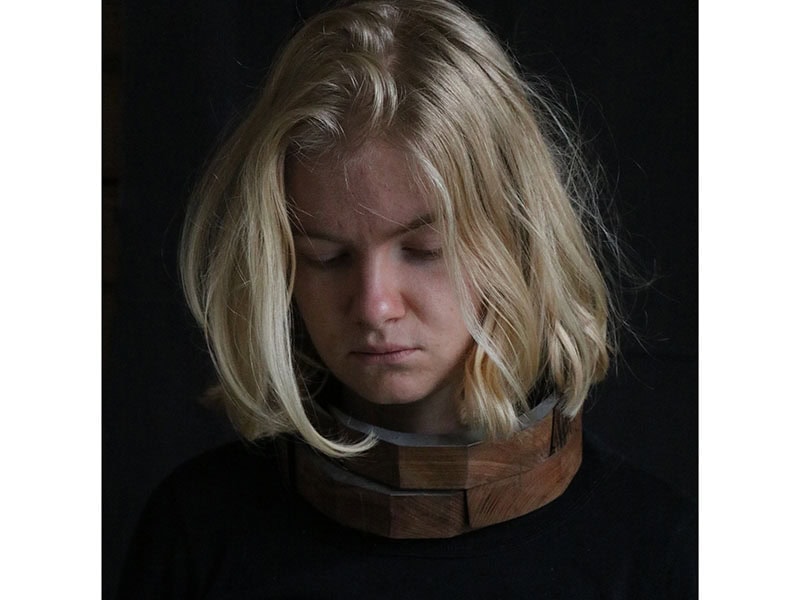
In a recent conversation, Locquet discussed her conceptual origins, her award-nominated work, and her vision for the future of the contemporary jewelry landscape.
Challenging the Definition of Jewelry
Locquet’s journey into the discipline began during her early art studies, when she encountered works that fundamentally challenged her vision and redefined the boundaries of the medium. Rather than gravitating toward traditional concepts of beauty or ornamentation, she found herself drawn to pieces that felt strange, uneasy, and dangerous—qualities she identifies as radical.

She points to the bottleneck creations of Bernhard Schobinger and the works of Dorothea Prühl as pivotal influences that shifted her perspective on art. These pioneering pieces demonstrated how jewelry could act as an object of disruption, reflection, and provocation. Entering the field with deep curiosity and a battery of questions, Locquet became fixated on a central inquiry: Why make and wear jewelry that appears disturbing at first sight, and what does it mean to create something deemed unwearable? This exploration of unwearability rapidly evolved into the core of her artistic research.
Growing up in the north of France, Locquet was exposed at an early age to the societal pressures of self-demonstration and the use of adornment as a camouflage for social affiliations. This upbringing cemented her conceptual approach to the field, steering her away from purely aesthetic affinities and toward jewelry as a subject of rigorous study.
The Politics of Confinement and Fragility
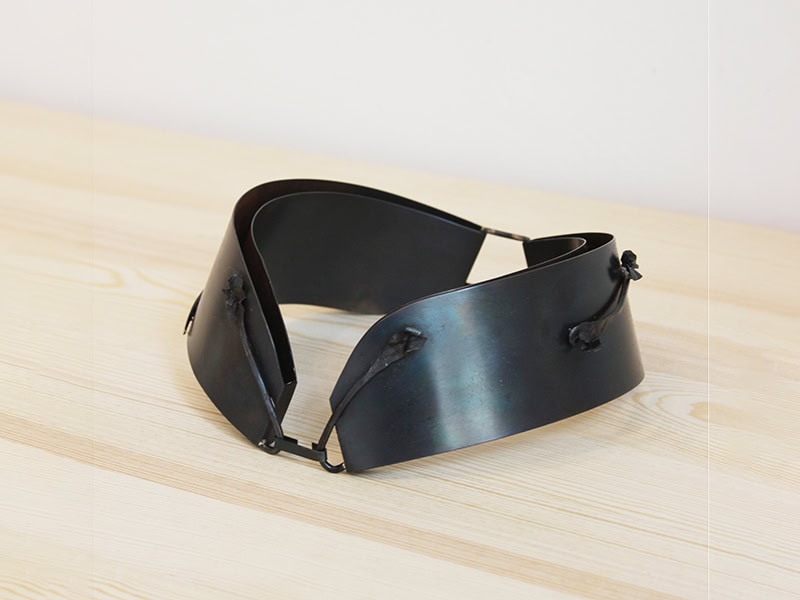
In Locquet’s practice, each piece redefines the status of jewelry, shifting it away from a showcase of wealth and power toward a confrontation with high potential for public disruption. Her creations eschew seduction and representation in favor of disturbance, violence, fragility, seduction, domination, vulnerability, and confinement.
By pushing materials to their extreme limits, she allows them to bare their true nature through forms that evoke both desire and death. Whether functioning as defensive weapons or physical restraints, her works maintain an unyielding tension between social discomfort and the temptation of an embrace.
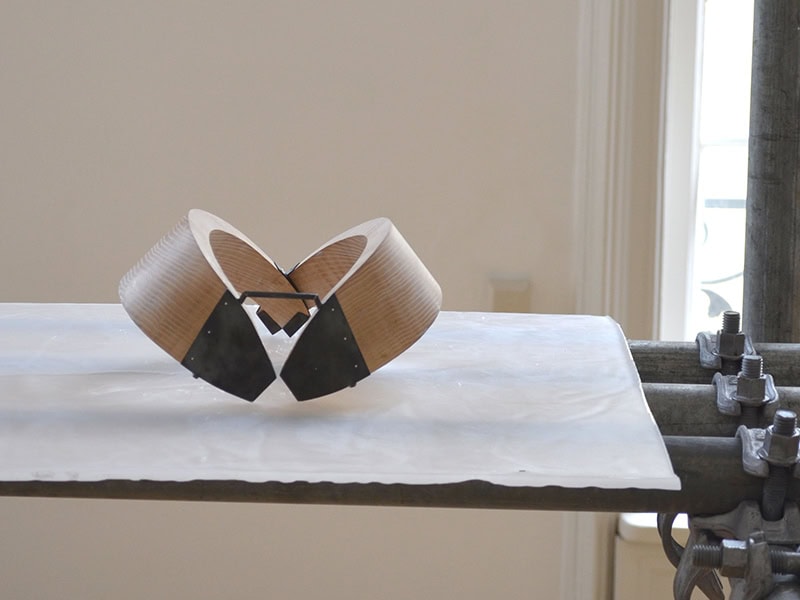
Over time, the themes of confinement, violence, and vulnerability present in her work led her to investigate historical and cultural objects of subjugation. She draws inspiration from the collier d’appartenance—a collar historically presented to individuals in submissive relationships—as well as the "slave collar" originating from 19th-century Norman and Auvergnat traditions, which was given to women at marriage as a token of possession. She also examines animal labor tools, such as the horse collar, to further investigate the physical and psychological implications of worn objects.
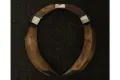
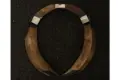
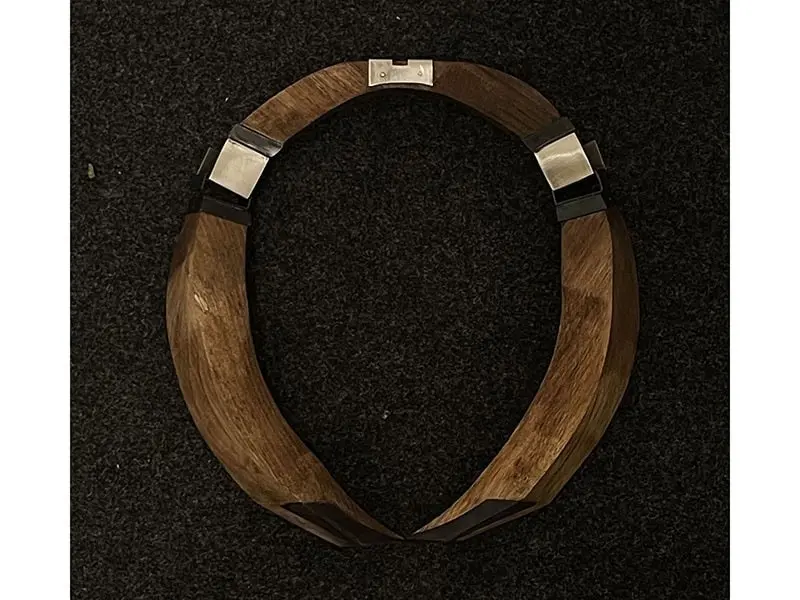
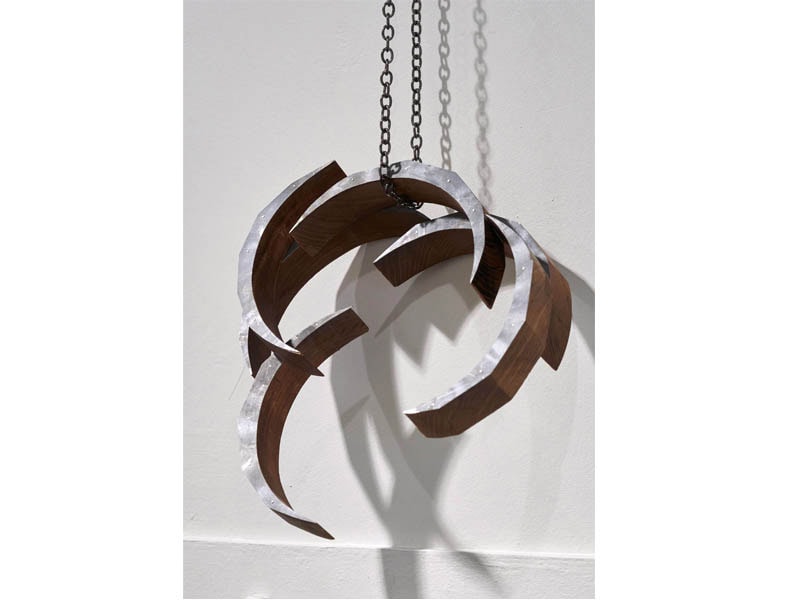
Among the standout pieces in her portfolio is Hands, a 2024 neckpiece crafted from elm wood, zinc-plated steel, and silver. The work serves as a comprehensive example of her obsessive research into mechanical systems, movements, clasps, and the delicate border between jewelry and sculpture. The piece unfolds and occupies surrounding space like a complex mechanical apparatus before closing tightly around the wearer’s neck in a gesture reminiscent of strangulation. Described by the artist as her most complex and intimate creation, Hands powerfully expresses themes of confinement and violence.
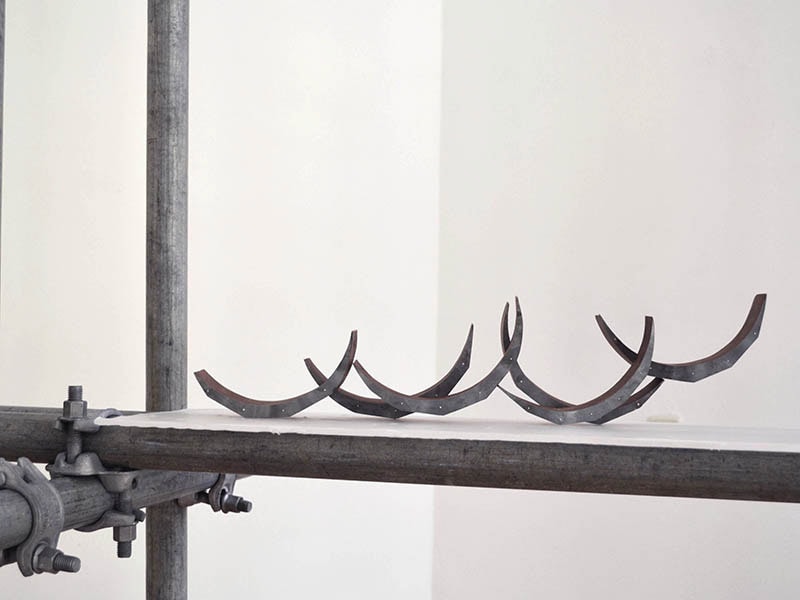
Other notable works include Armor I, a forged steel neckpiece produced during her artist-in-residency program at the Estonian Academy of Arts (EKA) in Tallinn, and Panicroom Vector I, a 2025 neckpiece fabricated from iron, elm wood, silver, and rubber, which was recently exhibited at the A-Galerii in Tallinn. These pieces function as literal keys for audiences, helping to guide viewers into the deeper layers of her conceptual framework.
Recognition and the State of the Field
Being named a finalist for the Young Artist Award represents a significant milestone for Locquet. She views the selection as a meaningful validation of the rigorous trajectory she has pursued over the past several years, providing her with the confidence to continue pushing her practice into more radical territory and challenging both wearers and viewers.
Reflecting on the broader state of the art jewelry field, Locquet acknowledges lingering frustrations regarding how the medium is perceived. During her studies at a French fine art school, she frequently encountered the assumption that jewelry was somehow less significant, superficial, or overly niche compared to other contemporary art forms.
However, she views this perceived marginalization as a unique strength of the medium, arguing that it fosters fresh ways of looking and thinking, even if it occasionally creates a distance between the field and wider audiences. For Locquet, maintaining a sense of risk is essential. Referencing the title of a student exhibition she co-curated during Munich Jewellery Week in 2018—Jewelry Is Still a Risky Business, inspired by a work by Paul Derrez—she asserts that contemporary jewelry must continue to embrace uncertainty and provocation.
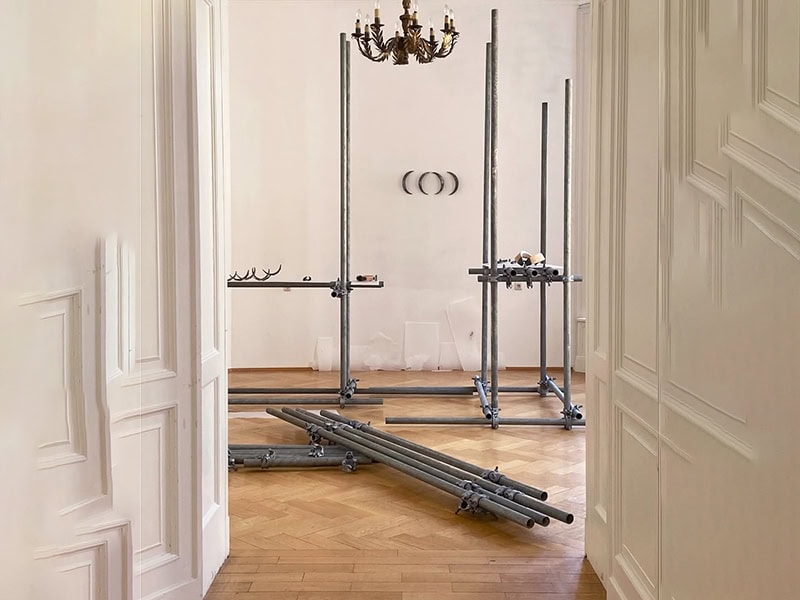
Looking ahead to the next five years, Locquet aims to build upon her recent transition into spatial installations, where her physical pieces resonate directly with the surrounding environment. Alongside her studio practice, she harbors a strong interest in research and teaching spaces, which she views as ideal environments for reinventing and expanding collective notions of body ornament. Trusting in her artistic process and expressing deep gratitude to those who have supported her work, Locquet remains committed to questioning, deforming, and expanding the fundamental definition of jewelry.