



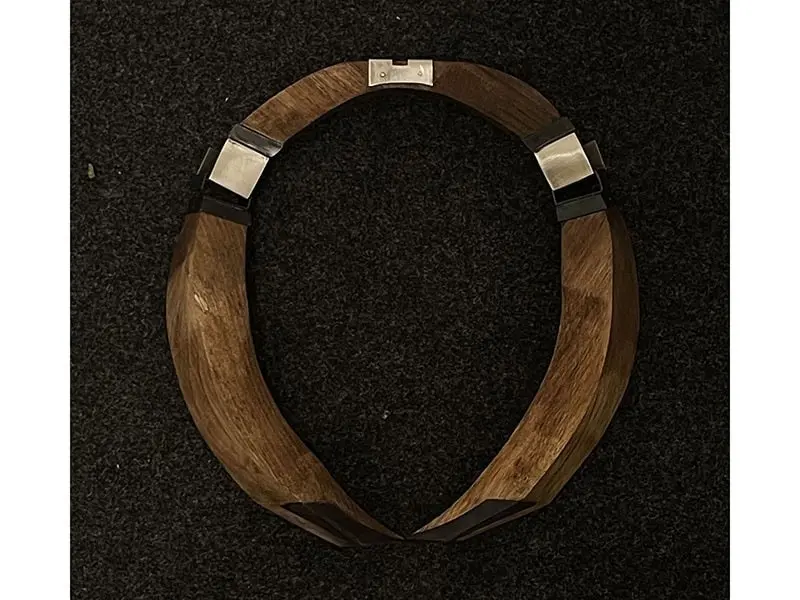
Contemporary jewelry has long transcended the traditional boundaries of precious gems and displays of sheer wealth, but few emerging creators challenge the medium’s underlying psychological premises with the radical intensity of Marie-Caroline Locquet. Recently announced as a finalist for the prestigious Young Artist Award—an honor supported by Karen and Michael Rotenberg that recognizes promise, innovation, and individuality in artists aged 35 or younger—Locquet approaches the field not as a purveyor of decorative luxury, but as a conceptual provocateur. Her body of work consists of restraints, defensive weapons, and sculptural armor designed to evoke profound physical and emotional reactions, exploring the delicate boundary between vulnerability and dominance.
The Young Artist Award, presented biennially by the Art Jewelry Forum (AJF), seeks to spotlight boundary-pushing creators whose work will influence the future trajectory of the discipline. For Locquet, this recognition serves as a powerful validation of a trajectory she has pursued with unwavering focus since her student days.
Challenging the Status Quo of Body Ornament
Locquet’s artistic philosophy was forged early in her education when she encountered works that fundamentally disrupted her understanding of adornment. Rather than gravitating toward pieces intended to signify beauty or social standing, she was drawn to creations that felt unsettling, strange, and inherently dangerous. Citing seminal influences such as Bernhard Schobinger and Dorothea Prühl, Locquet realized that jewelry could function as an instrument of critical disruption.
"Everything started at the beginning of my art studies," Locquet explains. "I discovered works by artists that challenged my vision and the definition of jewelry. The works I am talking about were not about beauty, showing wealth, etc. They were ‘strange,’ ‘uneasy,’ somehow ‘dangerous’—in fact, radical… It really changed my point of view on art. In a way, jewelry interests me as an object of disruption, reflection, and provocation."

This realization steered her toward an inquiry that has come to define her entire practice: Why create and wear objects that appear deeply disturbing at first glance? What are the implications of fashioning ornaments that seem fundamentally unwearable? This tension between utility, rejection, and psychological confrontation became the bedrock of her academic and professional research.
Exploring Discomfort, Violence, and Fragility
Growing up in the north of France, Locquet developed an early awareness of how society utilizes dress and adornment as a form of social camouflage—a way to project status, signal affiliations, and conform to community expectations. This sociological observation birthed a conceptual approach that prioritizes critical inquiry over aesthetic compliance.
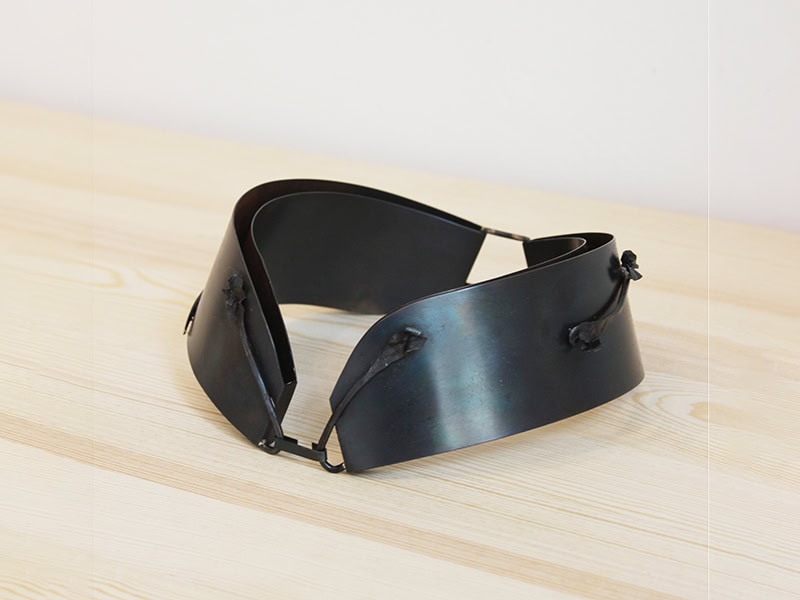
In her submitted portfolio for the Young Artist Award, Locquet presents pieces that actively subvert the historical function of jewelry as a showcase of power or wealth. Instead, her works operate as intense confrontations within public and private spaces. Utilizing materials pushed to their extreme technical limits, she crafts items that evoke competing reactions of desire and dread, seduction and death. Whether functioning as defensive armaments or restrictive harnesses, each piece offers a unique wearing experience that interrogates our collective vulnerability.
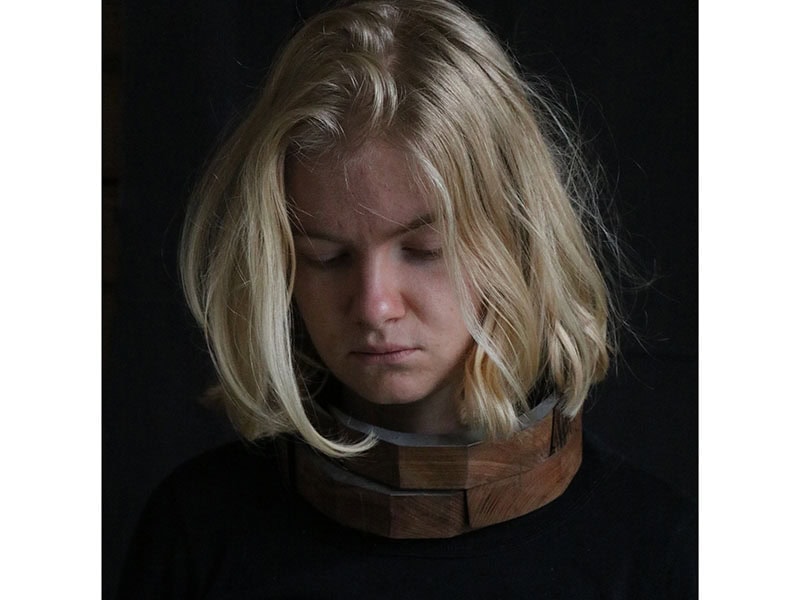
Her creative vocabulary draws inspiration from dark historical antecedents, including the collier d’appartenance—a historical collar associated with submissive relationships—and nineteenth-century Norman and Auvergnat traditions where "slave collars" were given to women at marriage as tokens of possession. She also examines agricultural instruments, such as heavy horse collars, translating their industrial weight and confinement into wearable art.
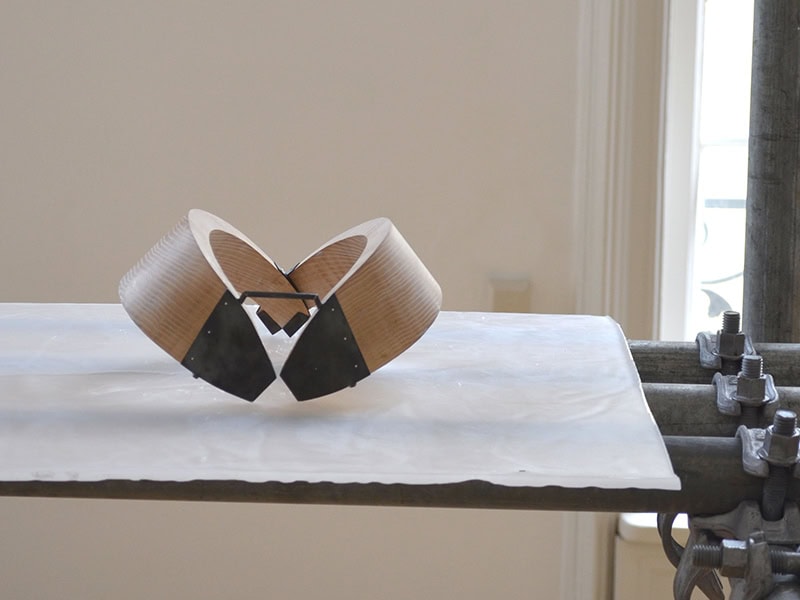
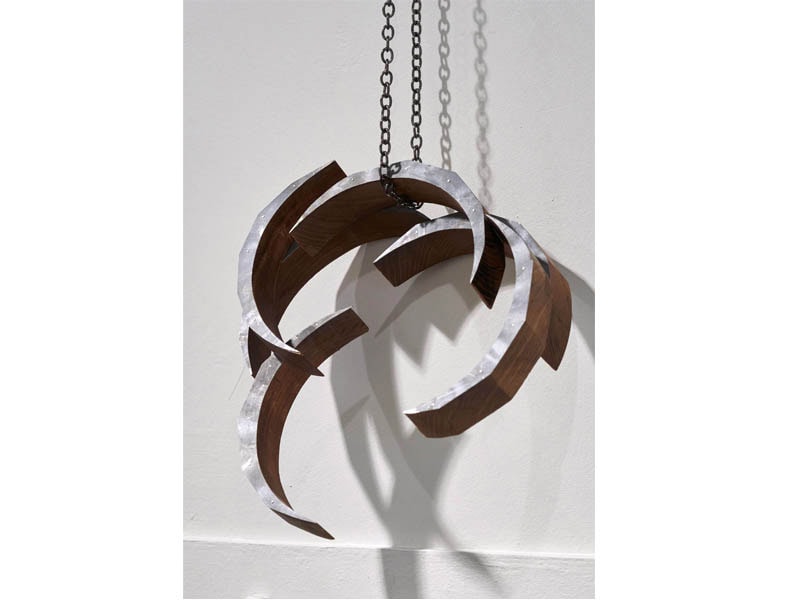
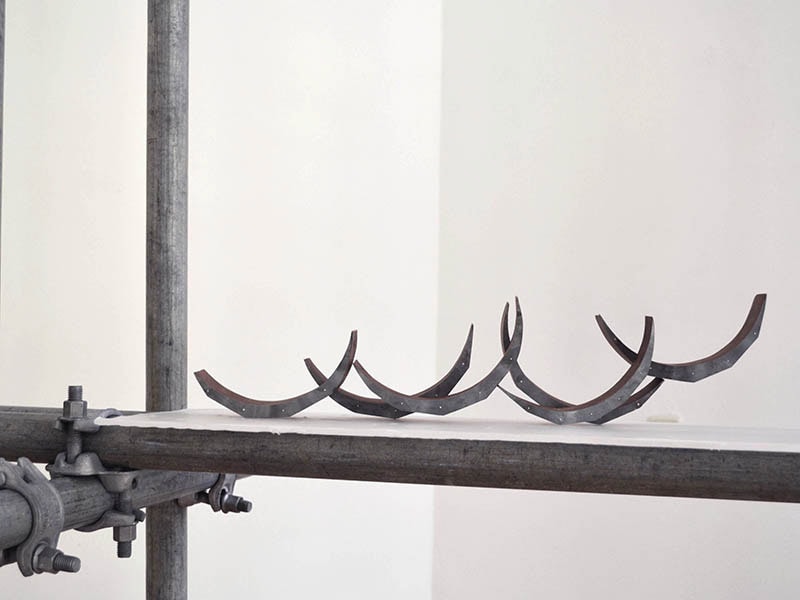
Among her most striking pieces is Hands (2024), a complex neckpiece constructed from elm wood, zinc-plated steel, and silver. The work exemplifies her obsessive investigation into mechanical systems, complex clasps, and the fluid border separating jewelry from freestanding sculpture. Unfolding dynamically to occupy space, the piece ultimately closes around the wearer’s neck with a gesture reminiscent of strangulation. It remains one of her most deeply intimate and complex works, encapsulating the themes of confinement, physical dominance, and psychological violence.
Other notable creations, such as Armor I (2026)—forged in steel during her residency in the Artist-in-Residence program at EKA Tallinn—and Panicroom Vector I (2025), executed in iron, elm wood, silver, and rubber, serve as physical manifestations of her spatial investigations. These pieces act as literal and figurative keys, inviting viewers to engage with the complex interplay between the private interiority of the body and the public theater of society.
Navigating the Perceptions of Contemporary Jewelry
Despite the vibrant experimental energy within the contemporary craft community, Locquet remains acutely aware of the hurdles facing the medium. Reflecting on her time studying in a French fine art school, she frequently encountered the lingering prejudice that jewelry is somehow a lesser, more superficial, or overly niche pursuit compared to traditional fine arts.
Yet, Locquet views this marginalization as an inherent strength rather than a weakness. By operating on the fringes of mainstream contemporary art, the discipline retains the freedom to ask difficult questions, provoke audiences, and maintain a sense of genuine risk. Recalling an exhibition titled Jewelry Is Still a Risky Business, which she co-curated with colleagues during Munich Jewelry Week in 2018, she emphasizes that the medium must continue to embrace uncertainty and avoid complacency.
"I think jewelry should remain risky," Locquet notes. "I sometimes feel that contemporary jewelry is still expected to justify its presence within contemporary art… That’s something really interesting to me. It’s a strength of the medium, because it opens new ways of looking and thinking."
Looking Forward: Research, Space, and Pedagogy
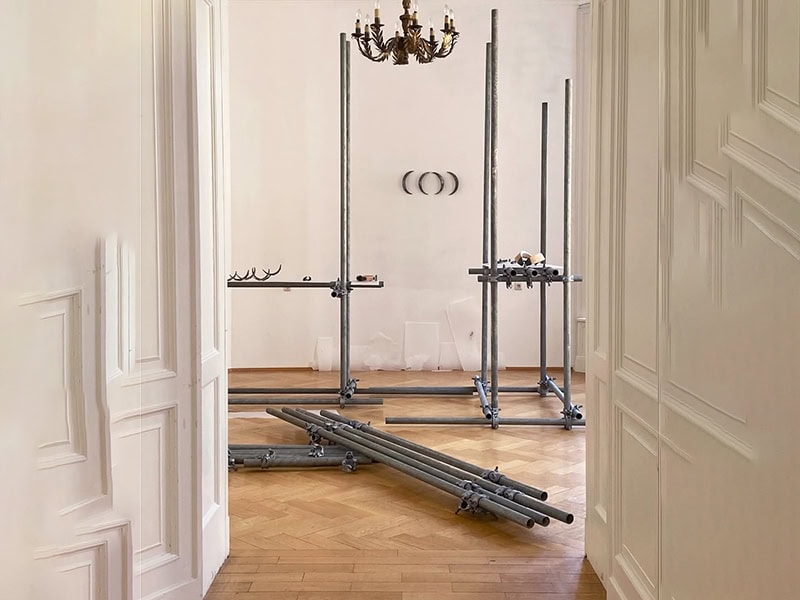
Being named a finalist for the AJF Young Artist Award arrives at a pivotal moment in Locquet’s career, coinciding with an expansion of her practice into larger spatial installations. By connecting her wearable sculptures directly with the surrounding environment, she aims to create immersive exhibitions that allow the physical objects and the architectural space to resonate in tandem.
Looking ahead over the next five years, Locquet intends to deepen her material research, pursue international residencies, and collaborate with fellow artists. Beyond her studio practice, she harbors a strong interest in entering academia through research and teaching roles, viewing educational spaces as vital environments for pushing forward collective understandings of body ornament and challenging traditional definitions of adornment.
For now, the artist remains grounded in her creative process, expressing deep gratitude to the mentors, institutions, and peers who have supported her uncompromising vision. As contemporary art continues to grapple with questions of identity, safety, and bodily autonomy, Locquet’s provocative creations ensure that the conversation around what we wear—and why we wear it—will remain as sharp and unsettling as ever.