




By filtering floral imagery through familiar architectural materials, Dutch designer Marius Boekhorst is challenging how people look at nature and inviting audiences to pause and see the natural world differently.
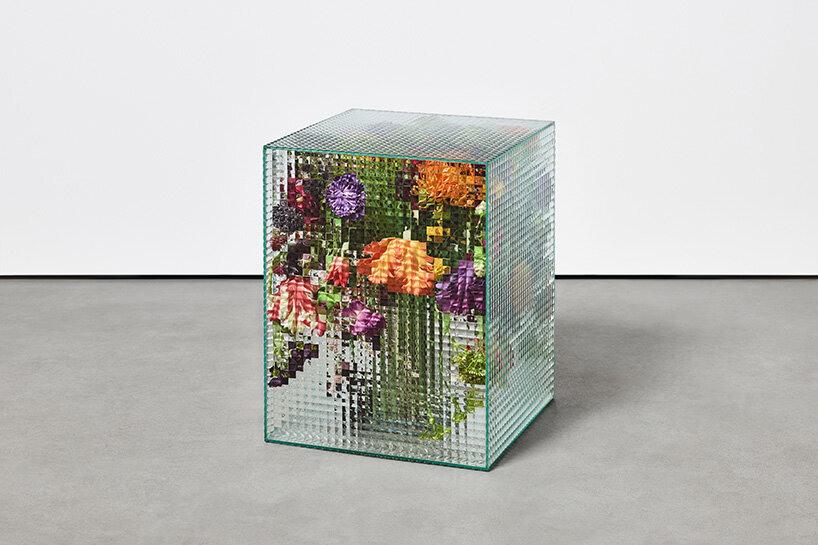
In his striking Violet series, Boekhorst utilizes patterned glass to frame organic subjects, creating three-dimensional still lifes where botanical arrangements dissolve into abstract compositions of color, light, and texture. The sculptures present a deliberate fragmentation of familiar forms, offering a slower, more meditative way of observing the environment.
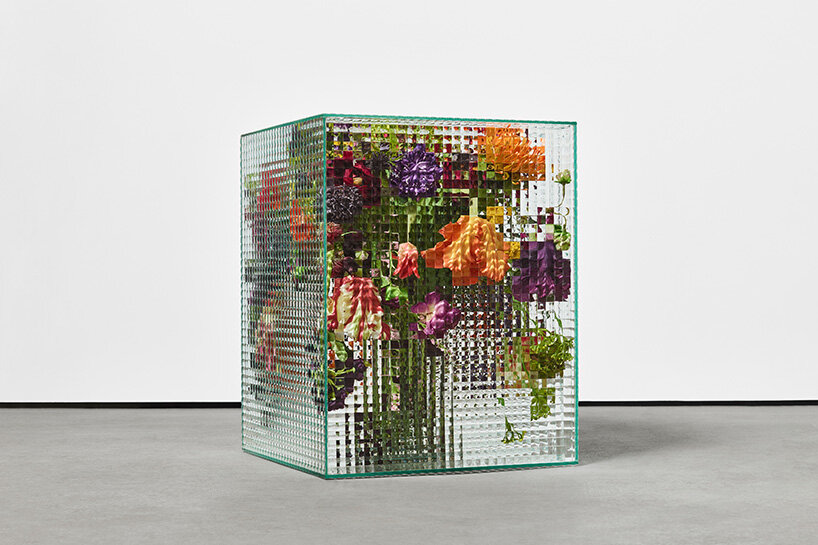
Commonly associated with domestic settings such as interior partitions, doors, and windows, patterned glass is typically valued for its practical properties. It has the distinct ability to filter natural sunlight while diffusing and obscuring direct views, all while maintaining a degree of transparency. Boekhorst looks far beyond these everyday functions, weaponizing the textured surface of architectural glass to entirely transform the visual perception of flowers.
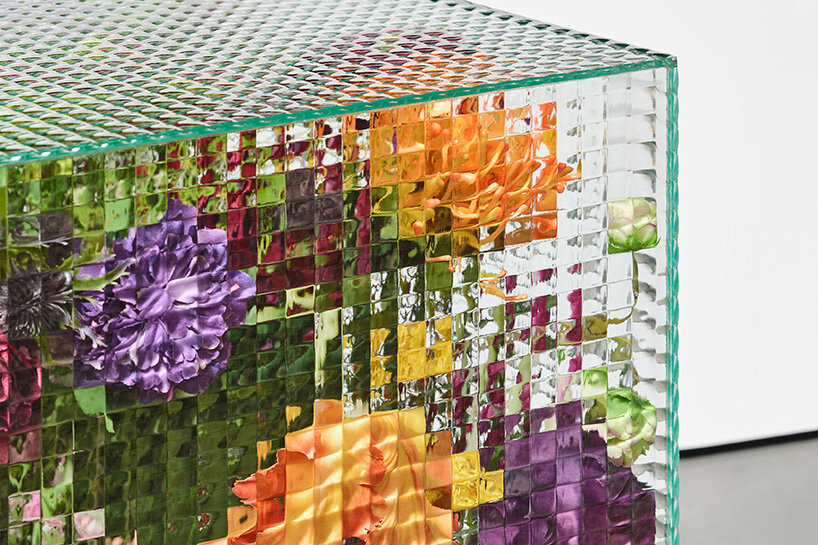
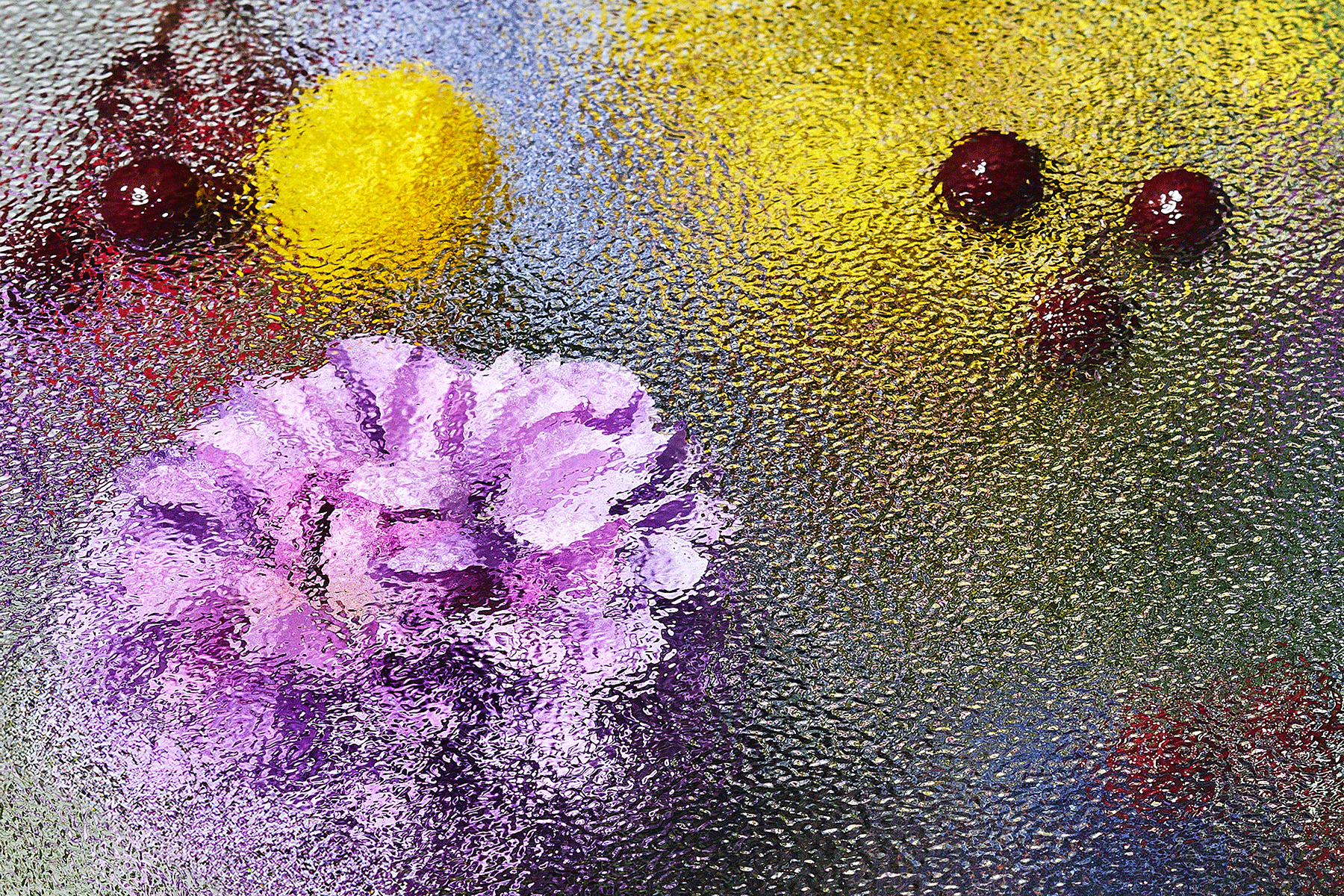
Within the sculptures, patterned glass panels are arranged into rigid geometric volumes, carefully enclosing rich botanical imagery. As natural light passes through the textured, rippled, or frosted elements of the glass shell, the flowers inside fracture into smaller, distinct pixels of color and shape. Vibrant petals are rendered as abstract blocks of orange, purple, pink, and yellow, while dense foliage dissolves into varied hues of green.
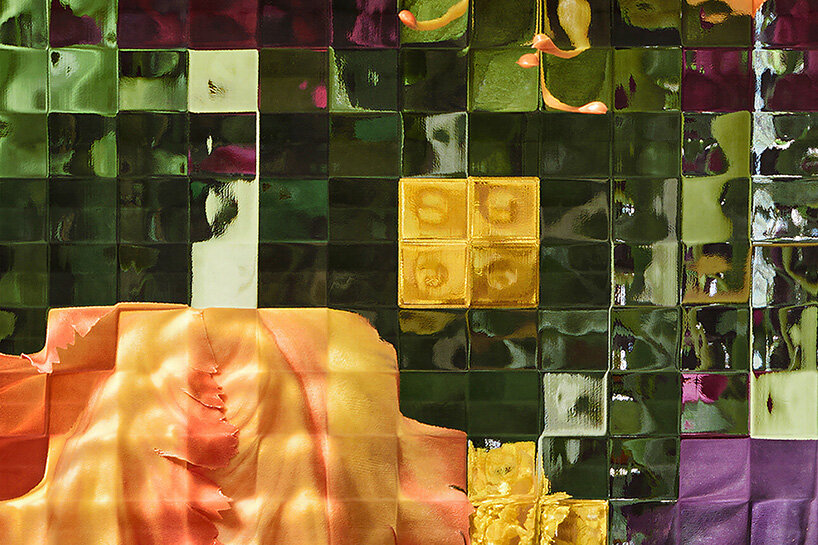
Rather than serving as a clear window, the glass functions as a sophisticated lens that both frames nature and interrupts its direct representation. It casts a deliberate filter over the original subject matter. While the flowers remain recognizable as outlines infused with intense color, their exact anatomical shapes—the fine details of individual petals and leaves—remain deliberately just out of reach.
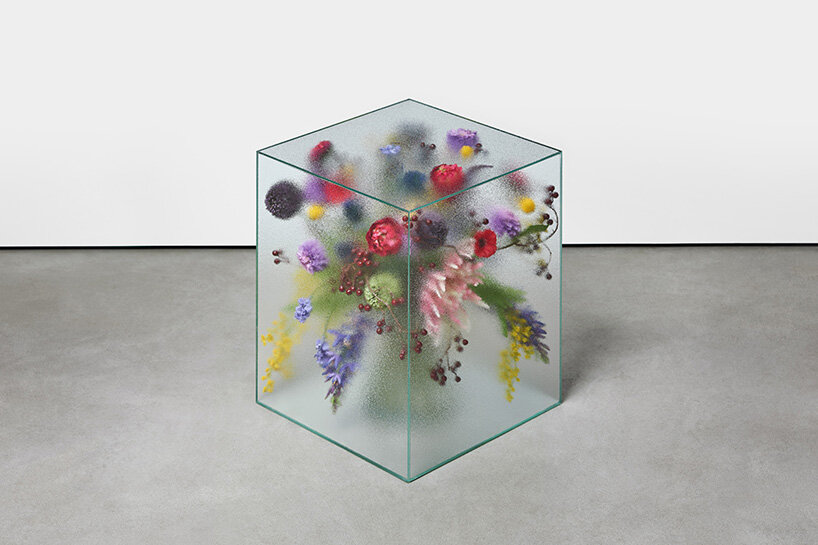
Central to the conceptual power of the Violet series is the compelling tension between the rigid, manufactured geometry of the glass enclosures and the wild, organic nature of the floral arrangements contained within. The repetitive, calculated grid and patterns of the architectural material introduce a strict human-made order to the chaos of nature. Conversely, the flowers inject vital irregularity, organic movement, and tactile warmth into the pristine structural composition.
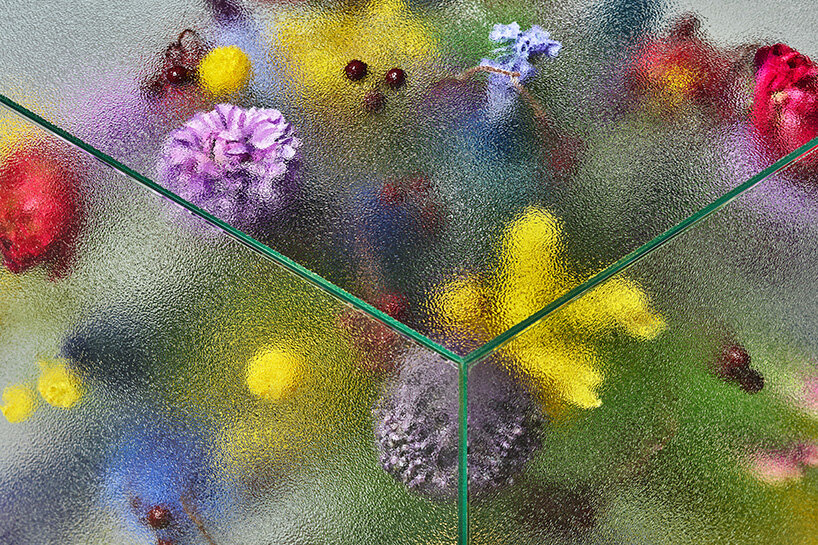
Neither element completely dominates the other. Instead, they exist in a dynamic dialogue, creating a harmonious exchange between structural design and natural growth.
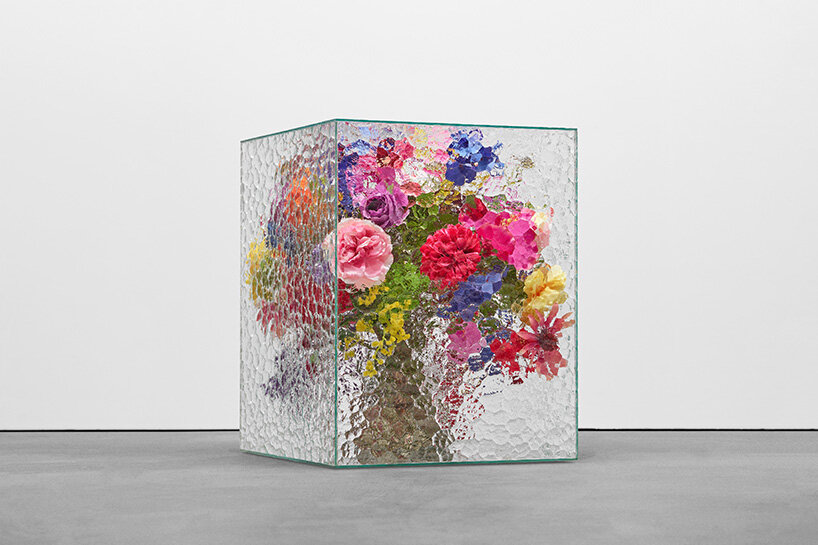
Boekhorst often articulates this relationship by viewing the glass as a canvas and the flowers themselves as paint. The finished volumetric pieces carry the visual qualities of abstract paintings, yet their physical depth, material construction, and spatial presence elevate them into profound sculptural objects. Concepts such as transparency, blurriness, visibility, and spatial distance become active artistic tools used to reshape and deconstruct the traditional genre of the still life.
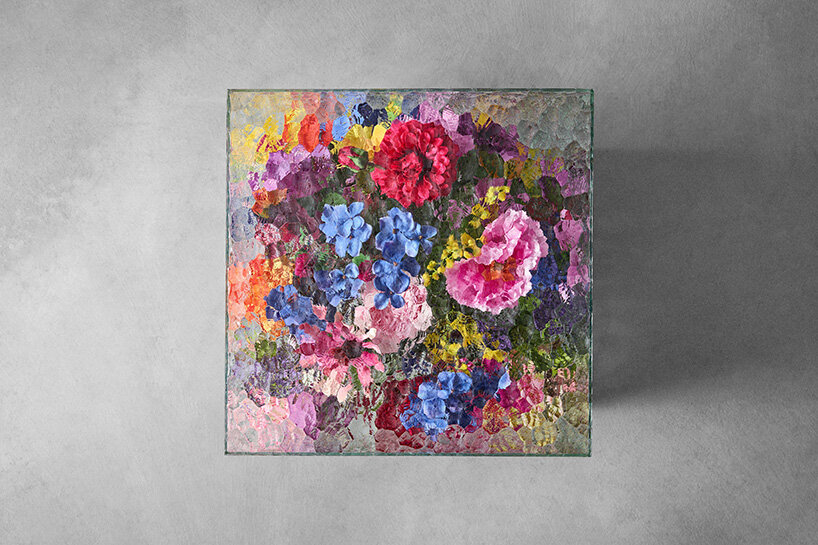
The project has evolved through several distinct iterations, most notably Violet Frosted and Violet Pixel, each investigating the tactile and visual dialogue between architectural glass and botanical subjects in unique ways. Expanding the boundaries of the series, the artist has also translated these three-dimensional sculptures into a collection of two-dimensional art prints. These photographic prints retain the heavily fragmented and pixelated compositions of the physical pieces while shifting the viewer’s experience from an interactive three-dimensional object to a flat visual plane.
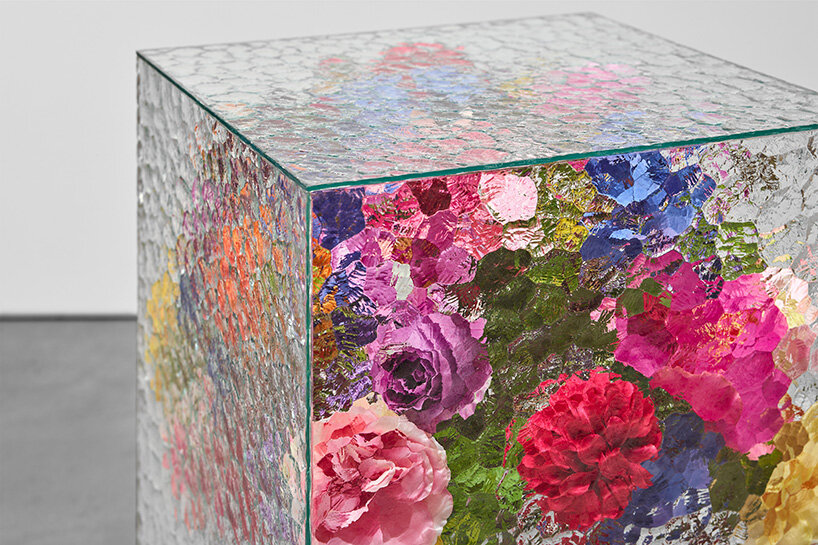
The work forms part of a broader cultural conversation surrounding modern design and environmental philosophy, touching on themes of perception and humanity’s evolving relationship with the material and natural worlds. By slowing down the act of looking, Boekhorst’s sculptural enclosures remind viewers of the beauty hidden in abstraction, turning ordinary architectural elements into profound frames for the living world.