





Right now, art lovers and collectors alike could certainly use a moment of inspiration and a tangible treat. There is a distinct, grounding pleasure to be found in acquiring a terrific piece of contemporary art jewelry for oneself, all while actively celebrating and supporting the visionary artists and dedicated galleries that bring these works to light. Art Jewelry Forum’s international network of gallery supporters continuously champions the vibrant world of art jewelry, creating spaces where boundary-pushing design and master craftsmanship can thrive.
To bridge the gap between creators and collectors across the globe, Art Jewelry Forum presents its bi-monthly On Offer series. This curated feature allows an extensive network of international galleries to showcase extraordinary pieces personally selected to tempt, provoke, and inspire. From delicate silver work and conceptual brooches to narrative-driven pendants and pieces that question our relationship with the natural world, this latest edition offers a diverse cross-section of what is happening in contemporary studio jewelry right now. Taking a look through the selections reveals a wealth of talent, and collectors are bound to find a fantastic piece that commands attention. Inquiries for any of the featured works can be directed straight to the respective galleries.
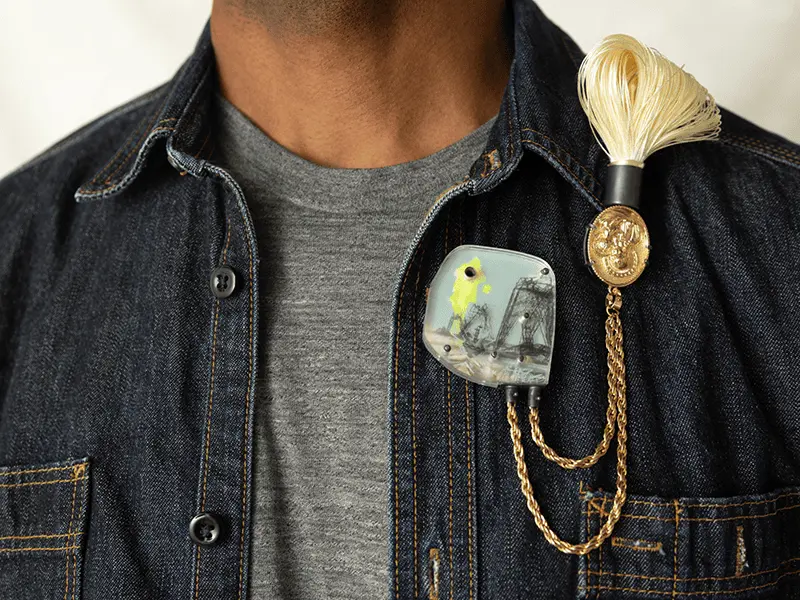
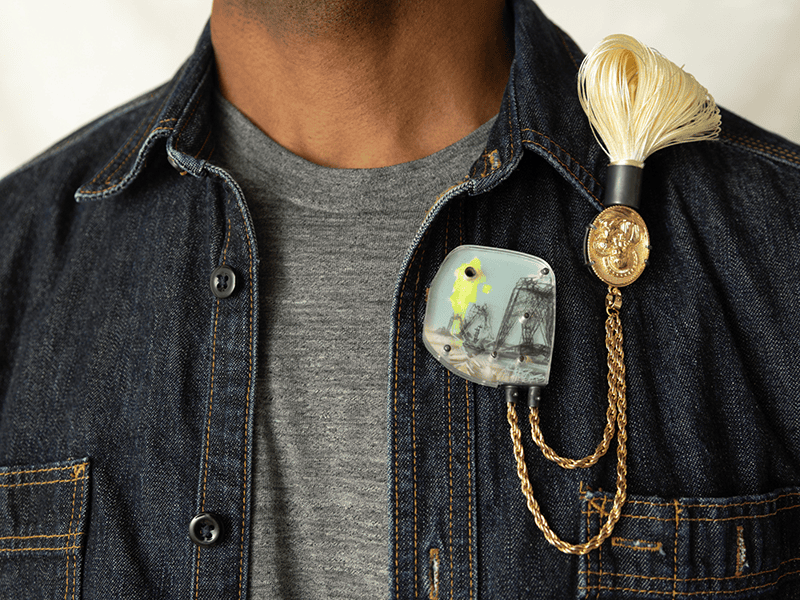
Among the standout pieces featured in this October curation is a deeply personal and layered brooch by artist Melanie Denis, titled Vierge Reliquary for an Impossible Mother II, presented by the Heidi Lowe Gallery located in Lewes, Delaware. Crafted in 2026, the brooch measures 180 by 80 by 20 millimeters and is meticulously fabricated from an eclectic mix of sterling silver, steel, brass, plastic, Plexiglas, photography, ink, silk, a recycled fantasy jewel, and a physical relic. The work was originally created for the 2026 ReJewelry exhibition, which was hosted by Heidi Lowe Gallery as part of the Radical Jewelry Makeover initiative. The piece is available through contact with Kassadi Williams at the gallery for a retail price of US$350, offering an accessible entry point into conceptual art jewelry that repurposes history and materials.
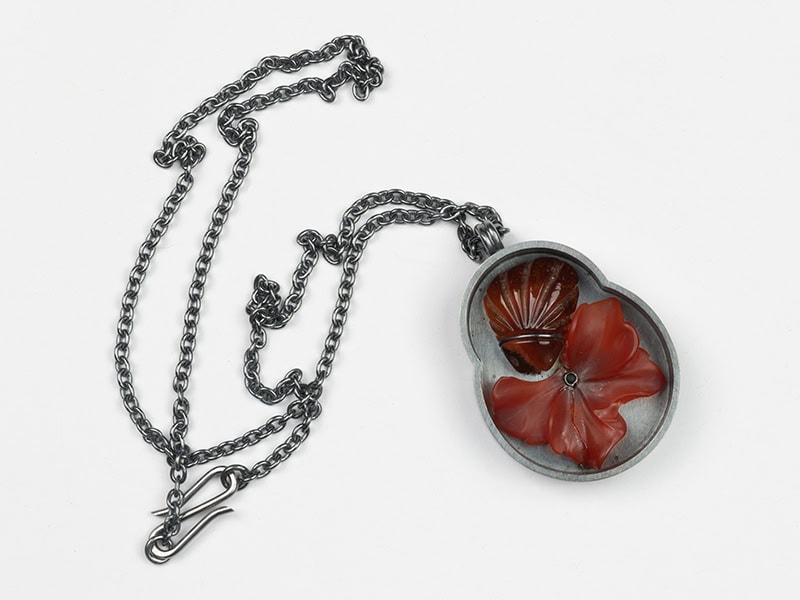
Traveling across the Atlantic to Lisbon, Portugal, Galeria Tereza Seabra features the work of artist Catarina Silva, whose recent pendant in oxidized silver, coralline, and agate is part of her solo exhibition Jardin d’agrément. The exhibition forms an integral part of the third Lisbon Jewellery Biennial program. Silva’s Jardin d’agrément imagines a lush, utopian garden inspired by the mythological gardens of paradise and the sacred groves of the gods found across various cultures. In this envisioned space, humans, animals, and plants coexist completely free of hierarchy, participating in a shared ecology marked by reciprocity and wonder. Within this conceptual framework, jewelry transforms into a living constellation of symbols—apples, unicorns, flowers, birds, and Marian imagery—all working together to evoke profound themes of knowledge, care, fertility, and transformation. At the very heart of the exhibition, the snake emerges not as a classic figure of temptation, but as a protective guardian representing wisdom, regeneration, and the perpetual cycle of life. Rather than mourning a lost Eden, Silva’s work acts as a poetic fiction, inviting viewers to imagine alternative ways of inhabiting the world where coexistence is practiced as a daily reality rather than an idle ideal. Represented with dimensions of 50 by 35 by 8 millimeters alongside a 250-millimeter chain, the pendant is available through gallery director Tereza Seabra for 650 euros, plus shipping.
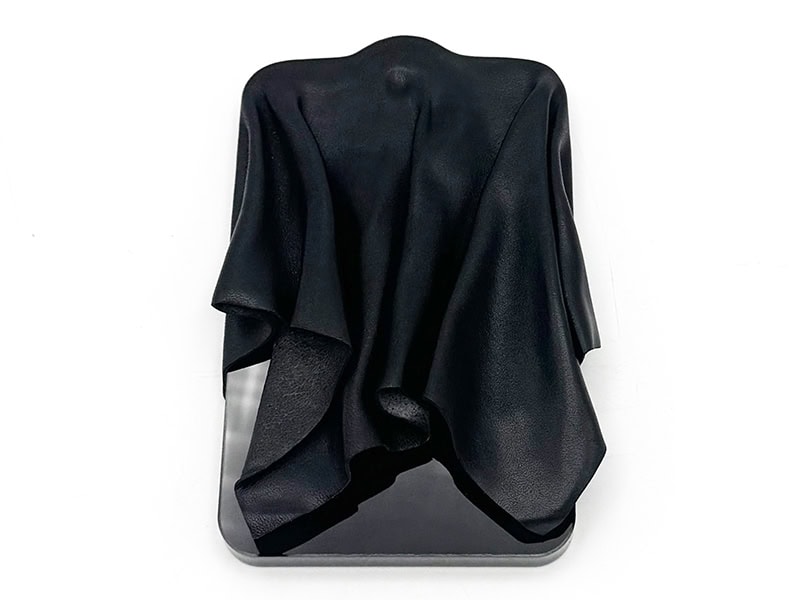
In Brooklyn, New York, In the Gallery at Brooklyn Metal Works turns the focus inward with a poignant brooch by artist Kerianne Quick titled A Denial. Measuring 5 by 3 ¼ by ¾ inches and fabricated from vegetable-tanned leather, Plexiglas, and a nickel alloy pin, the work reflects Quick’s rigorous academic and creative research rooted in craft practice as a vital cultural expression. Quick’s work pays particular attention to what they define as "material specificity"—a concept articulated in their master’s thesis that recognizes raw materials as active, speaking participants in the generation of meaning. Through object-making, Quick unearths overlooked and hidden stories, allowing the embedded histories of materials to create a lasting cultural impact. The black-shrouded "mirrors" from the Nevermind series, to which this brooch belongs, directly reference the historical mourning tradition of covering domestic mirrors following a death. Rather than functioning to protect the spirit of the deceased from catching its own reflection, these obscured mirrors turn the gaze relentlessly back onto the living, materializing complex emotional states including shame, culpability, despair, and helplessness. Brian Weissman handles inquiries for the piece, which carries a retail price of US$550.
Space and time take physical form in the work of Karin Seufert, presented by Four Gallery in Umeå, Sweden. Seufert’s latest creations grapple with concepts that are inherently difficult to depict: emptiness and time. Because time is complex, ever-changing, and fundamentally immaterial, humanity has long turned to the sky for orientation. The sun dictates the progression of days, the moon marks out longer lunar phases, and the stars allow for spatial navigation across vast distances. Karin Seufert’s latest brooch, Brooch 534.24 l, fabricated in 2026 from PVC, silver, and steel with dimensions of 69 by 56 by 24 millimeters, portrays these celestial bodies directly, capturing the sun as a flickering yellow circle, the moon moving through its shifting phases, and the stars taking on multifaceted forms. Represented by Karin Roy Andersson, the piece is available for 700 euros, excluding value-added tax.
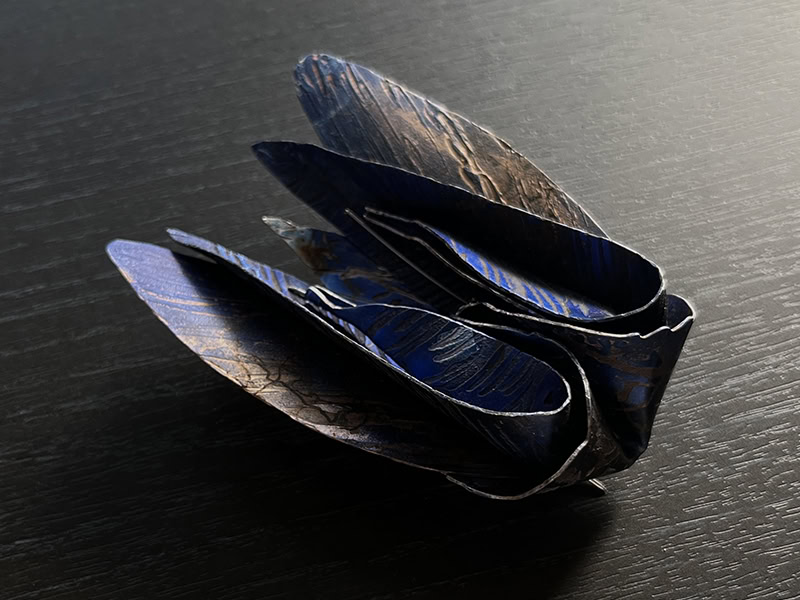
In London, United Kingdom, Objects Beautiful gallery highlights the intricate, lightweight artistry of Mei Fang Chiang with the brooch The Other Shore #17, created in 2022. Based in Tainan, Taiwan, Chiang has earned widespread recognition for her masterly command of anodized aluminum, utilizing proprietary techniques developed entirely within her studio to achieve striking, nuanced color work. Her practice explores narratives centered on the coexistence of nature and the man-made environment. An award-winning creator whose pieces reside in public collections such as the Gold Museum in Taiwan, Chiang’s jewelry bridges sculptural ambition with everyday wearability, resulting in objects that are remarkably light and comfortable. Measuring 80 by 65 by 28 millimeters and crafted from aluminum and stainless steel wire, the brooch is available through gallery director Yael Reisner for 760 British pounds, excluding tax.
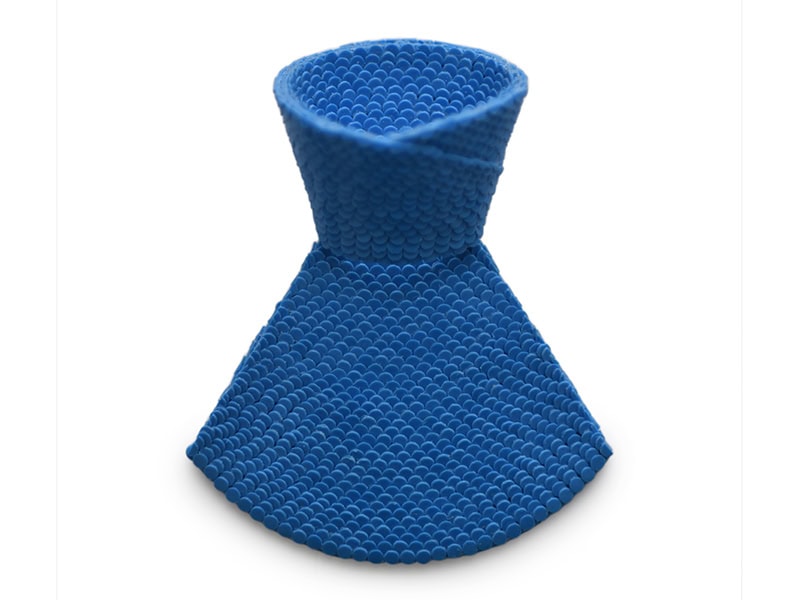
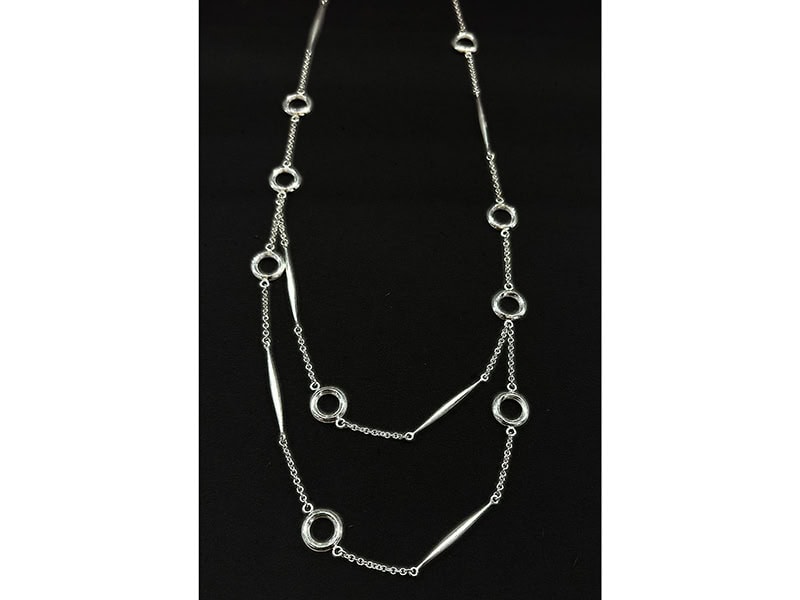
Gravers Lane Gallery in Philadelphia, Pennsylvania, presents a masterclass in quiet precision through the work of Naomi Kurita. The featured Silver Link Necklace, created in 2025 from sterling silver and measuring 26 inches in length, demonstrates a design philosophy where a simple chain leaves nowhere to hide. Every individual link must justify its existence—its proportion, its join, and the precise way it moves and rests against its neighbors. Kurita has dedicated three decades of her career to this level of quiet technical mastery. Alongside her original line of jewelry, Kurita also specializes in redesigning settings around her clients’ own precious stones, breathing new life into inherited or long-held gems. Guided by the conviction that true jewelry should remain natural, simple, and constructed to be worn for a lifetime, the necklace is available through gallery contact Mia Chen for US$3,080.
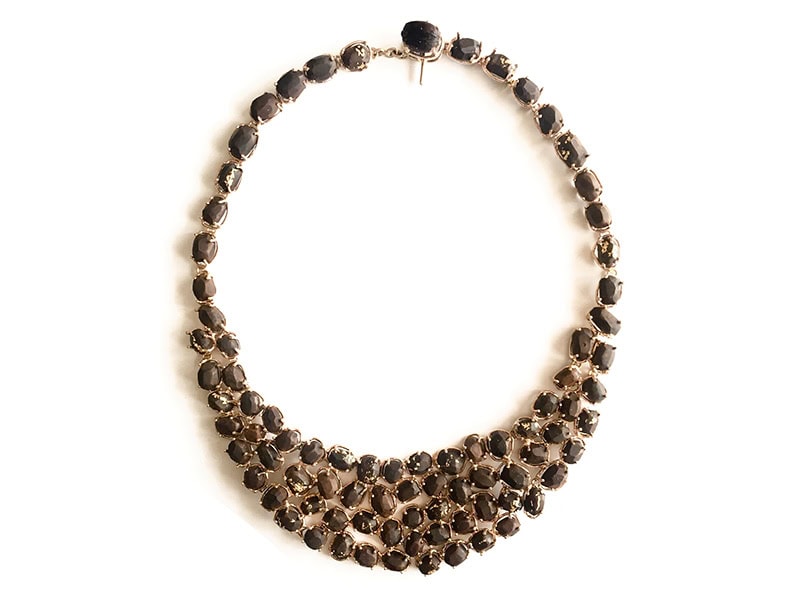
At the Wearable Art Museum, director Lisa M. Berman presents a historically resonant and politically charged piece by Colombian artist Andrea Ortiz. Titled Offering a Gem and created in 2001 as part of the Linking Realm series during Ortiz’s graduate studies at the Savannah College of Art and Design, the necklace is fabricated from coffee beans, bronze, and brass, measuring 180 by 230 by 10 millimeters. The work directly addresses the harsh, disparaging conditions faced by coffee bean workers in Ortiz’s native Colombia, shedding light on urgent issues surrounding human rights and fair working conditions. Lisa M. Berman previously curated this necklace to be featured alongside Max Alexanders’s Coffee Bean dress for the New York Times in 2024. Ortiz has earned an impressive four International Design Awards since completing her graduate education, and the museum owner has committed to offering the piece for institutional loan requests upon exhibition inquiry. The retail price for the work is US$1,495.
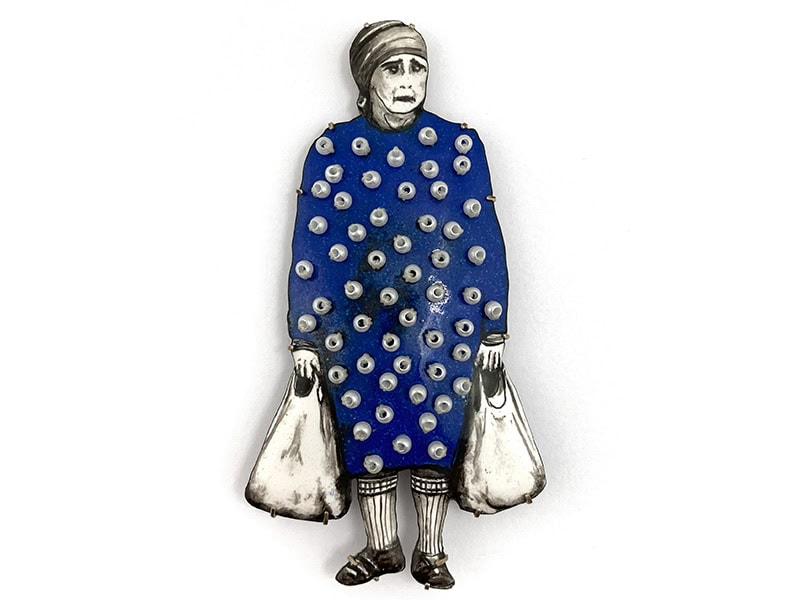
Pistachios Contemporary Art Jewelry in Chicago, Illinois, showcases the narrative-driven enamel work of Esteban Erosky with the hand-painted brooch And I Dreamed That I Would Be Happy. Measuring approximately 3 ¾ by 1 ½ inches and crafted from hand-painted enamel on copper, glass beads, nickel silver, and steel wire, the brooch reflects Erosky’s background as a Mexican jeweler, enameler, and researcher currently based in Madrid, Spain. Having studied across multiple countries, Erosky specializes in classic enameling techniques, skillfully adapting traditional methods to contemporary dialogues concerning social, human, and gender issues, while passionately asserting individual freedom. Despite exploring weighty and often painful themes, Erosky’s pieces function like short stories told through a playful visual language. Meg Nash manages inquiries for the work, which is listed at a retail price of US$1,495.
In Adelaide, Australia, Zu design presents a striking ring by Angela Giuliani titled Sapphire and Diamond, crafted in 2026 from sapphires, a cognac diamond, 9-karat yellow gold, and sterling silver. Designed to finger size N with a top dimension of 16 by 23 millimeters and standing 32 millimeters from base to top, the ring is part of stateMEANT, a contemporary jewelry exhibition that invited participating artists to write extensive statements about their work, practice, and underlying processes. The exhibition gathers bold, thoughtful pieces with a distinct message, touching on social, political, and environmental concerns, or speaking more quietly about material honesty, sustainability, and the realities of everyday life. "My work explores structure, form, and geometry through the use of precious metals and gemstones," Angela Giuliani explains in her artist statement for the exhibition. "I’m drawn to clean lines, simple shapes, and the balance that geometric design creates. The making process is just as important as the finished piece. I enjoy seeing each design evolve through careful craftsmanship and attention to detail. I work primarily with sterling silver, yellow gold, and rose gold, appreciating the unique qualities each material brings. I use gemstones to add color and interest, selecting them to complement the design and become an integral part of each piece rather than simply decoration. My aim is to create jewelry that is thoughtful, well made, and timeless—pieces that people enjoy wearing and connect with for years to come." Inquiries can be directed to Jane Bowden at the gallery, with the piece priced at AUS$7,300.
Galerie Door in Nijmegen, Netherlands, highlights the exuberant and mischievous creations of Daniel Kruger. The featured Untitled necklace, crafted in 2025, incorporates glass vials containing Hindu ritual pigments alongside pearls, glass flowers, and silver, measuring 94 by 94 by 18 millimeters. Kruger’s work questions the boundaries between disparate materials, seamlessly combining shells, gemstones, plastic scraps, relics, and fetishes into unified wearable sculptures. His art jewelry is designed to seduce, beckoning the viewer to linger and inspect more closely. By merging gemstones with everyday manufactured items and pairing traditional textile work with refined metalwork, Kruger achieves a tension where the sublime meets the mundane, the precious meets the cheap, and the classical meets the kitsch. The resulting works draw the eye toward the neck, chest, hand, or ear, functioning simultaneously as ornaments, talismans, personal statements, or simply irresistible objects designed to bring joy. Doreen Timmers manages inquiries for the piece, which carries a retail price of 4,200 euros.
Fingers Gallery in Auckland, New Zealand, features a masterwork by Dunedin-based contemporary jeweler Jane Dodd. Titled A Night Out and fabricated in 2026 from ebony, bone, sterling silver, marcasite, and spessartite garnet, the brooch measures 73 by 33 by 22 millimeters and exemplifies the high level of technical craftsmanship that defines Dodd’s career. In recent years, Dodd’s practice has centered heavily on the portrayal of animals, using the natural world as a lens through which to examine human impact, interaction, extinction, infestation, cruelty, and conflict. Heavily influenced by historic European craft traditions while remaining acutely mindful of the environmental plunder that historically enabled such exuberant artistic production, Dodd channels these complex, contradictory emotions into works characterized by tension, humor, and intrigue. Lisa Higgins handles gallery inquiries, with the brooch priced at NZ$1,750.
In Baltimore, Maryland, the Baltimore Jewelry Center highlights the sculptural metalsmithing of co-founder April Wood through her Circle Fern Hoops, created in 2023 from steel and sterling silver and measuring 1 ½ by 2 ½ inches. Wood received her BFA in studio art with a concentration in metals and jewelry from Texas State University in San Marcos and her MFA from Towson University. As a co-founder of the Baltimore Jewelry Center, she maintains an active teaching presence locally and has previously taught at institutions including the Maryland Institute College of Art, the Corcoran College of Art and Design, the Penland School of Crafts, and the Idyllwild Arts Academy. Her work has been featured in publications such as Metalsmith, Surface Design Journal, and Sculpture, and has been exhibited in national and international venues, including a solo exhibition at the Austin Museum of Art in 2012 and the SIERAAD International Art Jewelry Fair in Amsterdam in 2013. J Diamond manages inquiries for the earrings, which are available at a retail price of US$160.
Galeria Reverso in Lisbon, Portugal, showcases a brooding, evocative brooch by Manuel Vilhena. The untitled 2026 work measures 150 by 120 by 30 millimeters and is fabricated from juniper, tourmaline, 18-karat gold, steel, and cotton. Describing the conceptual foundation of the piece, Vilhena notes, "Of all the dichotomies with which we have to coexist, perhaps the most evident is the precarious dance between life and death. This is the theme addressed in this work through the adventures of a notorious gang of evildoers who daily defy death and live with it as a partner: the pirates." Paula Crespo handles inquiries at the gallery, where the brooch is offered at a retail price of 2,730 euros.
Finally, Thereza Pedrosa Gallery presents a pivotal brooch by artist Ela Bauer, created in 2025 from resin, pigments, organic material, and an aluminum pin, measuring 125 millimeters in diameter. This piece captures a crucial turning point in Bauer’s artistic trajectory, marking a decisive shift away from the powerful two-dimensional works that initially defined her career toward a bold new sculptural, three-dimensional language. Rather than simply extending her previous vocabulary, the piece opens an entirely new field of spatial and material exploration. The significance of this evolution was recognized internationally when Bauer was awarded the prestigious Herbert Hofmann Prize at Schmuck 2026, confirming the artistic weight and forward momentum of her ongoing research. Inquiries can be directed straight to Thereza Pedrosa, with the brooch priced at 1,340 euros.