



After traveling across the globe and staging major fashion spectacles in New York, London, Paris, and Los Angeles, Vogue World officially landed in Milan. Taking place inside the iconic Galleria Vittorio Emanuele II—a bustling retail thoroughfare nestled in the heart of the city between the historic Duomo and Teatro alla Scala—the evening delivered an unforgettable feast of fashion. The show featured a curated mix of archival designs, current season looks, and custom runway pieces that paid profound homage to Italy’s enduring history of artisanal craft, cutting-edge textile technology, and forward-thinking ideas, all underscored by a special collaboration with the Teatro alla Scala Chorus.
"This extraordinary event offers a unique opportunity to celebrate with a global audience the timeless story of Made in Italy, a story of genius and craftsmanship," said Francesca Ragazzi, Vogue Italia’s head of editorial content, in a statement. "It feels particularly meaningful to do so at this moment in time, in the era of artificial intelligence."

Juan Costa Paz, the creative director of Vogue World Milan, noted that the intersection of human craftsmanship and technological advancement served as a central theme for the evening. "In the creative industry, it’s an enormous conversation at the moment," Costa Paz said. "Getting into that space for this year felt like the right thing to do. Especially being in Milan, it’s such a hub for craftsmanship—Italians have always been the leaders of craft. The idea of the show really has been to create a narrative in which we can see these conversations expressed through fashion."
The evening opened with a striking procession led by a trio of craftspeople presenting the physical objects they helped create: a meticulously detailed model of the Duomo, a celestial sphere, and a traditional loom. These elements were commissioned by fashion historian and show curator Judith Clark, who explained that the installation was designed to represent "artisans celebrating history, translating references from one material to another. It is what fashion does all the time."

This philosophy is deeply embedded in the very architecture of the Galleria itself. Clark noted that Vogue World: Milan was conceived to draw attention not only to Italy’s precious artisanal heritage, but also to the industrial revolutions that harmonized hand and machine. She connected these themes directly to the famous mosaic floor at the center of the Galleria, where emblems represent four defining Italian cities: Florence, Torino, Roma, and Milano. Each city represents a distinct chapter in Italian cultural history—Florence for the Renaissance, Torino for the Industrial Revolution and manufacturing, Rome for La Dolce Vita and the cinematic golden age of Cinecittà, and Milan for the contemporary fashion industry and northern smart textiles.
The opening trio of objects carried profound symbolic weight. The wooden scale model of the Duomo required 4,500 hours of work using the fretwork technique, representing the cathedral as it might have been completed in the 19th century with equal-height spires. The handmade celestial sphere featured a map of the 88 constellations printed from hand-etched copper plates onto fine Italian handmade paper, individually colored with natural pigments and gilded with gold leaf. Finally, the scaled-down historic loom symbolized the foundational intersection of hand and machine labor in Italian textile history.

Following the opening trio, 18 artisans representing 15 storied Italian fashion houses walked the runway attired by Loro Piana, accompanied by six hooded figures wearing custom velvet capes by Etro.
ACT I: The Artisanal Revolution
The first act of the evening brought Renaissance-inspired textiles to life through a dramatic, candlelit procession. Rich brocades, intricate lace, heavy ornamentation, and hand-worked surfaces evoked an era when artists, scientists, and artisans worked across traditional boundaries, laying the groundwork for Italy’s enduring culture of craftsmanship.

"The first act is the artisanal revolution, which has to do with everything that comes before electricity and before industrialization," Costa Paz explained. "It was the time of kings, queens, and popes, and through that, we’re seeing fashion that’s handcrafted."
The narrative was further enriched by deep dives into Italian fashion history, highlighting legendary visionaries like Roberto Capucci, celebrated for his architectural approach to garment design, and Romeo Gigli, the self-taught poetic designer of the 1980s known for his cocoon shapes and sensitive handling of opulence and androgyny.

ACT II: The Industrial Revolution
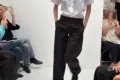
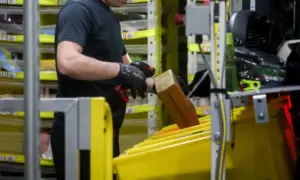
As the candlelight and Renaissance pageantry faded, the intimacy of the artisanal workshop gave way to the steady, mechanized rhythm of industrial production. Inspired heavily by Torino—the historic heart of Italy’s automotive and manufacturing sectors—Act II showcased a world of tailored silhouettes, monochrome fabrics, and precisely engineered woolen textiles.
The Industrial Revolution fundamentally transformed clothing production, streamlining manufacturing and bringing concepts like the everyman’s suit into mass-replicable focus. "I think there’s obviously a craft to tailoring, but there’s also dressing the working man," Costa Paz noted. "And also, the Industrial Revolution speaks to the birth of the fashion designer as a persona. Here, we’re referencing a lot of Giorgio Armani being probably one of the first superstar designers in modern history."

Industrial aesthetics were further emphasized by unique collaborations, including 50 industrial boiler suits designed by Diesel, styled with powerful shoulder pads and combat boots to project strength and uniformity.
ACT III: Made in Italy
Color, pattern, and cinematic mythology exploded onto the runway in Act III, drawing inspiration from Federico Fellini and the golden age of Italian cinema. This segment celebrated the birth of the Italian diva—an enduring symbol of glamour, sensuality, and expressive personal style.

"Italy is a country of so much emotion, and so much color and pattern, and yet every part of Italy is unique," reflected Lady Amanda Harlech, fashion director for Vogue World: Milan. "And I think that’s what I find so fascinating, the difference between Florence or Rome or Milan or Venice. I mean, it’s so rich and profound, and they have not lost it… It’s still holding onto its integrity. That’s what I love."
The act also paid tribute to trailblazers like Miuccia Prada, whose revolutionary design philosophies—such as exploring the "good taste of bad taste" through clashing patterns and unconventional color palettes—permanently expanded the boundaries of high fashion.

ACT IV: The Age of Intelligence
Moving toward the contemporary era, Act IV explored the convergence of craftsmanship and technology as fashion entered the modern laboratory. Intelligent and sustainable textiles capable of responding to temperature, movement, and environmental shifts took center stage, reinforcing Milan’s status as a global hub where research, manufacturing, and design intersect.
"When you think of Italian tech fabrics, it’s often linked to sports," Harlech observed. "You think Moncler, Prada, all of them, whether it’s Diesel or Ferrari, they all have the leading ability to create great fashion that is extraordinarily sporty."

The musical and performance elements of the evening reached a crescendo here, featuring performances by principal dancer Roberto Bolle alongside dancers in custom Ferrari costumes, opera singers draped in archival costumes from Teatro alla Scala, and a powerhouse musical performance by Alicia Keys in custom attire. Four conductors—dressed by Kiton and Genny—led 103 choristers from the Accademia Teatro alla Scala, who wore specially designed uniforms by Benetton.
ACT V: The Imagination Revolution
The final chapter of Vogue World: Milan looked beyond the present day toward a speculative future, utilizing Italy’s extraordinary heritage as raw material for further invention.

"When I was researching for this show, I got really hung up on this concept of the Imagination Revolution," Costa Paz explained. "A lot of technologists and scholars from around the world say that, when AI and all of these radical moments that we’re living right now [occur], the ultimate human capital is creativity. There is something about the role of human creativity as a mediator of these things that is something that you cannot let go of."
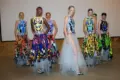
This forward-facing sentiment was captured through "memory dresses"—custom creations commissioned from leading creative directors of major fashion houses to serve as acoustic echoes of each brand’s iconic design history.

The event was held under the patronage of the Municipality of Milan and the Camera Nazionale della Moda Italiana, with the artistic contribution of Teatro alla Scala and Accademia Teatro alla Scala. Presenting sponsors for Vogue World: Milano included ALO, eBay (Vogue’s official vintage and pre-loved partner), Eli Lilly and Company, and Meta Glasses, with additional support from FedEx and OpenAI, concluding a triumphant night celebrating the past, present, and future of Italian style.